Persephone Myths: Abduction, Queenship, and the Turning Seasons
Greek Mythology
They called me Kore first. The Maiden. A name that tastes like springwater and unfinished sentences, like a story everyone assumes they already know how to end.
But myths do not end. They molt.
If you came here looking for a simple moral, Greek religion will disappoint you with the elegance of a knife. My story is a braid of older songs: a meadow torn open, a mother who bargains with the cosmos, a king who waits in shadow, and a handful of pomegranate seeds that turn a girl into a boundary stone between worlds.

The meadow is never just a meadow in Greek myth. It is a threshold that looks harmless until it opens.
The Meadow and the Chasm
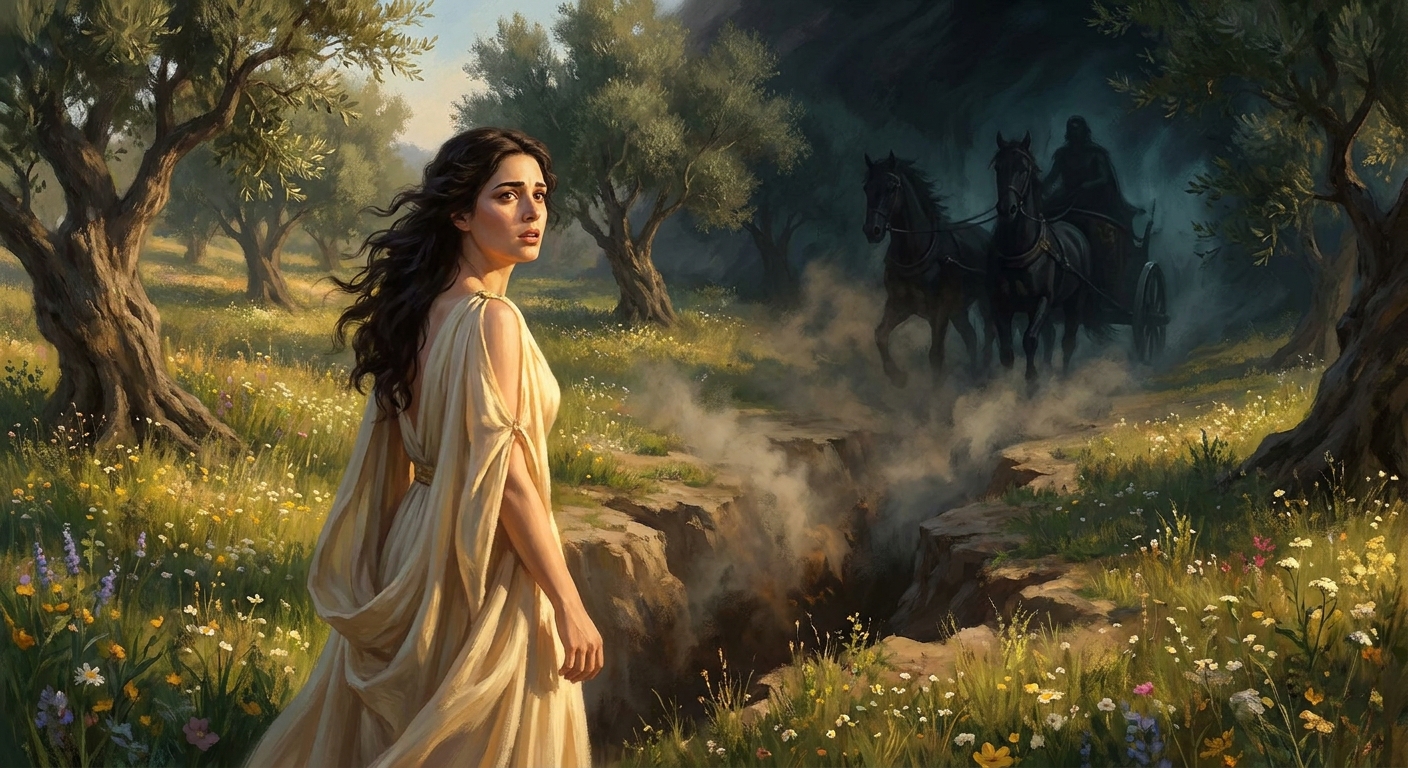
The version most people recognize comes to us most powerfully in the Homeric Hymn to Demeter, a poem that feels like incense smoke and emergency. In it, I am gathering flowers with the Oceanids, bright nymphs at the edge of a day that does not yet know it is ending.
The narcissus blooms with the suspicious perfection of a trap, and the earth splits.
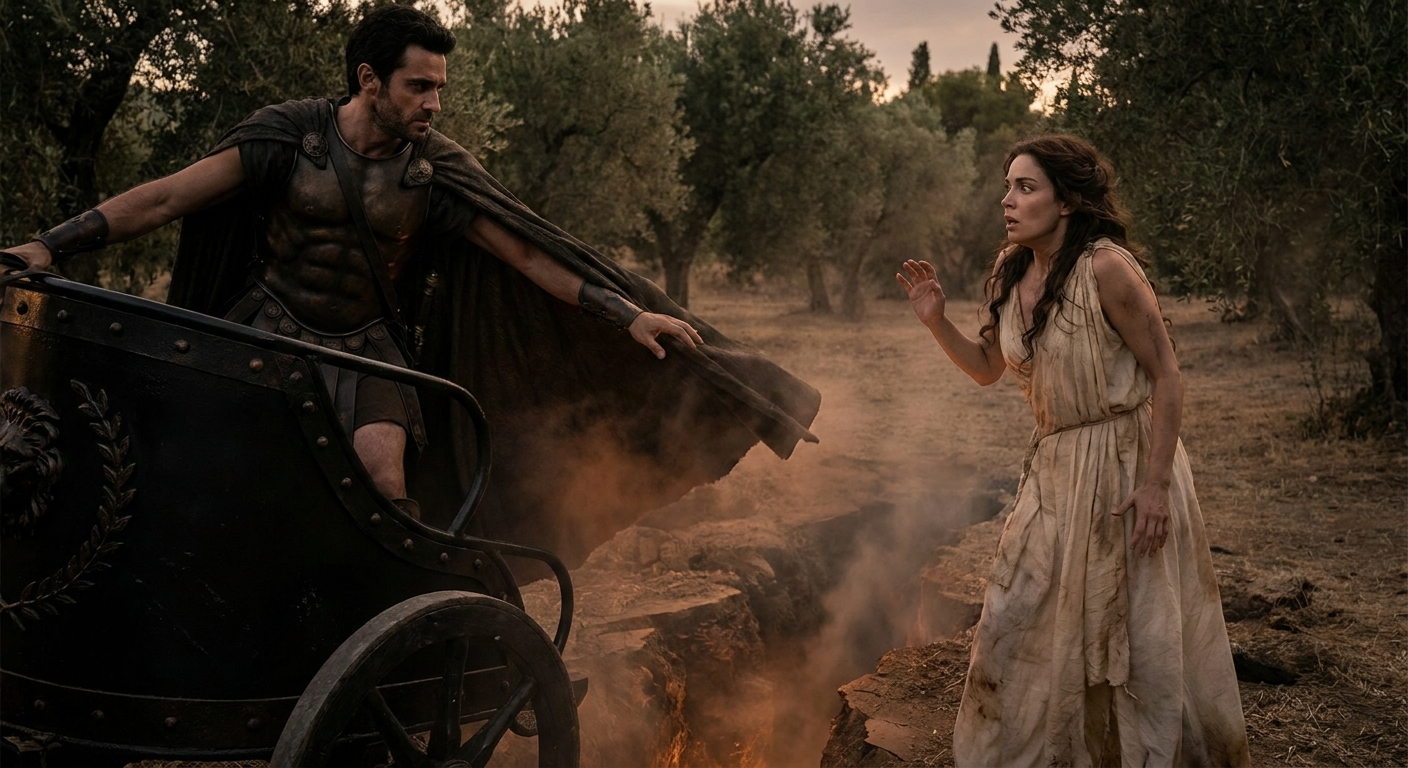
Hades rises in his chariot, and there is no polite courtship, no careful asking. There is speed. There is force. There is the sudden collapse of everything familiar into the throat of the world.
Ancient poets love a clean descent. Tradition is messier. What matters in the hymn is the violence of the transition: not only my body taken, but the entire order of the surface world shattered by what the gods decide is permissible.
Zeus Knew
Here is the detail that makes the hymn burn. Zeus is not surprised. He gives permission. The king of Olympus sanctions the match and lets the girl vanish.
It is the kind of divine politics mortals endure constantly in myth: decisions made above your head, then explained as destiny.
When modern readers debate my “agency” in the abduction, this is one of the fault lines. The earliest, most influential narrative frame treats my consent as irrelevant to the bargain between gods. That does not mean every local cult, every later poet, every vase painter felt the same. It means the hymn is honest about the brutal shape of authority.
Olympus calls it order. The earth calls it famine.
Demeter’s Grief
My mother, Demeter, does what a goddess of grain can do when she is betrayed: she stops the world.
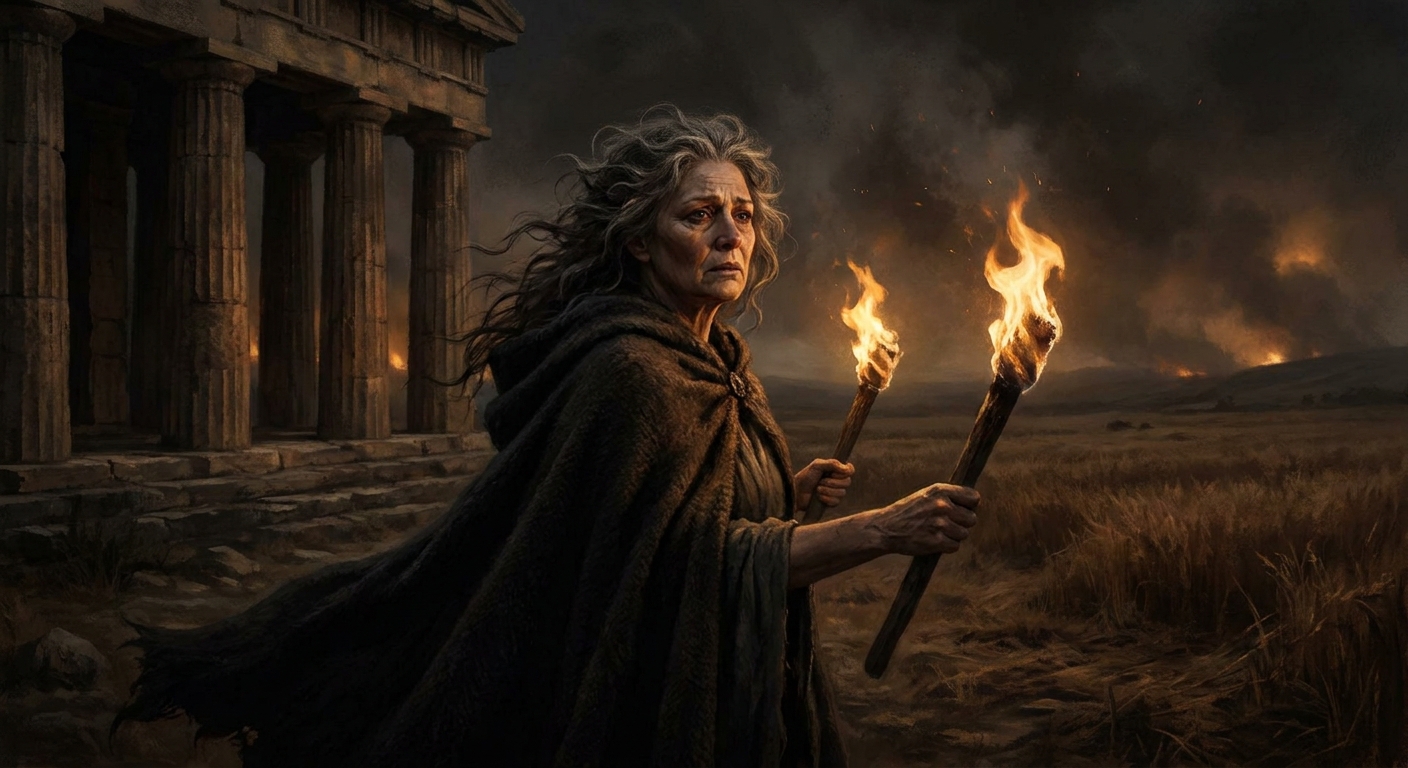
She searches with torches, refusing nectar and laughter. She walks among mortals like a storm dressed as a woman, and eventually she comes to Eleusis, where the hymn folds domestic detail into cosmic consequence.
Demeter nurses a royal child, sits by the hearth, and in some tellings attempts to make him immortal. She is discovered. She reveals herself. She demands a temple. She demands what she is owed.
And then she closes her fist around the harvest. Wheat fails. Fields go thin. The smoke of sacrifice thins with it, because starving people do not have offerings to burn. The gods, who can ignore a girl’s scream, cannot ignore a world without rituals.
Underworld Rules
Down below, the myths shift tone. The Underworld is not only terror. It is administration. It is law. A place of gates and keys, of names counted and kept, where even a god’s promise becomes a mechanism.
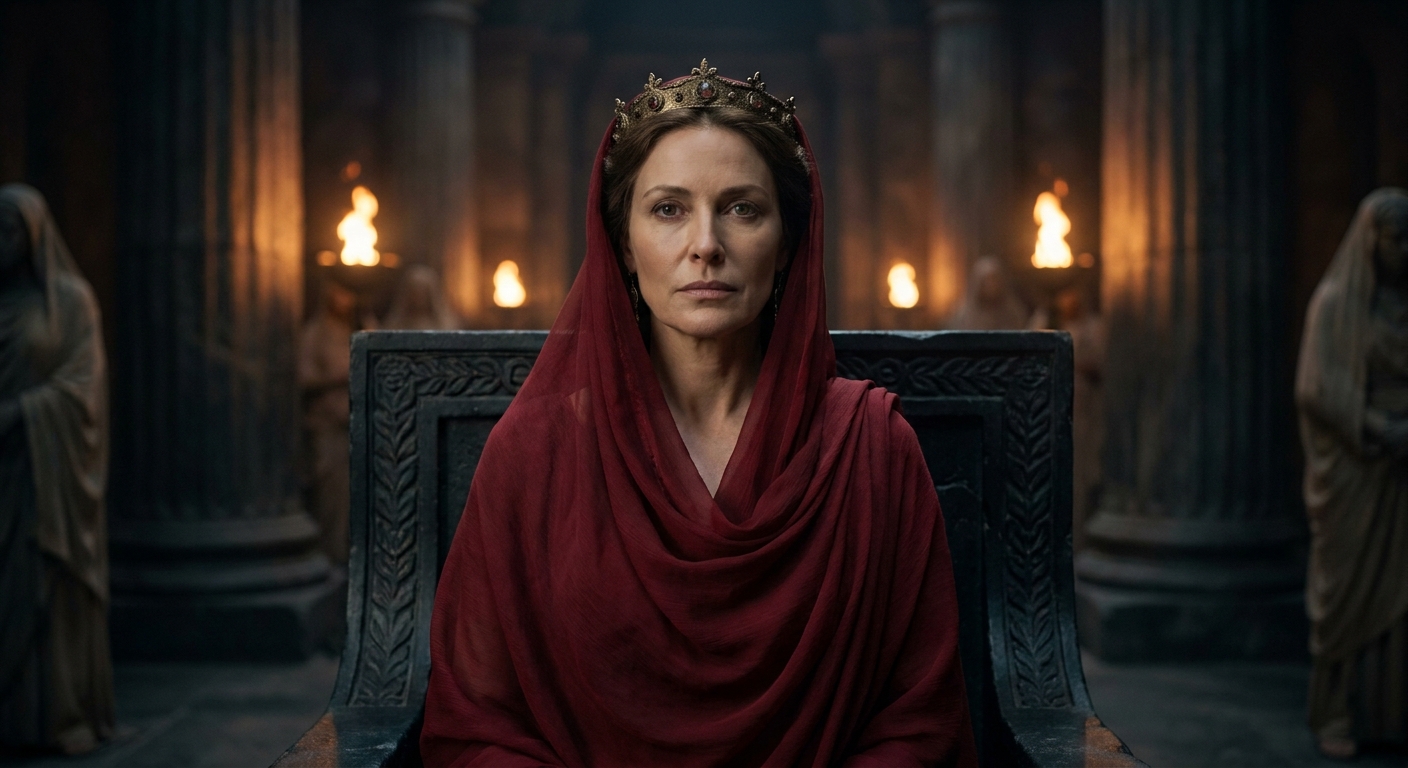
In the hymn, I grieve. I resist. I am made a wife by force and by divine consent. Yet the same tradition that tells of my abduction also preserves my transformation into something more unsettling than the Maiden: Queen.
Later Greek and Roman literature will sometimes show me as feared, not merely pitied. I become the one who receives souls. The one who hears petitions. The one whose favor can be won, whose anger can sharpen.
That is the uncomfortable truth at the center of my mythology: the victim of one story can become the authority of the next.
The Pomegranate Bargain
When Zeus finally sends Hermes to negotiate my return, the Underworld answers with a classic divine maneuver: a rule that looks like hospitality and behaves like a trap.
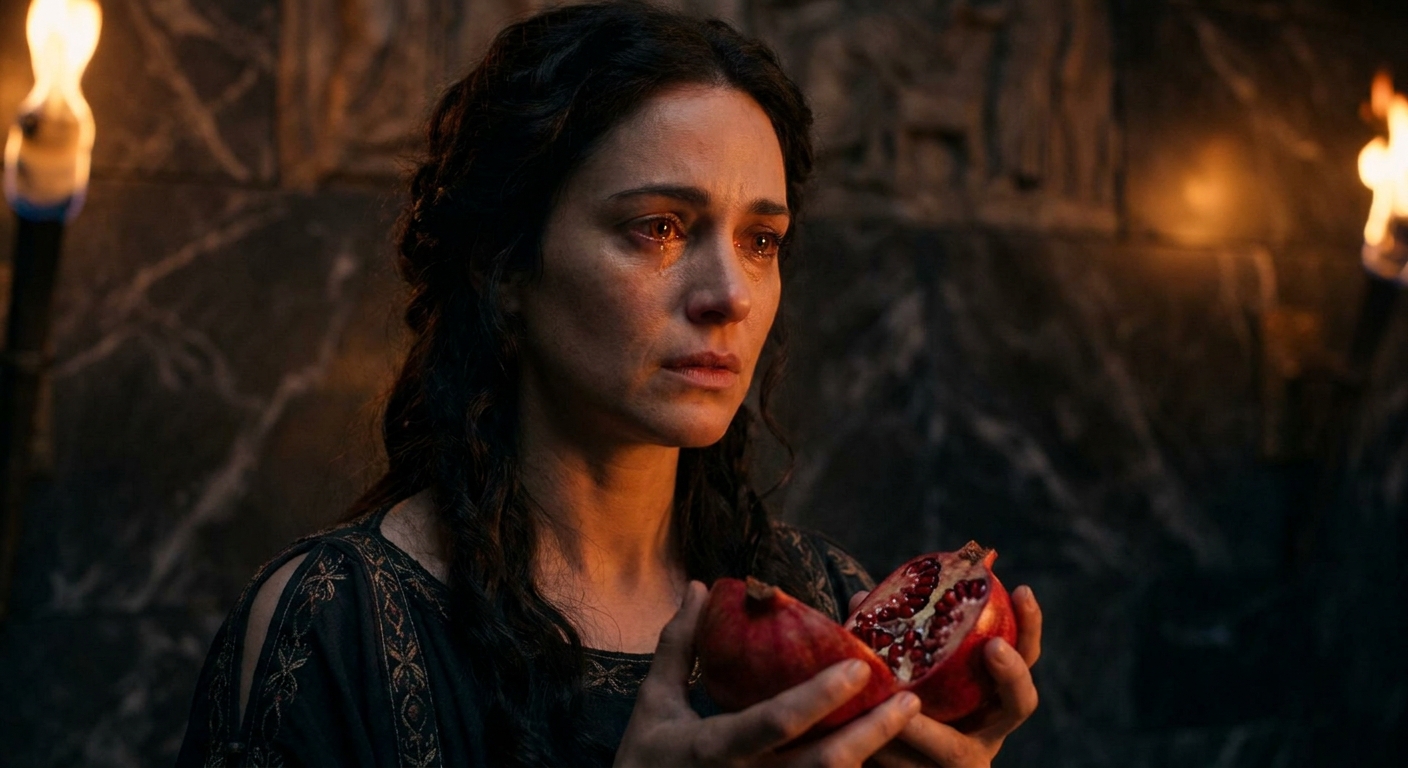
I am offered food. And in the hymn’s sharpest cruelty, Hades gives it to me in secret, so that the act binds even if my heart does not.
I eat pomegranate seeds.
Ancient sources do not always agree on the count. You will hear one or three or seven, depending on the teller. The point is not arithmetic. The point is the law of binding.
To eat in the realm of the dead is to accept the realm’s claim. The pomegranate, with its jeweled blood-bright kernels, becomes the symbol people cannot stop touching: deception, hunger, defiance, curiosity, resignation. Greek myth rarely offers clean consent. It offers consequences.
Two Names
People talk about me as if I am split into two characters: Kore above, Persephone below. That is a modern neatness. Ancient religion loved paradox more than diagnosis.
As Kore, I carry the brightness of budding grain, the ritual freshness of girls’ processions, the sweet violence of spring pushing up through mud. As Persephone, I carry the stillness of locked doors, the authority of endings, the velvet patience of stone.
The turning seasons are the myth’s most famous poetry, but the hymn’s deeper theology is harsher: the world is kept alive by a bargain that includes grief. There is no spring without a descent written into it.
I do not spend all my time in one place. I am granted the upper air for a portion of the year, and for a portion I remain below, where the torches do not go out.
Each year, I do not simply return. I cross a border the cosmos remembers.
Agency and Sources
It is tempting to rescue me into one clean modern category: either powerless captive or secretly consenting bride. Ancient evidence refuses both simplifications.
- The Homeric Hymn to Demeter frames the story as abduction sanctioned by Zeus, with my mother’s grief as the moral engine.
- Later literary and artistic traditions sometimes emphasize my queenship and my role as a stabilizing power below, which can change the emotional temperature of the tale.
- Local cults and mystery traditions often cared less about romance and more about what my cycle meant for initiation, renewal, and the hope of a gentler fate after death.
So when we ask “Did Persephone choose?” we should also ask: which Persephone? Which century? Which city? Which ritual context? Greek myth is not a single book. It is a coastline of stories with caves and shipwrecks and sacred springs, and you do not get to map it with one straight line.
Persephone and Adonis
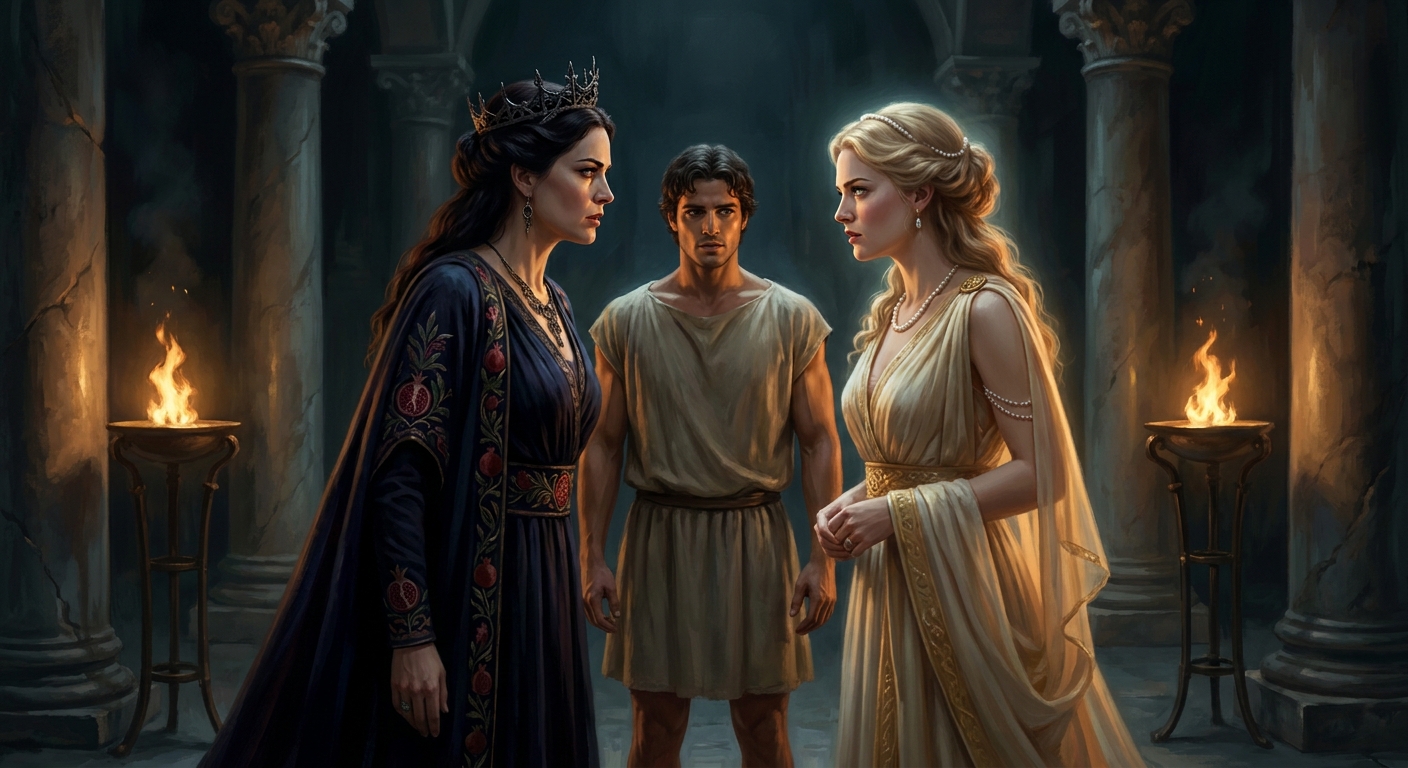
Some traditions give me another charged entanglement, not with a king of the dead but with a beautiful mortal: Adonis.
In certain accounts, Aphrodite hides the infant Adonis in a chest and entrusts him to me. When he grows into the kind of beauty that makes gods behave badly, I do not want to give him back. Aphrodite, predictably, does not accept refusal.
The dispute escalates to a divine judge. In many versions it is Zeus. In others, another voice is named. The verdict is the same shape either way: Adonis is divided by time, portioned between powers that treat desire like a claim.
The story echoes my own seasonal division, but with a sharp reversal. Now I am not the one divided. I am the one accused of holding.
Eleusis and the Mysteries
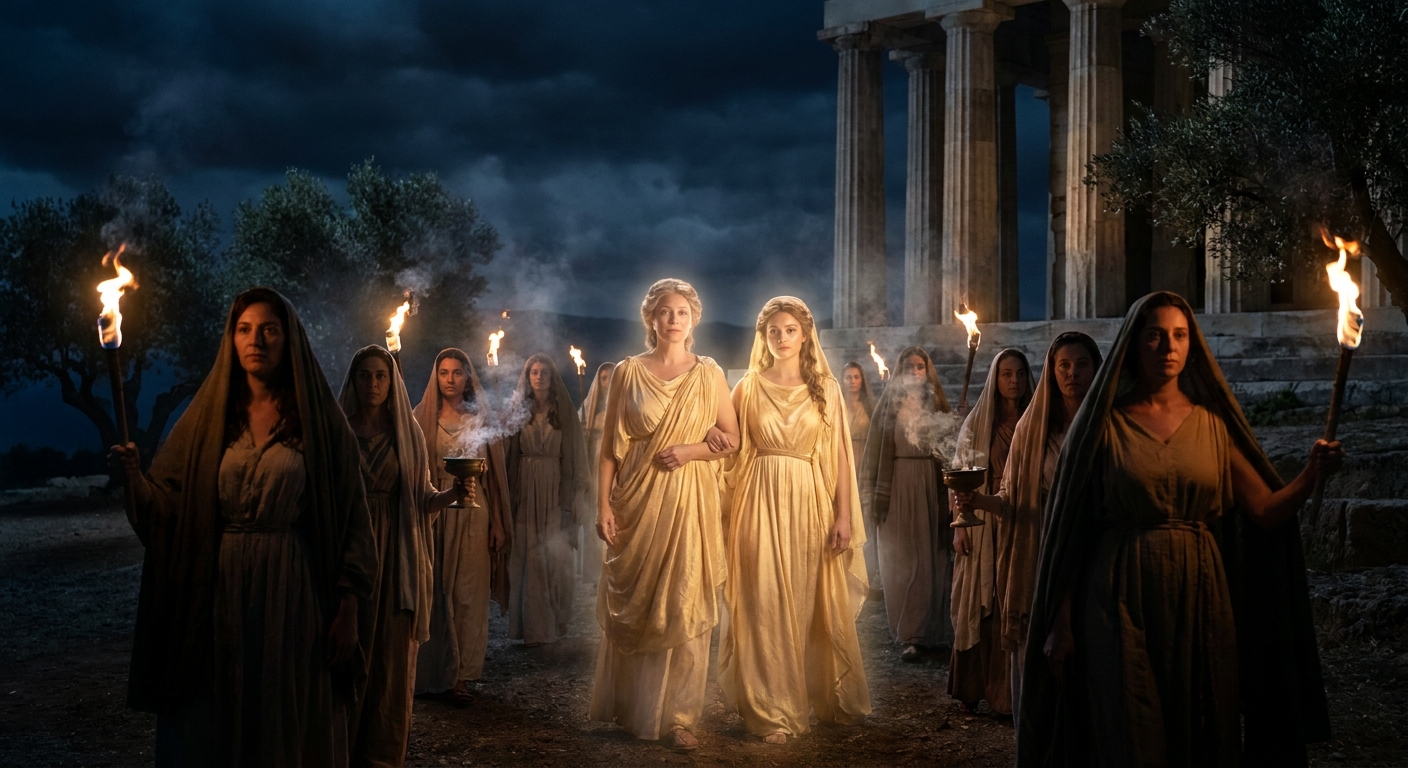
The myth does not live only in poems. It lived in rites, in the shiver of torchlight on stone, in processions, fasting, and a sacred secrecy that lasted for centuries: the Eleusinian Mysteries.
We cannot reconstruct every detail, because initiates were sworn to silence. That silence is part of the power. But we can say this: Demeter and I stood at the center of a ritual world that promised participants something precious in Greek religion, which often offered fear more readily than comfort.
At Eleusis, the cycle was not merely agricultural. It was existential. My descent and return could be felt as a pattern for human lives: loss, searching, revelation, and a possible hope that death was not the end of meaning.
In some later interpretations, I am not only the girl taken. I am the goddess who knows the road down and still comes back. That alone would have made me worth following into a dark hall, worth trusting with a secret prayer.
What I Become
In the end, my mythology is not only about being taken. It is about being remade by the crossing.
I am the girl in the meadow and the woman on the throne. I am spring’s tenderness and the Underworld’s law. I am the soft promise of flowers and the hard mathematics of bargains.
And every year, when the earth warms and the first green blade dares to rise, remember what Greek myth is really saying beneath the beauty: the seasons turn because a goddess is always negotiating the distance between love and power.