Rhea’s Gamble
Greek Mythology
Some myths are built on thunder and heroics. This one is built on a mother’s hands, moving quickly in the dark.
Rhea is often introduced like a background figure in a story that belongs to men. Cronus eats. Zeus strikes. The cosmos rearranges itself accordingly.
But Zeus survives because Rhea tells a lie so clean, so cruel, and so perfectly timed that it changes the destiny of heaven.

The family that taught fear
Rhea did not invent dysfunction. She inherited it, like a cursed heirloom wrapped in gold thread.
Her parents, Gaia and Uranus, were the kind of divine couple that makes you understand why ancient people looked at the sky and assumed it was capable of cruelty. Uranus imprisoned his children in Tartarus, and the lesson landed early: power does not always protect. Sometimes it cages.
Then Rhea married her brother, Cronus, which in Titan terms is less scandal and more business arrangement. The trouble was that Cronus carried the same rotten seed as his father.
A warning drifts down from the first gods: one of Cronus’s children will dethrone him.
And because Titans do not attend therapy, they attend prophecy.
Cronus swallows the future
The prophecy does not tell Cronus to become a monster. It simply shows him what fear will make of him.
He chooses the most direct method imaginable: when each child is born, he swallows the newborn whole. Not killing them cleanly, not exiling them to some far edge of the world. Consuming them. Keeping them inside him like locked treasures.
For Rhea, this is a nightmare with a ritual rhythm. Birth becomes a countdown to disappearance. The moment of first breath becomes a sentence.
By the time Rhea carries her sixth child, she is no longer merely grieving. She is planning.
Crete becomes a sanctuary
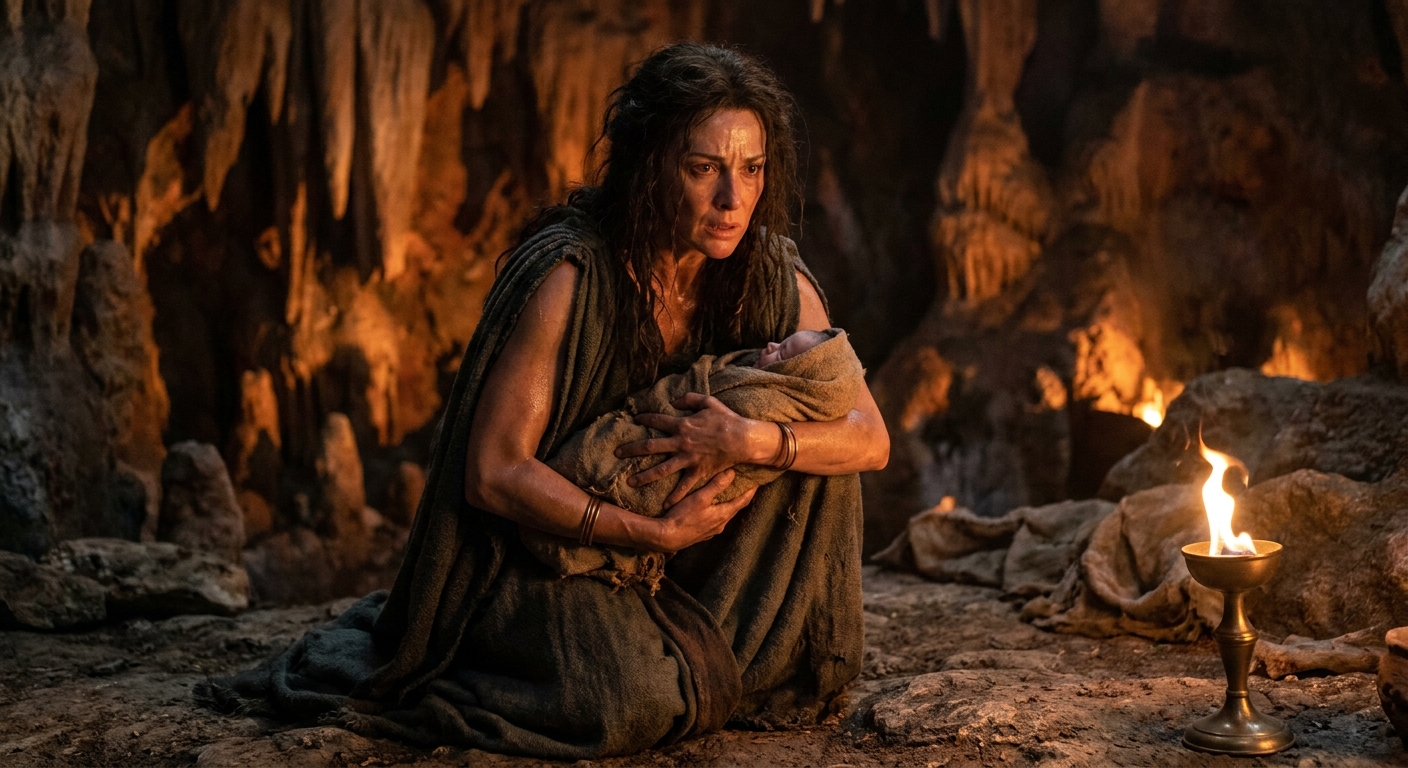
When Zeus is near, Rhea makes her move. She goes to Crete, a place myth loves because islands understand secrecy. Sea cliffs keep their own counsel. Caves swallow sound. Even the wind seems bribable.
And she does not plan alone. Gaia guides her, mother to mother, as if the earth itself cannot bear to watch another child vanish.
There, away from Cronus’s reach, she gives birth in hiding. The story lingers on the strangeness of it: a newborn god concealed in a cave, protected by the island itself, as if Crete has agreed to become an accomplice.
Zeus is fed on goat’s milk, a detail that always feels almost insulting in its simplicity. The future king of Olympus, nurtured not by jeweled ambrosia but by the milk of an animal and the stubbornness of a mother who refuses to lose one more child.
The rock that becomes a weapon
Rhea’s most famous tool is not a sword or spell. It is a stone.
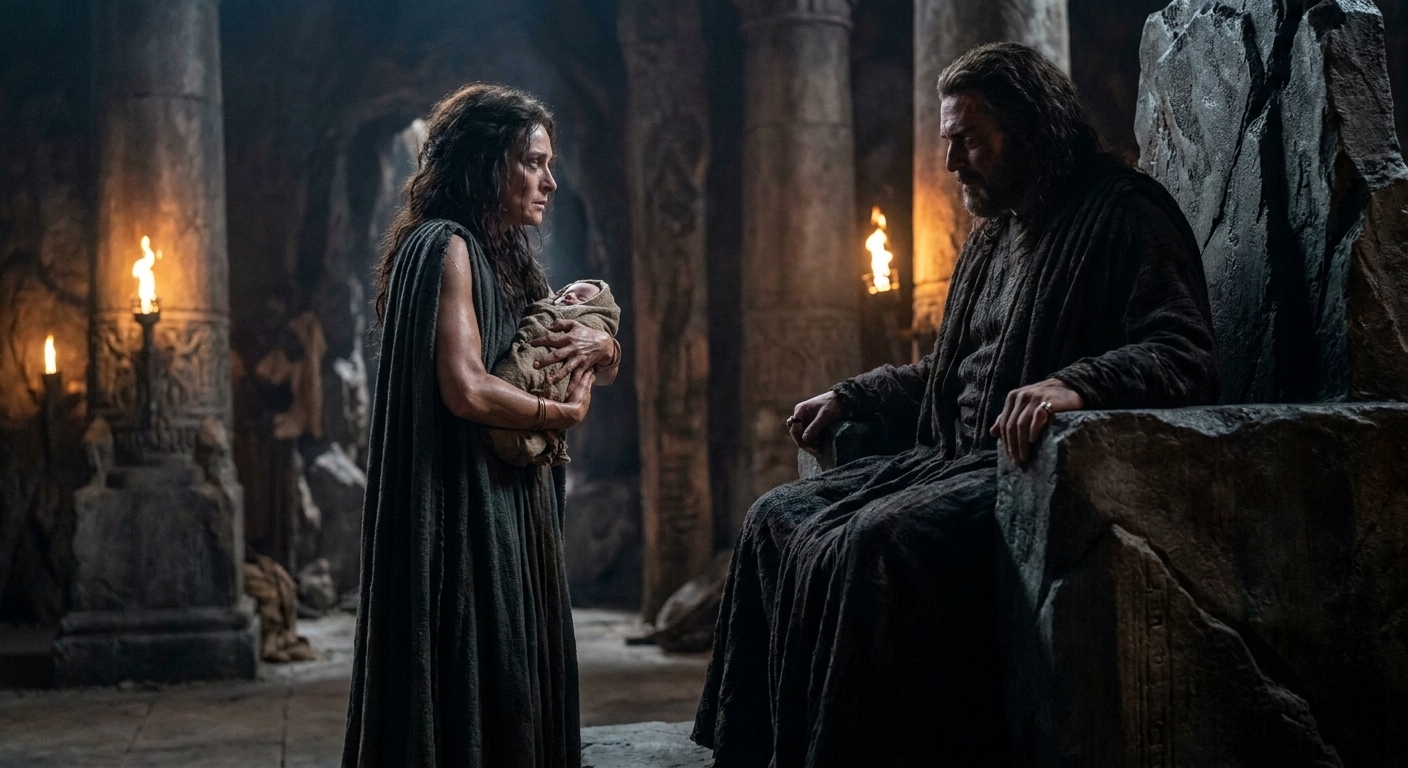
She wraps a rock in baby clothes, crafting a decoy with the kind of care that hurts to imagine. It is not just deception. It is performance. She must make it believable to a god whose entire life is paranoia.
Then she returns to Cronus and offers the bundle like a dutiful wife would. Cronus does what he has trained himself to do: he swallows without hesitation.
In that moment, Rhea stops being only the woman things happen to. She becomes the hinge the whole cosmos turns on.
Zeus grows in secret
Years pass. Zeus matures on Crete, out of sight, out of Cronus’s stomach, out of the claustrophobic tyranny that swallowed his siblings.
And the prophecy keeps its patient pace.
Myths love to frame Zeus’s rise as inevitable, but inevitability is often just another word for a long preparation. His survival is the opening. Everything that follows is the consequence.
The overthrow and the disgorging
When the reckoning comes, Zeus does not arrive alone. He comes with allies, with the gathering force of a rebel court, with the future pressing against the old order’s locked doors.
The struggle is cosmic, loud with power. Zeus wields his lightning, the signature violence that will brand him into every century that follows.
But one of the most grisly turning points is not lightning at all. It is a potion, crafted by his consort, Metis.
The magic brew forces Cronus to disgorge what he has swallowed: first the stone, and then the siblings who vanished at birth. The story makes you picture it, whether you want to or not. Titan tyranny, undone by its own stomach.
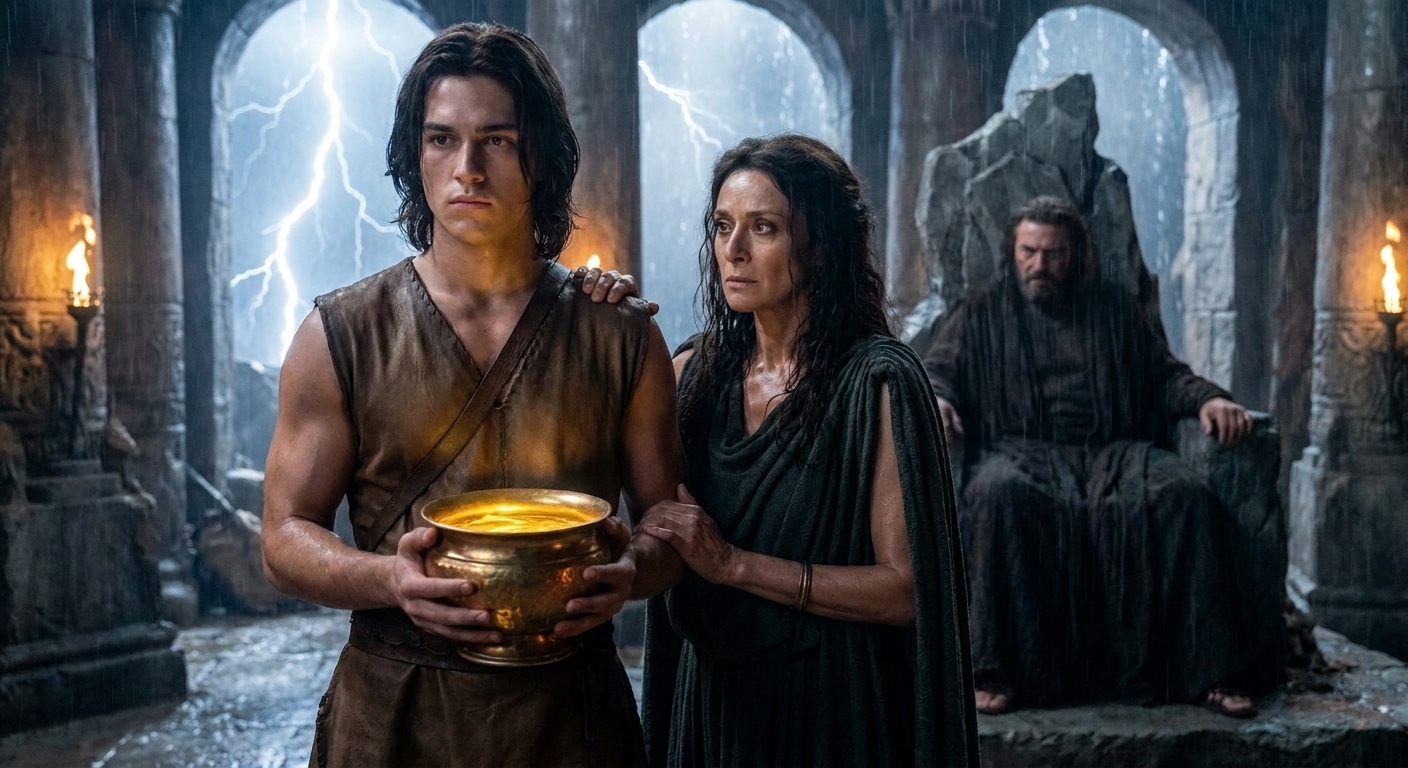
With his allies beside him, Zeus wins. Cronus is banished to Tartarus, the same deep prison that haunts this family tree like a recurring nightmare. The circle closes. The age of the Olympians begins.
Rhea’s legacy
It is tempting to reduce Rhea’s story to a sentimental slogan about a mother’s love. Love is there, yes, bright and furious.
But what saves Zeus is something sharper: decision. Rhea reads the pattern of her household and chooses to break it with the one tool Cronus never learned to fear.
He expects rebellion to look like an army on the horizon. Rhea makes it look like a newborn bundle in her arms.
Before Zeus is a thunderbolt, he is a secret. And before the secret, there is Rhea, holding the future and refusing to hand it over.
So if you ever wondered where Olympus truly begins, start not with the sky splitting open, but with a mother in a cave on Crete, swaddling a stone like a promise and a threat at the same time.