Pelops and the Rigged Chariot Race
Greek Mythology
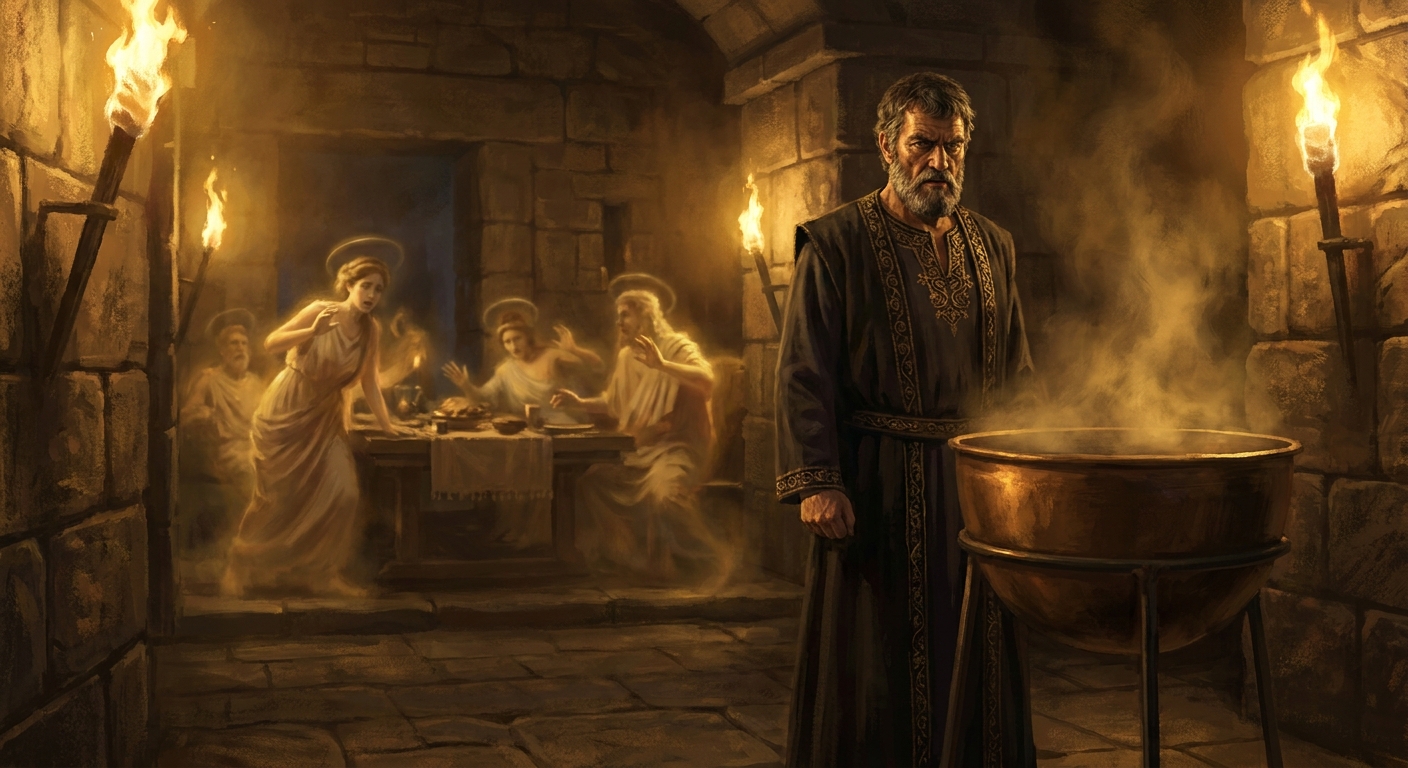
Some myths open on sea spray and heroic speeches. This one opens on a kitchen, and not the charming kind with olive oil and hearth-smoke curling like prayer.
Pelops begins as a child reduced to ingredients, because his father Tantalus decides to perform the most arrogant experiment imaginable: test the gods by feeding them the one thing that should have been untouchable.
There are crimes in Greek myth that do not end in punishment. They become the punishment, passed down like an heirloom no one asked to inherit.
The Pot That Should Have Stayed Empty
In the ancient moral universe, you can offend a god and sometimes survive it. You can even lie to a king and keep your head. But to violate kinship and guest-right is to tear holes in the fabric that holds society together.
Tantalus hosts a feast and serves the Olympians a stew made from his own son. The trick is meant to prove something about divine knowledge, as if omniscience is a party game and not a cosmic feature.
The gods recognize the horror and refuse to eat. All but one.
Demeter, fogged with grief over her missing daughter, falters. She consumes part of Pelops, specifically his shoulder. A small moment, and yet it lands like a stone dropped into a deep well. The ripples do not stop.

Stitched Back, Marked Forever
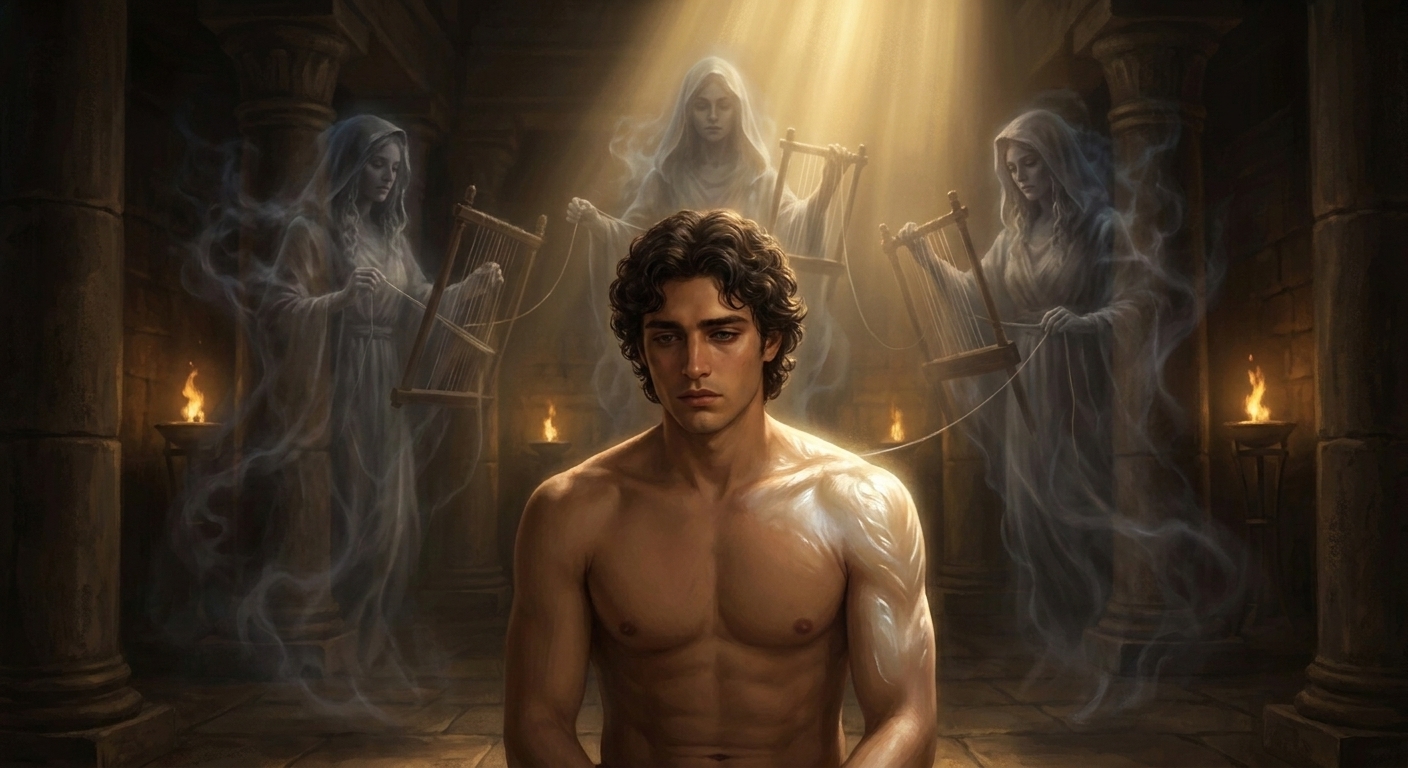
When the gods decide a boundary has been violated beyond tolerance, they respond with a kind of clean violence. Zeus intervenes and commands the Fates to restore Pelops, drawing him back together from the ruin of the cauldron.
But the myth does not allow a neat erasure. Pelops returns with a visible seam in his story.
The missing shoulder is replaced with ivory, crafted by Demeter. In one bright piece of impossible material, the myth fuses repair with confession. Pelops is made whole, yes, but now he is also unmistakably remembered.
And still, restoration does not grant him a soft life. Exile comes like weather in Greek myth, sudden and unquestioned. The boy with the ivory shoulder is pushed out of place, and like many heroes, he learns to treat ambition as a lifeboat.
Poseidon’s Favor (And Its Strings)
Enter Poseidon, sea-dark and glittering with danger. Pelops is pulled into the god’s orbit and becomes his companion and charioteer, close to power, close to speed, close to the kind of gifts that never arrive without a bill attached.
It is easy to romanticize divine attention in these stories. It feels like being chosen. But the gods do not choose like humans do. They choose like storms.
The Princess, the King, the Race
Eventually, Pelops sets his gaze on Hippodamia, the dazzling daughter of King Oenomaus. The price of her hand is not negotiation, not bridewealth, not vows spoken under garlands.
It is a chariot race.
This is not sport in the gentle sense. It is a public gamble with blood in the wheels, a contest where the road becomes a blade. Pelops needs victory to claim both a princess and a kingdom.
Pelops does not ask, “Can I win?” He asks, “What can I live with, if I must?”
Greek competition loves arete, excellence, and it loves honoring the gods. Pelops chooses a third rule that shows up whenever glory begins to stink: win by any means that leaves you breathing.
Wax Linchpins and the Quiet Birth of a Curse
Pelops cannot topple Oenomaus with speed alone. So he reaches for the oldest weapon in myth: a human weakness placed exactly where it will do the most damage.
Myrtilus, the king’s charioteer, becomes the hinge of the story. Pelops tempts him with promises that sound grand in the mouth and slippery in the soul.
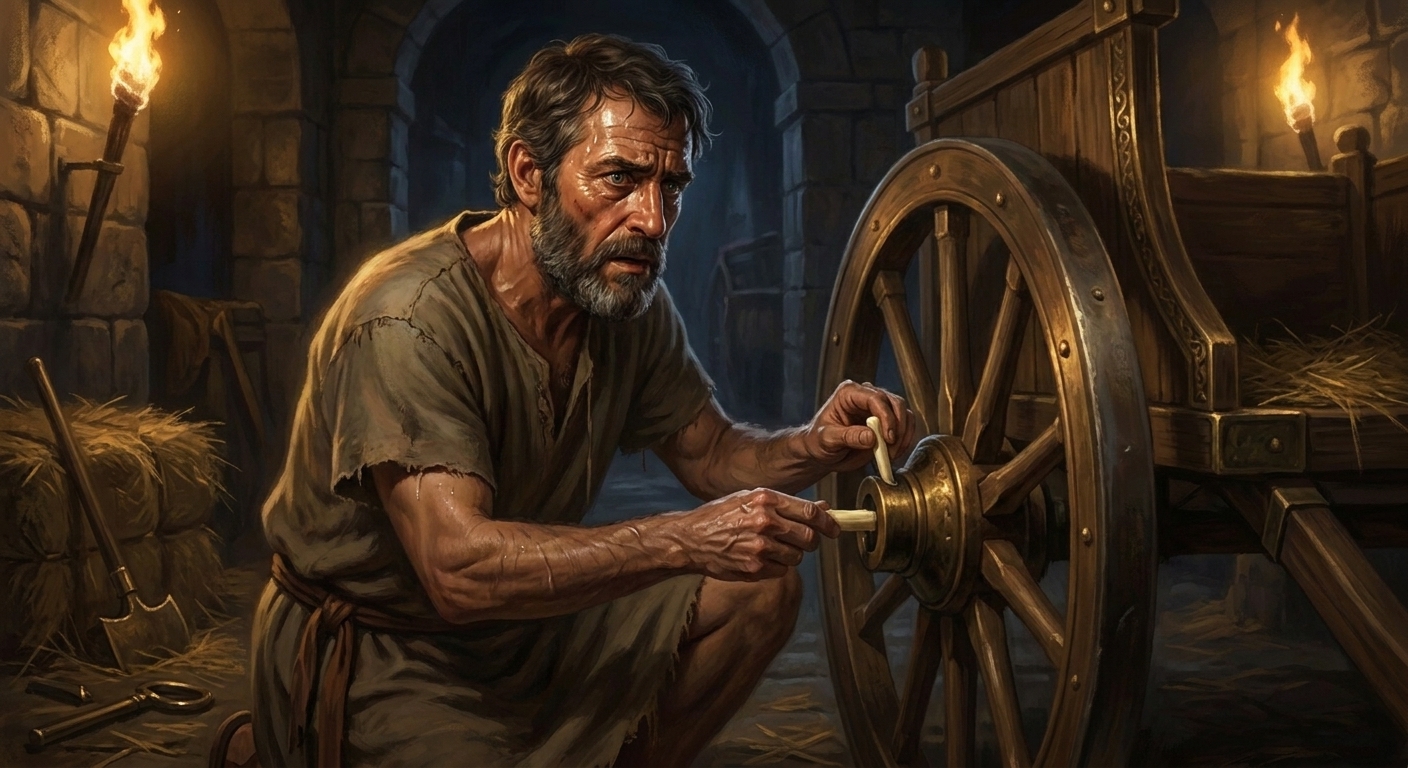
The sabotage is almost intimate in its simplicity. Myrtilus replaces the iron linchpins that secure the king’s chariot wheels with linchpins made of wax.
During the race, under heat and friction, the wax fails. Oenomaus’s chariot breaks apart. The king dies in the wreckage.
Pelops takes Hippodamia. Pelops takes the throne. He also takes the kind of victory that stains your palms even after you wash.
The Murdered Charioteer
Here is where the myth tightens its fist.
Myrtilus helped. Myrtilus made the king’s death possible. And like so many accomplices in royal stories, he becomes inconvenient the moment the crown settles comfortably on someone else’s head.
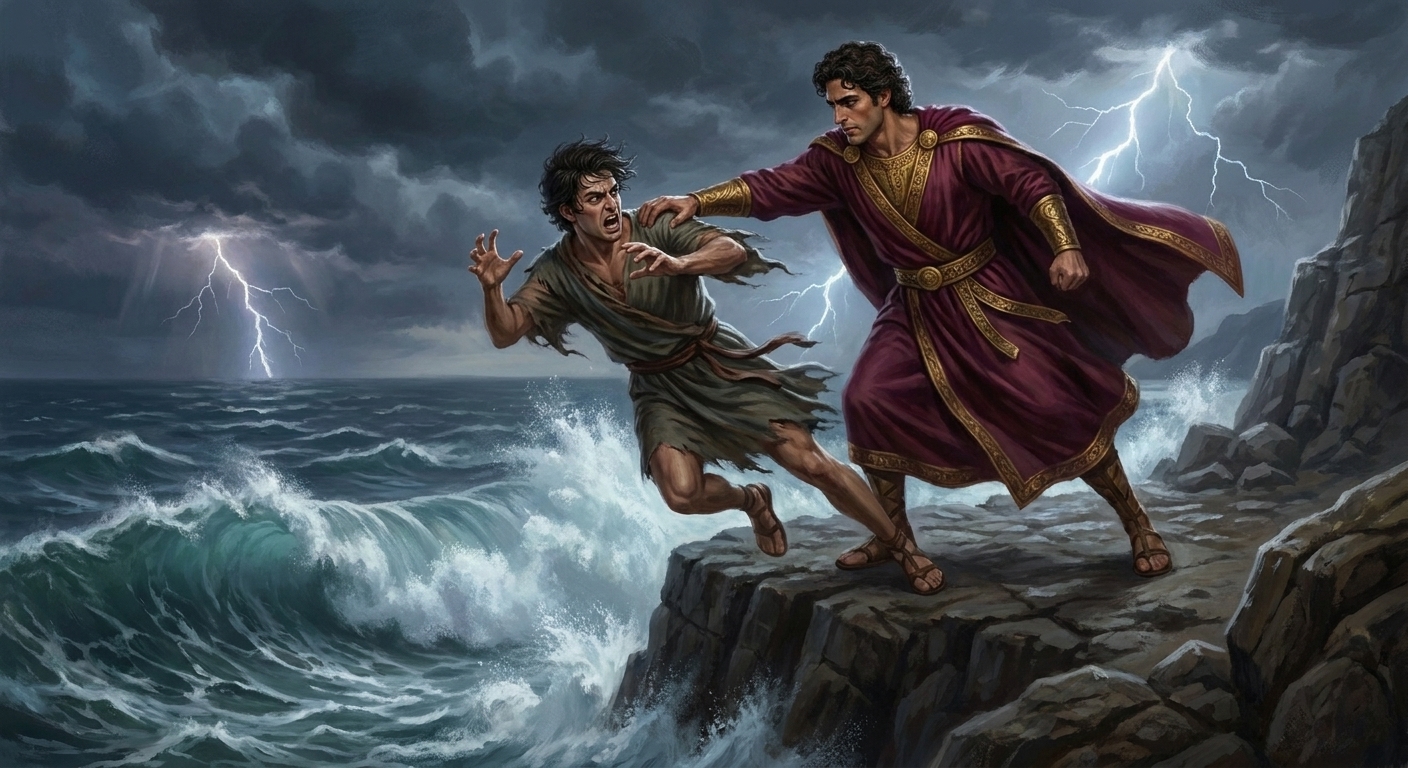
Pelops throws Myrtilus from a cliff into the sea.
The water below will be remembered as the Myrtoan Sea, because Greek myth does not simply kill people. It names the coastline after the body.
A promise breaks, and the crack runs through bloodlines like fire through dry laurel.
As he falls, Myrtilus unleashes a curse against Pelops and his descendants. Not a vague cloud of misfortune, but a spoken contagion meant to outlive the man who voiced it.
How a Dynasty Pays for One Rigged Victory
The House of Pelopidae becomes one of mythology’s most famous haunted families, not because the gods randomly picked them for suffering, but because the story builds its doom brick by brick.
First comes Tantalus’s atrocity, the family’s opening wound. Then comes Pelops’s bargain and betrayal. Then comes the curse of the man who fell into the sea still believing in a promise.
From this bloodline will come names that echo with disaster: Atreus, Thyestes, Agamemnon, Menelaus. Their stories are separate myths, yes. But they carry the same flavor. The same metallic aftertaste of consequence.
In this family, a feast is never just a feast. A marriage is never just a marriage. And a victory is never merely a victory.
Olympia, the Games, and the Glamour of Mourning
Even the aftermath becomes spectacle. After Oenomaus’s death and funeral rites, funerary games are held in his honor, commemorations that become the foundation for what later tradition remembers as the Olympic games.
It is perfectly Greek, and perfectly human: turning grief into pageantry, turning death into an arena where bodies gleam with sweat and ambition, where laurel crowns try to make meaning out of dust.
The Map Remembers: Myrtoan Sea and Peloponnesus
Pelops does not only leave a trail through family history. He leaves it on geography.
- The sea that receives Myrtilus becomes the Myrtoan Sea, a watery monument to betrayal.
- The southern region of Greece bears Pelops’s name: the Peloponnesus, the “Island of Pelops.”
Myth loves this kind of permanence. A murder becomes a coastline. A king becomes a festival. A curse becomes a family tradition, performed generation after generation, even when no one remembers who started it.
Why Pelops Still Feels Uncomfortably Modern
Pelops is easy to misread as a simple winner, a man clever enough to seize fate by the throat. But his story is not really about cleverness. It is about what happens when survival teaches you that rules are optional, and then power confirms it.
He is rebuilt by gods. He is favored by Poseidon. He is crowned by a rigged race. And yet none of it makes him safe from consequence.
The Greeks did not tell this story to reassure you that justice always arrives on time. They told it to warn you that broken sacred laws do not vanish. They sink into the foundation of a house, and then one day the whole dynasty starts to lean.