The Cretan Bull
Greek Mythology
There are myths that arrive like hymns, clean and ceremonial, all laurel and incense. And then there are myths that kick down the palace doors, drag silk across the floor, and leave hoofprints in the sanctuaries.
The story of the Cretan Bull belongs to the second kind. It begins as a divine favor, curdles into a royal lie, erupts into a bedroom scandal, and ends as the sort of monster problem that calls for heroes.

The Gift
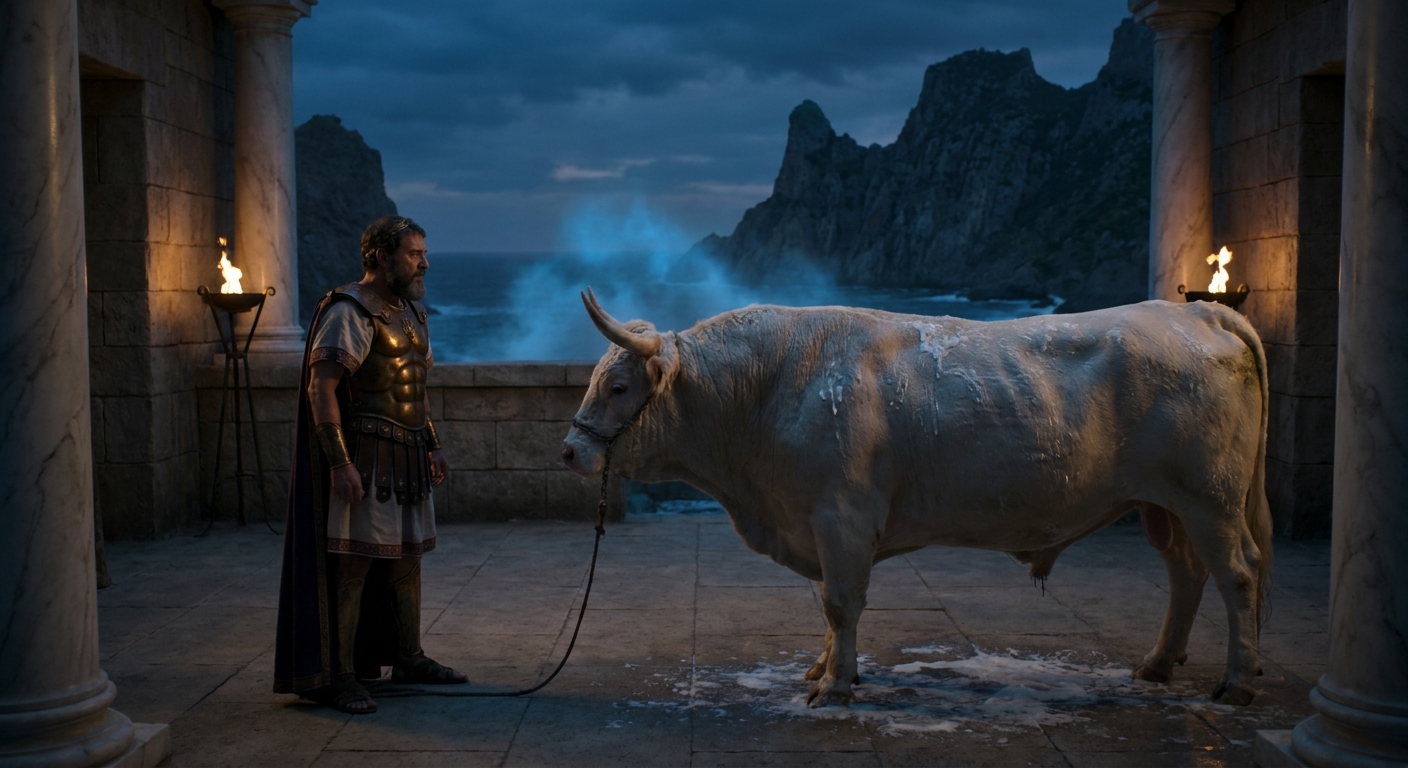
On Crete, where the sea is never just scenery, Poseidon sends a bull to King Minos. Not a farm animal, not a convenient symbol, but a creature that looks like it rose from the god’s own depths.
And with divine gifts, there is always an unspoken contract. The bull is meant to be a sacrifice, a clean exchange of wonder for temple smoke.
Minos sees the bull and chooses what no god forgets.
He decides to keep it.
In its place, he offers an ordinary bull, as if the sea-god will not notice the swap, as if reverence can be mimed with smaller offerings.
A bargain was made in saltwater and temple smoke. Minos tried to answer it with less.
The Punishment
Poseidon does not answer with a distant bolt or a tidy plague. The story reads his revenge as something sharper, something that turns a palace inward and makes it watch itself.
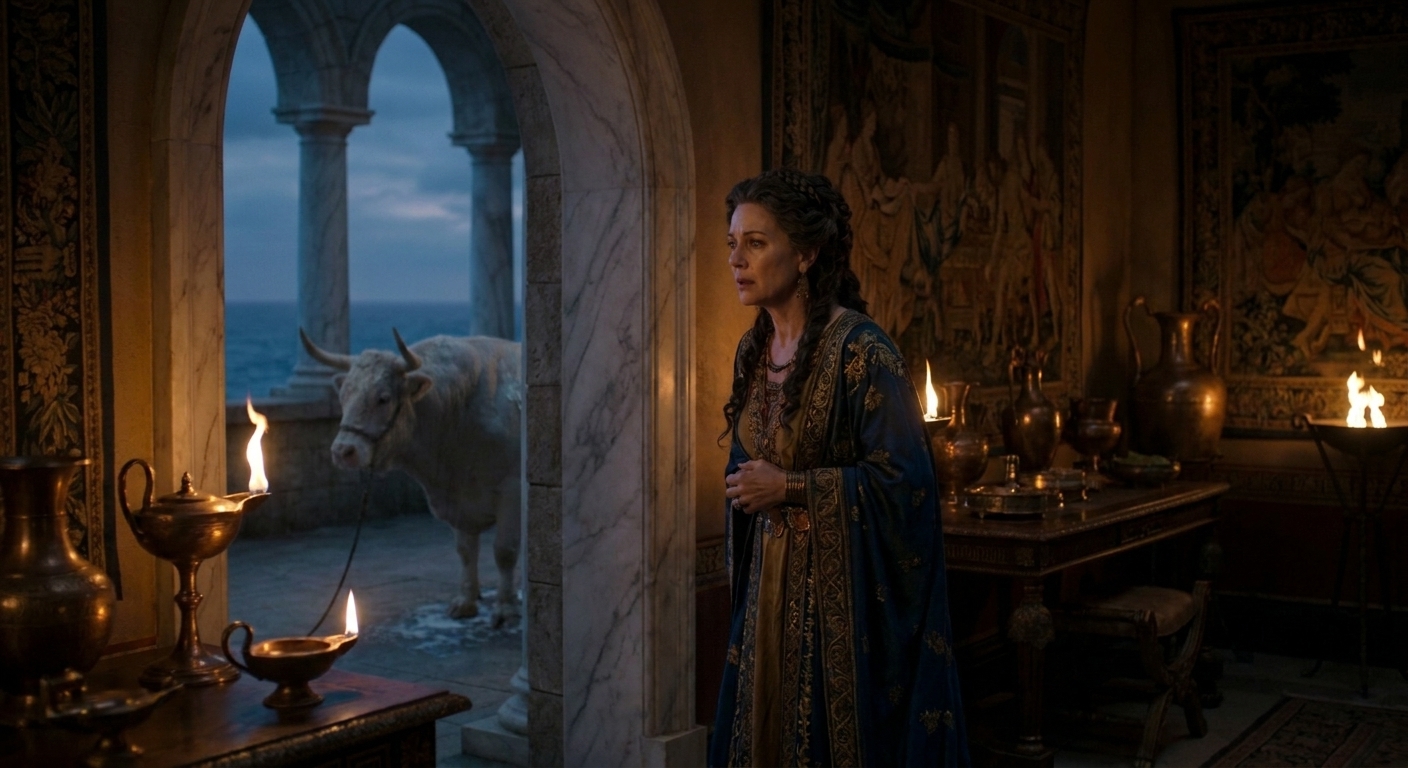
He enchants Queen Pasiphae to fall in love with the bull.
Suddenly the royal halls feel narrower. Veils become heavier. Every torch seems to burn too bright. The punishment is not only pain, but exposure, the kind that stains a dynasty’s name.
It is not scandal for its own sake. The myth invites a lesson in it: refuse the god’s terms, and the god can reach past the altar and into the laws of your home.
The Minotaur
The queen’s enchanted obsession does not fade like a fever dream. It becomes story. It becomes fate. And from this calamity comes the most infamous offspring in Cretan legend: the Minotaur.
Half bull and half man, the Minotaur is the myth’s cruel fusion of power into one nightmare shape. The bull is no longer just Poseidon’s warning. It is now a bloodline complication, a living riddle that will demand walls and secrets.
From here, the tale spirals into everything labyrinthine: corridors, sacrifices, and heroes brave enough to step into designed darkness and hope their names survive it.
A lie at the altar became a monster at home.
The Rampage
As if the palace calamity was not enough, the Cretan Bull refuses to remain a private symbol. It rampages across Crete in a violent stampede, thrashing through serene settings like a storm given hooves.
This is the bull as divine wrath made visible. Not merely random destruction, but a display of Poseidon’s might, a reminder that divine beings still hold the upper hand.
In Minoan and wider Greek imagination, the bull carries heavyweight meanings: power, fertility, and the dangerous beauty of forces no mortal rule can fully contain.
Heracles
Enter the hero with the shoulders of a mountain and a life shaped by ordeals: Heracles.
For his seventh labor, King Eurystheus orders him to capture the Cretan Bull. Not kill it, not wound it, but bring it back alive.
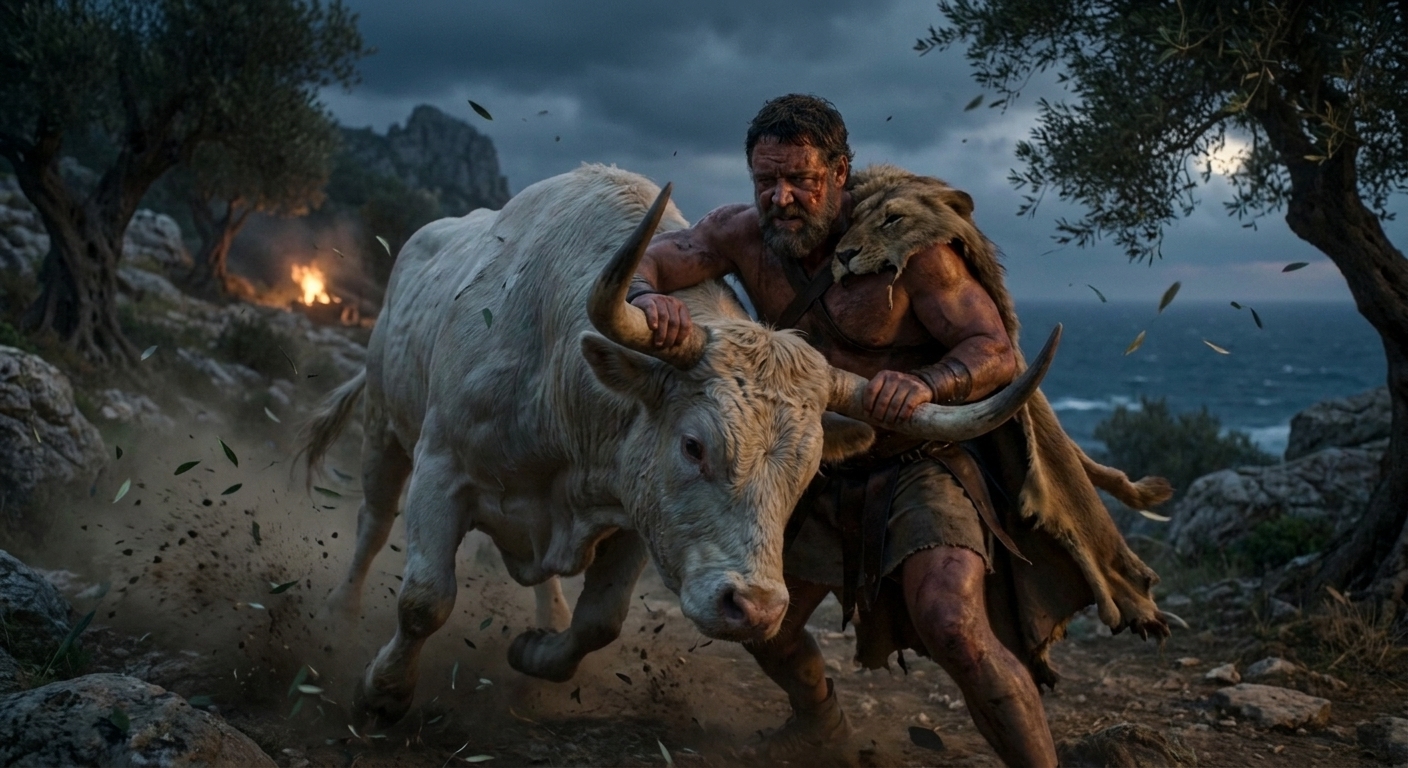
Heracles takes the beast by the horns and wrestles it into submission with divine strength. For a moment, it looks like muscle can pin down a message.
Heracles carts the god-infused bull back across the sea. Eurystheus, unwilling to keep such a disruptive creature, releases it.
Marathon
Freed, the bull does not vanish into convenient fog. It runs.
It makes its way to Marathon, where it resumes its terror, turning the countryside into a stage for panic. The trouble that began as Minos’ decision now travels, dragging the old offense behind it like a shadow.
By this point, the bull is more than a beast. It feels like consequence made tangible, hooves striking the ground like a reminder.
Theseus
Where Heracles is force made flesh, Theseus, the Athenian hero, arrives with a different kind of heroism, the kind that mixes courage with calculation.
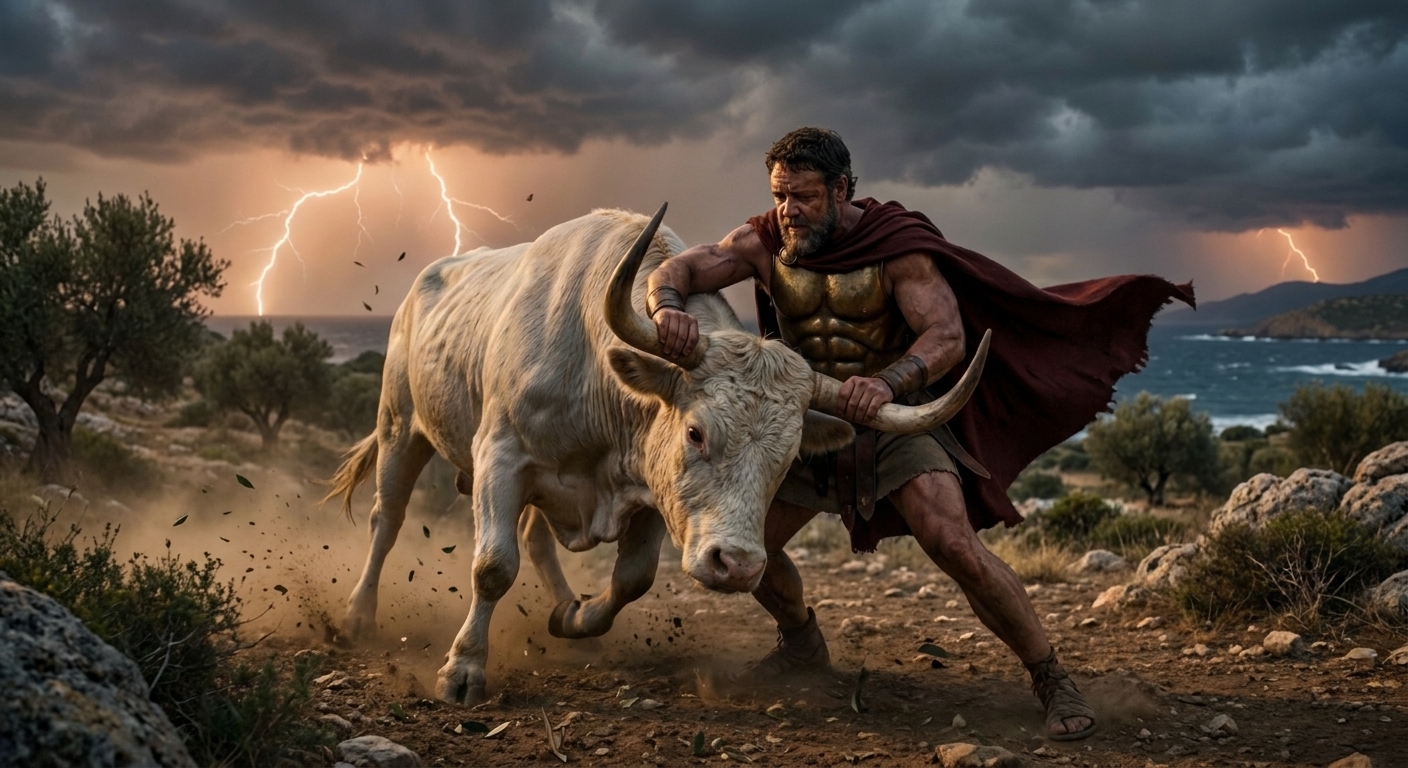
Theseus confronts the bull at Marathon and restrains it, ending its reign of terror in the countryside. The myth seems to favor a kind of symmetry: what began as a divine display is finally answered by a mortal’s steadiness.
And the victory still carries the larger Cretan shadow, because this bull is bound up with the Minotaur and the labyrinth-centered adventures that follow.
Legacy
The Cretan Bull refuses to remain only a plot device. Its story stamps itself into culture.
- It becomes a lasting symbol across Greek and Roman imagination, a shorthand for wild power, fertile abundance, and divine temper.
- It appears across ancient art, from pottery and frescoes to mosaics, returning again and again to the question of whether civilization can truly hold nature in place.
- Its myth reaches the night sky as Taurus, the constellation that makes the bull a permanent silhouette above human history.
Modern authors and screenwriters still draw from the bull’s labyrinthine legacy, reshaping the same old warning into new forms. The pattern endures: a leader takes a gift, refuses its cost, and then watches consequences grow horns.
Quick Map
- Poseidon sends a majestic bull to Minos, meant for sacrifice.
- Minos lies and sacrifices an ordinary bull instead.
- Poseidon punishes the house by enchanting Pasiphae to love the bull.
- The scandal leads to the birth of the Minotaur and the later labyrinth-centered saga.
- The bull rampages, then is captured as Heracles’ seventh labor, released, and later terrorizes Marathon.
- Theseus restrains the bull and ends its havoc.