Theseus Myths: Labyrinth, Kingdom, Betrayal
Greek Mythology
Theseus is the hero Athens wanted to be true, and the hero Athens could never quite justify. He arrives dressed in civic virtue and lionhearted swagger, then leaves fingerprints all over the city’s moral furniture. If Heracles is brute force with a prayer attached, Theseus is politics in a bronze breastplate, the kind of man who can slay a monster at dawn and talk the city into a new shape by dusk.
But the myths refuse to make him clean. They make him luminous, and then they make him guilty. His cycle is not one neat legend but a chain of recognitions, oaths, weddings, sails, and doorways that should have stayed shut.

Tokens Under the Stone
Every Athenian hero story begins with a problem of legitimacy. Theseus is born to Aethra at Troezen, with a father story that refuses to be singular. In many traditions, the father is Aegeus, king of Athens. In others, it is Poseidon, because the sea has always wanted a claim on important men.
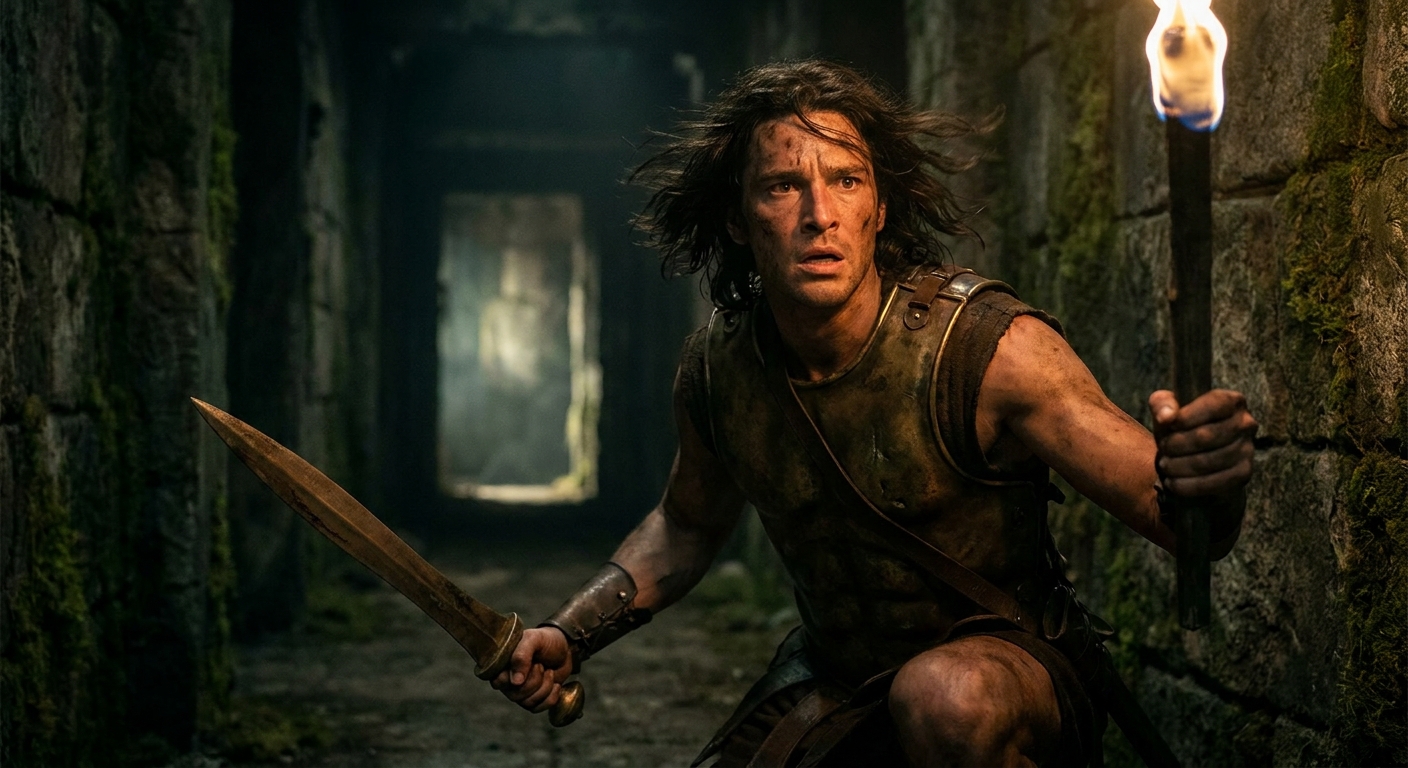
Aegeus, anxious about heirs and omens, leaves behind a test like a sealed prophecy: a sword and sandals hidden beneath a heavy stone. When the boy is strong enough to lift it, he can take the tokens and go to Athens to be recognized. It is a paternity test written in mythic grammar: strength, proof, and the dangerous right to belong.
A hero’s life begins the moment he can lift the stone that kept him safely unknown.
He chooses the hard road to Athens, the overland route haunted by bandits and local terrors. This is where Theseus starts to feel like an Athenian answer to Heracles: not merely surviving chaos, but organizing it. He meets criminals who kill by a signature method and gives them their own medicine, a grim symmetry the Greeks loved: Periphetes and the club, Sinis and the bent pines, Sciron and the cliff, Procrustes and the bed that punishes bodies for failing to fit.
Justice, in these stories, is not gentle. It is theatrical.
Athens Takes Him In
In Athens, recognition is never purely domestic. It is political theater with poison in the wings. Theseus arrives at the court of Aegeus and collides with Medea, who in some later accounts is now Aegeus’s wife, carrying her own history of exile, sorcery, and survival.
She sees what he is immediately: a rival to any child she might secure, a threat to the story she is trying to write. The myth often places a poisoned cup in her hands, and a last-second recognition in Aegeus’s eyes when he sees the sword that should not exist unless the boy is his.
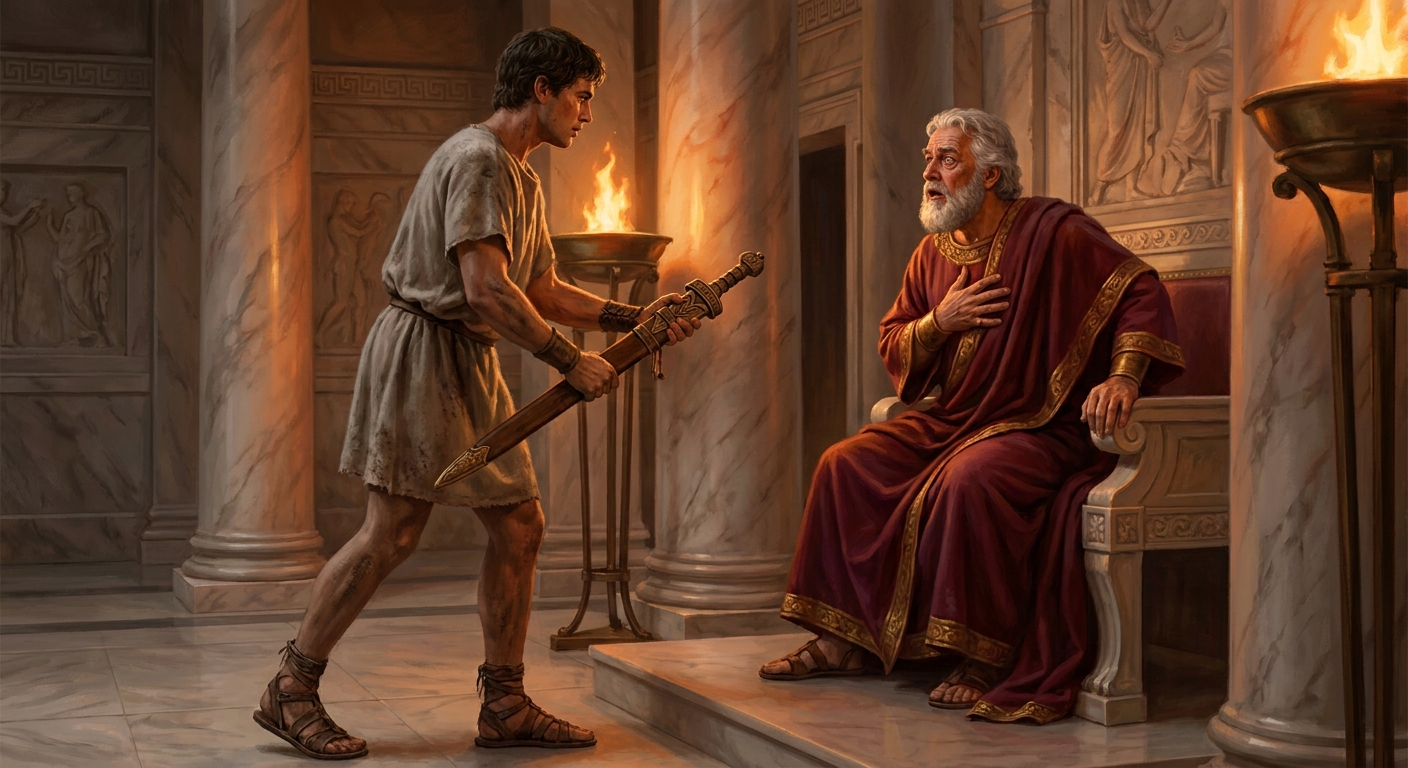
The hero is accepted. The household crisis is averted. The city gains a prince.
And then comes the matter that makes Theseus inevitable.
Crete and the Maze
The tribute to Minos of Crete hangs over Athens like a storm that never quite breaks. The versions differ, but the shape is consistent: Athens owes young lives to Crete, and the debt is paid in human fear. The reason is tied to Aegean politics and tragedy, to deaths and insults and the kind of interstate grudges that myth turns into ritual.
Theseus volunteers to go with the doomed youths, which is either noble sacrifice or a clean opportunity to become unforgettable. In Crete, the story tightens around its most famous icons: Ariadne, the king’s daughter with love in her hands, and the Minotaur, a monster born from a broken divine bargain, when Minos fails to repay Poseidon what he was owed and the punishment turns inward.
Ariadne gives Theseus the advantage that turns heroism into victory: the famous thread, often called Ariadne’s clew. Sometimes it is a ball of wool. Sometimes it is a more intimate promise, a pact made in moonlit corridors where palace stone smells like sea salt and sacrificial smoke.
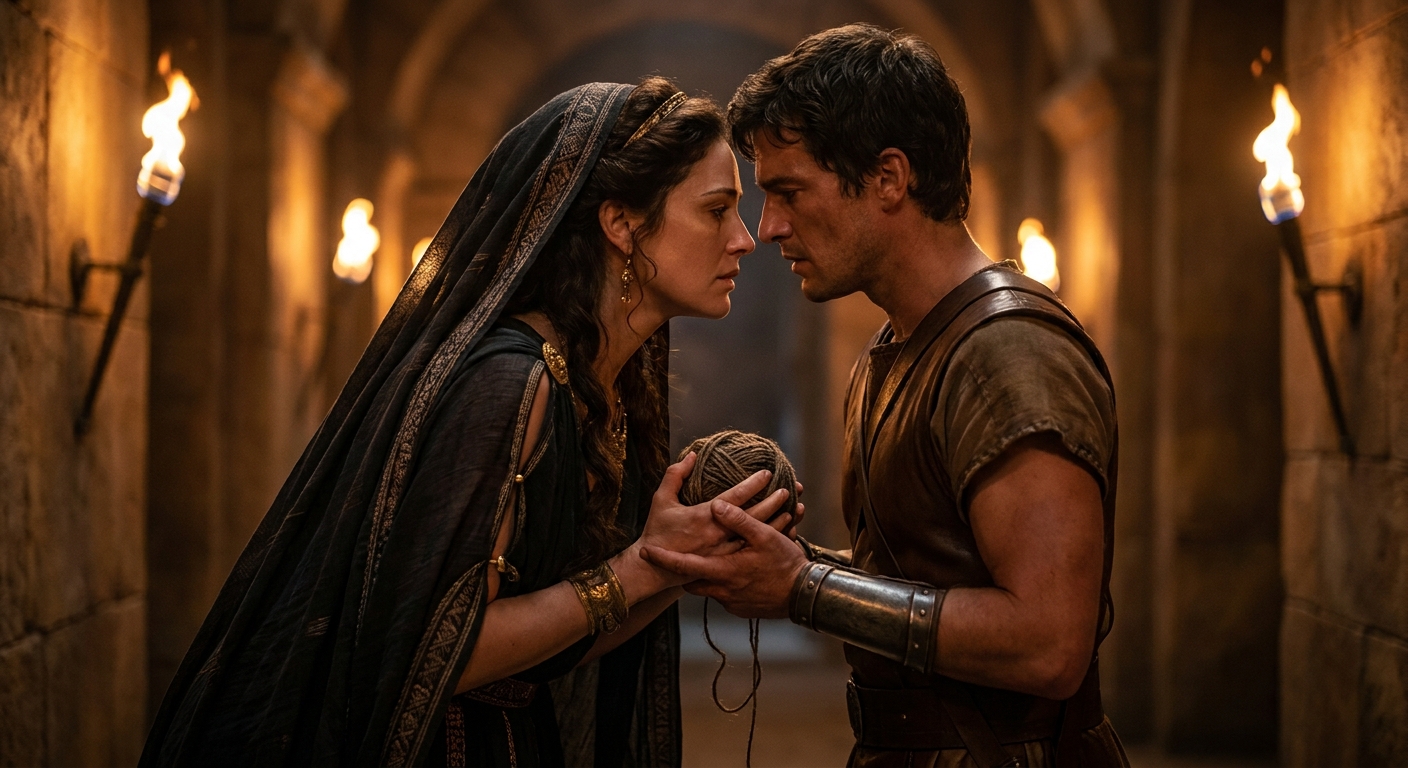
Theseus enters the Labyrinth and kills the Minotaur. The Greeks rarely linger on the mechanics. The point is the reversal: the city that has been paying tribute now has a man who can end it.
They flee Crete. Victory has the taste of salt wind. And then the myth takes its first truly personal bite.
Ariadne Left Behind
There are abandonments that read like accidents, and abandonments that feel like character. Theseus leaves Ariadne on Naxos, and the traditions argue over why. Sometimes he forgets. Sometimes he chooses. Sometimes a god intervenes, because the gods have always been jealous of human romances that start to look like destiny.
In many tellings, Dionysus takes Ariadne as his bride, and her human heartbreak is rerouted into divine elevation. That does not make Theseus innocent. It makes the world larger, and colder. In this story, love is either a ladder or a trapdoor, and Ariadne is the one who learns it first.
The thread got him out of the Labyrinth. It did not get her out of the story.
And then comes the sail.
The Black Sails
Before Theseus leaves for Crete, he makes a bargain with his father: if he survives, he will return with white sails instead of black, a signal to keep Aegeus’s heart from breaking in advance. It is a small logistical detail, which is exactly why it is fatal. Greek tragedy loves a hinge that looks like nothing.
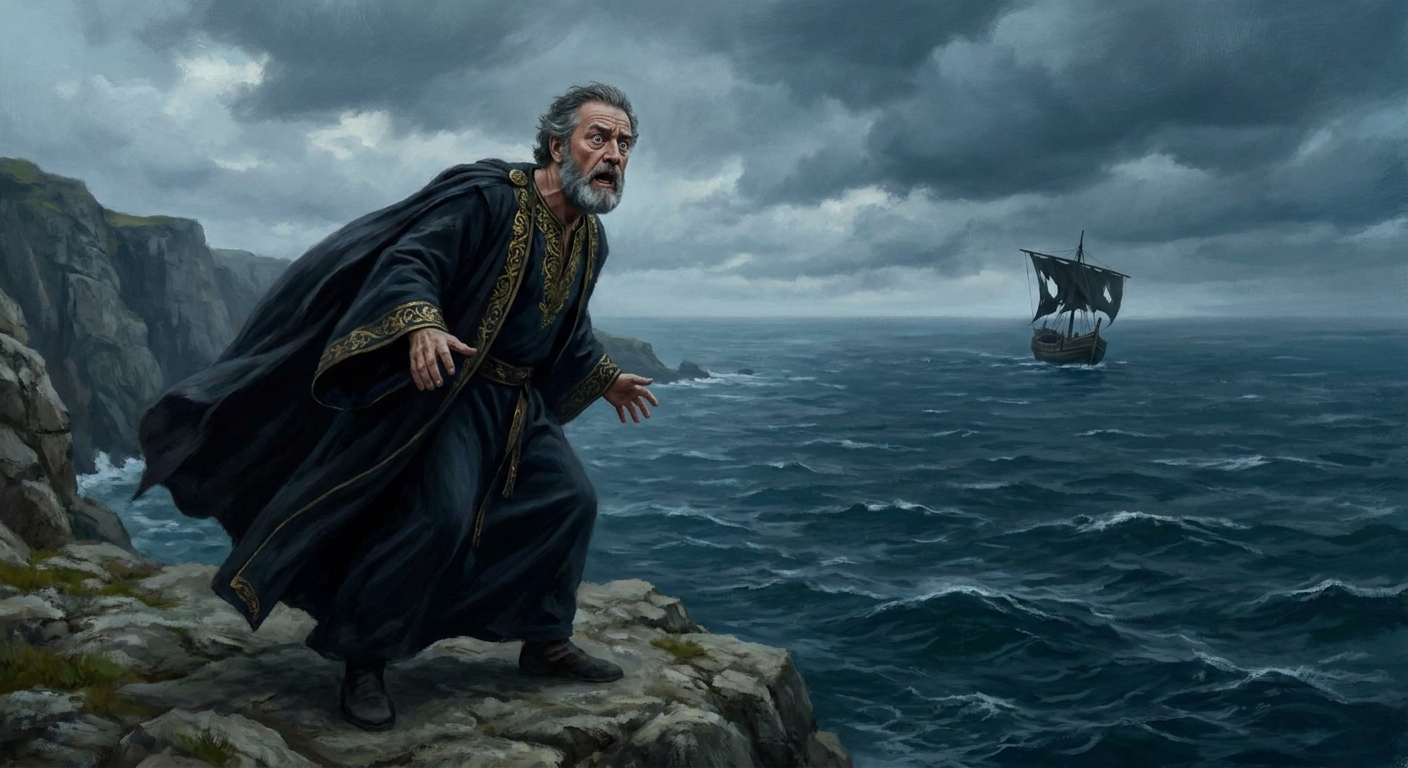
Theseus returns alive, but the sails remain dark. Aegeus sees them from the cliffs and throws himself into the sea that will bear his name: the Aegean. The hero saves the city and kills his father anyway, with an absence, a lapse, a failure of care.
King of One Athens
After Aegeus’s death, Theseus takes his place as a ruler, and this is where myth starts serving civic identity. Later Athenian civic tradition credits Theseus with the synoikismos, the unification of Attica’s scattered communities into a single political body centered on Athens.
Whether we treat this as literal mythic history or as a back-projected explanation for Athenian power, the idea matters. Theseus is not only a monster-slayer. He is a city-maker. In festivals like the Synoikia (also called Synoecia), Athens could celebrate itself through him: the hero who takes a landscape of rival villages and turns it into one name, one center, one story.
It is an elegant myth, and also a warning. Unification always asks who gets to be the center. Heroes do not found cities with clean hands.
The Amazon Bride
Somewhere in Theseus’s orbit, women become trophies, alliances, casualties, or all three at once. His most famous martial romance is the Amazon episode: his union with an Amazon queen, named variously Antiope or Hippolyta depending on the source tradition.
The myths disagree on how she comes to Athens. Was she abducted during an expedition associated with Heracles? Did she come willingly and fall into a complicated peace? Myth keeps its options open, as if even it cannot decide whether to frame Theseus as romantic, predatory, or simply imperial.
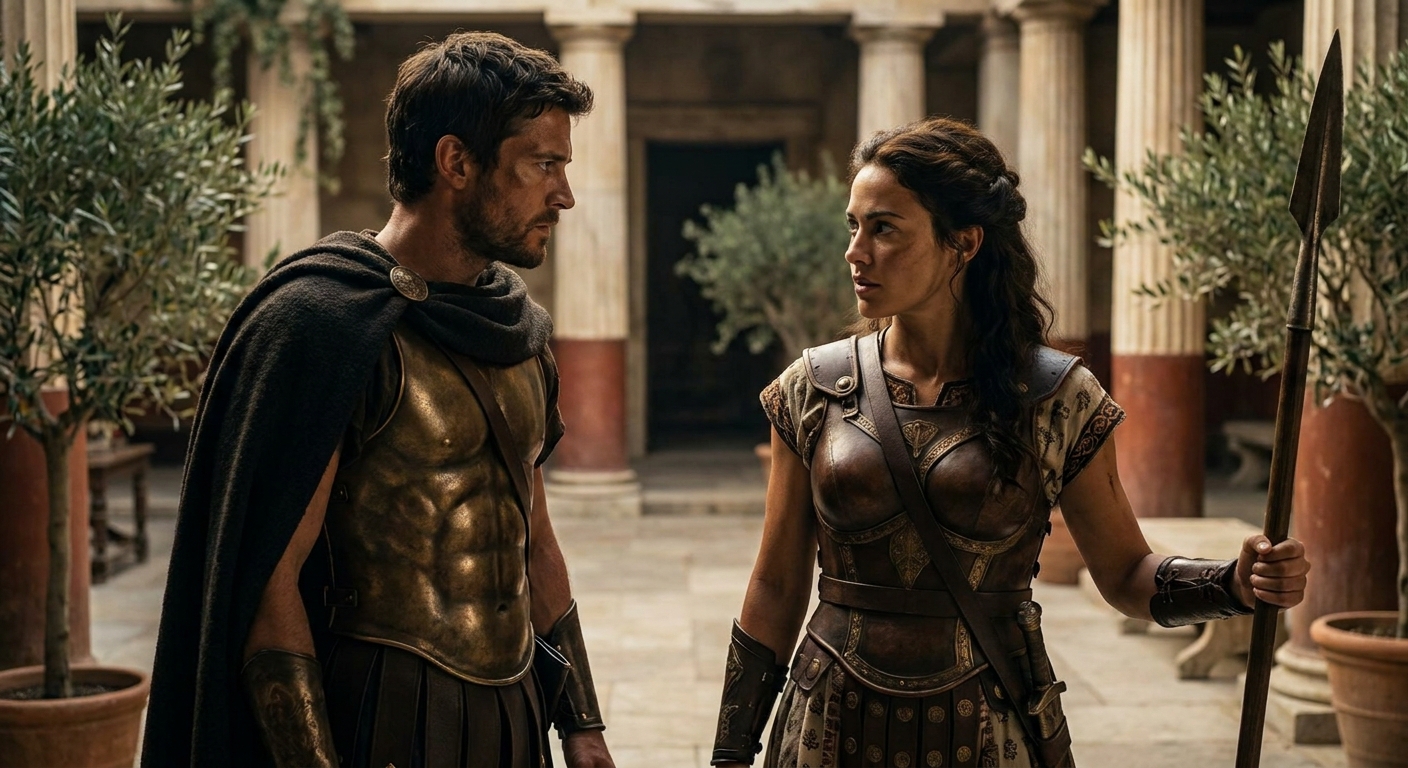
The relationship culminates in conflict: the Amazonomachy, the Amazon war against Athens, a mythic battle scene Athens loved to carve into stone because it flattered the city’s self-image. Even when Theseus marries the outsider, the story insists that the outsider must eventually be fought, disciplined, or replaced.
And replaced she is. Theseus later marries Phaedra, sister of Ariadne, because this myth cycle enjoys a family circle that tightens like a noose.
Phaedra and Hippolytus
If the Minotaur episode is Theseus at his most cinematic, the Phaedra episode is Theseus at his most ruinous. Phaedra falls in love with Hippolytus, Theseus’s son. The reasons and the machinery vary, but the classical pattern is familiar: divine influence in some versions, human desire in all versions, and the resulting catastrophe.
Hippolytus is tied to Artemis, to chastity, to the cold brightness of boundaries. Phaedra’s desire becomes accusation. Theseus believes the accusation, and he uses power like a curse. In many tellings, he calls on Poseidon to punish his son, and the punishment arrives from the sea, because Poseidon never forgets who owes him.
In Theseus’s house, the worst monster is the sentence a father cannot take back.
The result is the death of Hippolytus and the collapse of Phaedra. It is the civic hero’s private disaster, and it stains him. Athens gains institutions. Theseus loses his ability to be trusted with the hearts nearest to him.
Pirithous Below
Theseus’s closest friendship is with Pirithous, a bond myth treats as intoxicating and reckless. Together they chase glory with the hungry impatience of men who survived their own legends and decided that survival proves invincibility.
They attempt to seize women as if fate itself is a marriage market. They abduct Helen while she is still young in many versions of the story, a detail later Greeks already found troubling, and which modern readers should not romanticize. The myths often pivot quickly away from the uglier implications, but the moral stench remains. Heroism, here, is entitlement wearing a laurel wreath.
Then they go one step further, the step that turns arrogance into a cosmic joke. Pirithous wants Persephone as a bride. So the two heroes descend into the Underworld as if it is merely another palace to raid.
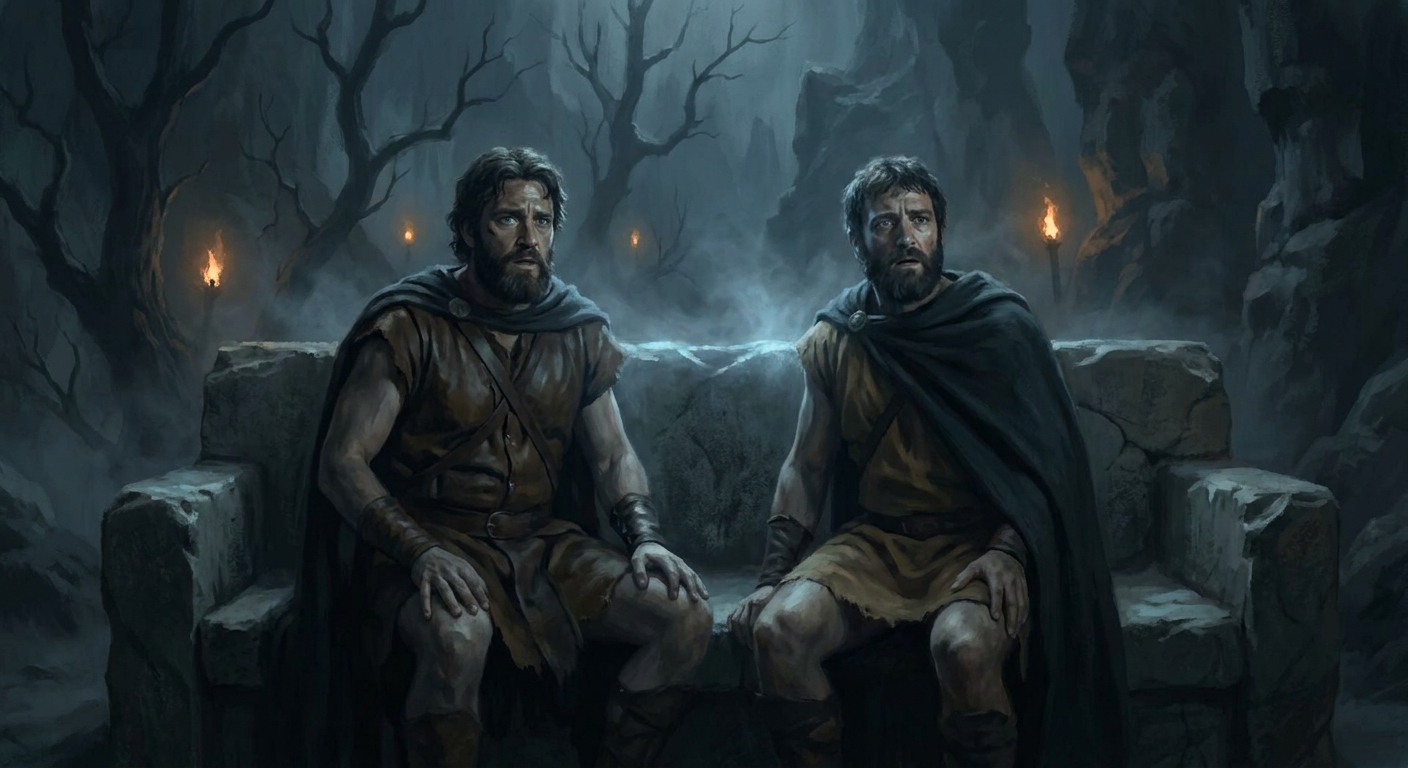
Hades receives them with hospitality that is really a snare. They are fixed to a seat, held fast by the logic of the dead. In some accounts, Heracles later rescues Theseus during his own descent, but cannot free Pirithous. The Underworld keeps the one who asked for its queen.
Theseus returns to daylight with an extra layer of failure clinging to him, like ash that will not wash off.
Skyros
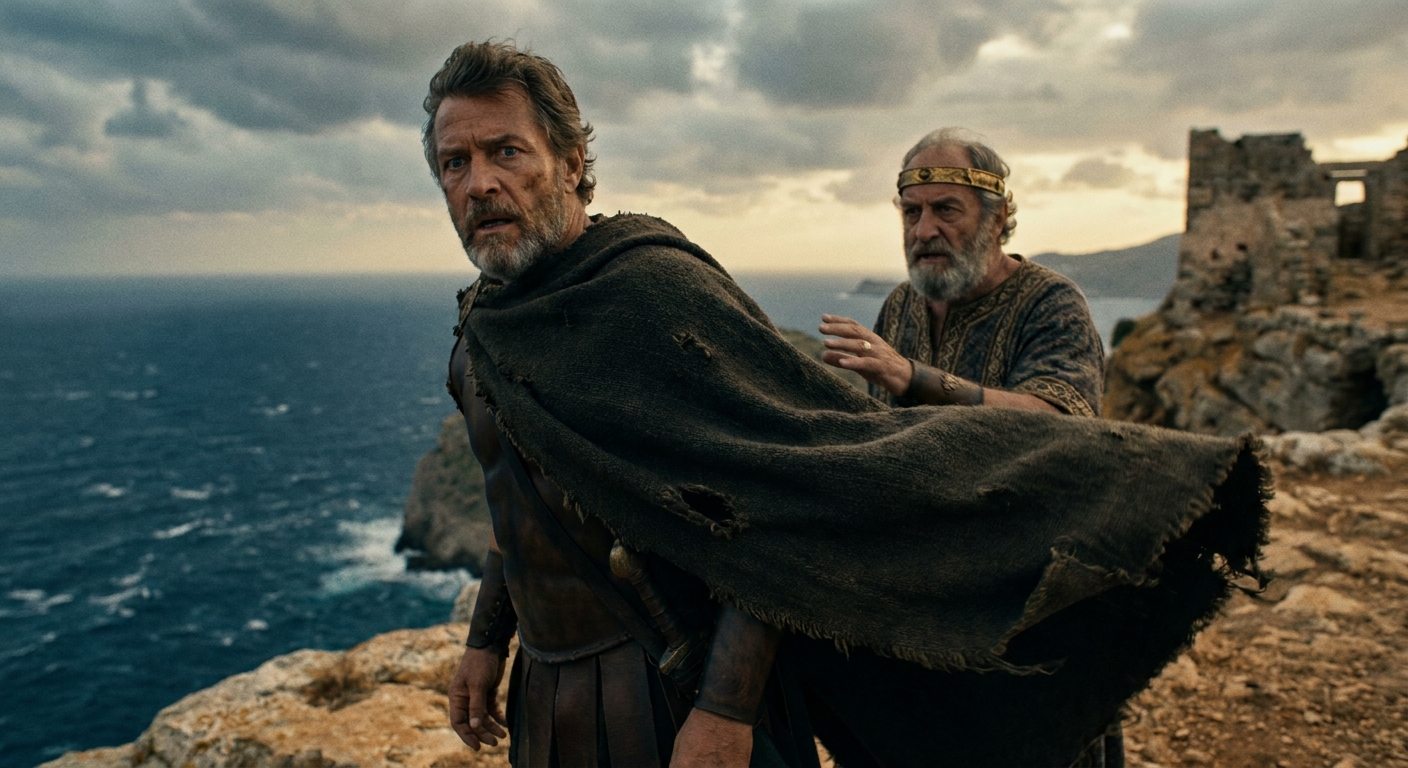
Theseus’s end is not a clean heroic sunset. It is exile, suspicion, and an island with cliffs. After political troubles in Athens, he flees to Skyros and seeks refuge with King Lycomedes. The welcome turns sharp. In some accounts, Lycomedes fears Theseus or envies him. In others, it is simply convenient to remove a displaced legend.
Theseus is pushed, or falls, from a cliff. The man who navigated the Labyrinth cannot navigate court politics forever. He dies not in a monster’s jaws, but in the ugly quiet of human calculation.
Why He Still Cuts
Theseus survives because he is not a comfort. He is a mirror Athens held up to itself: brave, clever, ambitious, capable of unification, and capable of betrayal with the same steady hand.
He is the hero who kills the Minotaur, then abandons the woman who made the victory possible. The king whom later civic tradition crowns as unifier, then fractures his own household. The friend who follows Pirithous into the Underworld, then returns to daylight alone. Greek myth does not punish him once and call it morality. It lets consequences accumulate until his name feels heavy.
And that is why he remains so mythically modern. Theseus is what happens when a city chooses a hero who can do the job, and then spends centuries pretending the job did not cost anyone anything.