Persephone’s Pomegranate
Greek Mythology
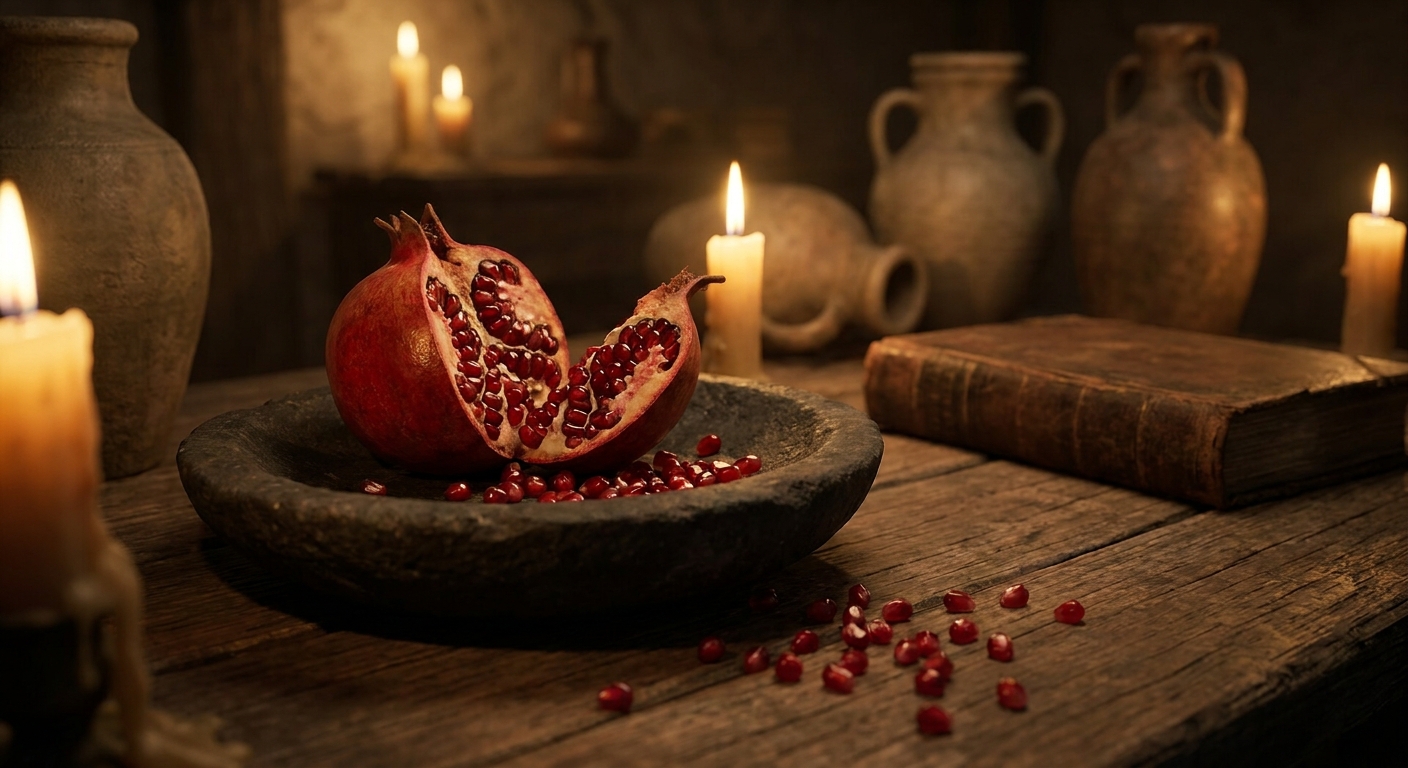
The pomegranate is a small, jeweled thing. Split it open and it bleeds rubies. In Greek myth, that is exactly the problem.
Because Persephone does not simply eat in the Underworld. She takes something in. She touches a rule older than sympathy, older than Zeus’ authority, older than Demeter’s grief. One bite and the rescue story becomes a custody arrangement.

If you have ever wondered why ancient storytellers made the turning point of the season hinge on a piece of fruit, the answer is deliciously grim. The pomegranate matters because it is about belonging. In the Underworld, what you consume is what consumes you back.
The myth in one awful arc
Persephone, daughter of Demeter, is gathering flowers when the earth splits. Hades rises like a thought you tried not to think and carries her down to his realm. Demeter’s grief becomes ecological. Crops fail. Human beings starve. The gods, for once, notice the collateral damage.
Zeus negotiates. Hades agrees to let Persephone go. Hermes, the messenger and escort, is sent to fetch her back to the living world.
And then comes the pomegranate.
Somewhere between decree and departure, Persephone eats pomegranate seed in the Underworld. In many versions Hades offers it. In some, he tricks her. In others, Persephone eats with a more complicated agency, less a victim and more a girl waking up inside the machinery of divine marriage.
Either way, the result is consistent. Because she has eaten the food of the dead, she cannot fully leave. The compromise is seasonal: Persephone will spend part of the year above with Demeter, part below with Hades. The world blooms when she returns and withers when she descends.
Underworld rules of eating
Greek myth treats the Underworld like a place with its own jurisdiction. You can enter by force, accident, love, or catastrophe. Leaving is harder. Leaving after you have eaten is hardest of all.
This is less a written statute than a recurring mythic logic: to consume a realm’s food is to accept that realm’s terms. In the Greek imagination, food is not just nourishment. It is kinship, hospitality, allegiance.
So the pomegranate seed functions like a binding clause. Not a courtroom contract, but a sacred one.
- Food is belonging: if you eat there, you are of there.
- Hospitality has teeth: accepting a gift can obligate you, even when the giver is a god with terrible manners.
- The Underworld is sticky: it does not need chains when it has customs.
This is why the myth feels so inevitable. Zeus can order. Demeter can rage. Hermes can escort. But the Underworld’s logic still applies.
Why a pomegranate
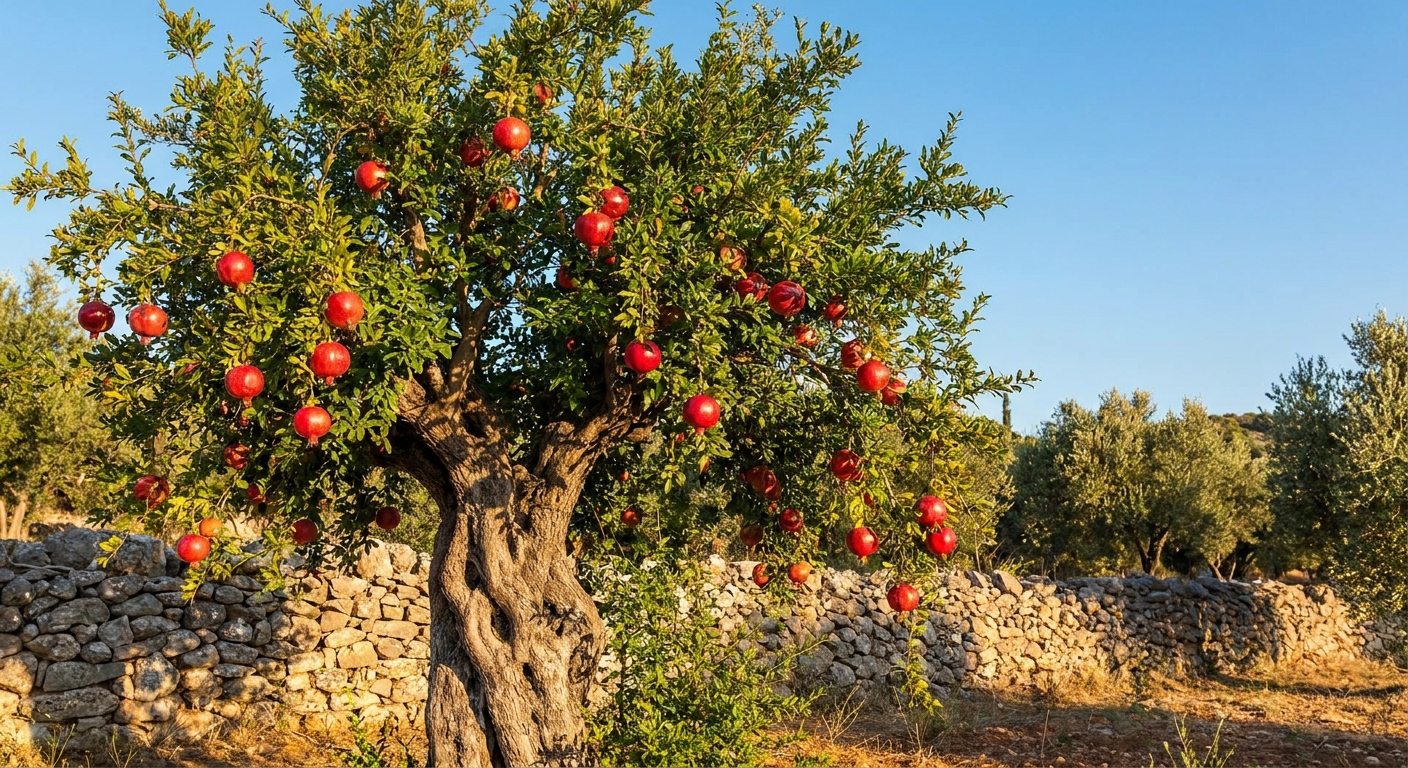
The pomegranate is not random scenery. It is one of the most symbol-heavy fruits in the ancient Mediterranean. It shows up in cult practice, marriage imagery, and funerary contexts. It belongs, fittingly, to the two most scandalously connected territories in Greek thought: sex and death.
1) Fertility and marriage
Cut a pomegranate open and it is an entire universe of seeds. It is easy to see why it became a symbol of fertility and abundance. In Greek contexts, pomegranates appear in associations with marriage and female sexuality, especially in connection with Hera (famously, in Argive iconography) and sometimes Aphrodite in later art and literary traditions.
In Persephone’s story, the fruit becomes a marriage token with an edge. This is not a bouquet. This is a binding to a household, a bed, a realm.
2) Death, blood, and beauty with teeth
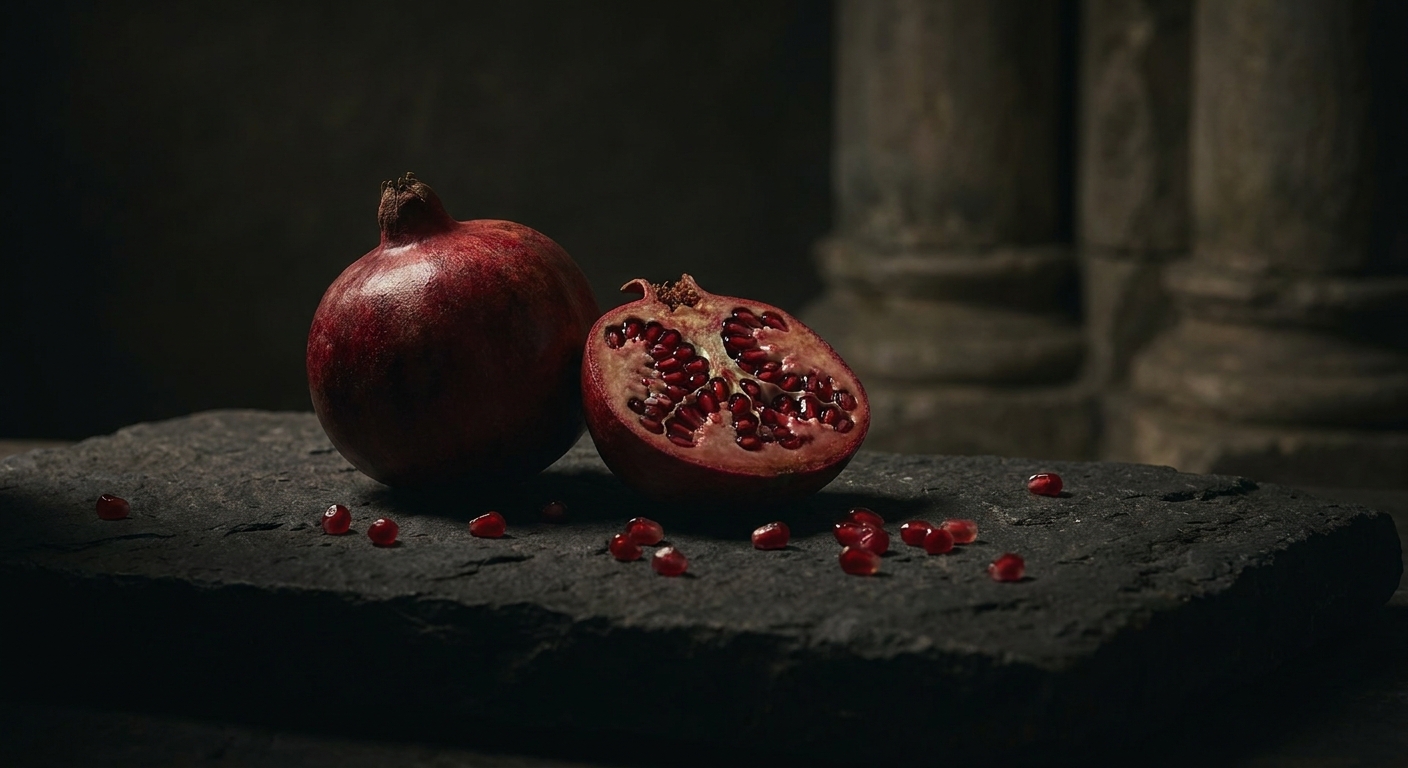
The pomegranate’s color does not whisper. It announces. The seeds look like blood droplets that decided to become gemstones. Ancient myth loves this kind of visual poetry: the gorgeous thing that is also a warning.
Persephone is a goddess of spring, yes, but she is also a queen of the dead. The pomegranate sits perfectly between those identities. It is fertility wearing the color of mortality.
3) A threshold fruit
Pomegranates are liminal. They are contained worlds, many inside one, hidden behind a rind. Persephone is also liminal: maiden and queen, daughter and wife, above and below. The fruit is the physical symbol of her new double life.
How many seeds
This is where mythology does what it does best: it refuses to be pinned down.
In the Homeric Hymn to Demeter, the moment is razor-thin: Persephone is given a single, honey-sweet pomegranate seed before she is brought back. That one seed is enough to make her return conditional.
Later tellings multiply what the Hymn keeps small. Ovid, in Metamorphoses, famously specifies seven seeds. Many modern retellings settle on six, neatly mapped onto a six-and-six split of the year. Other traditions give different counts, including four, which can echo a Mediterranean rhythm where the Underworld portion is closer to one-third of the year, about four months, rather than an even half.
What matters more than the math is the logic: even one seed changes the contract.
The seed count is a mythic dial that storytellers adjust depending on what they want to emphasize:
- Symmetry: a clean division of the year.
- Climate: shorter or longer seasons depending on local experience.
- Drama: a small taste with enormous consequences.
In other words, the pomegranate is not a calendar first. It is a trapdoor.
Trick or choice
Ancient myths rarely give us a single clear moral reading, and Persephone’s myth is especially slippery. Some tellings frame Persephone as deceived, with Hades forcing the seed upon her or engineering the moment.
Other readings, especially in modern scholarship and literary retellings, linger on a more unsettling possibility: Persephone eats because she understands, at least instinctively, that she cannot return unchanged. Eating becomes a kind of acceptance, or a claim to power within captivity.
In the Homeric Hymn, there is also a witness: Ascalaphus, an Underworld figure who reports that Persephone ate the seed, the tattler who makes secrecy impossible. The fruit binds her, yes, but the speaking of it seals the consequence.
Both interpretations exist because the myth is built from old layers. It has the bones of an agricultural explanation, the skin of a marriage story, and the shadow of a ritual narrative that was never meant to be fully spoken aloud.
In Greek myth, a girl can be taken. But a queen is made the moment she is bound to a realm.
Demeter and the seasons
Yes, the pomegranate helps explain why the earth goes barren and then returns. But the emotional engine is Demeter.
Demeter is not a gentle background goddess. She is grain, harvest, bread. Her sorrow is not poetic. It is famine. When Persephone is gone, Demeter withdraws her gifts. The pomegranate makes the loss cyclical rather than final.
That is the myth’s brutal compromise:
- Demeter does not get her daughter back completely.
- Hades does not keep Persephone entirely.
- Humanity pays for divine family drama with winter.
And Persephone becomes the hinge between worlds, the reason the year has a pulse.

Eleusis and sacred echoes
Persephone and Demeter were not just characters in a story. They were at the center of one of the most important religious traditions in ancient Greece: the Eleusinian Mysteries, secret rites held at Eleusis that promised initiates a deeper hope regarding death.
Because the Mysteries were sworn to secrecy, we do not have a neat script. But we do know the myth of Demeter and Persephone formed their emotional and symbolic core: descent, loss, searching, reunion, and the possibility that death is not simply a slammed door.
We cannot securely point to the pomegranate as a documented ritual element inside the Mysteries. Still, as a symbol within the myth, it resonates with what the rites circle around: the threshold between life and death, and the strange idea that what is eaten, buried, and hidden can return.
Why it still feels personal
The pomegranate matters because it is painfully relatable, even when gods are involved.
It is the story of one irreversible moment. A single choice, a single trap, a single taste that changes the shape of your life. Persephone cannot go back to being only Demeter’s daughter, only a springtime girl in a field. After the pomegranate, she has two names in her mouth at once: Kore and Queen.
And if that sounds like coming of age, it is because myths are not subtle about the costs of becoming someone new.
What the seeds mean
- Bond: a tie that cannot be argued away.
- Desire: the dangerous beauty of what we are curious to taste.
- Transformation: innocence to knowledge, daughter to ruler.
- Cycles: absence and return, grief and renewal.
Persephone’s pomegranate is not just an Underworld snack. It is the reason the myth hurts. It is also the reason it endures.
Quick questions
Is the pomegranate in early versions
The pomegranate detail is most famously preserved in the Homeric Hymn to Demeter, one of our key early sources for the myth, where Persephone is given a honey-sweet pomegranate seed before leaving. Later poets and artists expand, embellish, and sometimes reorganize the emphasis, but the seed remains the story’s signature.
Why does eating matter so much
Because Greek myth often treats abduction as an act of force that can be contested by higher force, while eating functions as participation in a realm’s order. The seed makes Persephone’s connection to the Underworld metaphysical, not just physical.
Is Persephone a victim or a queen
Both. That is the point, and it is why she remains one of mythology’s most magnetic figures. Greek stories love a woman who survives transformation and comes out with a crown.