Greek Mythology’s Most Dramatic Love Stories
Greek Mythology
Greek mythology does not do casual romance. It does omens. It does jealous deities with long memories. It does love that starts in moonlit orchards and ends with a constellation, a laurel tree, or a polite but irrevocable curse.
These are the love stories that feel like they were written to echo across stone temples and stormy seas, the ones where desire is never just desire. It is bargaining power. It is a weapon. It is the kind of devotion that makes even immortals look briefly, embarrassingly human.
A quick note before we dive in: what we call “Greek myth” reaches us through a long relay of storytellers. Homeric hymns, Athenian tragedians, later poets, and Roman authors all leave fingerprints on the versions we remember. The result is a shared classical myth-world, messy with variants, and louder for it.

Persephone and Hades
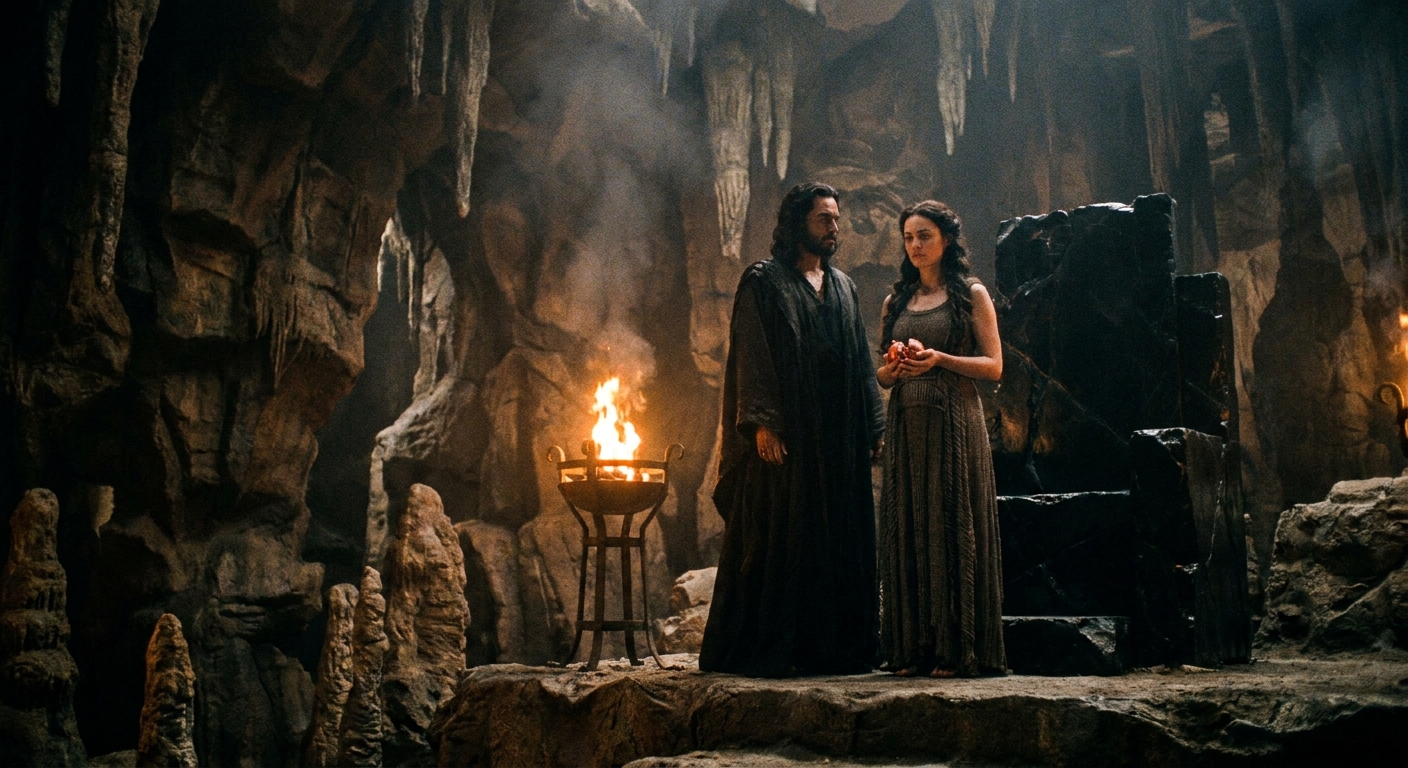
Let us start with the romance that launched a thousand uncomfortable dinner conversations: Persephone and Hades. In the most familiar version, Hades abducts Persephone from a meadow, splitting her life into a before and after. Her mother Demeter’s grief poisons the earth with famine, and suddenly the love story is also an agricultural crisis.
It is tempting to flatten this myth into a simple villain and victim. Ancient sources are messier. In the Homeric Hymn to Demeter, Persephone is taken, Demeter rages, and Zeus negotiates, because Olympus always prefers diplomacy after the damage. Persephone’s famous pomegranate seeds become the binding mechanism that tethers her to the Underworld for part of the year. Love here is not gentle. It is conditional. It is seasonal. It comes with terms.
Why it is so dramatic
- It is a marriage that rearranges the cosmos. The world’s fertility hinges on one girl’s divided residence.
- It is a story of power. Zeus authorizes. Hades claims. Demeter refuses. Persephone adapts.
- It is a myth that never stops evolving. Later retellings sometimes emphasize Persephone’s agency and her growth into a queen who belongs to shadow as much as spring.
Orpheus and Eurydice
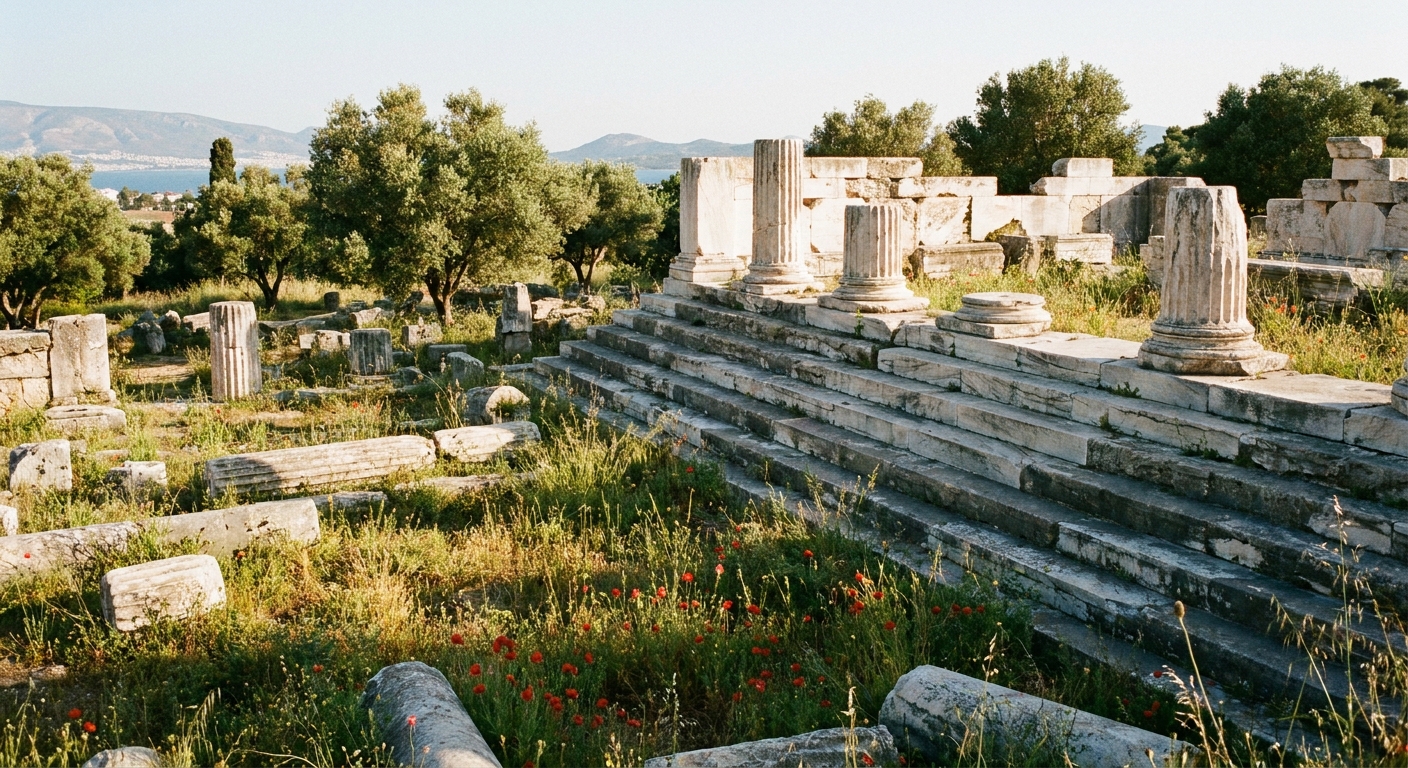
If you have ever tried not to look back at a mistake, you already understand this myth. Orpheus and Eurydice is the love story that turns one small human impulse into catastrophe.
Eurydice dies abruptly, often by snakebite, and Orpheus does the unthinkable. He walks into the Underworld armed with nothing but music and grief. His song softens Hades and Persephone, those notoriously unsoftened monarchs, and he is granted a bargain: Eurydice may follow him back to the living world, but he must not look back until they reach the surface.
He looks back. Of course he does. Love can be brave and still be anxious. Eurydice vanishes, and the second loss is worse because it is his.
Why it is so dramatic
- The Underworld says yes, then punishes a glance. The gods do not have to be cruel. They simply are.
- It is romantic and humiliating at once. He wins her with art, then loses her with doubt.
- It makes tragedy feel intimate. No war, no monster. Just one moment of human weakness.

Eros and Psyche
Eros and Psyche is the myth that proves Aphrodite is never more dangerous than when she is offended. The story is best known from Apuleius’ Roman-era Metamorphoses, but it is steeped in Greek gods, Greek motifs, and that very Greek obsession with tests that remake you.
Psyche, a mortal princess, is so stunning that people begin giving her the kind of attention that belongs to a goddess. Aphrodite responds like a celebrity with an excellent publicist and terrible coping skills: she orders her son Eros to make Psyche fall in love with someone monstrous.
Instead, Eros falls for Psyche himself. He hides her in a secret palace and visits only at night, refusing to let her see his face. It is romantic in a candlelit, breathless way until Psyche’s curiosity and her sisters’ manipulation push her to break the rule. She lights a lamp, sees her divine husband, and a drop of hot oil wakes him. Trust fractures. The punishment begins.
Psyche endures tasks set by Aphrodite that read like a divine obstacle course: sorting seeds, gathering deadly wool, fetching water from impossible heights, and traveling to the Underworld for a box of Persephone’s beauty. Eventually, Psyche is granted immortality, love is legalized, and Aphrodite, begrudgingly, learns to share the spotlight.
Why it is so dramatic
- It is a romance built on secrecy. The rules are seductive, and also doomed.
- It has a rare arc of earned happiness. Psyche suffers, transforms, and is elevated.
- It is a love story where the villain is a mother-in-law. Ancient, eternal, and painfully relatable.

Apollo and Daphne
This one is less a romance and more a cautionary tale about what happens when gods treat desire like sport. Apollo and Daphne begins with Apollo mocking Eros, because arrogance is Apollo’s occasional hobby. Eros, understandably irritated, shoots Apollo with an arrow of love and Daphne with an arrow of aversion.
Apollo becomes obsessed. Daphne runs. The chase is relentless, and the landscape itself seems to tighten around her like a closing net. At the brink of capture, Daphne calls to her father, the river god Peneus, and is transformed into a laurel tree. Apollo, still burning, claims the laurel as his sacred plant. He cannot have her, so he sanctifies the symbol of losing her.
It is beautiful. It is terrible. It is the mythic version of turning rejection into a monument.
Why it is so dramatic
- Love is a curse, not a gift. The arrows make desire feel like possession.
- Transformation becomes escape. The body itself changes to survive.
- Apollo’s victory is hollow. His trophy is a tree, and it is still a refusal.

Jason and Medea
If you want a love story that begins with divine interference and ends with the kind of fallout that stains whole dynasties, you want Jason and Medea. Jason arrives in Colchis as a stranger with a mission, chasing the Golden Fleece like it is a solution instead of an omen. Medea is a princess, a sorceress, and a young woman caught in the blast radius of gods who treat desire as a tool.
Aphrodite and Eros ignite her love for Jason, and it hits like a spell because, in a way, it is. Medea betrays her father, uses her magic to help Jason survive impossible trials, and flees her homeland for him. She is not a side character in his heroism. She is the engine of it.
And then Jason, safely celebrated, does what respectability often demands of men in myths. He trades Medea for a more convenient bride. The aftermath, told most famously in Euripides, is catastrophic. Medea’s love curdles into vengeance so extreme it still unsettles modern readers, which is exactly the point. In these stories, “romance” can sit uncomfortably close to coercion, abandonment, and raw survival.
Why it is so dramatic
- It turns love into exile. Medea gives up home, family, and future for him.
- It makes betrayal feel political. Jason chooses status. Medea becomes the cost he refuses to pay.
- It is tragedy with teeth. Not wistful. Not gentle. Unforgettable.

Helen and Paris
Some love stories do not end with two bodies. They end with cities. Helen and Paris is the romance that lights the fuse of the Trojan War, and it begins with divine vanity in its purest form: the Judgment of Paris.
Paris is asked to decide who is fairest among Hera, Athena, and Aphrodite. This is like being asked to pick a favorite hurricane. He chooses Aphrodite, who bribes him with the most beautiful woman in the world: Helen of Sparta. The problem, unfortunately, is that Helen is already married to Menelaus.
The Greek response is not just wounded pride. There is also the oath of Tyndareus, the promise Helen’s suitors once swore to defend her marriage, which turns one stolen bed into a coalition. Whether Helen goes willingly depends on the source, and that ambiguity is part of the myth’s magnetic discomfort. She is sometimes seduced, sometimes abducted, sometimes blamed for everything, as if a war could be pinned on one woman’s face. Paris and Helen become icons of desire and disaster. The ships sail. Troy burns. Aphrodite watches like a patron saint of terrible decisions.
Why it is so dramatic
- It is a romance with political consequences. Love is not private. It is diplomatic violence.
- It is fueled by divine rivalry. The gods treat mortals like chess pieces with good hair.
- It questions agency. Helen’s role shifts with every storyteller, and the tension never resolves.

Ariadne and Theseus
Ariadne and Theseus begins like a heist movie on a sacred island. Theseus arrives in Crete to slay the Minotaur, and Ariadne, daughter of King Minos, falls for him hard enough to betray her own house. She gives Theseus the thread that will guide him out of the Labyrinth. It is one of mythology’s most elegant symbols: love as a lifeline.
Then Theseus does what a distressing number of heroes do when the adventure is over. He leaves her on Naxos. Depending on the version, it is a choice, a mistake, or divine interference. Either way, Ariadne wakes to an empty shoreline and a future that suddenly looks like a cracked amphora.
But the story swerves. Dionysus, god of wine and holy frenzy, finds her and makes her his bride. Sometimes he gives her a crown that becomes a constellation. Sometimes the marriage is ecstatic and strange, as Dionysus tends to be. Ariadne’s love story is not one romance. It is a second act with teeth. She moves from mortal heartbreak into divine transformation.
Why it is so dramatic
- Devotion is rewarded with abandonment. The hero leaves. The cost is hers.
- Then the god arrives. Dionysus is the patron of second acts and beautifully chaotic salvation.
- It ends in the sky. Myths love to make grief glitter.

What the myths reveal
Greek mythology is not interested in teaching you that love is kind. It is interested in showing you that love is power. It can be bargaining, obsession, devotion, revenge, and rescue, sometimes all in one breath. The gods fall in love the way storms fall on the sea, with grandeur, collateral damage, and a complete lack of apology.
That also means “romance,” here, can be a slippery word. Many of these stories contain coercion, pursuit, and unequal power, and the myths do not always blink at it. They simply record what happens when desire belongs to someone who cannot be told no.
And yet, the reason these stories keep their grip on us is not just spectacle. It is recognition. Orpheus looking back. Demeter refusing to accept loss. Psyche fumbling toward trust. Ariadne learning that abandonment is not the last chapter.
In Greek myth, love rarely behaves. It haunts. It transforms. It leaves evidence in the landscape.
If you have ever felt like a relationship changed the season of your life, then you already understand why Persephone’s footsteps can still be heard in spring.
Quick list
- Zeus and Europa: desire disguised as a white bull, ending in a sea-crossing and a continent’s name.
- Selene and Endymion: a moon goddess’s devotion to a beautiful sleeper, suspended between tenderness and control.
- Hera and Zeus: the divine marriage as eternal argument, political alliance, and scandal machine.
- Achilles and Patroclus: a bond read by many as romantic, and grief so ferocious it becomes battlefield theology.
- Alcyone and Ceyx: shipwreck, transformation, and the “halcyon days” calm, named for the kingfisher lull that myth places after the storm.