
Orpheus and Eurydice
Greek Mythology
Greek myth has never been interested in polite, low-stakes romance. It prefers love with consequence: vows made under stormlight, kisses that taste like prophecy, and rules that sound almost reasonable until you realize they were drafted by gods who will never have to live inside the wreckage.
And if there is a single love story that proves how mercilessly a “small rule” can fracture a marriage, it is Orpheus and Eurydice , the legend where devotion walks all the way into death and still loses to one human impulse.

The bargain
Orpheus is not a king with an army. He is not a demigod with a famous sword. He is a man whose power is music, which sounds gentle until you remember what music does in ancient stories. It alters moods. It persuades. It makes even the hardest hearts pause.
Eurydice, his bride, is taken quickly, abruptly, unfairly. In many tellings she dies by snakebite, and the marriage barely has time to warm the bedsheets before the Underworld takes her for good.
So Orpheus does the most unreasonable thing a grieving person can do. He refuses to accept the world as it is. He goes after her.
How he gets yes
The Underworld is not a place that rewards hope. It is a kingdom with rules older than pity, where even heroes usually arrive as supplicants, not negotiators.
But Orpheus arrives armed with grief and a lyre, and he plays.
His song is the kind of beauty that makes monsters hesitate and judges look down at their own hands as if they have forgotten what mercy feels like. And somehow, against the usual temperament of the dead, the rulers below soften. Hades and Persephone grant him a bargain: Eurydice may follow him back to the living world.
There is one condition. One slender hinge on which an entire marriage will swing.
The rule
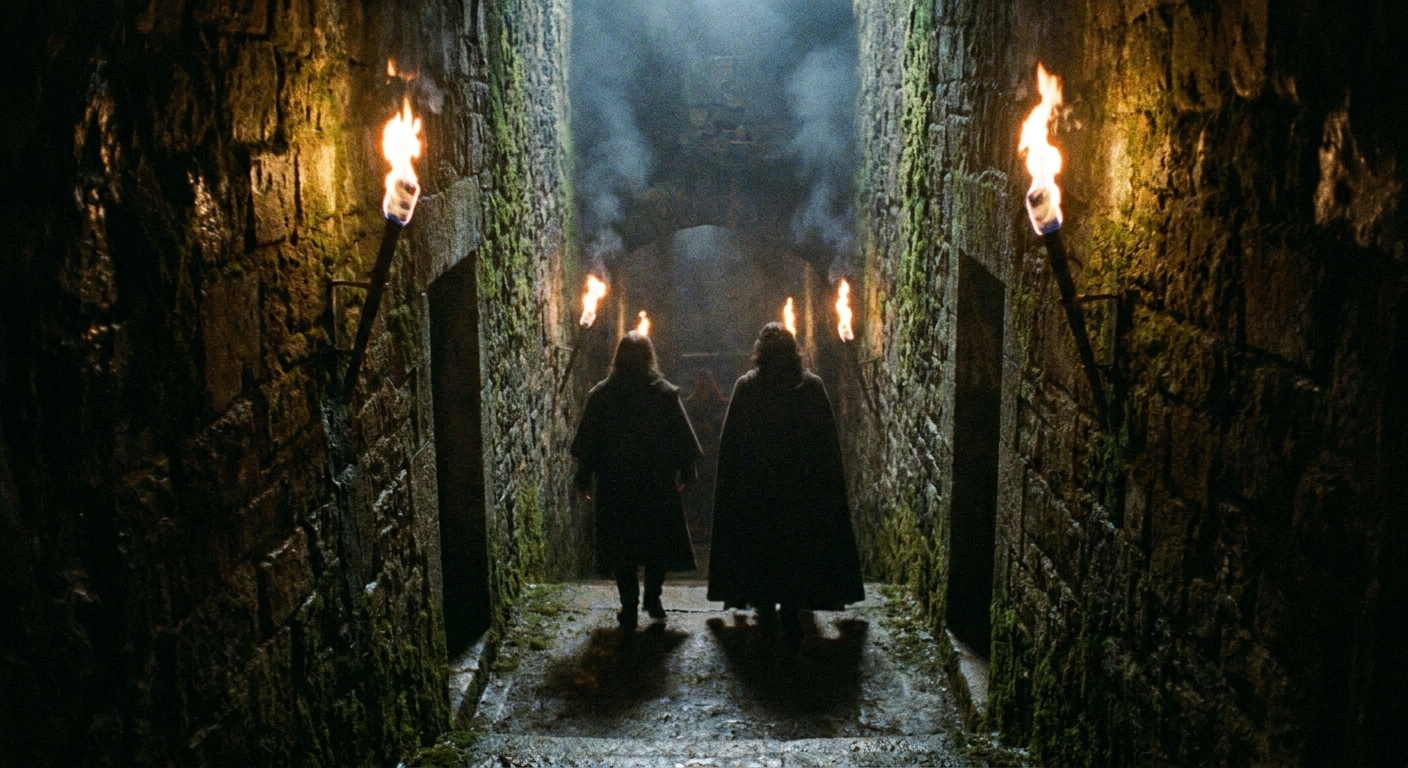
The command is almost elegant in its simplicity: Orpheus must walk ahead, and he must not turn around to look at Eurydice until they both reach the surface.
Not a glance. Not a “just to make sure.” Not even the kind of quick look people pretend does not count.
This is not a test of strength. It is a test of trust.
- Trust in the gods, whose choices rarely bend toward mortal comfort.
- Trust in Eurydice, who must follow without being able to reassure him.
- Trust in the unseen, which is the hardest kind, because it offers no proof to hold.
Why it cuts
If you want to understand why this rule feels less like a condition and more like a snare, look at what it forces Orpheus to carry.
He cannot confirm her footsteps. He cannot turn his head and see the person he has crossed death for. The ascent becomes psychological torture dressed as divine protocol: walk forward, believe, and do not reach for comfort.
The Underworld does not need to sneer to devastate you. It can simply insist on its terms, offer a miracle, and let your own nerves do the rest.
The glance
And then the moment arrives, the tiny motion that ends everything.
Orpheus looks back .
It is easy to judge the turn as weakness, but it reads like something more familiar: devotion strained to the breaking point by doubt. He has fought his way into death itself, and still his mind cannot stop asking the oldest question in the dark: Is she really there?
But the rule is not interested in motives. The rule is interested in obedience.
Eurydice vanishes, drawn back into the dark like breath pulled out of a mouth. The tragedy is not only that she is lost. It is that she is lost twice, and the second time belongs to him.
What it punishes
It is tempting to read this as a simple moral: do not doubt, do not disobey, do not look back. Ancient myths love a clean rule because clean rules create messy consequences.
But the more haunting interpretation is that the Underworld is punishing something subtler: the human need for certainty.
Orpheus cannot tolerate the invisible. He needs proof. He needs the reassurance of sight, even though sight is the very thing forbidden. And that is painfully human. We reach for confirmation the way we reach for a lover’s hand in the dark, even when we are told to keep walking.
Why it lasts
No war causes this tragedy. No monster. No glorious battlefield. The entire marriage collapses on something that looks small from the outside: one backward turn.
That is why it endures. The myth makes catastrophe intimate. It suggests that sometimes the thing that ruins us is not fate’s grand spectacle, but a single moment when we cannot bear uncertainty for one more step.
Orpheus and Eurydice is not only a romance. It is an anatomy lesson in trust, grief, and the cost of needing to see what you have been promised.
In the Underworld, love may earn you an audience. It may even earn you a “yes.” But love is still weighed against terms, tests, and power. The rules are older than tenderness, and they do not change their mind for a beautiful song.
Other loves
Orpheus and Eurydice is only one thread in a larger tapestry of Greek love stories where desire is never just desire. It is leverage, obsession, bargaining, a test with teeth.
These myths reach us through many hands and many eras, so versions shift and emphasis changes. That mess of variants is part of their staying power.
- Persephone and Hades : Persephone is taken from a meadow, Demeter’s mourning turns the world barren with famine, and a handful of pomegranate seeds becomes the clause that keeps Persephone returning to the Underworld each year.
- Eros and Psyche: A love affair conducted in darkness and rules, until Psyche breaks the condition, a lamp exposes what was hidden, and Aphrodite answers with trials that end only when Psyche is granted immortality.
- Apollo and Daphne: Eros’s arrows turn Apollo’s longing into pursuit and Daphne’s response into flight, and when escape is no longer possible she becomes a laurel tree, a living refusal that Apollo still tries to claim as sacred.
- Jason and Medea: A romance sparked by divine meddling, powered by Medea’s magic and betrayal of her own home, then shattered when Jason chooses a more acceptable marriage, leaving vengeance to do what love can no longer do.
- Helen and Paris: A prize promised by Aphrodite after the Judgment of Paris, complicated by Helen’s marriage to Menelaus and the oath that summons the Greek coalition, turning desire into the match that starts the Trojan War.
- Ariadne and Theseus: Ariadne equips Theseus to survive the Labyrinth with a guiding thread, is left behind on Naxos once the hero’s work is done, and later becomes Dionysus’s bride, with some versions lifting her crown into the stars.