Prometheus and the Price of Fire
Greek Mythology
Some myths feel like weather. You do not simply read them, you stand inside them and let them drench you.
The story of Prometheus is one of those. It crackles with heat and consequence, with the metallic scent of lightning after it strikes. A Titan defies a king of gods. A stolen flame changes the fate of the fragile creatures below. And the bill comes due in a way only Olympus would consider reasonable.
Prometheus did not just bring humanity warmth. He brought them a future. And in Greek mythology, futures are never free.

The theft that turned mortals into makers
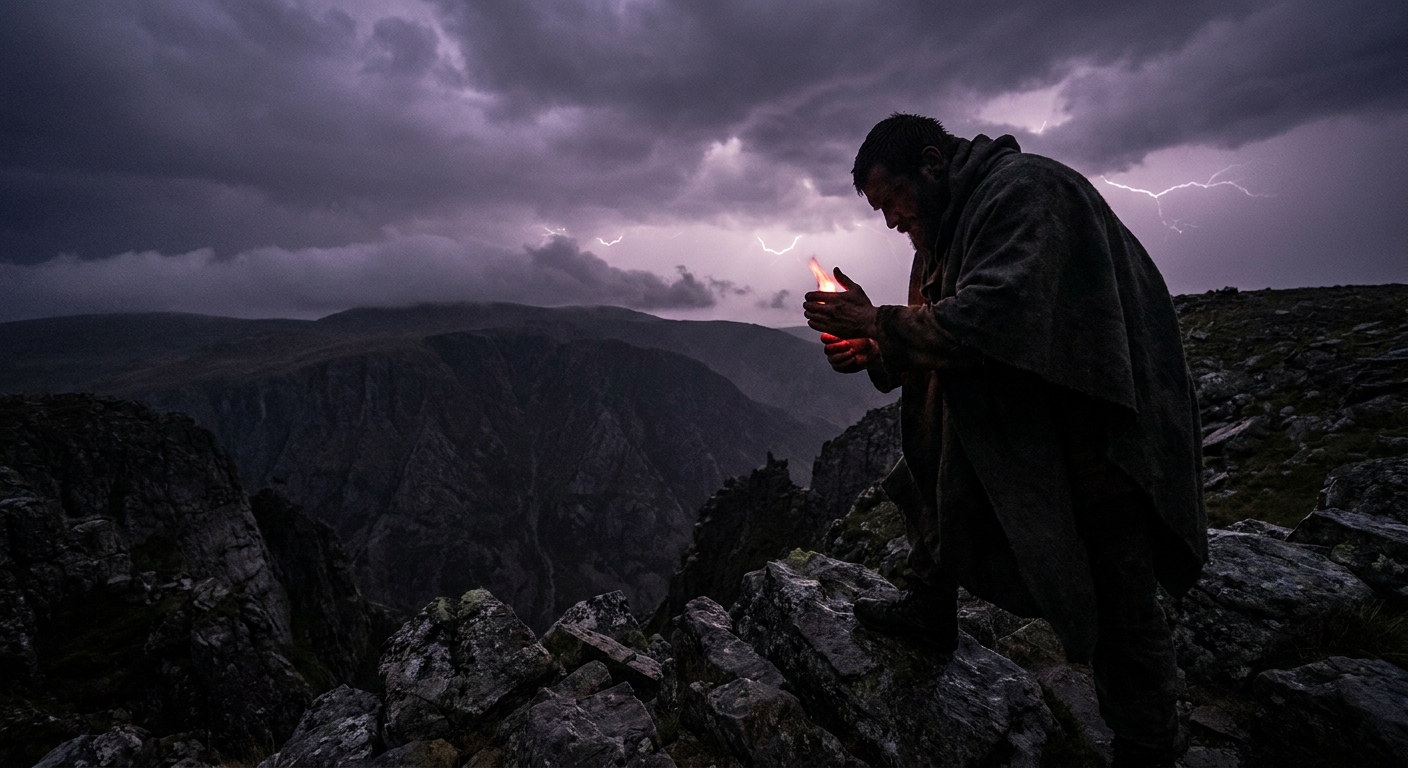
Prometheus is remembered as the kind of divine troublemaker who does not merely break rules. He breaks them with a purpose. In the mythic imagination, he steals fire from Zeus and gives it to human beings, a gesture that lands somewhere between compassion and provocation.
Fire is practical, yes. It boils water. It softens meat. It pushes back the claws of the night. But in this story it is also symbolic, the most ancient shorthand we have for knowledge, skill, and that intoxicating, dangerous idea that the world can be changed by human hands.
Imagine the first person leaning toward a flame with equal parts fear and fascination, watching it bite and obey. The myth invites that image because it wants us to feel the moment when survival becomes possibility.
Prometheus the creator, not just the rebel
Prometheus is often described not only as fire-thief, but as a shaper of humanity. There is something intimate and almost tender in that older idea: a Titan forming humans from clay, then granting them the decisive spark that makes their lives more than a brief, cold scramble across the earth.
It is an origin story that treats innovation like a birthright. Not because Zeus permits it, but because Prometheus insists on it.
In other words, humanity’s first upgrade arrives the way upgrades often do: unauthorized.
Zeus responds like Zeus
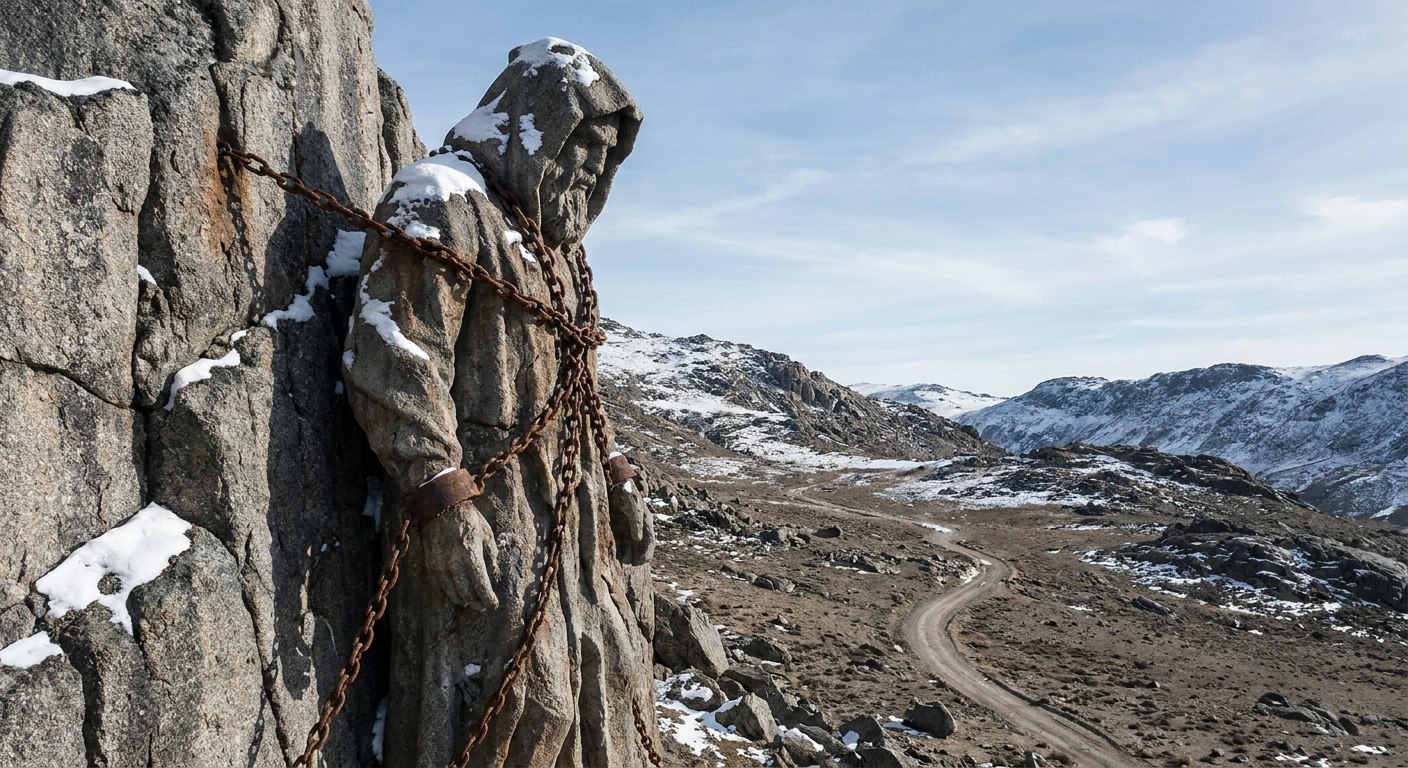
Zeus , unsurprisingly, does not applaud this act of generous insubordination. In the myth, Prometheus is condemned to a punishment designed to be both theatrical and eternal: he is bound to a mountain, and an eagle comes each day to feed on his liver.
This is not discipline. This is spectacle. Olympus loves a lesson with scenery.
The detail matters because it reveals the myth’s bleak honesty about power. The gods can be brilliant, beautiful, and terrifyingly petty. A gift to mortals can be interpreted as an insult to divine authority, and the response is not proportion. The response is dominance.
Pandora: the other half of the invoice
Prometheus’ rebellion does not only scorch his own fate. The myth threads his theft into a broader consequence for humanity through Pandora, fashioned as a divine retaliation and sent into the mortal world carrying a jar filled with troubles.
When the jar is opened, human life becomes crowded with misery: sickness, misfortune, grief, the long list of pains that feel like they were designed by someone with unlimited time and a sharp grudge.
And yet, the story refuses to be pure despair. At the bottom remains Hope, a small, stubborn residue that does not erase suffering, but makes endurance possible. Greek myth rarely gives clean comfort. It gives something more realistic: the idea that even in a world engineered for heartbreak, humans keep reaching for tomorrow.
The double nature of fire
Fire is the most honest symbol Greek mythology could have chosen for progress because it is a gift that comes with teeth.
- It creates. It enables cooking, warmth, light, and the leap from mere endurance toward civilization.
- It destroys. It spreads. It consumes. It punishes carelessness with merciless speed.
That duality is the myth’s real prophecy. Every innovation carries the same contradiction: the tool that saves you can also ruin you. The flame that lights the hearth can torch the home.
So when we talk about Prometheus giving humans fire, we are also talking about the moment humanity becomes responsible for what it unleashes.

From flame to civilization
Once fire exists in human life, the world changes shape. The myth gestures toward that long chain reaction: warmth that expands territory, cooking that shifts survival, light that extends waking hours, and the beginnings of craft that lead to metallurgy and the tools that build cities.
Fire makes mortals into makers. It turns the environment from a hostile power into something that can be negotiated with, reshaped, even mastered.
This is why Prometheus is not merely a rebel. He is a patron saint of the risky leap, the person who looks at the locked door and decides that progress is worth the noise it makes when it opens.
Why the myth still burns
Prometheus survives so vividly because he maps onto a feeling we still recognize. The urge to know more than we are permitted to know. The impulse to build, test, unlock, reach. The suspicion that the gatekeepers of power will always call curiosity “disobedience” when it threatens their control.
Modern culture keeps returning to Prometheus because his story fits inside so many contemporary anxieties about creation. Mary Shelley famously subtitled Frankenstein “The Modern Prometheus,” and the connection is not subtle: an act of daring ingenuity followed by consequences that cannot be neatly contained.
Even stories that invert the symbolism still echo the Titan. In Ray Bradbury’s Fahrenheit 451, fire becomes a weapon against knowledge, which only sharpens the original myth’s point: what matters is not the flame itself, but who controls it and why.
And when cinema drags his name into deep space, the old pattern remains intact. The Promethean question is always the same, no matter how futuristic the costume: What happens after we steal what we were told not to touch?
The defiance that bought us everything
Prometheus’ theft of fire is one of mythology’s most unsettling love stories, not romantic, but devoted. He chooses humanity. He chooses potential. He chooses the messy, luminous experiment of letting mortals become more than victims of weather and hunger.
But the Greeks, with their brutal clarity, refuse to pretend that progress arrives without a body on the altar. In this myth, the body is Prometheus’ own, pinned to a mountainside, paying endlessly for the audacity of hope.
Fire is the gift. The price is the lesson.
And somewhere, in every new spark of human invention, you can still hear Olympus shifting in its marble seats, watching to see whether we will build a hearth, or a weapon, or a new kind of ruin.