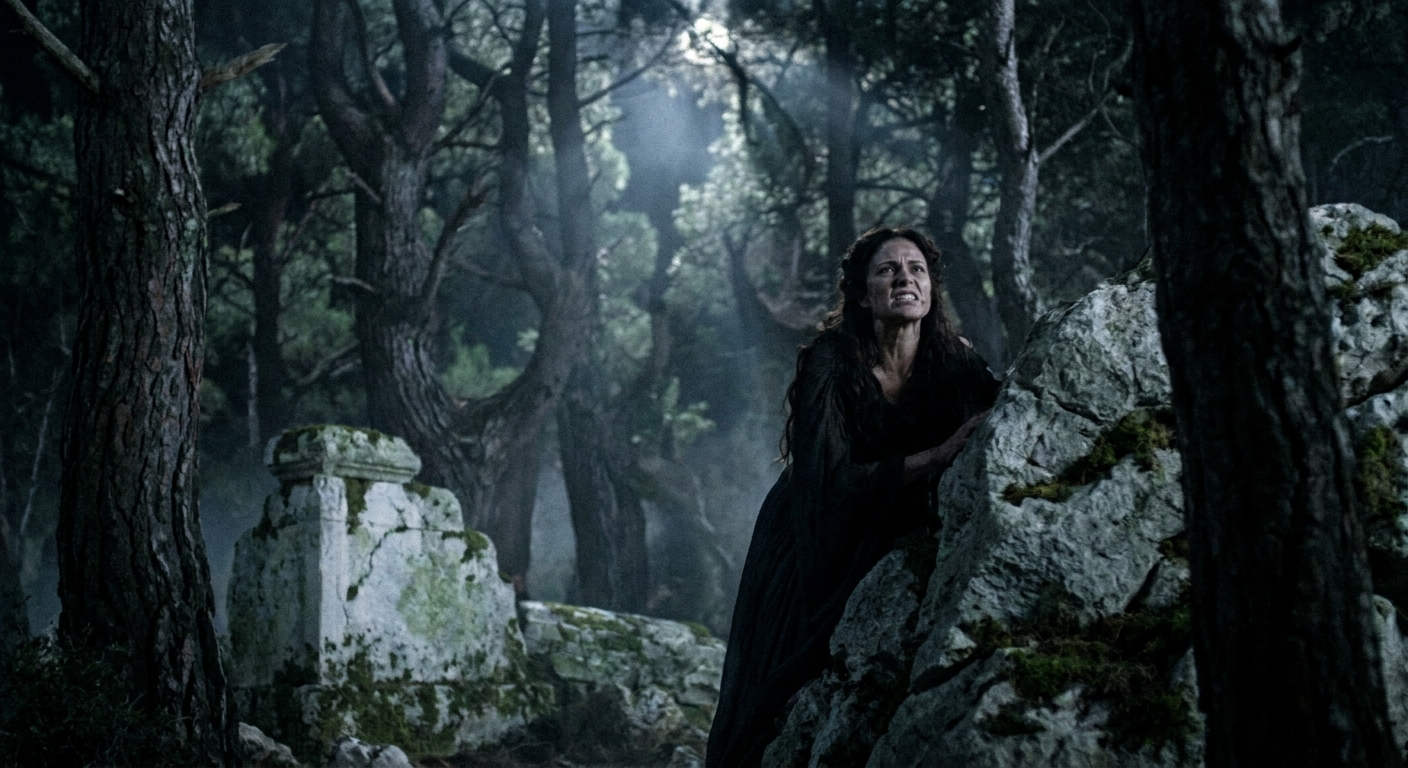
Echo’s Borrowed Confession
Greek Mythology
Some myths arrive like sea-spray on temple steps. This one arrives like a slap.
Echo is not a queen or a warrior or a monster with fangs. She is a nymph with a mouth that never learned restraint. A bright, talkative creature of the wilds, made for stories, banter, and the easy music of company.
And in the divine economy, a talent is only a talent until someone decides it is a tool.

Hera, Zeus, and the cover-up
Zeus, in his eternal commitment to chaos, keeps straying. Hera, in her eternal commitment to not being made a fool, keeps looking.
Echo gets pulled into the mess. When Hera draws near, suspicious and sharp-eyed, Echo distracts her with conversation. Not a little conversation either. A flood. A glittering wall of words meant to hold Hera in place while Zeus’s trysts stay hidden in the grove ahead.
It is a small crime by Olympian standards. No thunderbolts thrown. No cities sunk. But Hera does not measure betrayal by scale. She measures it by humiliation.
So Hera chooses a punishment with surgical cruelty. Echo does not lose speech entirely. That would be merciful. Instead, Hera takes away the one thing that made Echo herself.
From then on, Echo cannot speak freely.
She can only repeat the last words spoken by someone else.
A living mouth, not her own
Imagine the particular violence of that curse. Your thoughts are intact. Your longing is intact. Your fear is intact. But your voice becomes a haunted instrument anyone else can play.
Echo turns into a social ghost. Present, listening, wanting, remembering, and then trapped. When she reaches for language, all she can do is return what she has been given, like a broken record with a beating heart.
Her social life collapses. She withdraws into the woods, where the only conversations are wind in branches and footsteps on pine needles.

Narcissus in the trees
Then comes Narcissus, the handsome heartbreaker who could make Aphrodite herself swoon. Mythology rarely punishes the plain. It saves its most elaborate consequences for the gorgeous.
Narcissus moves through the world like someone who has never had to learn tenderness. He is admired. He is wanted. He is used to desire pooling at his feet like offerings.
Echo sees him and falls, fast and brutally, because this is what the myths do to soft-hearted creatures. They give them one impossible love and call it fate.
A confession with no new words
Echo follows Narcissus through the forest, close enough to hear him, far enough to remain unseen. She wants to step forward. She wants to say his name the way it lives in her chest.
But Hera’s curse makes confession a performance with no original lines.
Echo cannot offer him her own words. She can only mirror his. Every attempt at honesty becomes borrowed language, a love letter written in someone else’s handwriting. It is like trying to shout “I love you” into a canyon and only hearing it bounce back.
Her attempts to communicate become a charade in epic proportions. And when Narcissus warns her off with repulsion, it lands like a second punishment. Echo is forced to repeat his rejection back into the air, as if the forest itself is making sure she hears it again and again until it becomes part of her.
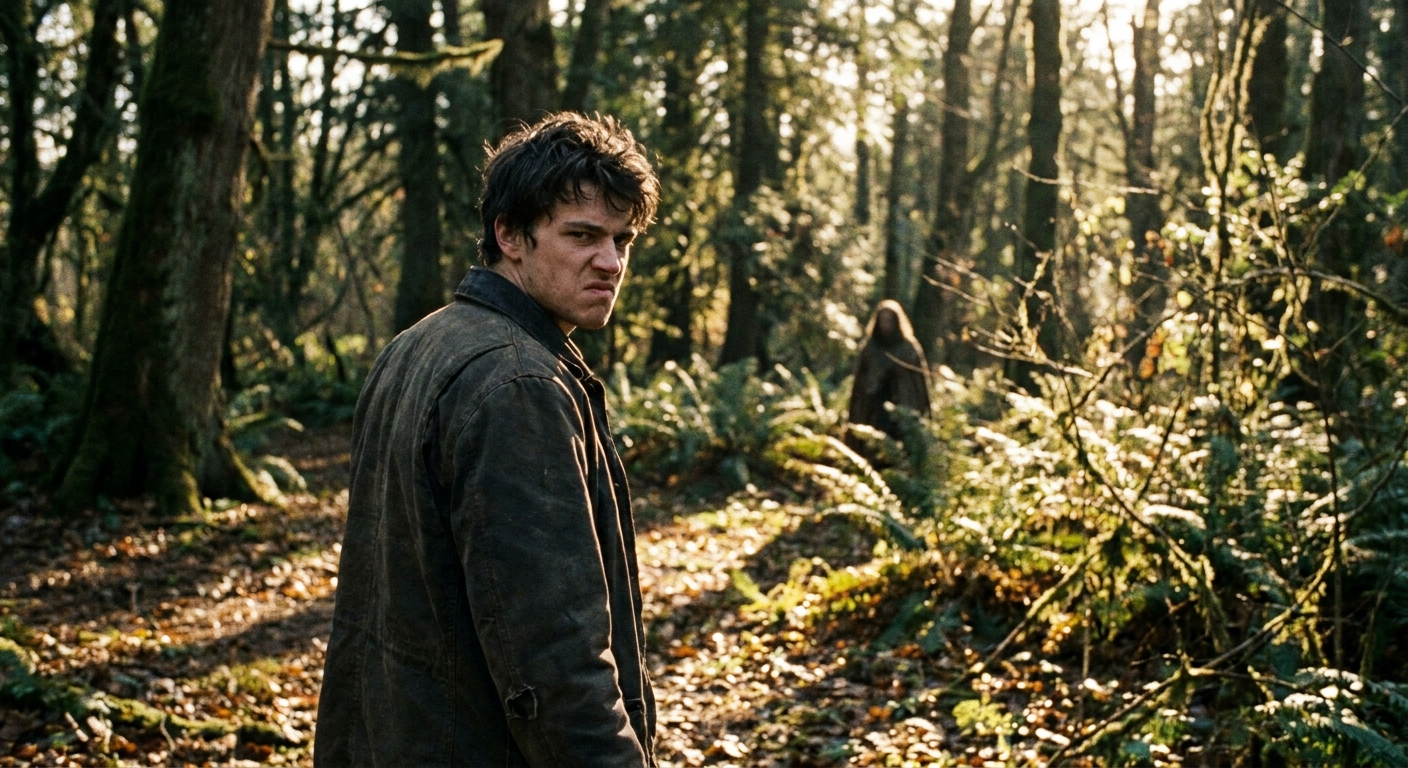
What she becomes
After rejection, Echo does not recover. She recedes.
She remains unseen, reduced to a spectral presence, drifting through forests and repeating old dialogues. The myths understand something modern people still try to deny: prolonged shame and unanswered longing can hollow a person out from the inside.
Later tellings sharpen that hollowing into something almost literal, as if she thins into the landscape itself. Whether you read it as body fading or identity fading, the point lands the same: she is diminished until what the world remembers most is the sound she cannot stop returning.
Nemesis and the pool
But Greek mythology is not content with one heartbreak. It likes symmetry. It likes consequences that feel tailored.
Nemesis, goddess of retribution, sees the imbalance in Echo’s unrequited love and decides it is time for divine intervention.
Her plan does not require chains or blades. Only water.
Narcissus stumbles upon a pool and looks down.
And there it is. A face so beautiful it becomes a catastrophe. Narcissus falls head-over-heels for his own reflection. He cannot leave it. He cannot stop staring. Days turn into nights in an obsession that drains him until he is depleted and desolate beside the mirror that conquered him.
As he lies by the fateful pool, Narcissus whispers his final goodbye. Echo, still what Hera made her, repeats it. A haunting refrain threaded through leaves and silence.

Why it still stings
This story is often packaged as a cautionary tale about vanity, and yes, Narcissus earns his ruin the way so many mythic men do: by mistaking admiration for love.
But Echo is the bruise the myth leaves behind.
Her punishment is not death. It is distortion. She is trapped inside other people’s endings, never permitted to offer her own beginning. Even her purest confession becomes a cursed echo, a romance turned ventriloquism.
Hera’s wrath, Zeus’s carelessness, Narcissus’s cruelty, Nemesis’s justice. Everyone gets to act.
Echo only gets to repeat.
The word that carries her
Echo’s legacy does not stay in the grove.
Her name threads itself into the DNA of language. We say “echo” for sound returning from a cave, for music rebounding off stadium walls, for the way a hallway throws your voice back at you. Casual, everyday, and quietly uncanny.
And she becomes more than acoustics. Echo is a metaphor for unrequited love, yes, but also for the historical silence forced onto women across cultures. A desire spoken inward. A self edited down to what someone else allows.
It is no accident that artists and writers keep going back to her. Her story keeps turning up where people try to describe longing, identity, and justice without the luxury of a clean ending.
Take it into the woods
The next time you hear your own words bounced back in a canyon, a stairwell, or between thick trunks on a trail, remember there is an old nymph folded into that sound.
Echo is what happens when a voice is treated like a convenience. When a woman is punished for a man’s mess. When love arrives, and language betrays you.
And somewhere in the myth’s moonlit aftertaste, Narcissus is still bent over water, learning too late what it feels like to want something that will never, ever reach back.