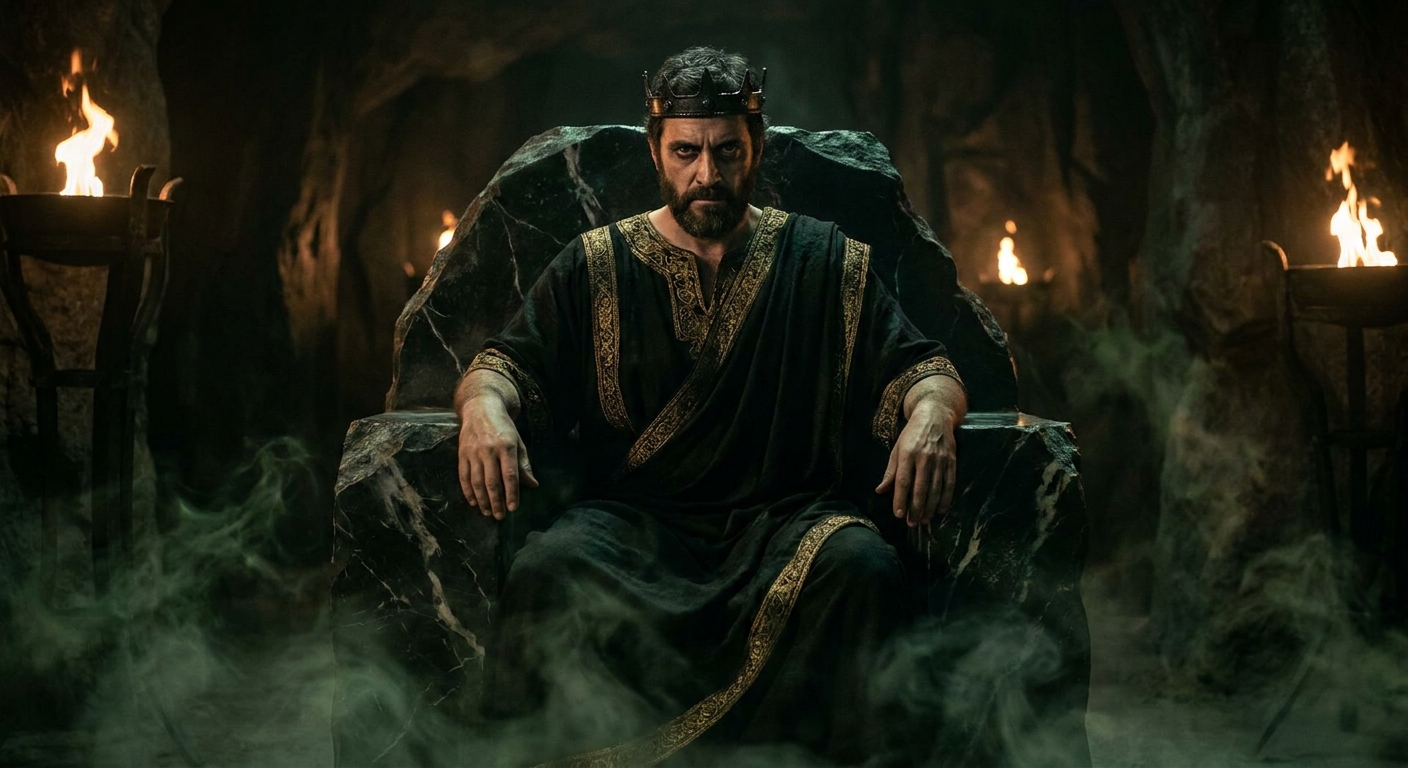
Hades Myths: Underworld, Riches, and Rules
Greek Mythology
Hades does not thunder. He does not flirt. He does not perform.
He simply keeps the universe from unraveling, not by spectacle, but by boundary.
Modern pop culture has trained audiences to treat the Underworld like a villain’s lair, and Hades like its grim cartoon warden. Older stories and older religious moods paint something colder and more unsettling: a god of law, limits, and finality. Zeus governs the sky’s chaos with lightning. Poseidon rages across the sea. Hades governs what no one can charm, bribe, or outfight.
Once you cross his threshold, the rules do not bend. They only reveal themselves.

Lord of the Dead, Lord of Riches
The Greeks had more than one name for him, and none of them were casual.
Hades is the name most of us use, but ancient writers and worshipers also used euphemisms and titles, including Plouton, “the Wealthy One.” In that logic, everything precious ultimately comes from below: fertile soil, buried seed, and the veins of gold and silver threaded through stone like secret rivers.
It is a strangely agricultural kind of divinity. The same earth that swallows the dead also feeds the living. The Underworld is not only a place of punishment. It is a place of accounting, with judges of the dead in some traditions weighing lives the way a temple weighs offerings.
Even his helmet tells you what sort of power he holds. Later retellings often call it the Helm of Darkness, a cap that makes its wearer unseen. Not a flashy weapon, not a hero’s trophy. A reminder that death arrives without announcement, and that the god beneath the world does not need your attention to win.
Why Mortals Feared Naming Him
There is a quiet superstition that wraps around Hades like smoke around a torch.
Many Greeks avoided speaking his name openly, not because they thought he would leap out of the floor like a monster, but because naming him felt like inviting attention. He is not usually the god you reach for first when you want a safe voyage or an easy harvest, even if his chthonic wealth brushes up against fertility in certain places and rites. You acknowledge him when you bury your dead, when you swear oaths, when you feel the cold certainty of endings.
To speak him too loudly was to tempt the Underworld’s most unforgiving keeper of order to look up and notice you.
Some gods punish pride. Hades punishes forgetting what you are: mortal, temporary, and already halfway claimed by the earth.
Persephone and the Season Bargain
If the Underworld has a love story, it is also a crime scene. The myth of Persephone is where Greek religion shows its teeth, then asks you to call it nature.
In the Homeric Hymn to Demeter, Persephone is gathering flowers when the earth splits open and Hades seizes her, driving his chariot down into the dark. Her mother, Demeter, goddess of grain, tears through the world with torches, refusing comfort, refusing meals, refusing the soft lies people tell grieving women to make them manageable.
And because a goddess of harvest is also a goddess of leverage, Demeter does the one thing Olympus cannot ignore. She withholds fertility. No grain. No fruit. No bread. A slow, holy famine tightening around human throats until the gods are forced to negotiate.
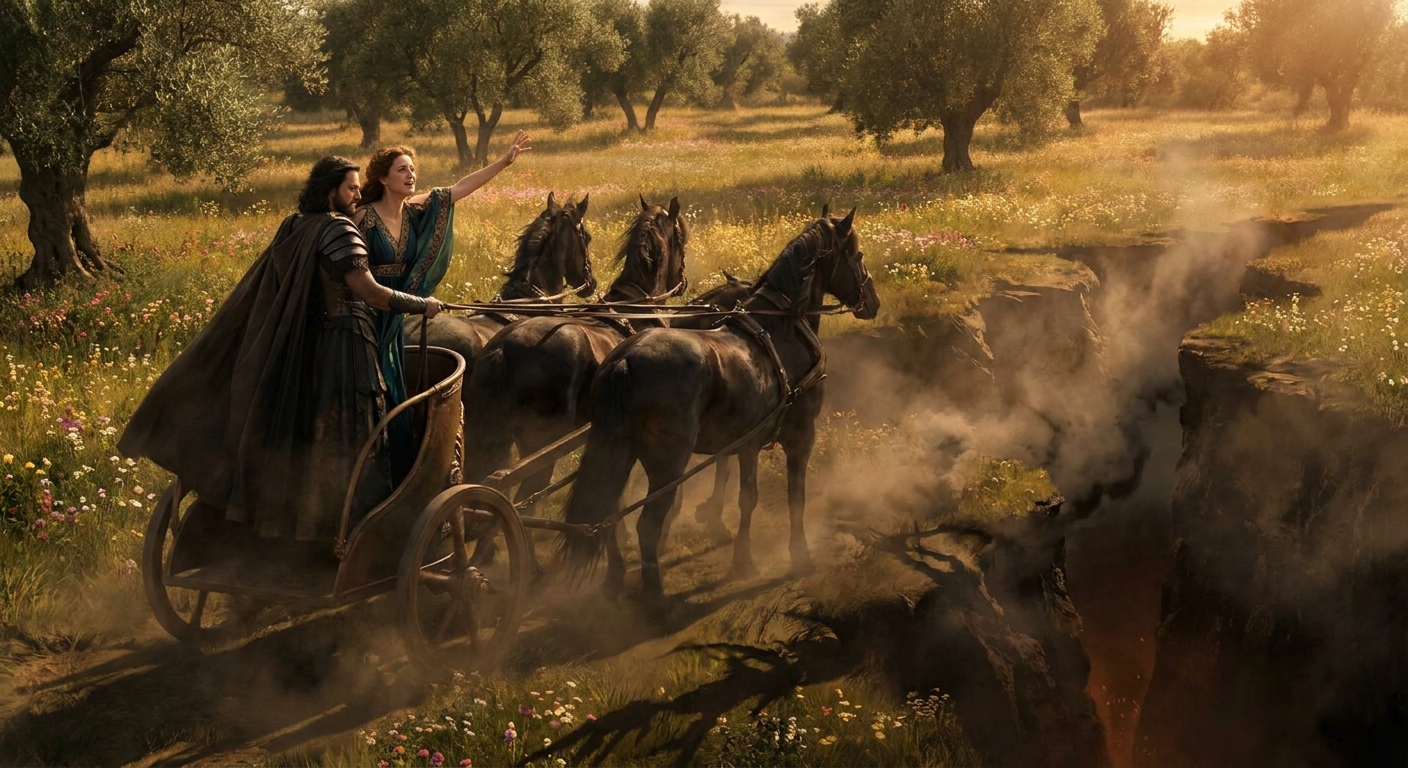
The compromise sounds simple, until you notice how myth hides its traps in sweetness: Persephone can return, if she has not eaten in the Underworld. But she consumes the pomegranate, and later tellings argue about the number of seeds, as if arithmetic could make the act cleaner. In the Hymn, what matters is the bite itself, and the way it binds.
So Persephone becomes both Queen of the Dead and daughter of spring. When she rises, the world softens and greens. When she descends, the land remembers loss. And Hades, for all his severity, keeps his side of the bargain. He does not chase her above ground. He does not rewrite the contract. He waits, because waiting is what the Underworld does best.
Orpheus and the Rule of One Look
In the myths, there are mortals arrogant enough to attempt the impossible: to retrieve a beloved from death. The most famous is Orpheus, the singer whose lyre could make stones lean in to listen.
When his wife Eurydice dies, Orpheus descends alive. He does not fight. He does not bargain with gold. He performs the one thing even the Underworld cannot fully ignore: art that tells the truth.
Later poets savor the scene, saying his music softens the realm itself, that even punishments pause, that even the throne listens. However it is told, the outcome is a conditional mercy from Hades and Persephone, and the condition is a blade-thin boundary.
He may lead her upward. He may not turn back. The living want proof. The dead require obedience.
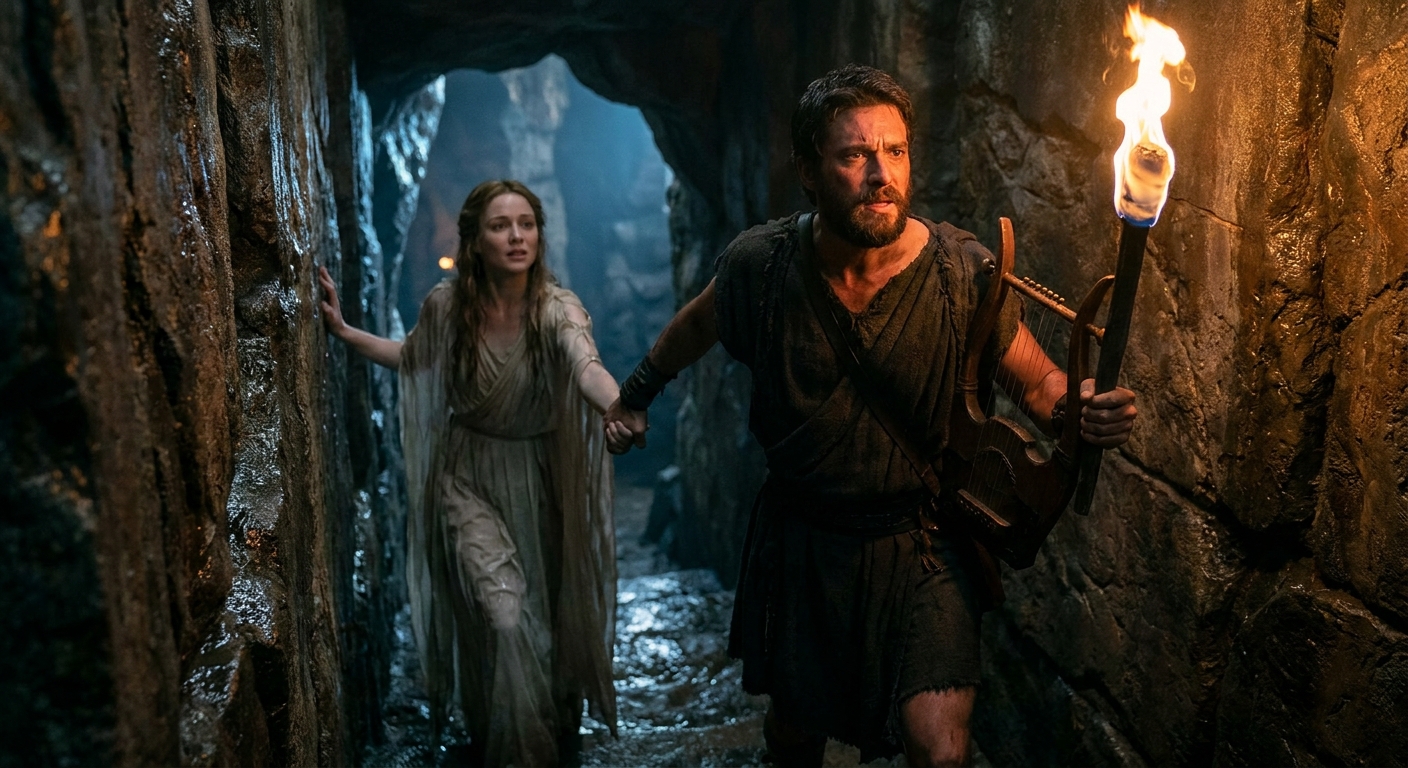
And of course he looks. In some tellings it is doubt. In others it is love that cannot tolerate uncertainty. Either way, the rule does what rules do. Eurydice slips back into the dark, more final than before.
Orpheus does not lose because Hades is cruel. He loses because the Underworld is built on a principle the living cannot stand: you do not get to negotiate forever.
Sisyphus and the Punishment of Again
If Orpheus fails because he is human, Sisyphus fails because he is unbearable.
Sisyphus, king of Corinth in many sources, becomes the emblem of cleverness rotting into corruption. He betrays secrets, cheats guests, and treats divine boundaries like optional courtesies. In the myths he attempts to outwit death itself, sometimes by trapping Thanatos, sometimes by angling back into the sunlight through a loophole of improper burial.
He succeeds for a moment, which is the most dangerous kind of success.
In the Underworld, Sisyphus is condemned to push a boulder up a slope only for it to roll down again, eternally. The image is famous now, almost fashionable in modern philosophy. In its original mythic mood, it is not chic. It is horror by repetition, the universe answering a man who refused limits by giving him nothing but limits.
Pirithous, Theseus, and the Seat
Not every descent into the Underworld is motivated by love. Sometimes it is motivated by the kind of male confidence that should come with a prophecy attached.
Pirithous, king of the Lapiths, and Theseus, the Athenian hero, decide they deserve divine brides. Theseus takes Helen in some traditions, and then Pirithous aims higher, because ambition is a sickness that always needs a stronger dose. He wants Persephone.
So the pair walk into Hades’ realm as if it is a palace they can rob.
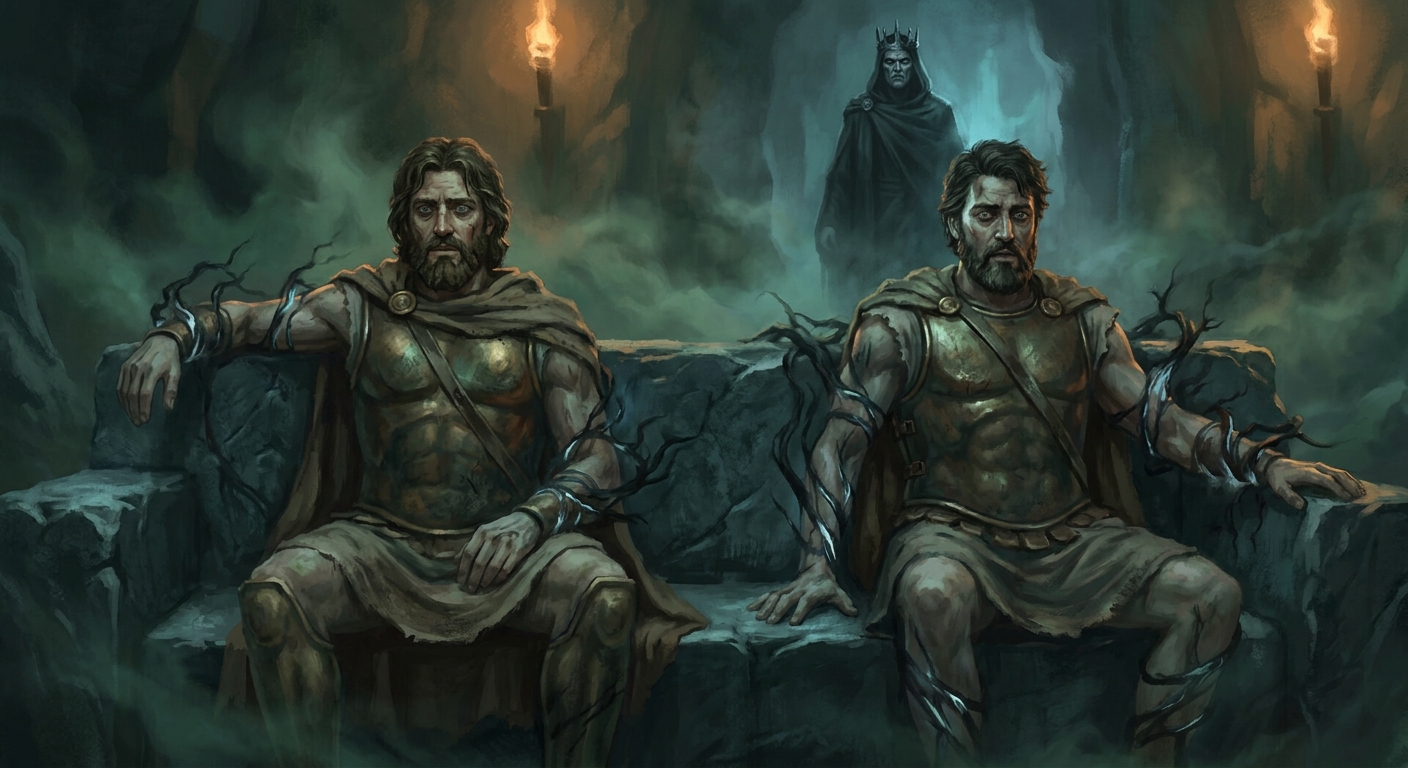
In several versions, Hades receives them with unnerving politeness, offers them seats, and the seats become the trap: a cursed bench, a binding, a doom that holds them fast. Sometimes Heracles later rescues Theseus during one of his labors, but Pirithous remains. The attempt to steal the Queen of the Dead is not a misdemeanor. It is a cosmic joke told at your expense forever.
In the Underworld, the most dangerous word is not “no.” It is “sure.”
Cerberus at the Threshold
Some creatures in Greek myth exist as symbols first and animals second. Cerberus is one of them: the dog at the threshold, the living lock on the dead.
Descriptions vary. Later art loves the multi-headed terror. Earlier sources tend to emphasize vigilance more than the head-count: a hound of the Underworld, monstrous, sleepless, impossible to reason with.
The mythic logic is consistent. Cerberus is less a guard against invasion than a guard against escape. Death is a one-way architecture.
When Heracles is tasked with bringing Cerberus to the surface as his final labor, the feat is framed not as a triumph over Hades, but as a tightly supervised exception. In some tellings, Heracles must do it without weapons, by sheer strength and courage. Even then, he does not keep Cerberus. He returns the boundary to its post.
Because even Heracles does not get to rewrite Underworld law.
Styx and the Oath
If the Underworld has a sacred element, it is not fire. It is water that remembers.
The Styx is a river of the Underworld and also a goddess, and in Greek tradition the gods swear their most binding oaths by her. This is not decorative ritual. It is enforcement. In Hesiod’s account, an oath-breaker among the gods pays with a long, humiliating penalty: collapse, exile from divine company, and years of being shut out of counsel.
Mortals meet that same river as a border. Depending on the tradition, the newly dead may require a coin for passage with the ferryman Charon. The coin is small, but the idea casts a heavy shadow: even grief has procedures, even death has tolls.
What Hades Represents
Hades is not the devil. Greek myth does not need a single horned villain to explain suffering. It already has fate, hunger, plague, war, jealousy, and the terrifying creativity of the gods.
Hades represents something more intimate, and harder to insult. He represents the rule that makes every other story meaningful: life ends. Therefore choices matter. Therefore love hurts. Therefore glory is brief and bright as bronze in sun.
And if you want the most unsettling truth, it is this: Hades is not usually the god who causes death. He is the god who contains it, the keeper of the boundary once the last breath has already been taken.
The Underworld is not merely darkness. It is order. It is a kingdom where glamor is stripped away, where even heroes become names on the lips of poets and then, eventually, even those poems fade.
Which is why the myths keep returning to him. Not because we like fear, exactly, but because some part of us recognizes the old Greek wisdom in the shadows: if you want to understand the living world, you look at what waits beneath it.
Hades Myths at a Glance
- Persephone: abduction, Demeter’s famine, and the pomegranate bargain that becomes the seasons.
- Orpheus: a rescue attempt granted by grace, destroyed by the single forbidden act, turning back.
- Sisyphus: the cheater who tried to loophole death, condemned to endless repetition.
- Pirithous and Theseus: would-be kidnappers of Persephone, trapped by the Underworld’s calm, merciless hospitality.
- Cerberus: the threshold made flesh, ensuring the dead stay where they belong.
- Styx: river and goddess of the most binding oaths, a law even Olympus respects.