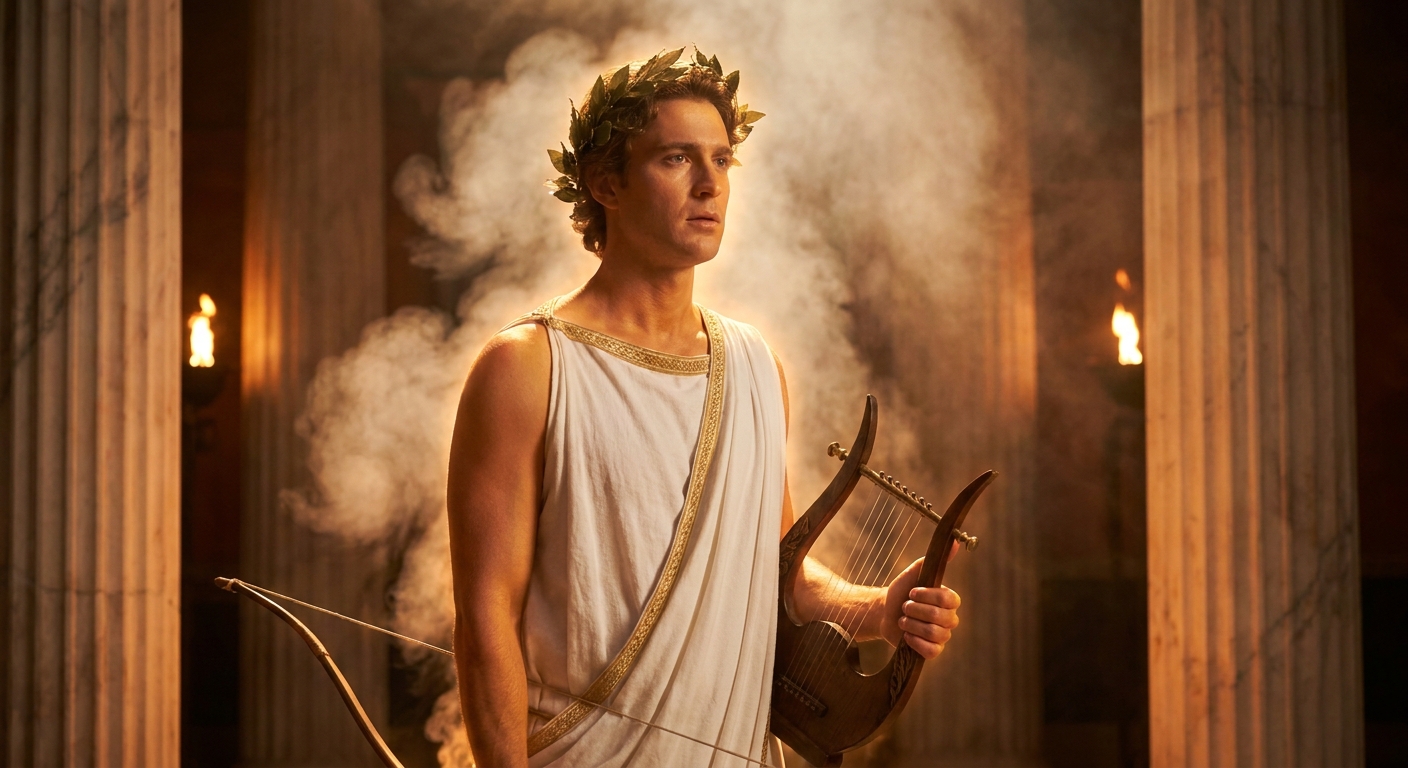
Apollo Myths: Prophecy, Music, and Deadly Arrows
Greek Mythology
Apollo arrives in Greek myth like sunrise on bronze: beautiful, inevitable, and not remotely interested in your comfort. He is the god of prophecy and the lyre, the patron of clean lines and sacred measures, the one who makes chaos sound like music. But he is also the archer whose arrows do not miss and do not always kill quickly.
To meet Apollo properly, you have to look past the polished statues and the “radiant youth” branding. Follow him instead through the places where myth still feels warm and dangerous: a floating island that becomes a refuge, a serpent fallen under Delphic stone, a nymph fleeing into bark, a princess speaking truth into a room that refuses to hear it.

Delos and Leto
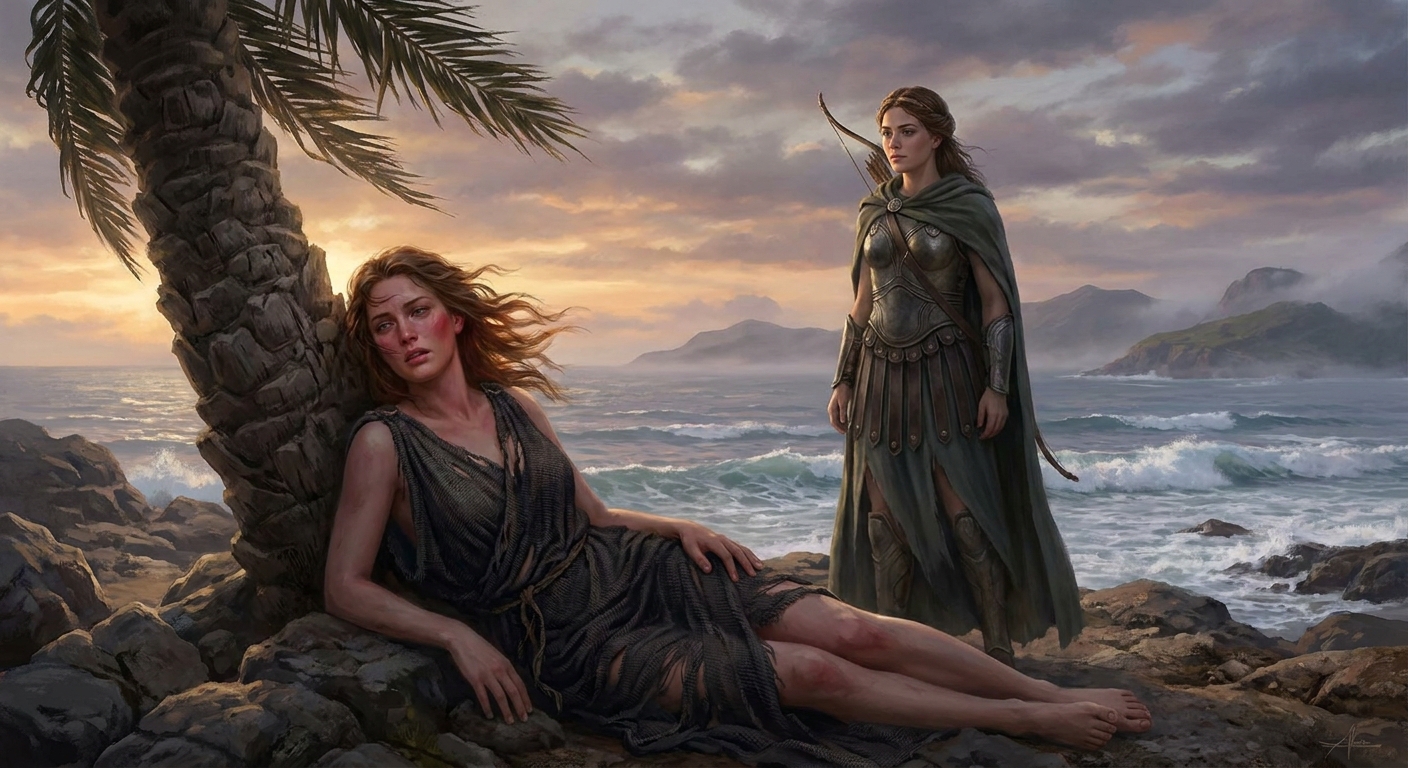
Apollo’s story begins with his mother, Leto, hunted across the world by Hera’s jealousy. The crime is familiar in Olympus: Zeus desired her, and the punishment is assigned to the woman who survived it. In many traditions Hera forbids the earth to offer Leto a place to give birth, as if the land itself can be bullied into compliance.
So the pregnant goddess wanders. Coasts. Islands. Sea cliffs. Doors that stay shut. The myth is not subtle about what it feels like to be refused by every threshold when you need sanctuary most.
At last, a floating, half-unmoored island answers. Delos, often glossed as “the visible” or “the manifest,” takes her in, sometimes bargaining for honor and future glory. In return it becomes what every sacred place wants to be: the site of an origin.
In some later tellings, Artemis is born first and helps her mother through the second birth. Then Apollo arrives. Not merely a baby, but a promise the world can feel in its bones. Soon, the island that was once unstable becomes anchored by devotion. In myth, worship can be geology.
A god of order enters the world through exile and refusal, and somehow that is the point.
Delphi and Python
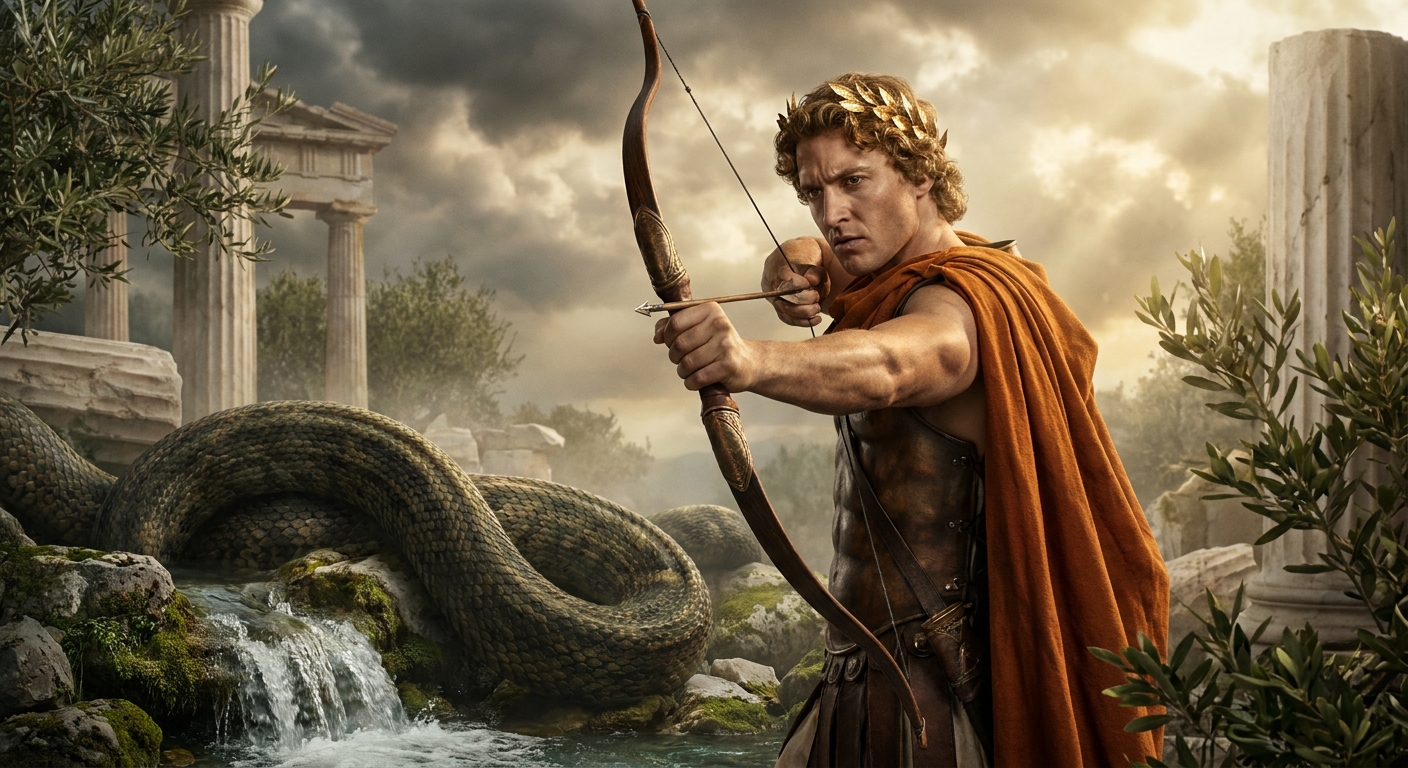
If Apollo is the god of prophecy, Delphi is his most famous stage. But even here, the story begins with an older presence. A great serpent, usually called Python (and in some traditions a related monster like Delphyne), haunts the place and claims the sacred ground. Depending on the telling, the creature is tied to Gaia and the earth’s older voice, or sent as an instrument of Hera’s anger, or simply remembered as what lived there before Olympus made its claim.
Apollo does what new gods do when they want legitimacy, at least in the logic of myth. He kills what came before and calls it purification.
He shoots the serpent with his arrows, takes the sanctuary, and establishes the oracle. The prize is more than land. It is access to the future, managed through ritual and interpretation: the Pythia on her tripod, the laurel, and, according to later tradition, the strange temple breath and smoke that turns questions into riddles.
And yet the myth keeps a faint aftertaste of guilt. Some traditions remember that Apollo must be purified after the killing, even as he becomes the god of purification. Greek myth loves a god who writes the law and then becomes the first case study.
Daphne and laurel
Some Apollo myths are violent in the obvious ways. Others are violent in the way they turn a body into a boundary.
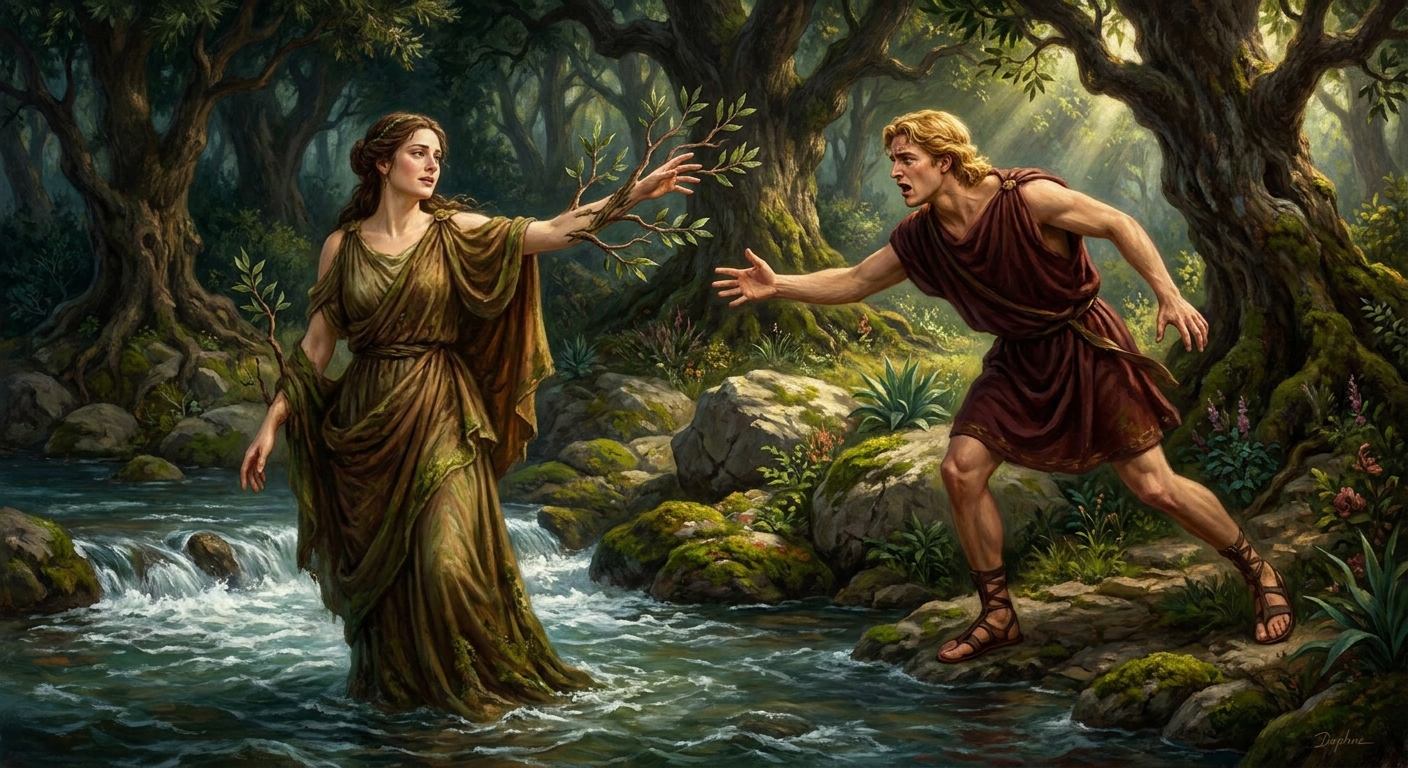
In Ovid’s telling, Apollo is struck with desire and pursues the nymph Daphne. She does not want him. She runs, the landscape blurring into panic: riverbanks, branches, the breathless closeness of a god who treats refusal as a misunderstanding.
At the last moment, Daphne prays for escape and is transformed into a laurel tree. The chase ends. The god gets his symbol. The girl gets to stop being pursued, at the price of becoming something rooted and silent.
Apollo does not win Daphne. He wins the laurel, which is a colder kind of trophy.
Apollo claims the laurel anyway, wearing it as his crown. It becomes the sign of victory, poetry, and consecration. And the uncomfortable truth is stitched into every leaf: in myth, even an escape can be appropriated into beauty.
Cassandra’s curse
Prophecy is rarely portrayed as a pleasant hobby in Greek myth. With Cassandra it becomes something closer to a slow public execution.
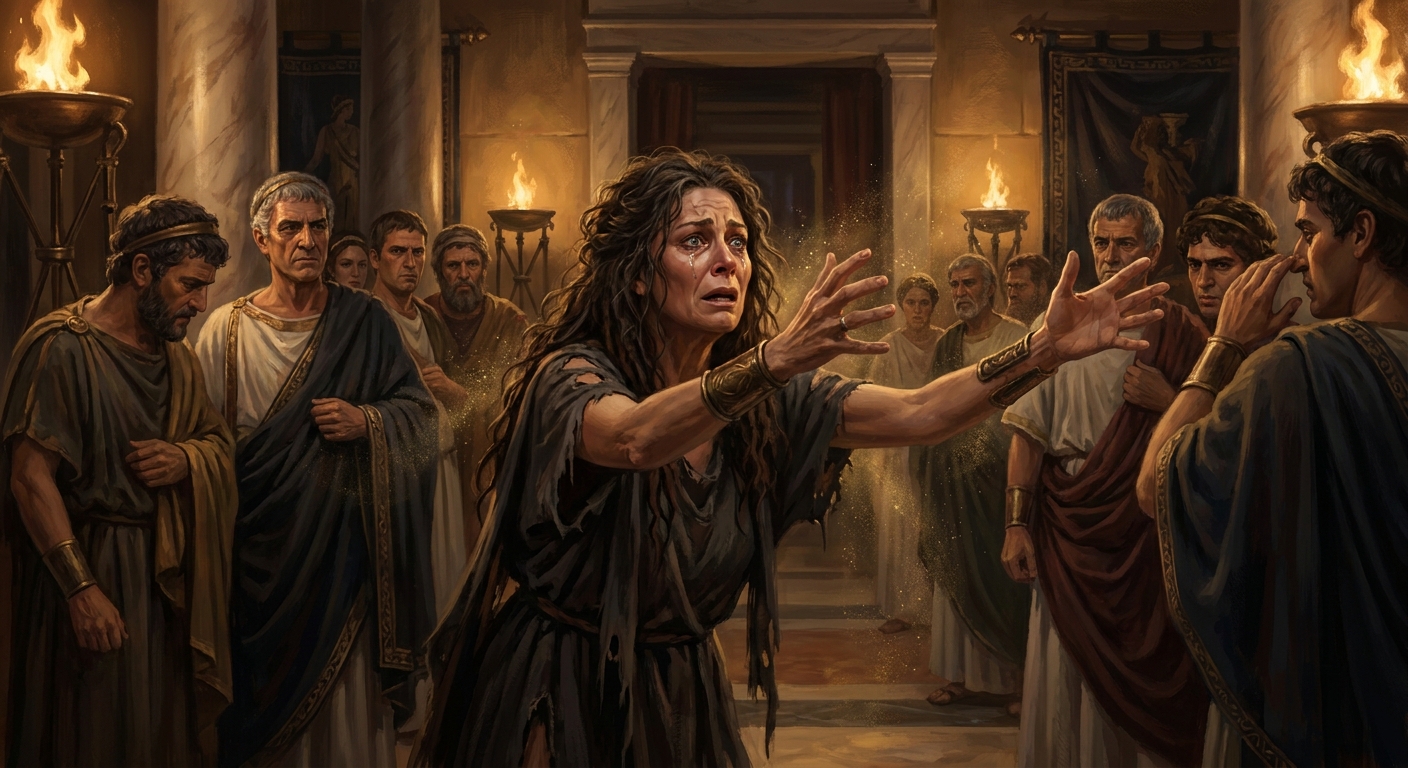
Cassandra, princess of Troy, receives Apollo’s gift of foreknowledge in a tradition where the god desires her and offers divine power as the price of intimacy. She refuses him or breaks the bargain, depending on the version. Apollo cannot take back the gift, so he changes its social reality.
He curses her so that she will always speak true prophecies and never be believed. Some later accounts sharpen the image into a detail, spittle or breath as the instrument of the curse, but the outcome is the same. It is punishment tailor-made for a god of order: not bloodshed, but credibility murdered in broad daylight.
Her myth bleeds into the Trojan War, where she foresees disaster with perfect clarity. The horse. The fire. The screams. The kind of future everyone later claims they “should have seen coming.” Cassandra did. That was never the problem.
Marsyas and the contest
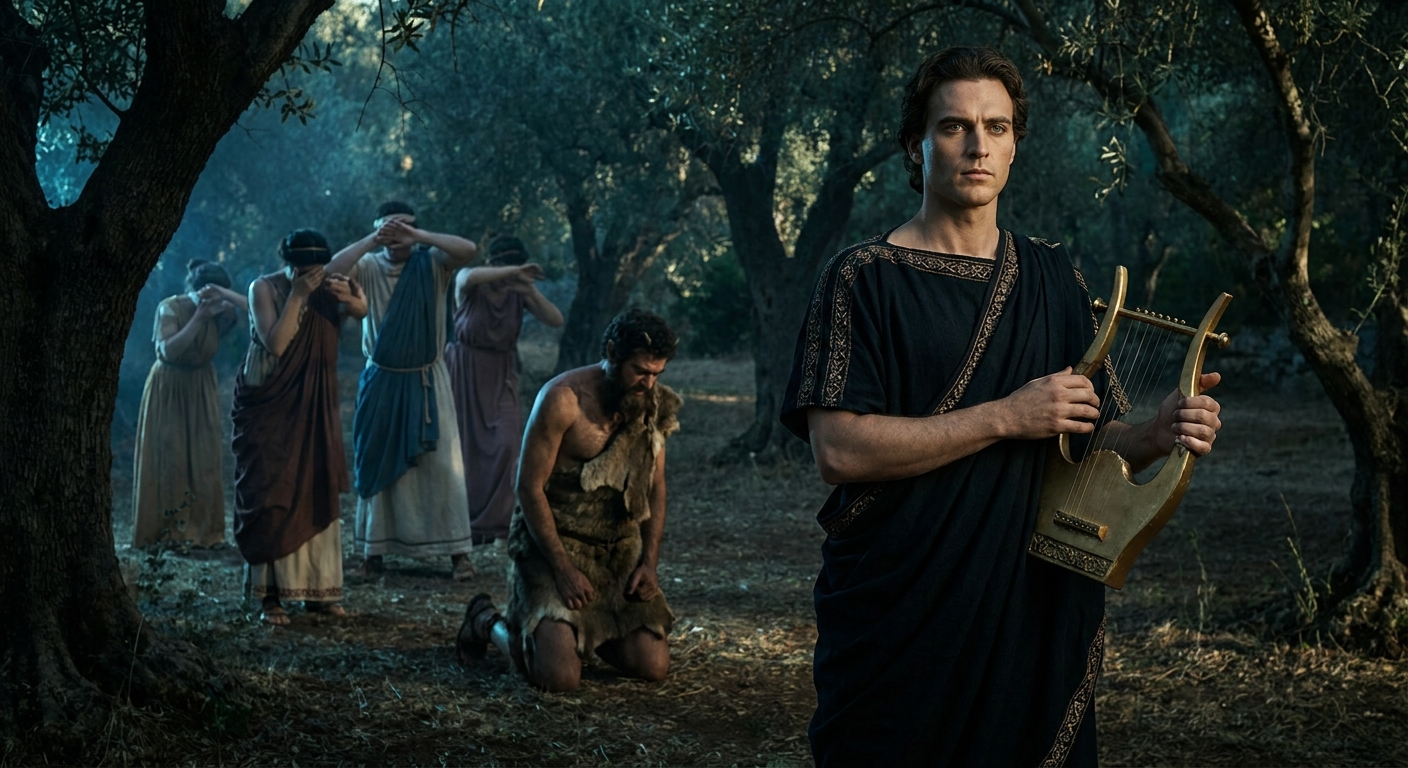
Apollo loves music, which means he also loves being unquestionably the best at it. Enter Marsyas, usually a satyr, sometimes tied to Phrygian stories, who picks up the aulos (a double-reed pipe) and plays with such skill that confidence swells into a dare.
The contest is staged as a fair competition. The problem is that “fair” in Greek myth often means “the rules are not finished yet.” Apollo plays the lyre, Marsyas plays the aulos. Then Apollo shifts the terms, depending on the version: he sings to his playing, or demands a reversal of technique that the aulos cannot match.
Marsyas loses. Then comes the part that makes the myth unforgettable in the worst way. Apollo has him flayed alive, skin removed like an instrument’s casing, as if the god is determined to prove that art belongs to him not only in beauty, but in pain.
Ancient sources treat Marsyas’ fate as a warning against hubris, the mortal mistake of thinking talent can outrun hierarchy. Modern readers often hear something harsher: a god who cannot tolerate being matched, even for a moment, even in song.
Hyacinthus and grief
If Apollo’s punishments are infamous, his grief is quieter but no less dramatic. The myth of Hyacinthus is one of his most tender tragedies, and like all tenderness in Greek myth, it arrives with a blade hidden in the bouquet.
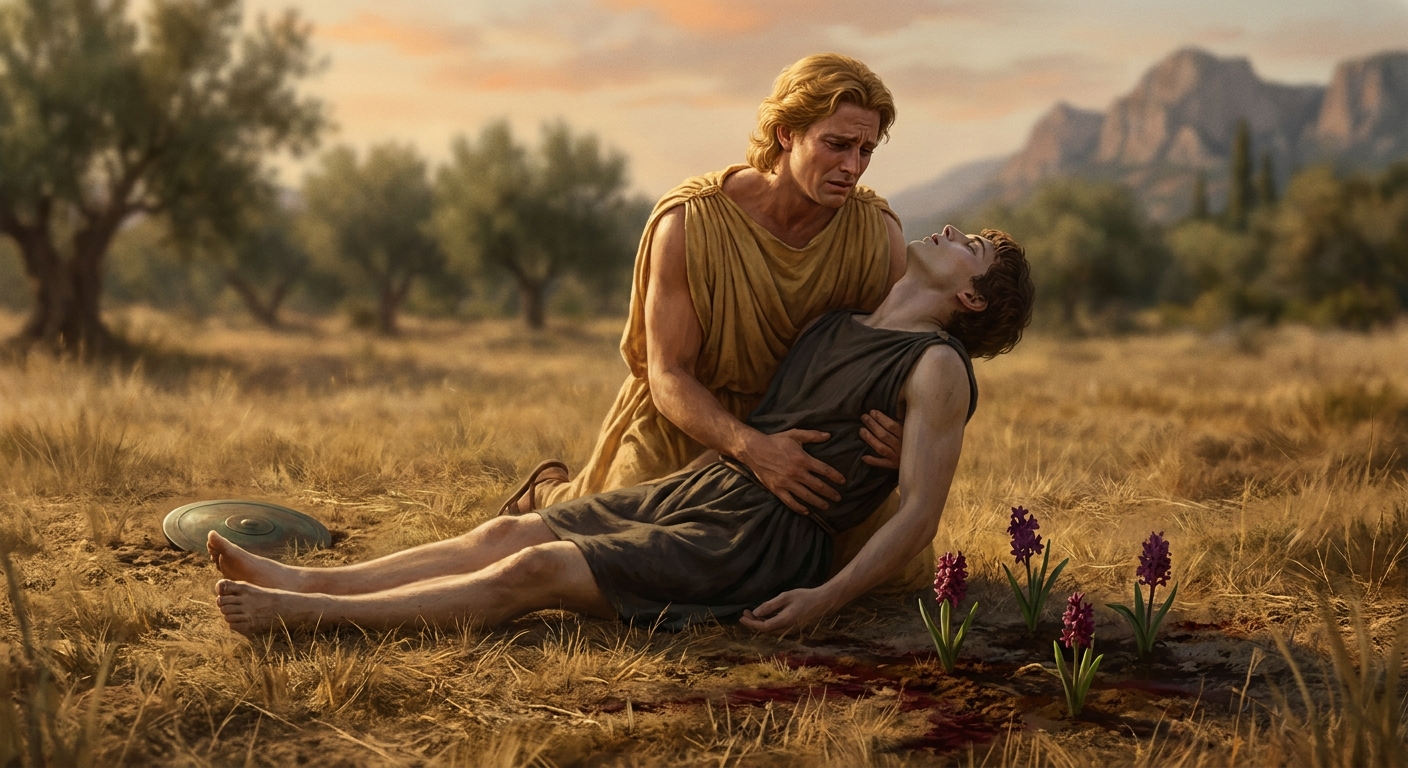
Hyacinthus, a beautiful Spartan young man, is loved by Apollo. They train, they throw the discus, they move through the world with that dangerous mythic glow that attracts envy like smoke attracts wind.
The discus strikes Hyacinthus and kills him. In some versions it is an accident, a cruel physics of fate. In others, Zephyrus, the West Wind, jealous of Apollo’s affection, deflects the discus and turns sport into death.
Apollo cannot prevent it, which is a particular kind of humiliation for a god who sees so far. He transforms the spilled blood into a “hyacinth” flower in the poetic sense, creating memorial through metamorphosis. The myth insists on a theme: the gods cannot always save what they love, but they can always turn it into symbol.
Plague and purification
The modern imagination likes Apollo as a wellness icon: sunlight, clarity, medicine. Greek myth is less interested in branding and more interested in power. Apollo is a god of healing, yes. He is also a god who can send sickness like a message written in fever.
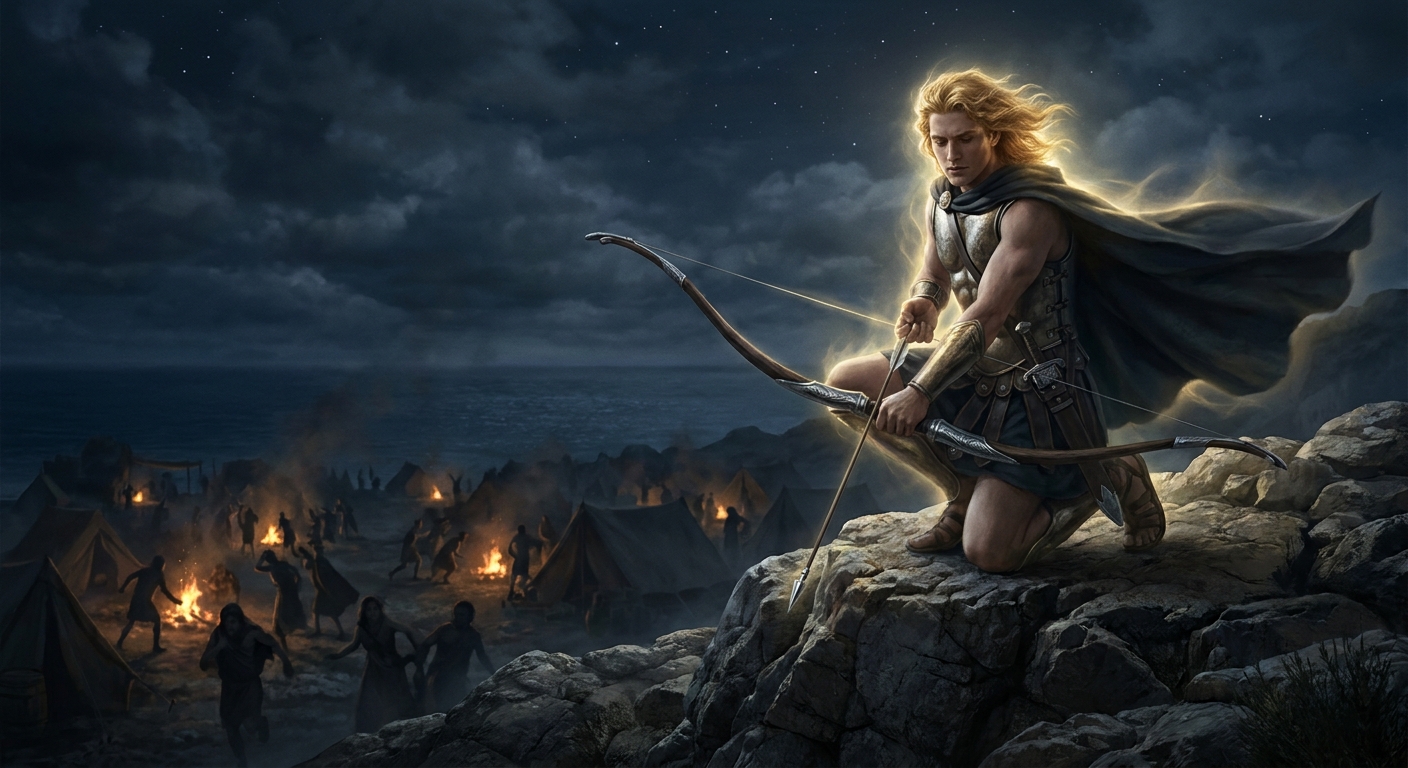
In Homer’s Iliad, Apollo unleashes a plague upon the Greek camp when Agamemnon dishonors Apollo’s priest, Chryses, by refusing to return the priest’s captured daughter. The god’s response is not a polite omen. It is an assault of invisible arrows, striking men and animals alike until the air itself feels contaminated.
This is Apollo in one of his most revealing roles: divine authority over contagion, purification, and the thin border between civic order and mass death. The same god who teaches humans how to cleanse also demonstrates how quickly a community can be made unclean.
It is tempting to call this contradiction. Greek myth would call it completeness.
- Arrows are not just weapons. They are Apollo’s delivery system for punishment and omen.
- Purification is not only moral. It is ritual, social, political, and bodily.
- Music is not only beauty. It is measure, hierarchy, and control.
Why Apollo endures
Apollo is often marketed as the “bright” god, and he is. But brightness in Greek myth is not kindness. It is exposure. Under Apollo, nothing stays comfortably hidden: not future events, not private failures, not the secret arrogance that thinks it can duel a god and walk away intact.
His myths orbit a central tension that still feels modern, still feels personal. We want art that makes order from chaos. We want truth that arrives clean and undeniable. We want a world where the beautiful is safe.
Apollo suggests otherwise. He offers prophecy, but not belief. He offers music, but not mercy. He offers healing, and also the plague that teaches you what healing is worth.
The god of light does not promise warmth. He promises clarity, and clarity can burn.
If you came here looking for Apollo as a simple patron of poets, keep the laurel. It is lovely. Just remember where it came from, and how often his beauty is paired with a blade.