The Birth of Artemis
Greek Mythology
Some gods arrive with thunder. Others arrive like a blade drawn slowly from a sheath, quiet at first, then suddenly unmistakable.
Artemis is the second kind. Her story is not only a family drama of Olympus. It is an entire atmosphere: salt wind, aching time, and the sharp, humiliating truth that even the queen of heaven cannot fully control where life chooses to break through.
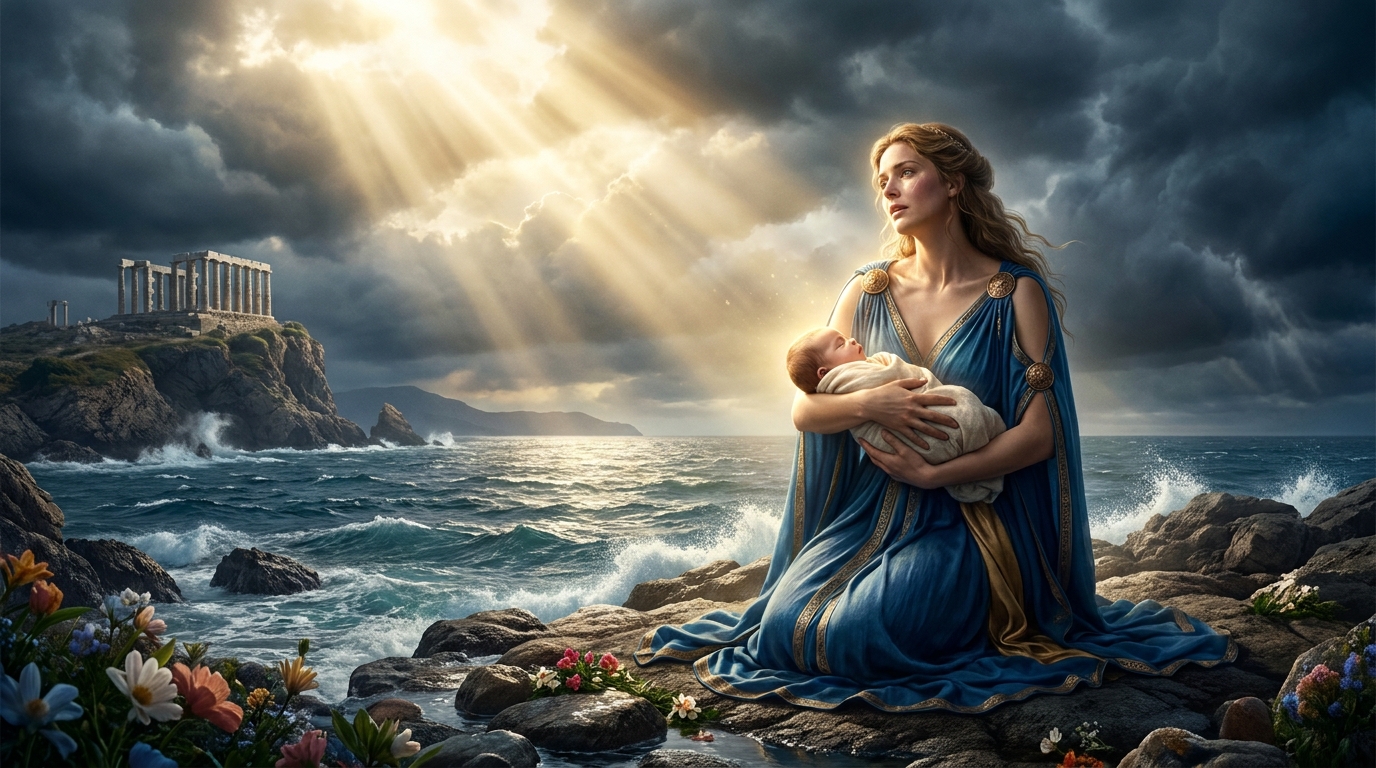
If you have ever imagined Artemis as the moonlit huntress who belongs to no one, start here. Before the bow. Before the nymphs. Before the silver glare of her punishments. Her beginning opens with her mother Leto, driven across the world by divine jealousy.

Leto’s exile
Artemis and her twin Apollo are children of Zeus. In Greek myth, that fact alone is rarely peaceful, but here it turns catastrophic. Zeus’ wife Hera, guardian of marriage and legitimate heirs, treats Leto’s pregnancy as an insult made public.
The punishment is elegantly vicious: Hera does not simply threaten Leto. She makes the world complicit. In many tellings, no place on fixed land will receive Leto for the birth, whether from fear, obedience, or the shadow of Hera’s anger. Earth itself is pressured to refuse her.
So Leto wanders. Not because she is weak, but because she is up against a goddess who understands exclusion as power.
When the gods feud, the battlefield is often a woman’s body, and the weapon is time.
Ancient sources vary on the mechanism and the names of each frightened shoreline, but the emotional logic stays consistent: mercy becomes dangerous, and shelter becomes a political act.
Delos says yes
The place that finally receives Leto is Delos, an island described as poor, wind-scoured, and afraid. In the Homeric Hymn to Apollo, Delos hesitates, weighing compassion against the possibility of punishment.
Some later traditions go even further and call Delos once-floating or unmoored, a scrap of land without the security of roots. Whether literal or symbolic, the point is the same: it is a marginal place that chooses courage.
Delos agrees, bargaining for future glory. The hymn frames this as a sacred contract: if Delos offers sanctuary, Leto’s son will honor the island, and it will become famous among mortals.
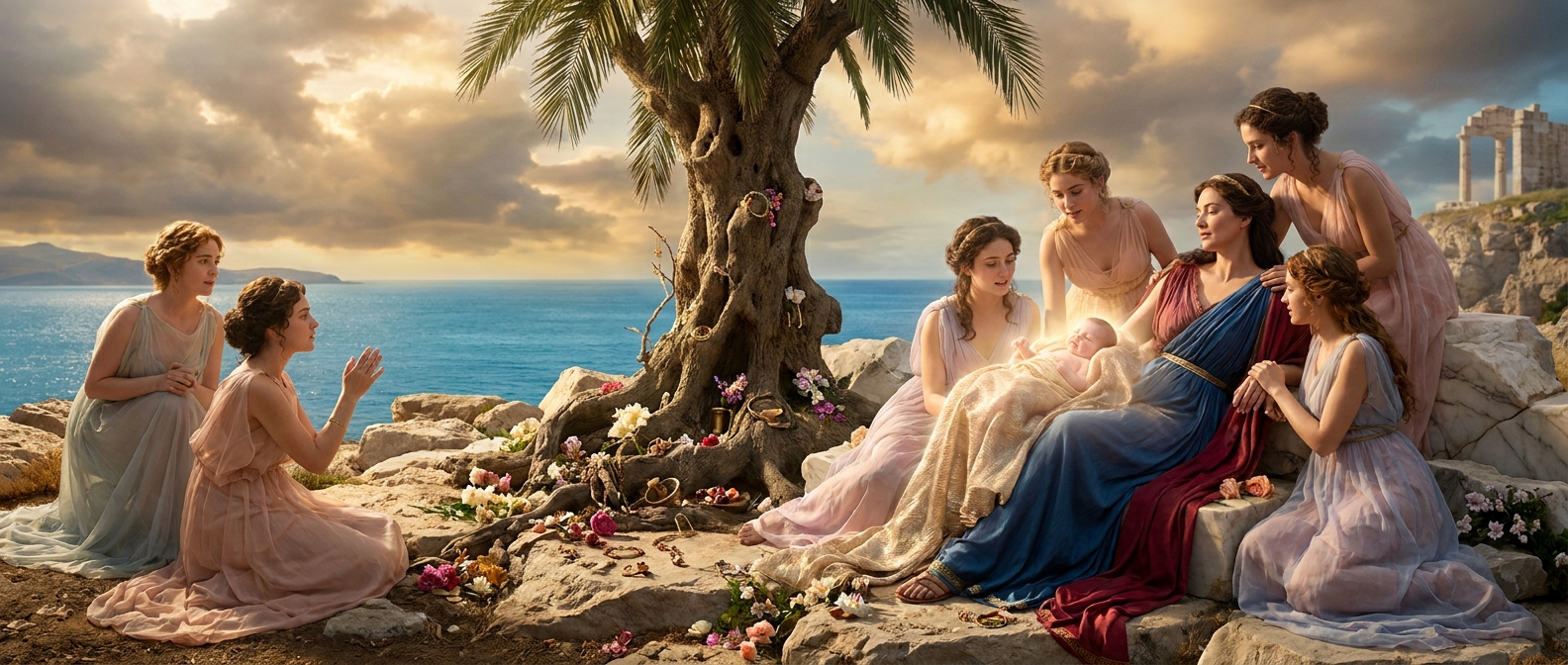
In the hymn, Leto labors beside a sacred palm. The setting is stark and bright: sea cliffs, salt air, and one strip of land refusing to obey Hera’s cruelty.
Hera delays the hour
Hera, of course, is not done. In the Homeric Hymn to Apollo, the obstruction becomes more intimate. Hera keeps Eileithyia, goddess of childbirth, away from Leto. Without her presence, labor stalls. The body is ready. The world is not permitted to cooperate.
This is one of those moments where Greek myth is both supernatural and painfully human. Pain is prolonged not by a monster’s claws, but by a withheld permission.
The other goddesses intervene. They send Iris, the swift messenger, to fetch Eileithyia with bribery. A necklace, a promise, a glittering concession. Olympus runs on status, and even childbirth can be negotiated like court ritual.
Artemis first
Here is the detail that later tradition loves: Artemis is born before Apollo. The earliest hymn is focused on Apollo’s arrival, but later retellings place Artemis first, as if the myth itself tilts toward her competence.
Those same later sources and storytellers linger on another image: Artemis, newly born, helping her mother with the delivery of her twin. Read as literal miracle or symbolic shorthand, it makes a clear claim. Artemis is tied to the threshold of birth, not only to the silence of the forest.
In some Greek cults she bears epithets like Artemis Lochia or Locheia, linking her to labor and delivery. And in places such as Brauron, her worship gathered offerings and rites around girls, growing bodies, and the dangerous passage into womanhood.
Artemis enters the world as a twin, but she does not enter it as a follower.
Apollo arrives
When Apollo is finally born, the hymn turns radiant. Delos blossoms into a stage worthy of a future god of prophecy, music, and clean, lethal light. The island that feared being forgotten becomes the cradle of an Olympian whose cult will spread across Greece.
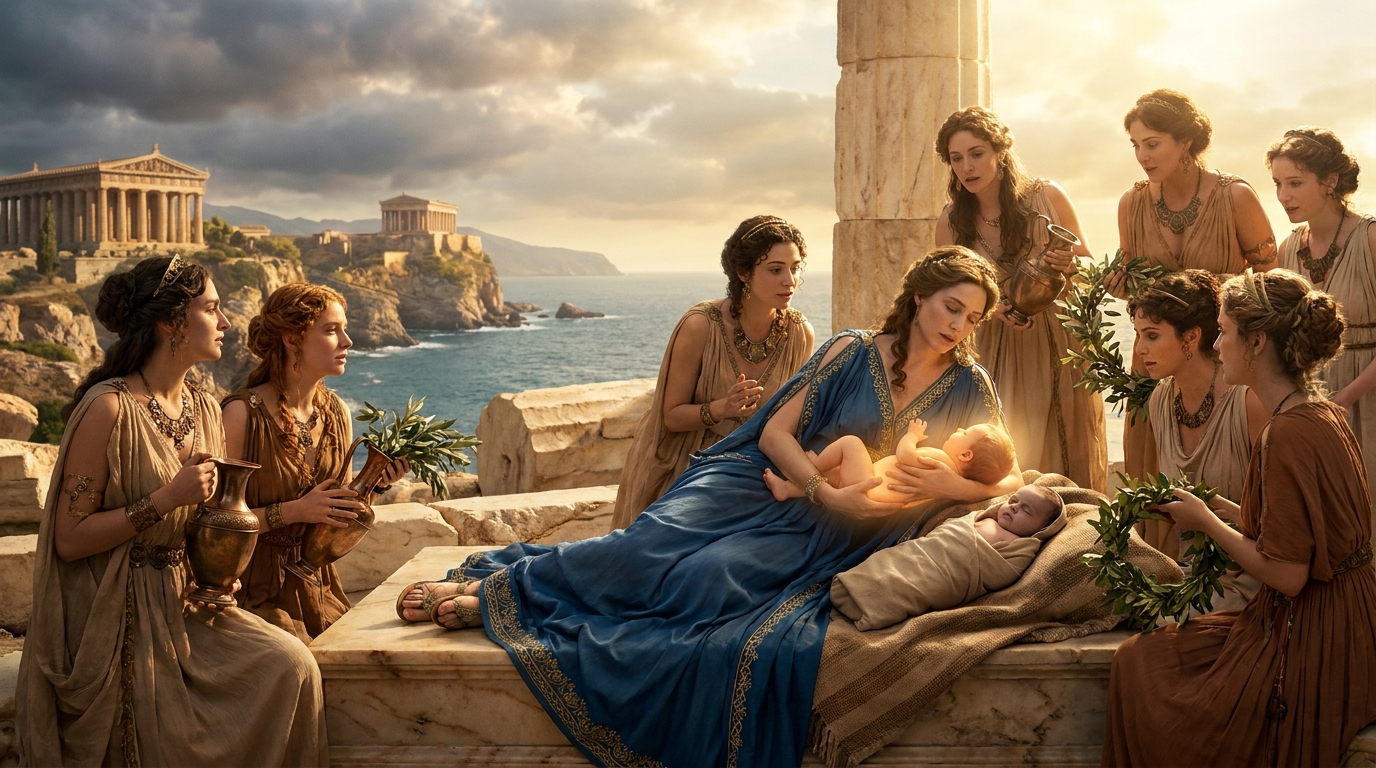
The hymn leans into wonder: goddesses gather, offerings shimmer, and the newborn is fed nectar and ambrosia. Then comes the sudden leap of mythic time, the child-god rising into his own demands. Bow. Lyre. Prophecy. Not ordinary infancy, but destiny arriving in a single breath.
And Artemis, beside him, is the shadow of the same arrow: wilderness to his city, moon to his sun, the untamed edge to his golden order.
Why it matters
Artemis is often introduced to modern readers as the goddess who refuses marriage, who runs with huntresses, who punishes boundary-crossers with merciless precision. That is true. But her birth explains the spine under the silk.
- She is born out of exclusion, with her mother denied shelter. Artemis grows into a goddess who guards borders, sacred spaces, and the right to say no.
- She is born on Delos, a liminal place that survives by being in-between. Artemis will always belong to edges: forest lines, mountain passes, the moment before the arrow lands.
- She is tied to childbirth, not because she is domestic, but because she rules thresholds. Birth is a threshold, and thresholds are her favorite kind of power.
So yes, picture her later beneath a moon that makes every leaf look like silver. But remember the first scene too: a frightened island, a labor delayed by courtly cruelty, and a newborn goddess arriving before her brother, already angled toward independence.
Olympus did not give Artemis her wildness. Olympus tried to corner her mother, and Artemis learned early what it means to survive a divine grudge.
Sources
The fullest early narrative of the twins’ birth appears in the Homeric Hymn to Apollo, which gives us Delos’ fear, Hera’s interference, and the role of Iris and Eileithyia. Later poets and mythographers expand the tradition that Artemis is born first and associate her more explicitly with childbirth at the threshold of danger. For Delos and its sacred prestige, later treatments such as Callimachus also echo and amplify the island’s mythic significance.