Hephaestus Myths: Fire, Craft, and Outsider Genius
Greek Mythology
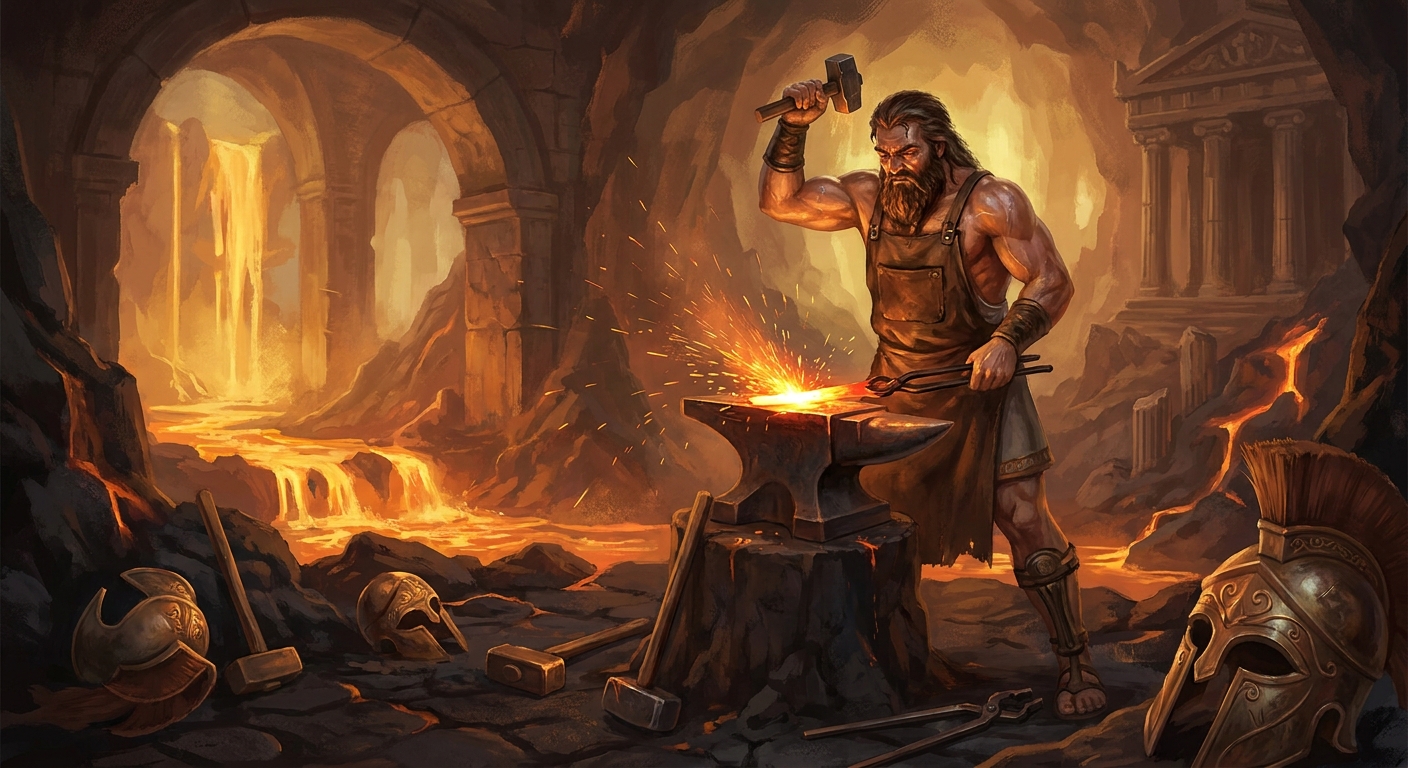
Hephaestus is the god you forget until the cosmos needs something built. Chains fit for a Titan like Prometheus. A throne that bites back. Armor so radiant it looks like sunrise hammered into metal. Olympus runs on spectacle, but it survives on infrastructure, and Hephaestus is the one in the volcanic dark making sure the divine machine does not collapse under the weight of its own drama.
He is also, inconveniently for the Olympians, the god who knows what it means to be unwanted. Thrown, mocked, sidelined, and still essential. In myth, that is not a motivational slogan. It is a scar.

Who Hephaestus Is
In the Greek imagination, Hephaestus is the god of fire and craft, the kind of genius that smells like smoke and sweat rather than ambrosia. He builds palaces, weapons, automatons, jewelry, and traps. He is the patron of smiths and artisans, the divine proof that skill can be holy.
And yet his stories rarely let him be simply admirable. They insist on a harsher truth: Olympus can be cruel to anyone who does not fit its beauty standard, even when that “anyone” is their own.
The Fall
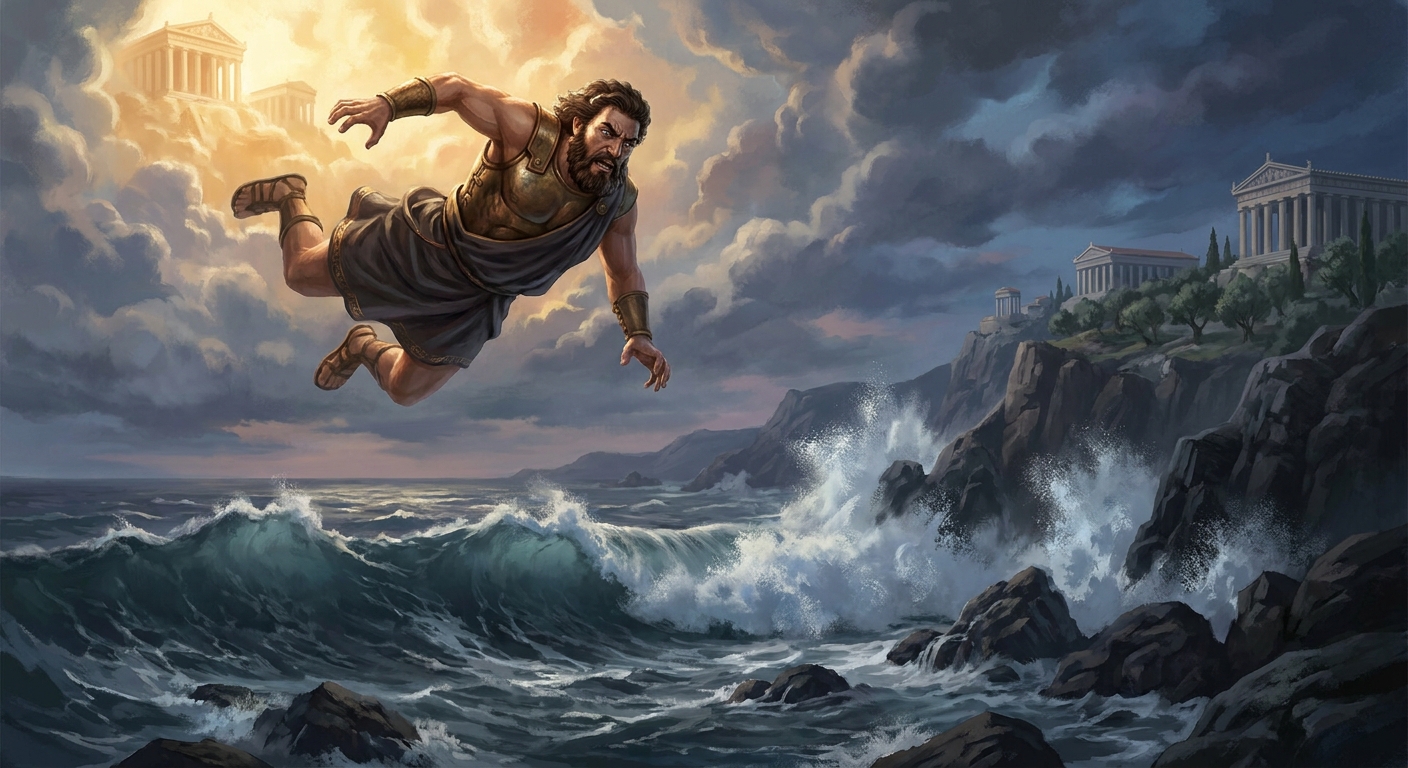
Hephaestus’ origin comes with more than one version, which feels fitting for a god who is always being rewritten by other people’s discomfort. In one tradition, Hera bears him without Zeus and rejects him for his deformity, hurling him from Olympus. In another, Zeus throws him down for taking Hera’s side in a divine quarrel. Either way, the result is the same: the god of making is made into an outcast.
He falls for a long time. Some myths place his landing on Lemnos; others cast him into the sea, where sea powers such as Thetis and Eurynome shelter and tend him. The details shift, but the emotional physics do not. The Olympians send him away. The world below catches him.
A god can survive the fall. What he does not survive, not cleanly, is the memory of being thrown.
The Throne Trap
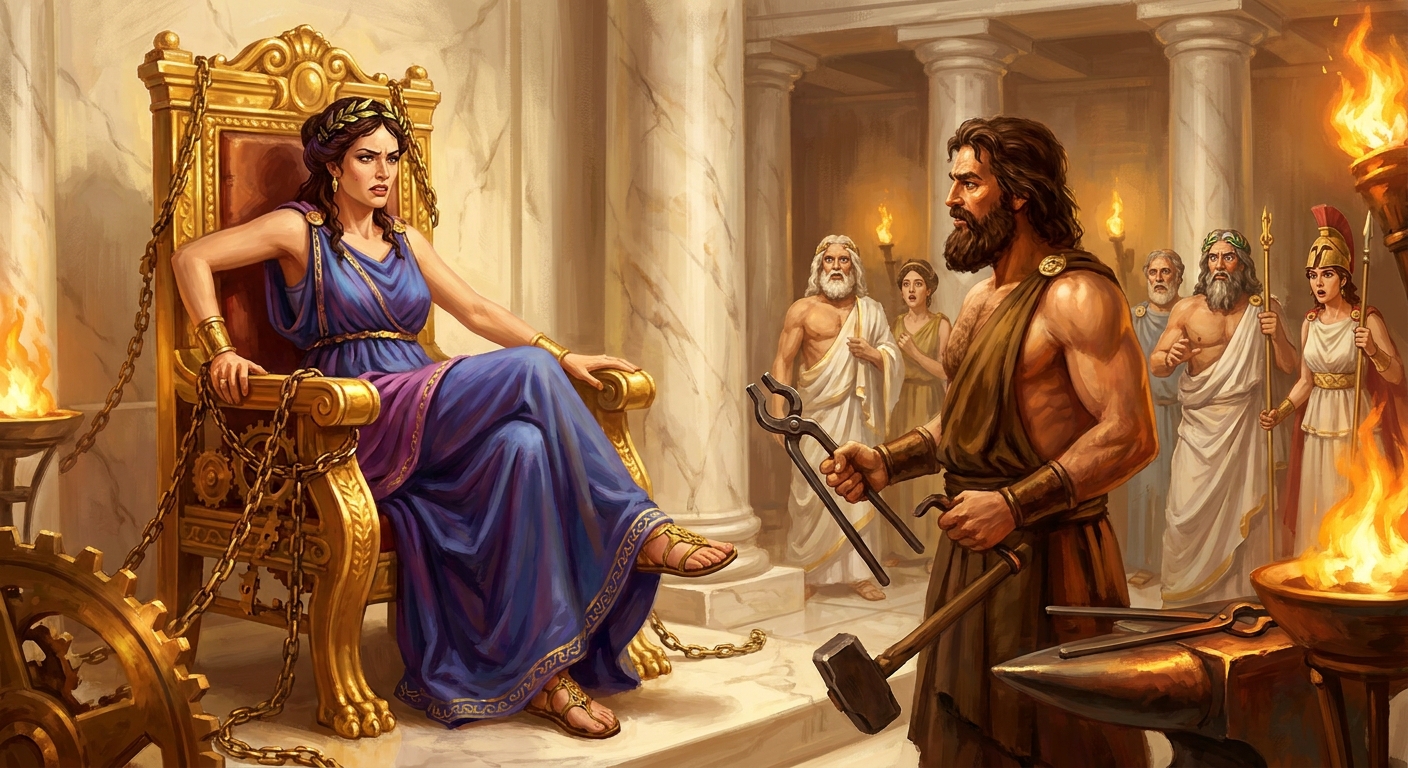
In one famous tale, Hephaestus sends Hera a gift: a magnificent golden throne, the kind of polished splendor Olympus pretends is its native language. Hera sits. The throne snaps shut. She is trapped by her own appetite for status and her assumption that a rejected son could only offer gratitude.
This is not random cruelty. It is a crafted message: you threw away my body, so I will prove what my hands can do.
The gods panic. No one can free her. Eventually, Dionysus is sent to coax Hephaestus back, often by wine and companionship, sometimes by a tipsy parade that turns the god of the forge into an unwilling celebrity. He returns, releases Hera, and takes his place among the Olympians again, but the reunion tastes like smoke. He is accepted because they need him.
The Net of Shame
If Olympus had a tabloid, the Aphrodite situation would be the cover story for a century.
Hephaestus is paired with Aphrodite in a marriage that reads like politics disguised as romance. She is glamour, desire, the soft weaponry of beauty. He is soot and craft, the god whose hands are more famous than his face. The myths do not pretend it is equal, and they do not pretend it is kind.
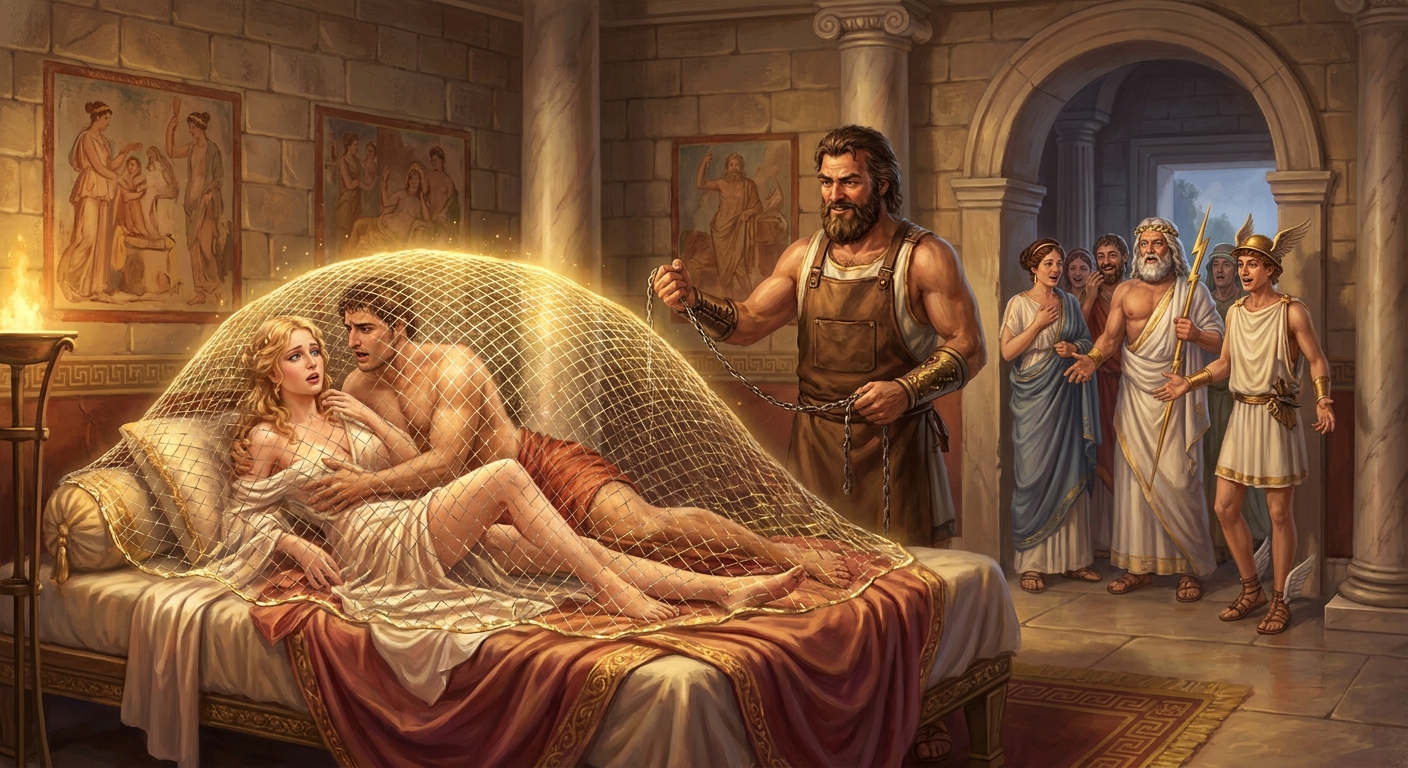
Aphrodite takes Ares as her lover. When Hephaestus discovers the affair, he does what he always does. He makes something. In Odyssey Book 8, he forges a nearly invisible net, a masterpiece of fine metalwork, and sets it as a trap on the bed. The lovers are caught and displayed to the other gods, a public humiliation staged with artisan precision.
It is a story about adultery, yes, but it is also about power. Hephaestus cannot compete in the beauty economy of Olympus, so he weaponizes the one currency the gods cannot counterfeit: craft.
In the hands of Hephaestus, even laughter becomes a tool. Even a marriage bed becomes a snare.
What He Builds
Not all Hephaestus myths are about rejection and retaliation. Some are about the divine tenderness of making, the way a crafted object can become fate you can touch.
Achilles’ armor
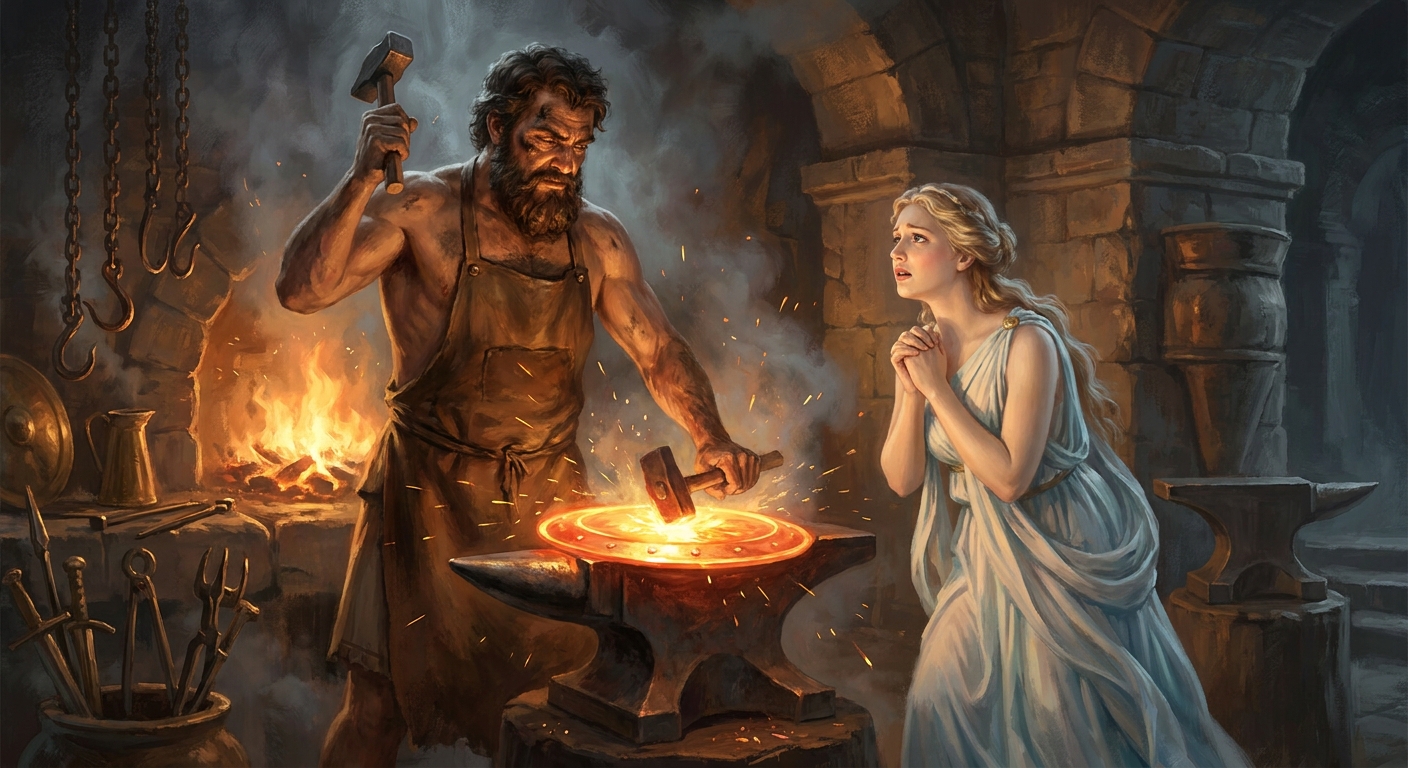
In Homer’s Iliad, when Achilles loses his armor, the sea-nymph Thetis comes to Hephaestus. She asks him to forge new arms for her son. He obliges with a craftsman’s intensity, creating the famous Shield of Achilles, a cosmos in metal: cities, fields, dances, wars, seasons, human life hammered into a single circle.
This is Hephaestus at his most godlike. Not because he is feared, but because he makes meaning.
Pandora
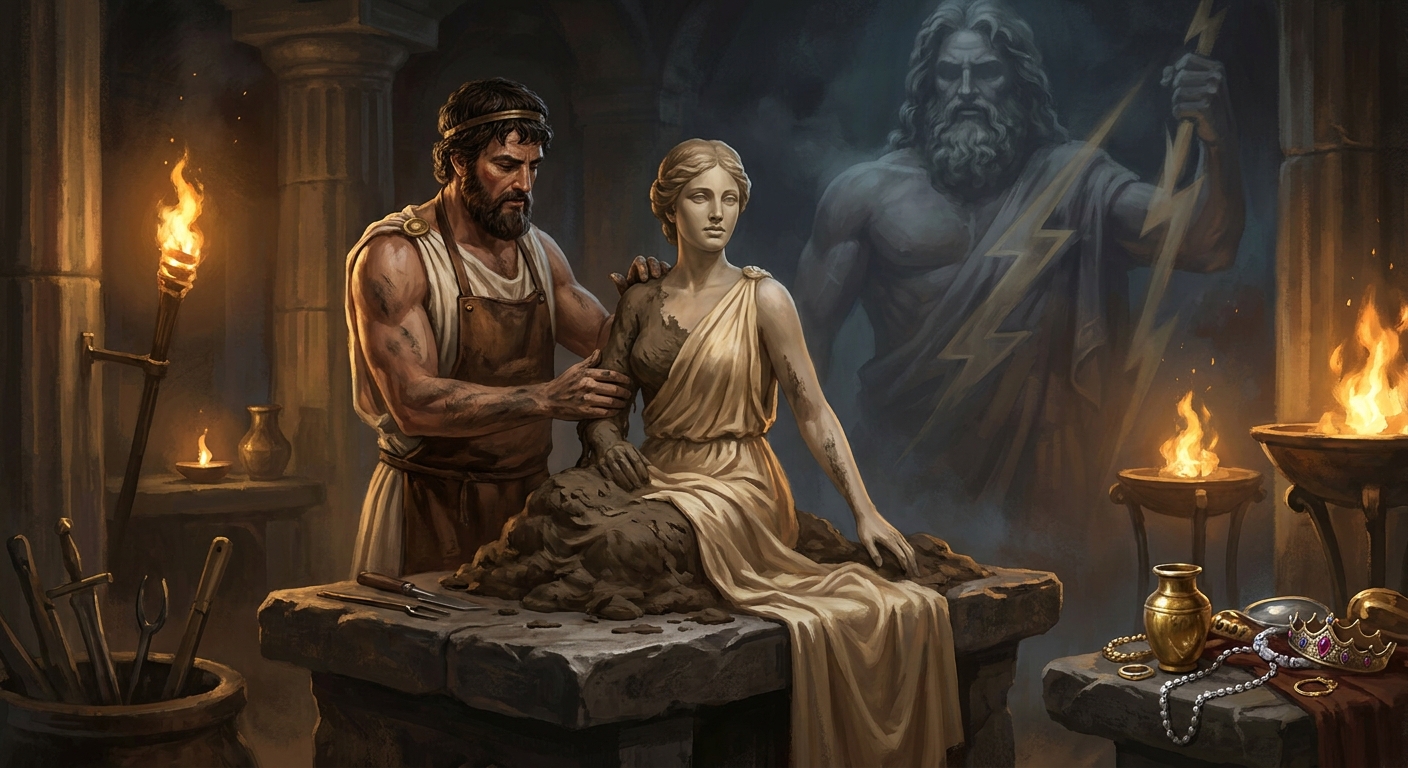
In Hesiod’s telling, Zeus orders Hephaestus to form Pandora from earth, sometimes mixed with water in later retellings. Other gods add gifts and charms that prove ruinous. Pandora becomes the beautiful turning point that releases suffering into the world.
It is a brutal assignment. Hephaestus, the maker, is used as an instrument of punishment. The myth quietly suggests that craft is not automatically benevolent. A perfect creation can still be a weapon, depending on the hand that commissions it.
Volcano God
Ancient sources link Hephaestus to volcanic landscapes and to Lemnos in particular, and later tradition loves to place his furnace under Etna. Wherever the forge is set, the point stays the same: fire lives under the world, and the smith god lives with it.
His limp and his labor make him different from the polished Olympians, and the myths refuse to hide that difference. Sometimes they use it for cruelty. Sometimes they use it for realism. Always, they use it to make a point.
- Fire: not only destruction, but transformation.
- Metal: the element of chains, armor, and promises you cannot easily undo.
- The workshop: a private realm where rejection is melted down and reforged into authority.
Reading the Myth
It is tempting to turn Hephaestus into a neat modern archetype: the misunderstood maker, the underpraised engineer, the artist in the back room keeping the lights on. But Greek myth does not hand out clean inspirational posters. Hephaestus is sympathetic, and sometimes vengeful. He is wronged, and sometimes ruthless. That contradiction is the point.
His most memorable moments happen when craft becomes emotion made visible. A throne that punishes a mother. A net that forces the gods to look at their own hypocrisy. A shield that carries the whole human world, beautiful and doomed, into battle.
Hephaestus does not simply make objects. He makes consequences, and then watches the gods pretend they did not ask for them.
Hephaestus in Brief
If you want the cleanest way to remember him, hold onto this: Hephaestus is the outsider whose work holds Olympus together. The Olympians may glitter, but they still need doors that swing, chains that bind, weapons that win wars, and halls that do not collapse into the sea.
And somewhere beneath the marble and the gossip, the forge keeps burning.