Argonauts Myths: The Golden Fleece and the Sea-Bitten Quest
Greek Mythology
Some myths feel like marble, cleanly carved and safely distant. The voyage of the Argonauts is not one of them.
This story is salt and omen. It is the creak of oars under a starless sky, the sting of prophecy behind the tongue, and the uncomfortable truth that a “heroic quest” is often just a prettier name for a chain of disasters with laurel woven over the bruises.
At its center hangs a single radiant object, the kind mortals ruin themselves for: the Golden Fleece. A treasure with a backstory steeped in family violence and divine rescue, a destination guarded by a dragon, and a price that will not be paid all at once, but slowly, over years, in love and exile and blood.

The Fleece Before the Quest
The fleece is already fate-heavy before anyone even thinks to fetch it. It begins with Phrixus, a boy nearly sacrificed, saved by a miraculous ram with a golden coat, a creature sent by divine interference and family cruelty in equal measure.
Phrixus escapes across the sea and reaches Colchis, where, in many tellings, he sacrifices the ram to Zeus in gratitude and hangs the fleece in a sacred grove. King Aeëtes keeps it as a sign of power and protection. That is the first seduction: the fleece becomes a guarantee, a talisman that says, “This kingdom is favored.”
And like every shining guarantee in Greek myth, it attracts a thief with a tragic history.
Jason’s Bargain
Jason is born into a royal house and raised away from it, the classic setup for Greek heroism: a young man whose destiny is both inheritance and trap. His uncle Pelias has seized the throne of Iolcus, and prophecy, that glittering poison, warns Pelias to beware a man with one sandal.
Jason arrives missing one sandal, as if the gods themselves dressed him for maximum dread. Pelias does what tyrants do best: he smiles, nods, and assigns an impossible task. Bring back the Golden Fleece. Then we will talk about the throne.
A bargain offered by a frightened king is never a path back to safety. It is a path deeper into the myth.
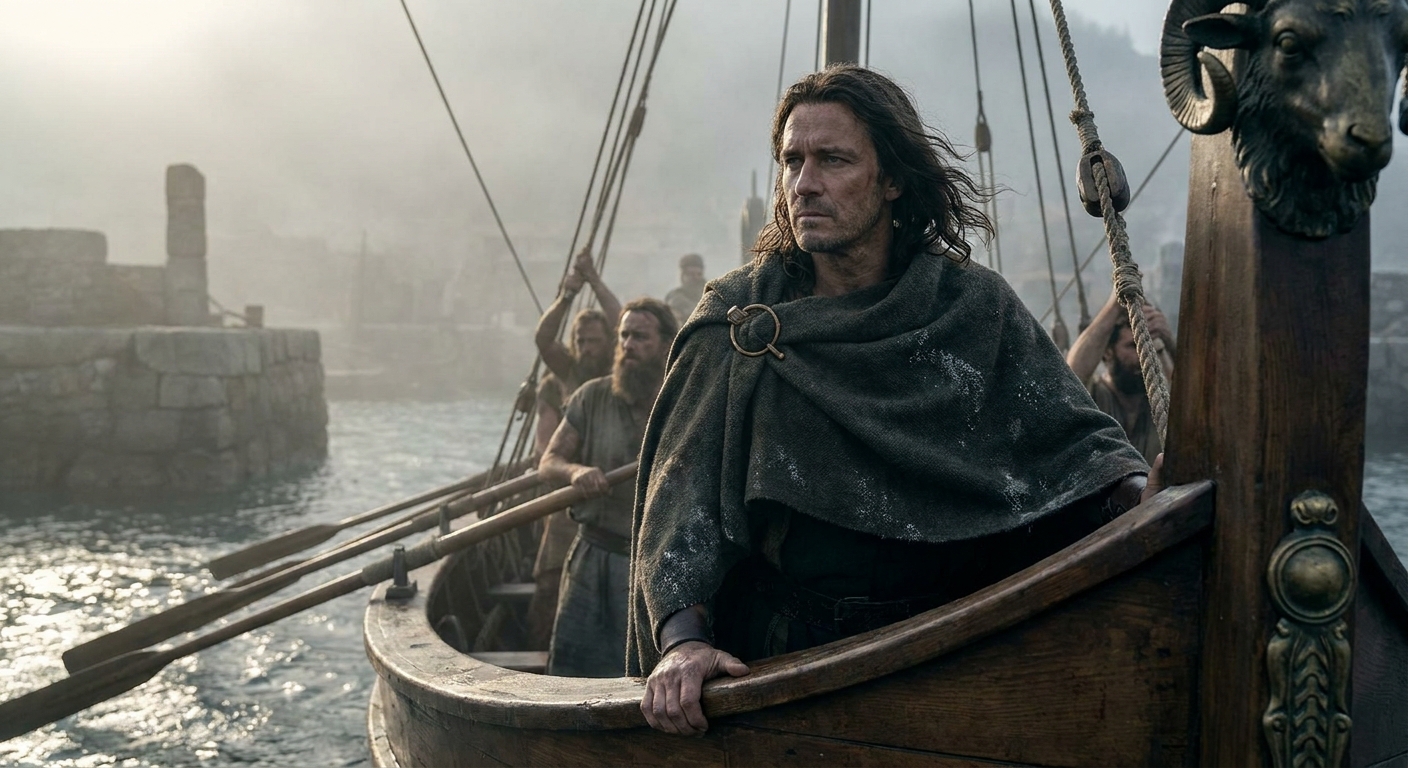
The ship is built, the crew assembled, and the voyage begins with that intoxicating confidence Greeks gave their heroes: if enough famous men stand on one deck, surely fate will blink first.
The Argo and Its Crew
The ship is the Argo, crafted by Argus with help from Athena in many traditions, and sometimes fitted with a prophetic timber from Dodona. Even the hull is half technology, half omen. Greek myth loves a tool that can whisper back.
The crew list reads like a roll call of Greek ambition. Different ancient sources vary, but the spirit is consistent: the expedition gathers heroes as if collecting blades.
- Orpheus, whose music is not decoration but a ward against terror.
- Castor and Polydeuces (the Dioscuri), storm-touched twins with a reputation for saving sailors.
- Atalanta appears in some later versions, a reminder that myth is a living river, not a sealed jar.
- Heracles, briefly, like a thundercloud that refuses to stay in the same sky.
And that brief membership matters, because it teaches us what kind of story the Argonauts are sailing into.
Heracles Left Behind
Heracles boards the Argo with the gravitational force of a man who has already become legend. But the Argonaut myth is not built to revolve around him. It cannot. Heracles is too large for ensemble tragedy.
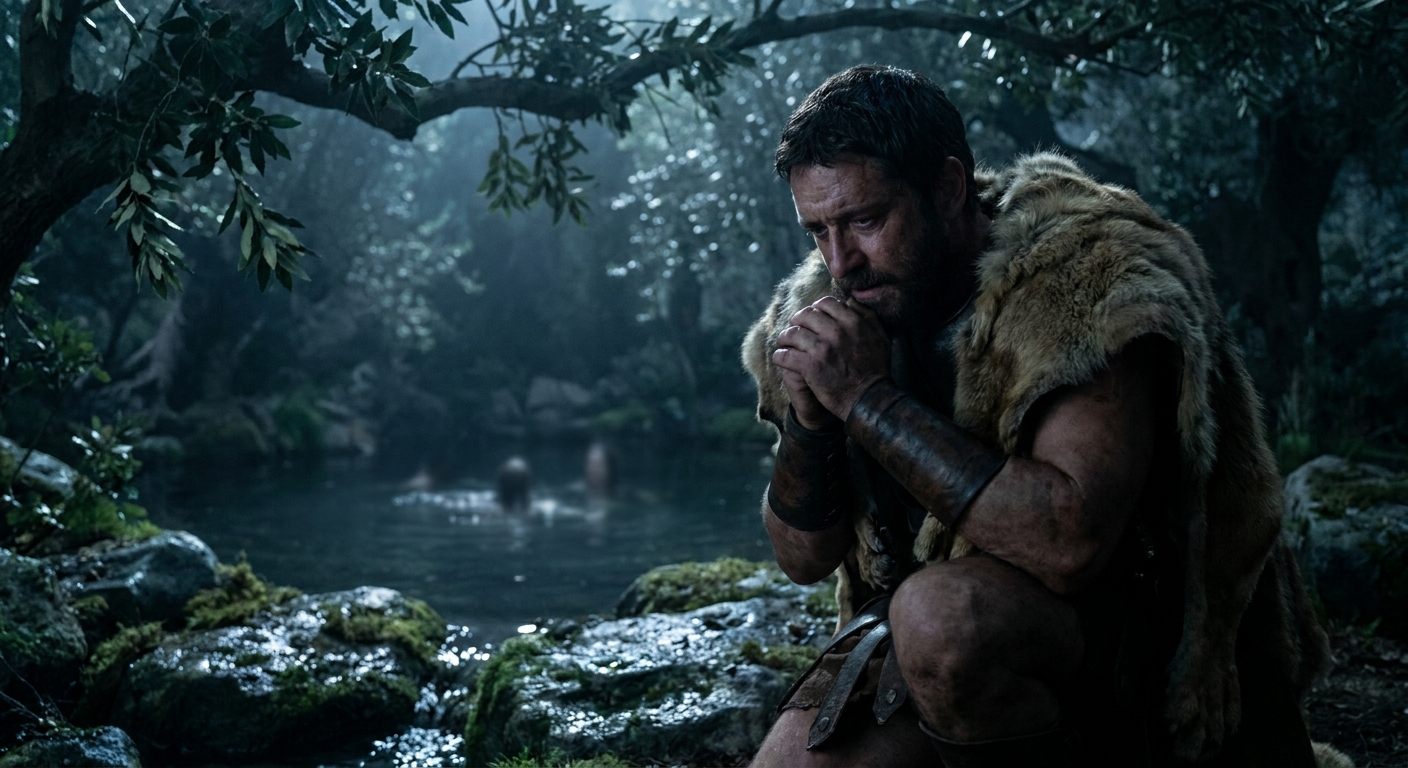
At a stop along the voyage, Heracles’ beloved companion Hylas is drawn away by nymphs at a spring. Heracles searches, furious and helpless, and is left behind when the ship departs.
Some versions soften it into accident or necessity, a moment of missed signals and wind on the wrong side. Others let it sting: in some tellings, the crew chooses the quest over the man who could have made it easy.
Lemnos
The Argonauts reach Lemnos, an island ruled by women after a rupture so violent it feels like myth trying to warn you about neglected vows. In one common version, the women of Lemnos have been punished by Aphrodite with a stench that drives their husbands away, and in rage and despair they kill the men.
Now the island is a polished wound, governed by Hypsipyle, and the arrival of the Argonauts brings temptation disguised as hospitality. Beds are offered. Names are learned. The quest begins to soften at the edges.
It is an interlude, yes. But Greek interludes are dangerous. They are where heroes forget their deadlines and myths quietly tighten the rope.
Eventually the Argonauts leave, because the story demands motion. Lemnos remains behind like a half-closed door, and some of its consequences will echo later in genealogies and regrets.
Phineus and the Harpies
On the way east, many tellings place the Argonauts before the prophet Phineus, a man punished with hunger while Harpies foul and steal his food as soon as it lands.
The Boreads, winged sons of the North Wind, drive the Harpies off. Phineus repays the mercy with knowledge, and knowledge is the only coin that spends well in a world governed by capricious gods. He tells them what waits ahead: a gate of stone that hates ships.
The Clashing Rocks
Every archetypal quest needs a threshold, and for the Argonauts it is the Symplegades, the Clashing Rocks. Two living cliffs that slam together and pulverize anything daring enough to pass.
The Argonauts do not brute-force this. They do what Greek myth occasionally rewards: they use ritual intelligence. A dove is sent through first. It loses tail feathers, but survives. That is the omen: passage is possible, but it will cost something small before it costs everything.
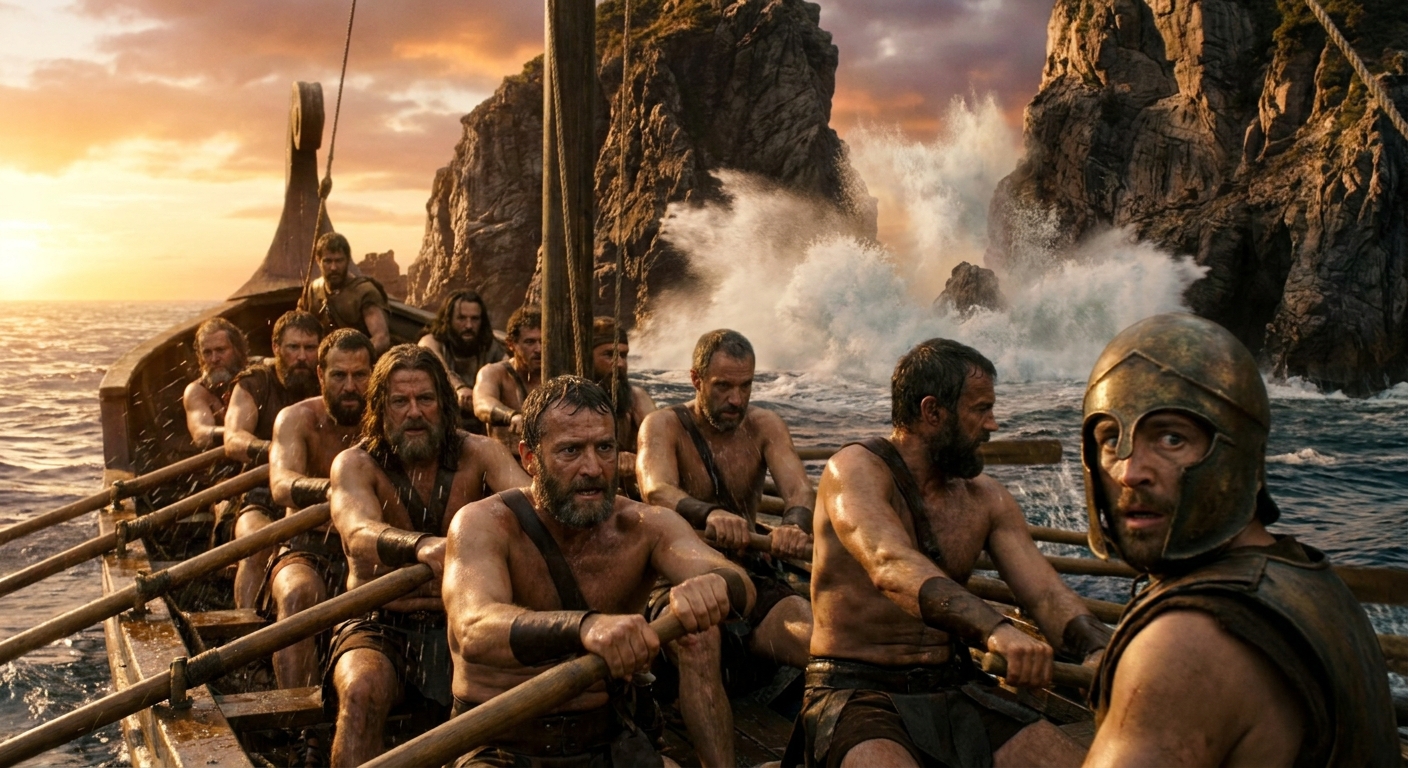
They row. The rocks clap shut behind them, scraping the ship. The Argo survives, and in many versions the rocks cease their clashing after the successful passage, as if the sea itself has accepted a new rule.
Colchis and Medea
In Colchis, the fleece hangs in a sacred grove under the glare of a sleepless dragon. King Aeëtes does not hand over power because a handsome stranger asks politely. He sets tasks designed to break a man’s spirit and body.
Jason must yoke fire-breathing bulls with bronze hooves, plow a field, and sow it with dragon’s teeth, which sprout into armed men. It is agricultural labor reimagined as nightmare, a reminder that “civilization” in Greek myth is often built on violence you are encouraged not to look at too closely.
And then, like a match struck in a dark temple, appears Medea.
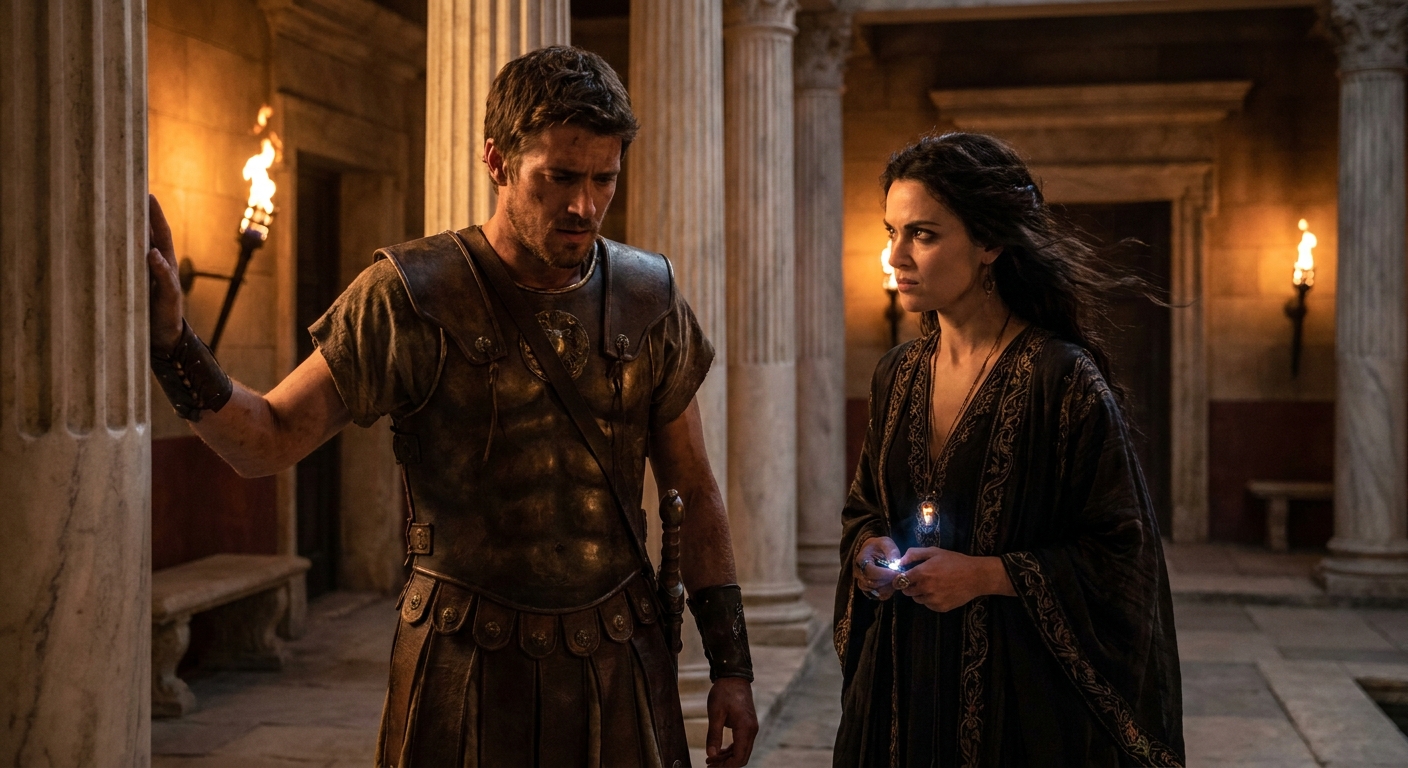
Medea is a princess of Colchis, a granddaughter of the sun god Helios in many traditions, and a sorceress whose power is not cute, not domestic, not safe. In Apollonius and later retellings, Hera and Aphrodite turn to Eros to strike Medea’s heart for Jason, because gods love using desire as a lever. Either way, Medea becomes the hinge of the whole voyage.
The fleece can be seized with strength. It is taken with magic, and magic always asks who you are willing to become.

The Theft
Medea gives Jason the advantage he cannot earn alone. In the best-known versions, she provides a protective ointment that shields him from fire and iron, and counsel for surviving the sown warriors. Jason succeeds, not because he is the strongest man alive, but because a woman with dangerous gifts decides to gamble her life on him.
When the time comes to take the fleece, the dragon must be dealt with. Ancient sources vary in detail, but the myth’s emotional truth stays steady: Medea’s craft overcomes the guardian, often by lulling it to sleep with spells and drugs. The fleece is seized. The grove is violated. The sacred becomes stolen property.
And Medea flees with Jason. The quest turns intimate and damning. It becomes a love story underwritten by treason.
Absyrtus
Colchis does not let its princess and its sacred treasure vanish without consequence. Aeëtes pursues. The sea behind the Argo becomes a corridor of knives.
Enter Absyrtus (or Apsyrtus), Medea’s brother. The tradition splits here, because Greek myth enjoys giving us multiple ways to fall.
- In one strand, Absyrtus is a child, lured and killed, his body dismembered and scattered to delay pursuit as Aeëtes stops to gather the pieces.
- In another, Absyrtus is older, murdered through ambush and betrayal.
Either way, the escape is paid for with kin-blood. Medea’s magic, once introduced as salvation, reveals its other face: it can also be the tool by which love becomes atrocity. The Argo slips onward, and the wake behind it feels watched.
Purification and Detours
After Absyrtus, the voyage is no longer just daring. It is polluted. Greek myth treats certain acts as stains that cannot be scrubbed off with seawater.
Many traditions send the Argonauts toward Circe, Medea’s aunt, for purification. Circe is another woman of spells, but her magic has a colder, more priestly quality here. She performs the rite, but she does not absolve them in the modern sense. She names what they are, and the naming itself is a punishment.
The return journey accrues further trials across different versions. Some remember the Sirens, and the moment Orpheus finally pays his passage by lifting his lyre against their song. Others remember hostile shores, tempests, strange islands, and later perils like Talos on Crete. Even when the map changes, the atmosphere stays the same: the gods have noticed.
The Homecoming
Eventually the Argonauts bring the fleece back to Iolcus. You might expect trumpets, a neat restoration, the moral satisfaction of the rightful heir reclaimed.
Greek mythology is not that kind.
Pelias does not simply step aside, and in the most famous telling, Medea orchestrates his death through a grim demonstration that persuades Pelias’ daughters to dismember him in the hope of rejuvenation. The promise is false. The result is murder dressed as medicine, and Jason’s “return” curdles into exile.
Even victory, in this myth, is contaminated by the methods used to achieve it.
Jason’s Betrayal
If you follow the Argonaut story beyond the voyage itself, it ends not with the fleece, but with the fracture between Jason and Medea.
In Corinth, Jason seeks a new marriage, often with Glauce (also called Creusa), the daughter of King Creon. It is a political move, a social climb, a tidy attempt to turn a blood-soaked epic into a respectable life.
But Medea is not a disposable accomplice. In Euripides and later traditions, her revenge becomes one of the most harrowing sequences in all Greek literature, an eruption of wounded pride, betrayal, and the terrifying logic of a woman who has already crossed too many lines to return to innocence.
The Golden Fleece is not the end of the myth. It is the beginning of the reckoning.
Why This Quest Endures
The Argonaut expedition is the blueprint later myths keep rewriting. It has the essential machinery of the Greek quest narrative, polished by repetition and salt:
- A stolen throne or threatened inheritance that demands action.
- An impossible object that promises legitimacy if obtained.
- An assembled crew, a temporary constellation of heroes whose glory does not protect them from mistake.
- Threshold trials like the Symplegades, where cleverness matters as much as strength.
- A divine bargain, because gods never sponsor a journey for free.
- A love entanglement that functions as both miracle and curse, embodied in Medea.
- A moral stain that follows the hero home, proving the quest changes the world and the quester.
Most of all, it captures the Greek obsession with consequence. The Argo does not glide through myth as a clean triumph. It cuts the sea like a blade, and it leaves people bleeding on both shores.
That is why the Argonauts endure. Not because they were the first to sail, but because their story admits what adventure stories love to hide: the ocean is beautiful, the prize is radiant, and the cost is real.
Key Episodes
- The fleece’s origin: Phrixus, the golden ram, the sacred grove in Colchis.
- The bargain: Pelias sends Jason to fetch the fleece.
- The crew: the Argo launches with a roster of heroes, including Heracles briefly.
- Lemnos: seductive refuge and dangerous delay.
- Phineus: the Harpies, the Boreads, and the warning that opens the sea-road ahead.
- The Symplegades: the Clashing Rocks, passage by omen and nerve.
- Colchis: Aeëtes’ tasks, Eros and divine interference, Medea’s choice.
- The dragon: the fleece taken from a sacred guardian.
- Absyrtus: escape purchased with murder and lasting pollution.
- Detours: Circe’s purification, the Sirens, and other sea-borne punishments.
- Homecoming: the fleece returns, peace does not.
- Betrayal: Jason’s political marriage attempt ignites Medea’s catastrophic revenge in later tradition.