Daedalus and Icarus
Greek Mythology
Some myths arrive like a thunderclap. This one arrives like a whisper of wax and sea salt, as though you are standing on a Cretan cliff and the wind is telling you a secret it has told for centuries.
Daedalus is the kind of mind myth both admires and fears: brilliant, practical, and capable of turning imagination into machinery. Icarus is his son, bright as a struck match, born into a story where escape is possible but safety is never promised.
Between them sits the most famous invention in the ancient world that never existed: wings built from feathers and wax, engineered not for glory but for survival. And like so many mythic gifts of hope, they arrive with a cost.

The Mind Behind the Labyrinth
Before Daedalus ever looks at the sky and decides it can be negotiated with, he is already famous for building the kind of things that make kings feel powerful.
In most traditions, he is an Athenian craftsman and inventor of near-mythic competence. He designs statues so lifelike they seem ready to step off their pedestals. He creates clever tools and devices. He embodies techne, the Greek idea of artful skill, the intelligence of hands guided by a restless brain.
But myth rarely lets genius remain clean. Some versions include a darker prelude: Daedalus grows jealous of a talented nephew, often named Talos or Perdix, and tries to eliminate the competition. The crime follows him like a stain. Athens becomes unsafe. Exile begins.
Crete and the Golden Cage
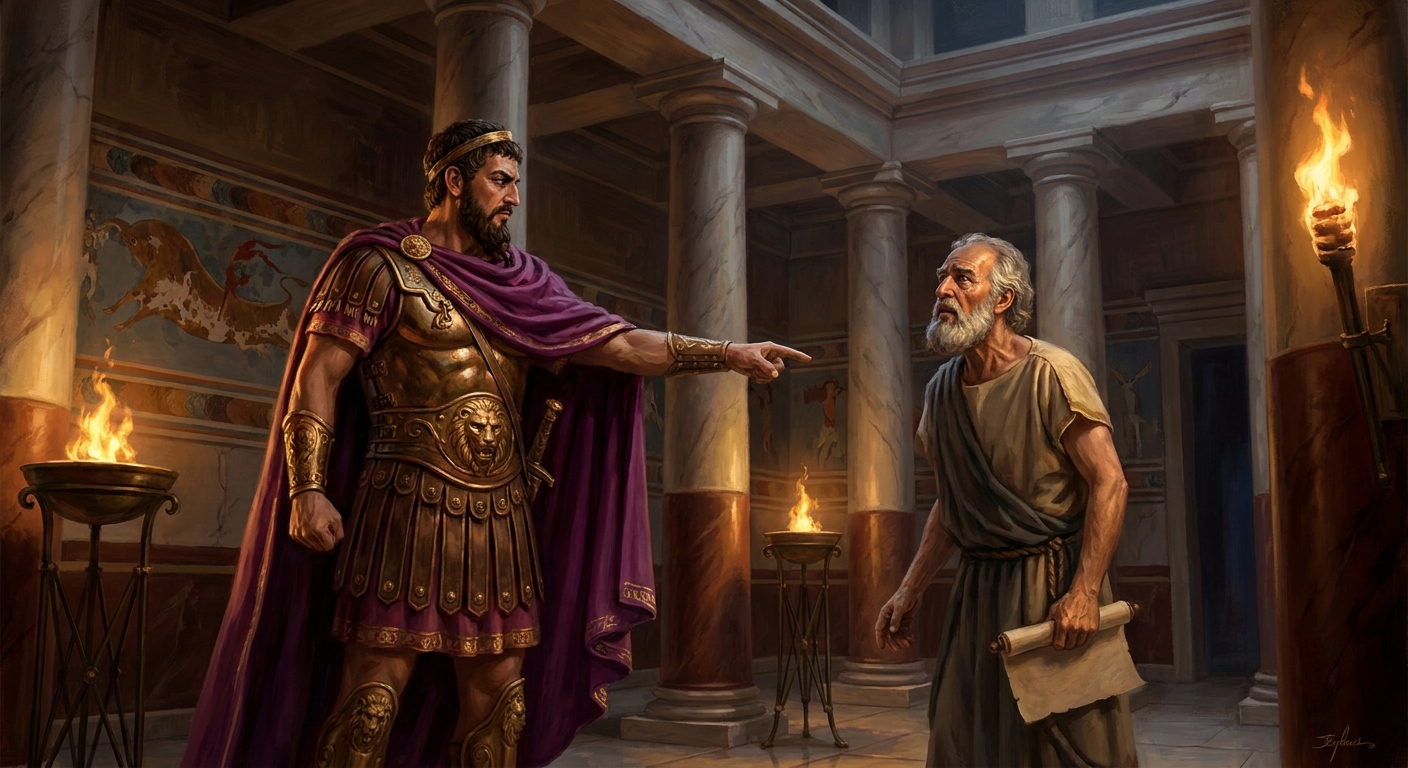
Daedalus ends up on Crete, working for King Minos, a ruler with wealth, fleets, and the kind of authority that expects obedience to look like gratitude.
Minos has a problem that cannot be solved with diplomacy. In the underbelly of his palace lives the Minotaur, a creature born from divine punishment and human arrogance. To contain it, Daedalus designs the Labyrinth, not a simple maze but a living idea of confusion: a structure meant to swallow certainty whole.
And then comes the human complication that ruins a perfectly good commission. When Ariadne helps Theseus survive the Labyrinth with a thread, Daedalus is sometimes blamed in later tellings, directly or by design, as if the builder of the trap must also be responsible for its undoing. Minos does not forgive betrayal, especially not from the mind that built his greatest symbol of control.
So the inventor who once made cages for monsters becomes a prisoner himself, kept on the island as though genius can be owned.
The Wings
Escape by ship is impossible. Minos has ships, sailors, and watchers enough to make the horizon feel locked.
Escape by land is a joke because Crete is an island and myth loves geography that behaves like destiny.
So Daedalus does what he always does. He invents a third option.
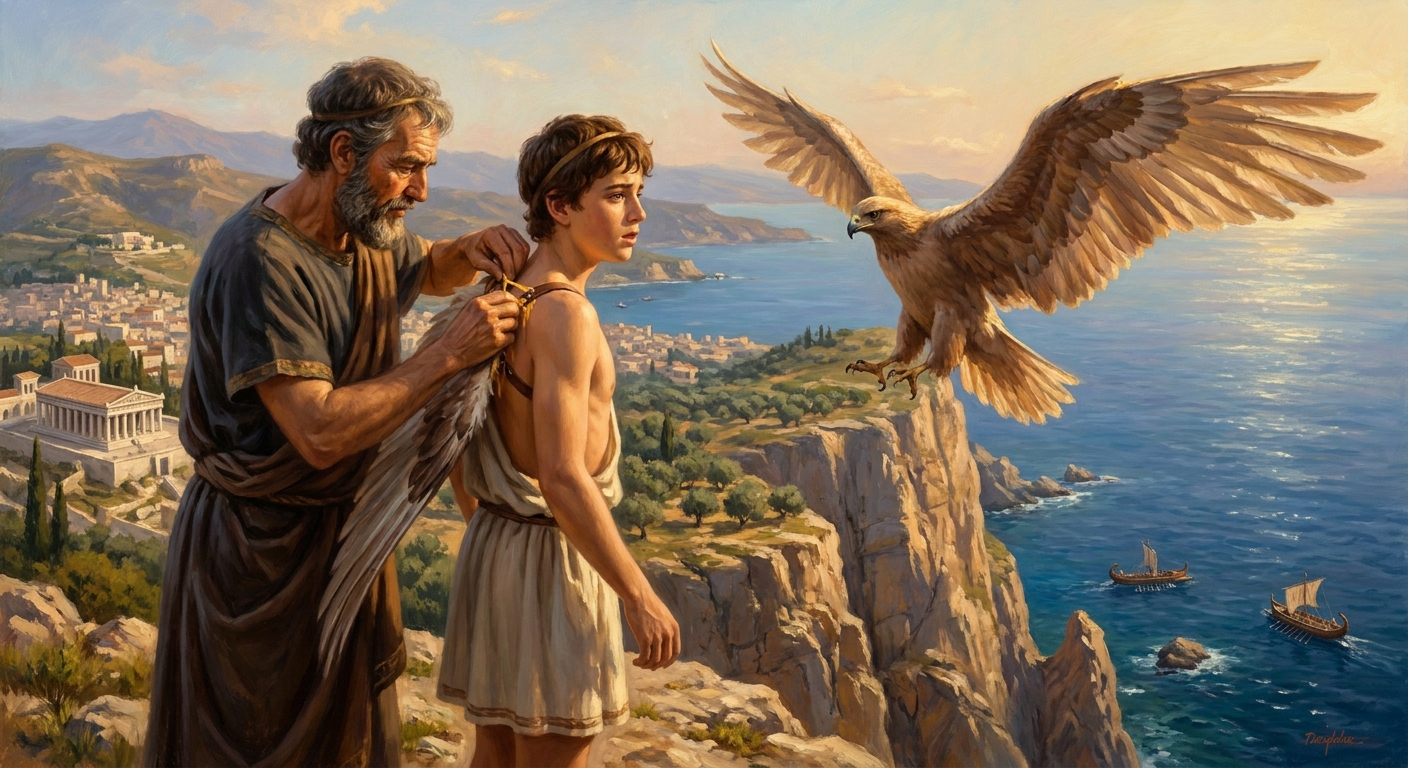
He gathers feathers, small ones, large ones, the fallen wealth of birds. He arranges them like scales, binds them with thread, seals them with wax. The workmanship is intimate. The stakes are mortal. Two sets of wings, because in tragedy you rarely fall alone.
There are warnings in this myth, but they are not thunderous. They are paternal. They are practical. And they are about to be ignored.
Daedalus instructs Icarus on the one thing that matters: fly the middle path. Too low and the sea will drag the wings down with damp heaviness. Too high and the sun will soften the wax. The advice is engineering, but it is also ethics. Myth adores turning physics into fate.
Icarus and Altitude
It is easy to turn Icarus into a moral lesson with neat edges, a convenient figure for hubris. But he is also something more complicated and more painful: a boy tasting power for the first time.
Imagine it. You have lived under a king’s gaze, inside a story your father cannot argue with. Then suddenly you are above the sea, the air holding you as if it has always been yours. The world becomes small. The rules become negotiable.
In the Roman poet Ovid’s telling in the Metamorphoses, there is a heartbreaking detail: as Daedalus works, passersby watch and think the pair must be gods. That is the myth’s cruel flirtation. They are not gods. They are mortals doing something godlike, which is precisely why it cannot end well.
Icarus climbs. He climbs because youth mistakes intensity for invincibility, because the sun looks like a prize, because stories are full of people who confuse being allowed to do something with being safe to do it.
The Fall
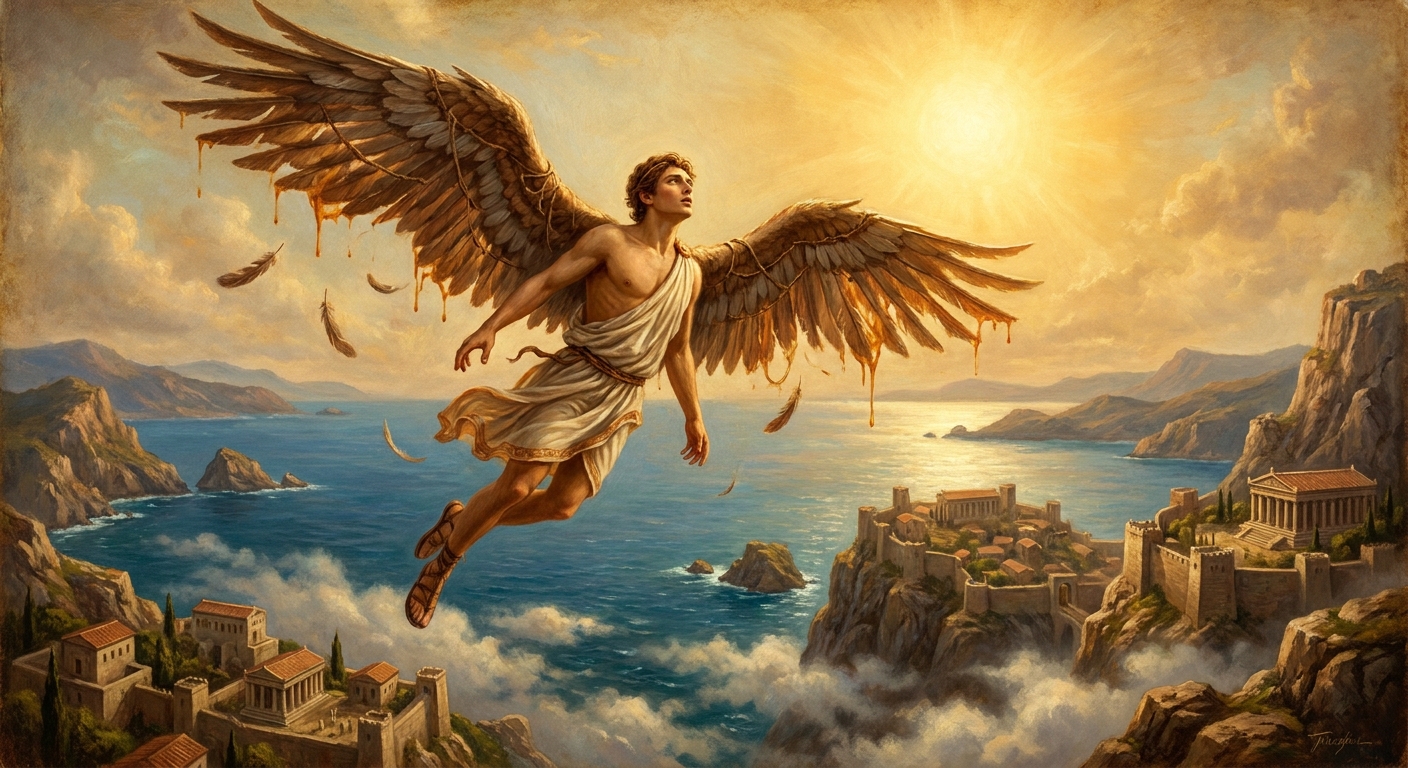
The wax melts. The feathers loosen. The invention turns traitor, not out of malice but out of design limits that were explained clearly and still treated like suggestions.
Icarus falls into the sea. Later tradition fastens his name to places, the Icarian Sea most famously, though some tellings gesture toward an island, a shore, a grave, a different point on the map where grief insists on being specific.
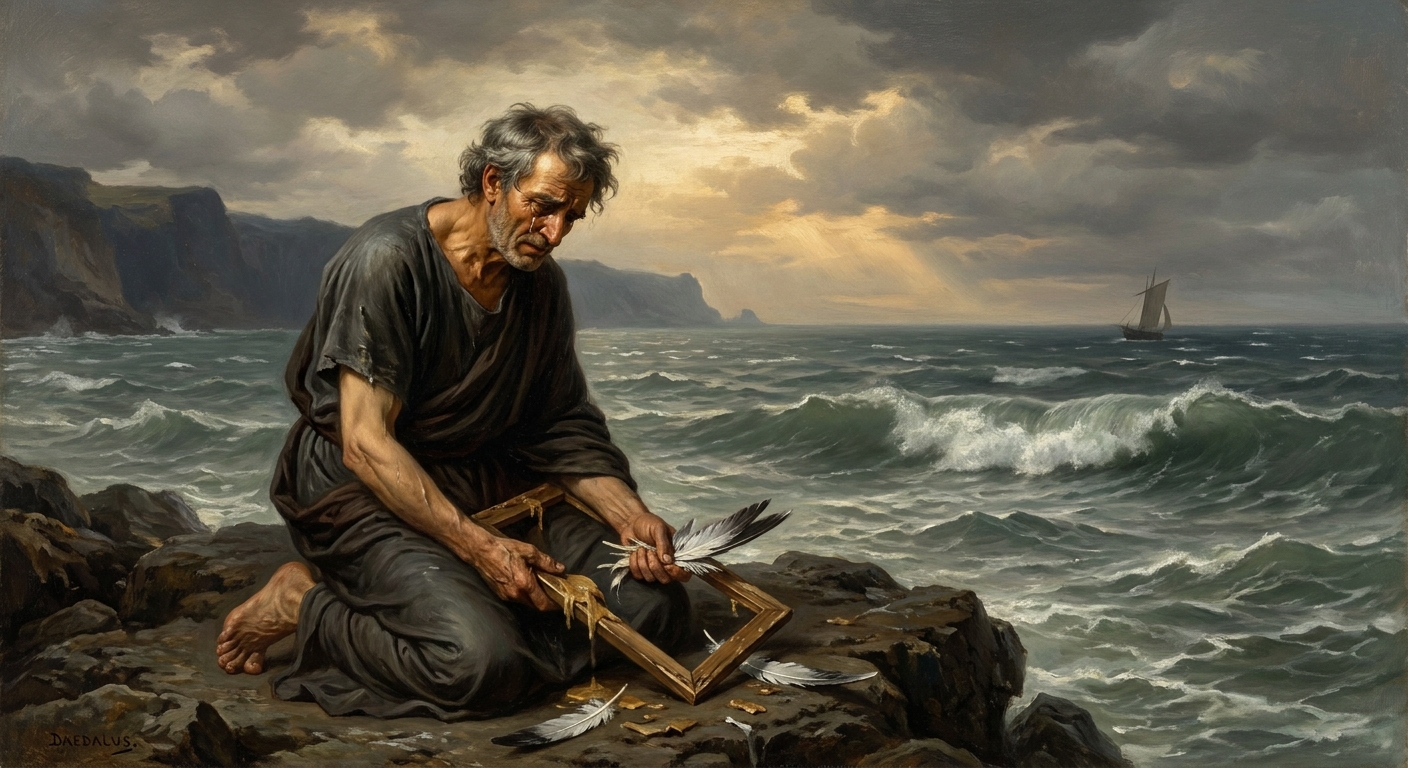
Daedalus survives, which is its own kind of punishment. He reaches land, often Sicily in later accounts, and continues to build. But the story never lets him escape the image of a father who can make miracles and still cannot keep a son alive.
Myth loves a clean punishment. This one is messier. It is grief, and it is a sky that will never feel innocent again.
Some versions add smaller, stranger after-notes: a curse spoken at the craft, a vow against invention. More often the emphasis is simpler and sharper: he mourns, he buries Icarus, he names the place, trying to pin the unpinnable to earth. Even when the details shift, the emotional geometry stays the same: invention opens the door, and desire rushes through it too fast.
What It Means
If you want the tidy lesson, it is there: do not fly too close to the sun. But myth does not survive because it is tidy. It survives because it is accurate about the human heart.
Invention is not innocence
Daedalus is not punished for inventing wings. He is punished by the fact that invention amplifies whoever uses it. Wings make escape possible. Wings also make overreach possible. The old stories understood technology as a multiplier long before we had that language.
Freedom has vertigo
Icarus is not simply arrogant. He is intoxicated. The myth captures the moment when liberation turns into spectacle, when the taste of possibility becomes a dare.
The middle path is harder than it sounds
Daedalus advises moderation, a very Greek virtue in theory. But the story quietly admits what philosophers often do not: the middle is not emotionally satisfying. The middle does not glitter. The middle does not feel like a story worth telling until you realize the alternatives end in water.
After Icarus
Daedalus continues, because that is what craftsmen do. In some traditions he reaches the court of King Cocalus in Sicily. Minos pursues him, determined to reclaim his property or his revenge.
A famous motif follows: Minos tests suspects by presenting a spiral shell and demanding someone thread it, a puzzle only Daedalus could solve. Daedalus does solve it, of course, by using nature as an accomplice, sometimes an ant coaxed through the shell with a thread. It is clever. It is chilling. It is the same mind that made wings.
Minos eventually dies in Sicily in many tellings, sometimes through treachery by Cocalus’ daughters. Daedalus lives. The myth does not reward him with peace. It simply lets him keep going, haunted and useful, the patron saint of gifted people who cannot unmake what their gifts set in motion.
Why It Still Haunts Us
This story keeps resurfacing because it speaks to the moment right after a breakthrough. The moment when you realize the world has changed, and you get to choose what kind of person you will be inside that change.
- It is a myth about limits, not because limits are noble, but because they are real.
- It is a myth about parents and children, and the terrible truth that love cannot always translate into protection.
- It is a myth about ambition, the most seductive sun in any era.
And it ends the way these stories often end, with an image that refuses to stop being visual: feathers drifting down on salt wind, the sea closing like a door, and somewhere above it all, an empty stretch of sky that still looks, to the reckless and the hopeful, like it is waiting to be claimed.
Sources and lineages vary across antiquity, with influential versions preserved in writers like Ovid, and mythographic traditions associated with names such as Apollodorus and Diodorus. The details shift, but the ache remains.