The Muses: Inspiration, Memory, and the Arts
Greek Mythology
Some gods conquer with thunder. Some with tides. The Muses conquer with something quieter and more humiliating: the sudden awareness that your best words are not entirely yours.
In Greek mythology, inspiration is not a personality trait. It is a visitation. It arrives like perfume in a cold temple, like a melody that will not let you sleep, like the first line of an epic that lands in your chest and insists you become its messenger.

When ancient poets opened their mouths and asked for a song, they were not being quaint. They were negotiating with divinity.
Who the Muses are
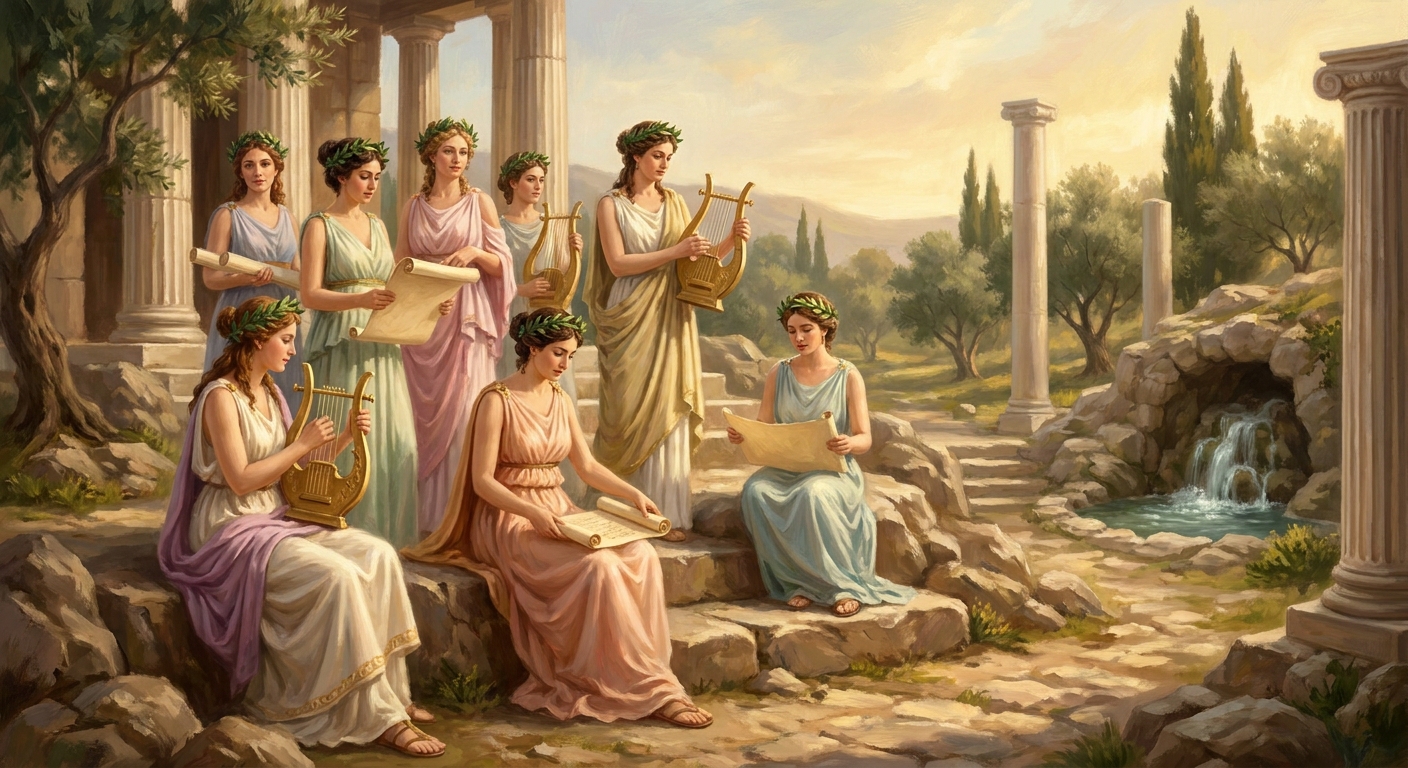
The Muses are traditionally nine sisters, born of Zeus and Mnemosyne, whose very name means Memory. Hesiod sings of them on Mount Helicon, a landscape of springs and slopes where the air itself feels rehearsed for singing.
But Helicon is not their only address. Other traditions place them in Pieria, near Olympus, and later imagination draws them toward Parnassus. The point is not the map. The point is that they are always near a source: a height, a spring, a threshold where ordinary speech becomes something else.
This parentage matters. Zeus brings authority and order, yes, but Mnemosyne brings the darker magic. The Greeks understood that art is not just invention. It is remembrance. The poet does not simply make. The poet recalls, reshapes, and resurrects.
Inspiration, in the old stories, is not owned. It is granted.
In epic tradition, the Muse is the one who knows what really happened. The human voice is only the instrument.
Memory as force
Modern life treats memory like a storage closet. Greek myth treats it like a goddess who can bless you or leave you blank.
When the Muses sing, they do more than entertain. In mythic logic, they make the world tellable, and what can be told can be carried forward. That is why they hover over bards, historians, hymn-singers, and tragedians. Without the Muse, culture dissolves back into noise.
Even the opening lines of Homeric epic are a ritual act: “Sing, goddess…” The poet is not bragging. He is asking not to be abandoned.
The nine and their arts
The Muses are often listed with stable specialties in later tradition. Ancient sources vary, and the system is not always tidy. One era leans hard on their role in song, another assigns them more clearly to history, theater, and the sky. Still, these names and arts are the best known and the most useful for navigating Greek literature.
- Calliope: epic poetry and eloquence, the voice that can carry wars, voyages, and the long bruise of fate.
- Clio: history, the Muse who refuses to let achievements vanish into dust.
- Erato: love poetry and lyric desire, longing turned into craft.
- Euterpe: music, especially aulos-music (a reed-pipe), breath turned into beauty.
- Melpomene: tragedy, where grandeur and ruin share a stage.
- Polyhymnia: sacred hymns and solemn song, the hush before revelation.
- Terpsichore: dance and choral song, the body remembering what words cannot hold.
- Thalia: comedy and pastoral poetry, laughter as a civilized form of survival.
- Urania: astronomy, the sky rendered into patterns, the heavens made readable.
Notice what is missing from the list: “self-expression.” The Muses do not exist to validate you. They exist to pull something true through you.
Myths and worship
The Muses show up most vividly where song becomes power.
Hesiod on Helicon
In Hesiod’s Theogony, the Muses meet the poet and set a frightening standard. They claim they can speak many false things that resemble true things and, when they wish, proclaim what is true. They are not harmless patrons. They are divine editors.
And Helicon itself has names that behave like spellwork. The springs Aganippe and Hippocrene belong to the same mythic geography: water that does not just refresh, but awakens.
Orpheus, the singer who almost won
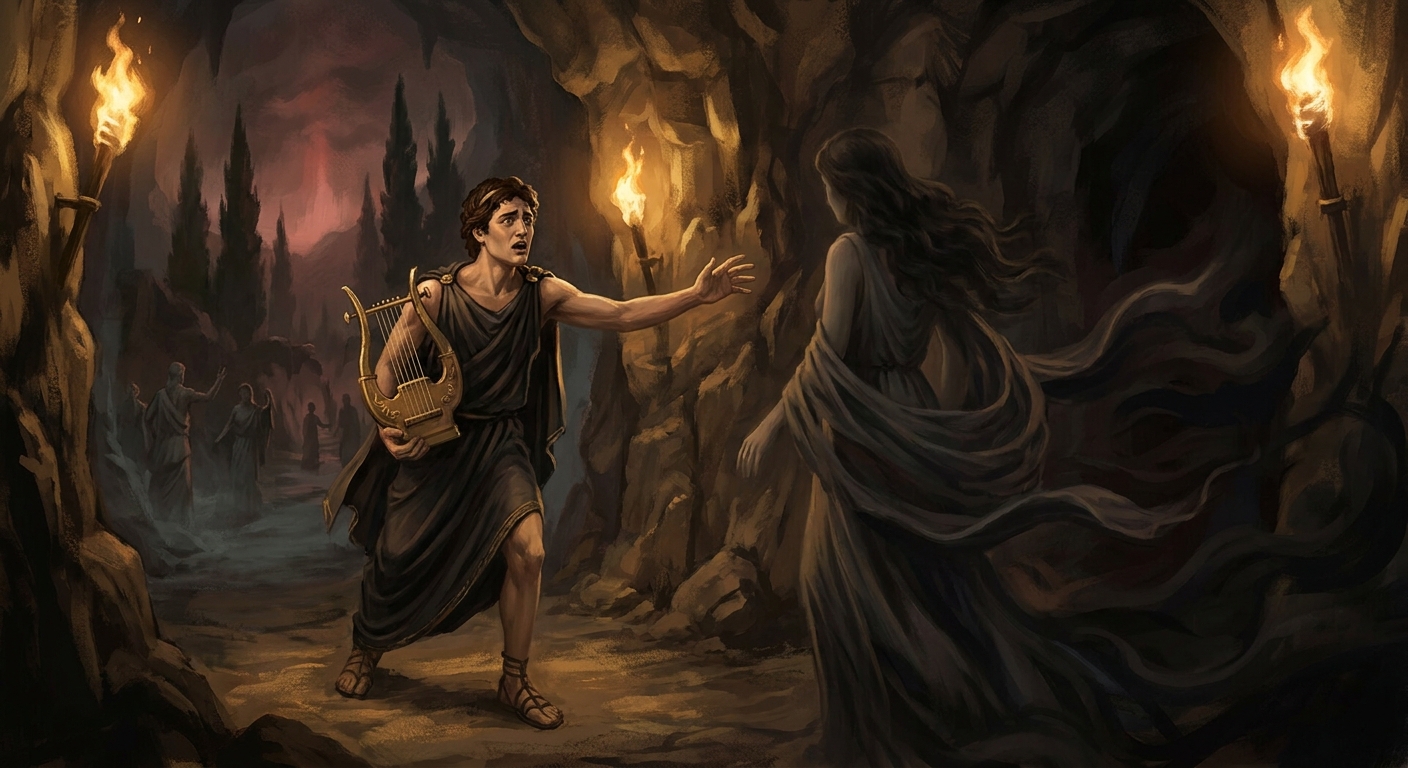
In some traditions, Orpheus is trained by the Muses or closely favored by them, an artist whose music could move trees, stones, and the moods of gods. His descent for Eurydice is proof that art can open the Underworld’s gates. It is also proof that art cannot always keep them open.
The Pierides
One of the sharpest Muse stories is the contest with the Pierides, mortals who challenge the Muses to a singing match. Depending on the version, the losers are punished and transformed. In Ovid’s telling, they become magpies, loud with the kind of voice that cannot make a true song.
Do not mistake talent for immunity. The Muses adore craft, and they despise arrogance.
Greek myth is full of divine punishments, but this one carries a special sting: it targets the ego that believes art is proof of superiority rather than a relationship with something larger.
Apollo and the standard
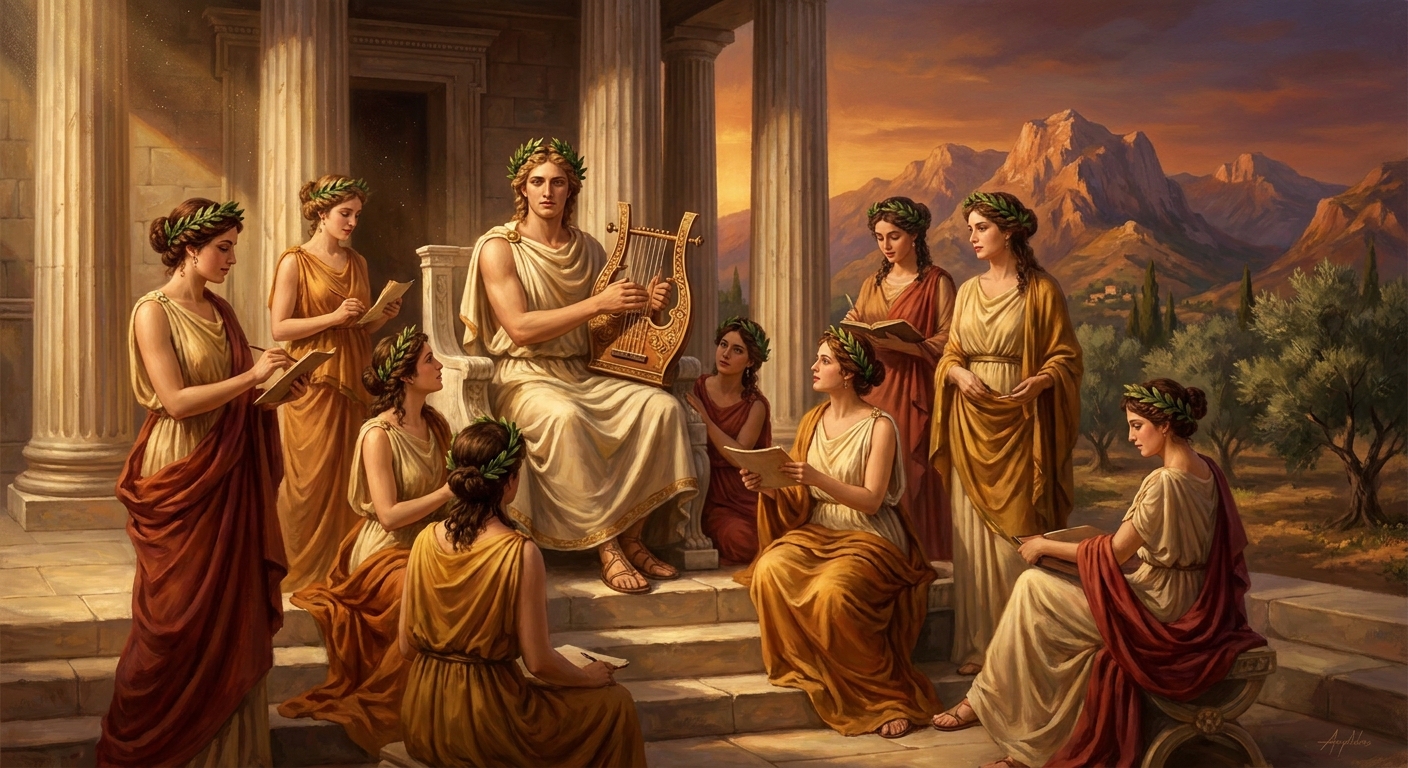
The Muses are frequently associated with Apollo, the god of music, prophecy, and radiant order, invoked as Musagetes, leader of the Muses. Together they form a kind of aesthetic empire: the Muses provide the voices, Apollo provides the discipline and the terrifying standard of perfection.
If Dionysus represents art as intoxication, Apollo represents art as clarity that can cut you. The Muses can dance with either current. Greek culture did not choose between ecstasy and form. It tried to survive both.
What they meant
To invoke a Muse was to claim a certain kind of authority. Not political authority, but narrative authority. The poet implies: I am not guessing. I have been touched by the source.
This is why the Muses matter beyond aesthetics. They are woven into how Greeks imagined knowledge itself: as something received, preserved, and made shareable.
- History becomes a discipline when Clio stands behind it, insisting that memory can be shaped into record.
- Tragedy becomes communal when Melpomene lends grief a language a city can hold.
- Astronomy becomes readable when Urania makes the stars feel like a text.
Modern rules
It is tempting to turn the Muses into motivational posters. The Greeks would find that adorable, and then quietly terrifying.
The Muse is not a cheerleader. She is an encounter with the idea that beauty has standards, and that memory is sacred, and that creative work can make you feel both chosen and exposed.
If you want a mythically accurate takeaway, it is this: creativity is not only a spark. It is a vow.
The Muse does not ask if you feel ready. She asks if you will be faithful to the song.
And somewhere on Helicon, in the old light where springs run cold and clear, the sisters still listen for the next mortal brave enough to ask.
Muse moments
- You feel summoned, not merely interested.
- The work demands precision and punishes shortcuts.
- You become strangely protective of a line, a rhythm, a scene, as if it has its own will.
- You sense the shadow of Mnemosyne, that pressure to remember what matters and discard what does not.
In Greek terms, that is not a mood. That is the gods, doing what they do best: rearranging your life without asking permission.