Achilles’ Heel: The Hold Thetis Couldn’t Protect
Greek Mythology
There are heroes who die because they are foolish, and heroes who die because the universe is petty.
Achilles belongs to the second category. Not because he lacked strength. Not because he lacked skill. He fell because even a mother with sea-magic in her veins cannot bargain her child out of fate without leaving fingerprints somewhere.
The Greeks loved a contradiction, and Achilles is one you can feel in your teeth: a man made almost divine, still tethered to a single mortal point. An “invincible” warrior with one vulnerable hold his mother could not protect.
Thetis and the art of desperate protection

Thetis was not a mortal woman with a mortar and pestle, whispering harmless blessings over a cradle. She was a sea nymph, a creature of deep water and older rules, married to Peleus, the mortal king of the Myrmidons.
And she did what mythic mothers do when they see the blade-shadow waiting in the future. She tried to outwork it.
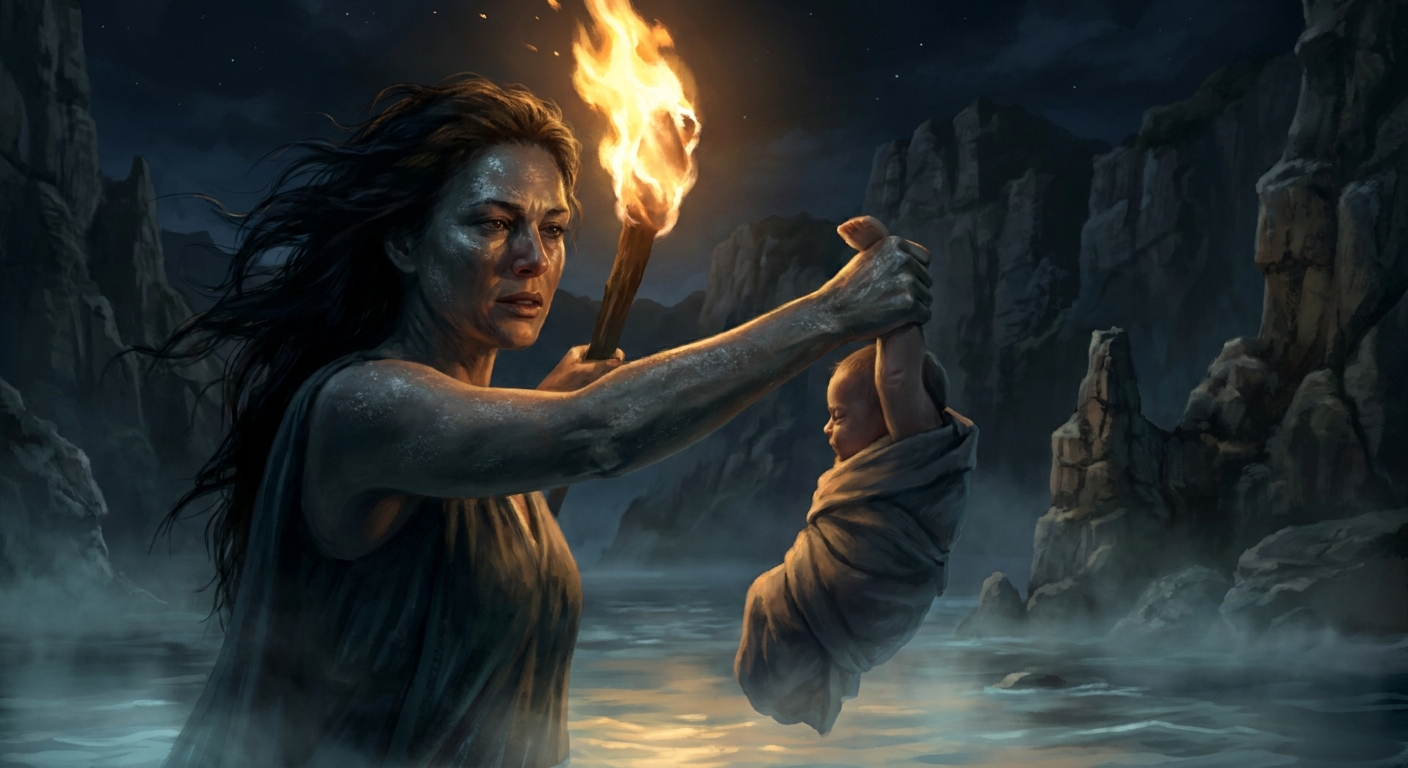
In the stories, Thetis goes to extremes to make her son unkillable. She subjects him to nightly fire, as if burning away the parts of him that can be harmed. She also tries a colder, more famous method: she immerses him in the River Styx, the dark boundary-water whose touch is not meant for living flesh.
But protection has a physical limit. It requires a grip.
She holds him by the heel, tight enough to keep her baby from slipping into the underworld current, and that one small place never meets the river’s power. It stays unsealed. Unblessed. Untreated by the magic that slicks the rest of him into legend.
The prophecy that spoiled every lullaby
Nothing ruins a childhood like a professional visionary.
When Achilles is nine, a seer delivers the kind of future that turns a mother’s blood to ice: Achilles will die heroically in battle against the Trojans.
A hero’s glory is often just a prettier name for an early grave.
Thetis refuses the script. She does not merely pray. She plots.
She disguises Achilles as a girl and sends him to Skyros, to live hidden among a king’s daughters. It is a wonderfully human act, despite the sea-nymph shimmer of it: if fate is looking for a son, then give it a daughter-shaped shadow instead.
But fate in Greek myth is not sentimental, and it is never fooled for long. The Greeks find him. They convince him to join the war. The boy who was wrapped in disguise becomes a man wrapped in bronze.
“Invincible” is not the same as untouchable
Here is where the myth plays its cruelest trick on the modern ear: we hear “invincible” and imagine a clean, superhero certainty.
But Achilles is not a comic-book godling. He is a storm given a human face. He can be wounded emotionally, socially, spiritually. His body may be nearly sealed, yet his life is still threaded through pride, rage, loyalty, and grief.
That is why the Trojan War does not only test his muscle. It tests his ego, his sense of honor, his willingness to be used by men who need him but do not know how to respect him.
The quarrel that proved Achilles could bleed without a blade
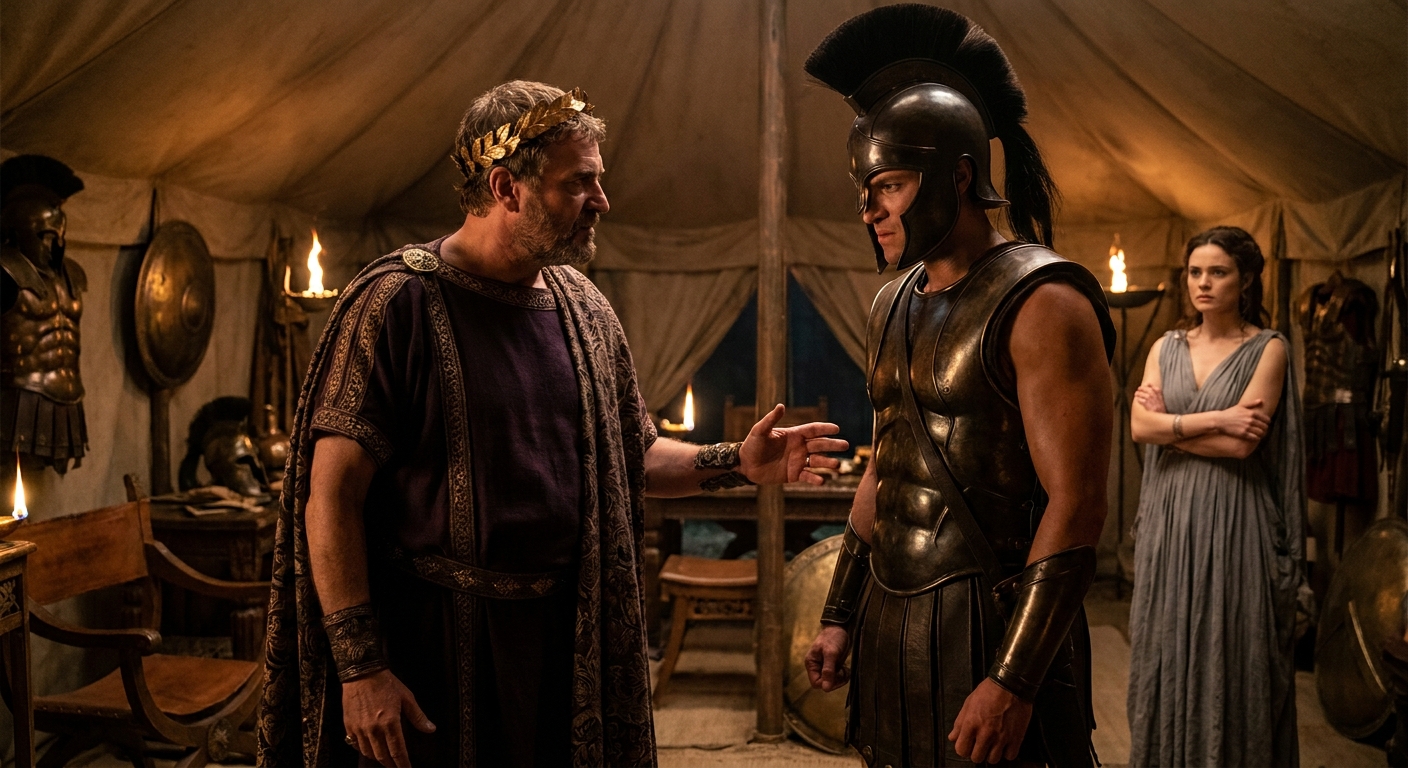
Enter Agamemnon, kingly, commanding, and allergic to being contradicted.
During raids around Troy, the Greeks seize Chryseis, and Agamemnon claims her as his prize. Her father, Chryses, is a priest of Apollo, and he offers a ransom to get her back. Agamemnon refuses.
Apollo answers in the oldest language: plague. The Greek camp suffers until, under pressure from his troops and with Achilles pushing hard, Agamemnon finally returns Chryseis to lift the curse.
Then Agamemnon reaches for compensation and takes Briseis, the woman awarded to Achilles.
The gods did not need to pierce Achilles’ skin to wound him. A public humiliation did the job.
Achilles withdraws from battle, and he does not go alone. He pulls back the Myrmidons too, and suddenly the Greek war machine starts grinding its teeth on empty air. The Trojans surge forward, sensing what everyone senses when Achilles is absent: the alliance was never as stable as it pretended.
Patroclus, the borrowed armor, and the price of a mistake
While Achilles smolders in his tent, the battlefield fills with Greek casualties and Trojan confidence.
Patroclus, Achilles’ closest companion, cannot endure it. He begs Achilles to return. Achilles refuses, but he allows Patroclus to wear his armor and lead the Myrmidons as if Achilles himself has finally rejoined the fight.
For a moment, the disguise works. Morale rises. The Trojans falter. But myth does not allow borrowed identities to end happily.
Hector, Troy’s greatest warrior, meets Patroclus in the chaos and kills him, stripping away Achilles’ armor like a brutal revelation: it was never Achilles out there at all.
Wrath in bronze, mercy in a tent
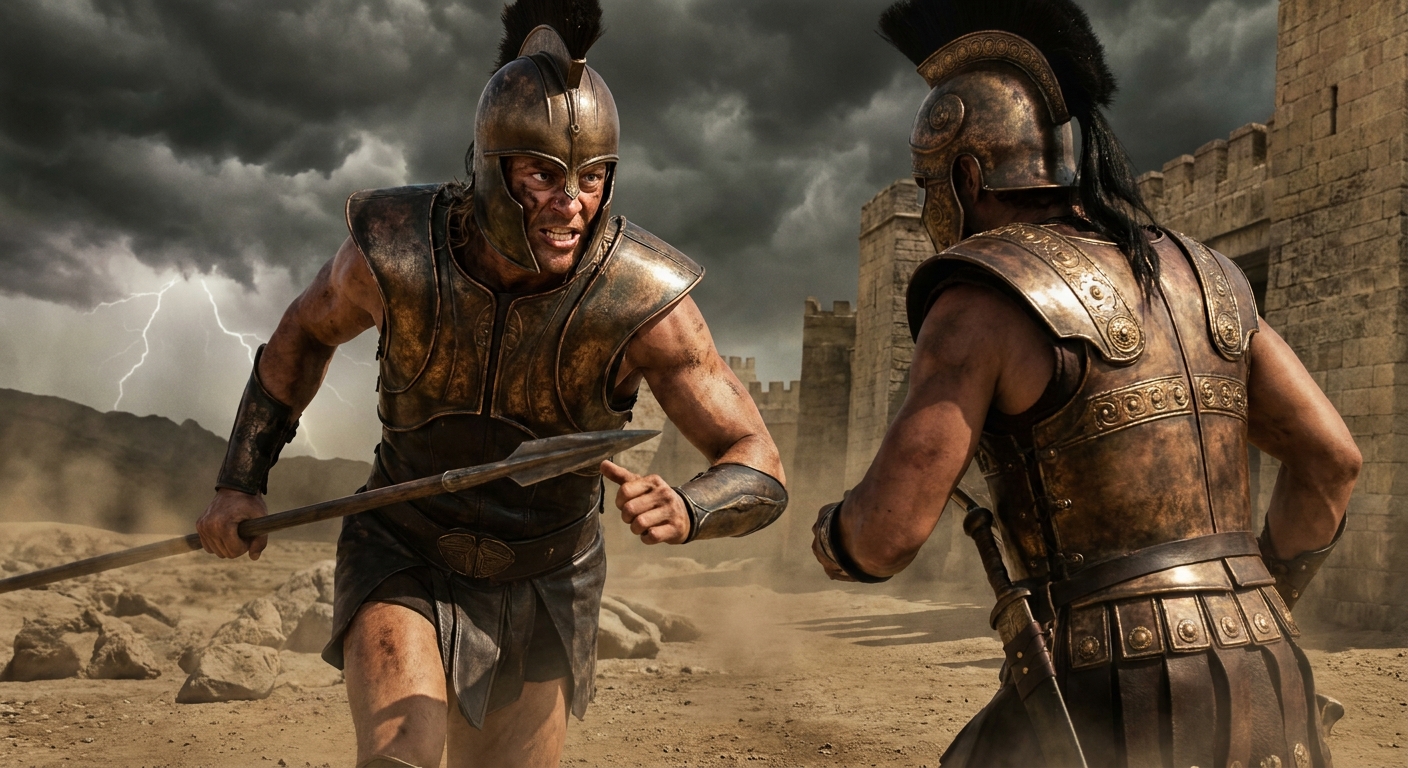
Grief turns Achilles into something nearly elemental.
He returns to the fight armed with new armor forged by Hephaestus, and the Trojans understand instantly that the war has changed temperature. Achilles kills Hector swiftly, then pushes past the boundary of what even war permits. He desecrates Hector’s body, dragging it behind his chariot before Troy’s walls.
The gods, who tolerate bloodshed with alarming ease, do not admire this. There is a difference between victory and violation, and Achilles crosses it.
Zeus sends Hermes to guide King Priam, Hector’s father, into Achilles’ tent to beg for his son’s body. It is one of the myth’s most intimate reversals: the old king kneeling before the young killer, grief speaking a language even rage can understand.
Achilles softens. He returns Hector’s body for an honorable burial. For a brief moment, the nearly-invincible hero looks unmistakably human.
The heel that fate kept
And yet the prophecy still breathes at the edge of every scene.
In the end, Achilles does not fall to Hector. He does not fall to a glorious spear-thrust in the center of the chest where songs prefer their endings.
Guided by Apollo, Paris shoots an arrow that strikes Achilles in the heel, the only place Thetis’ river-magic never touched.
The world did not conquer Achilles. A single untouched inch did.
Why this myth still cuts
We repeat “Achilles’ heel” like a neat proverb, but the original myth is not neat at all. It is tender and ugly and brilliantly unfair.
- Invincibility in Greek myth is never total. It is always conditional, always dependent on a ritual, a bargain, a god’s mood, a mother’s hand.
- Vulnerability is not just physical. Achilles is pierced by insult, by loss, by the unbearable truth that even glory cannot resurrect the dead.
- Fate is not a vague idea here. It is a pressure that turns every attempt at escape into part of the trap.
If you want the most haunting detail, it is not the arrow. It is the image of Thetis holding her child by the heel, trying to give him a life no mortal gets, and accidentally leaving behind the one small place the world can still reach him.
That is Greek mythology at its finest: the love is real, the magic is real, and the tragedy is still perfectly on schedule.