Pelops and the Ivory Shoulder
Greek Mythology
Some myths start with a prophecy, or a ship, or a lover’s glance across a temple courtyard.
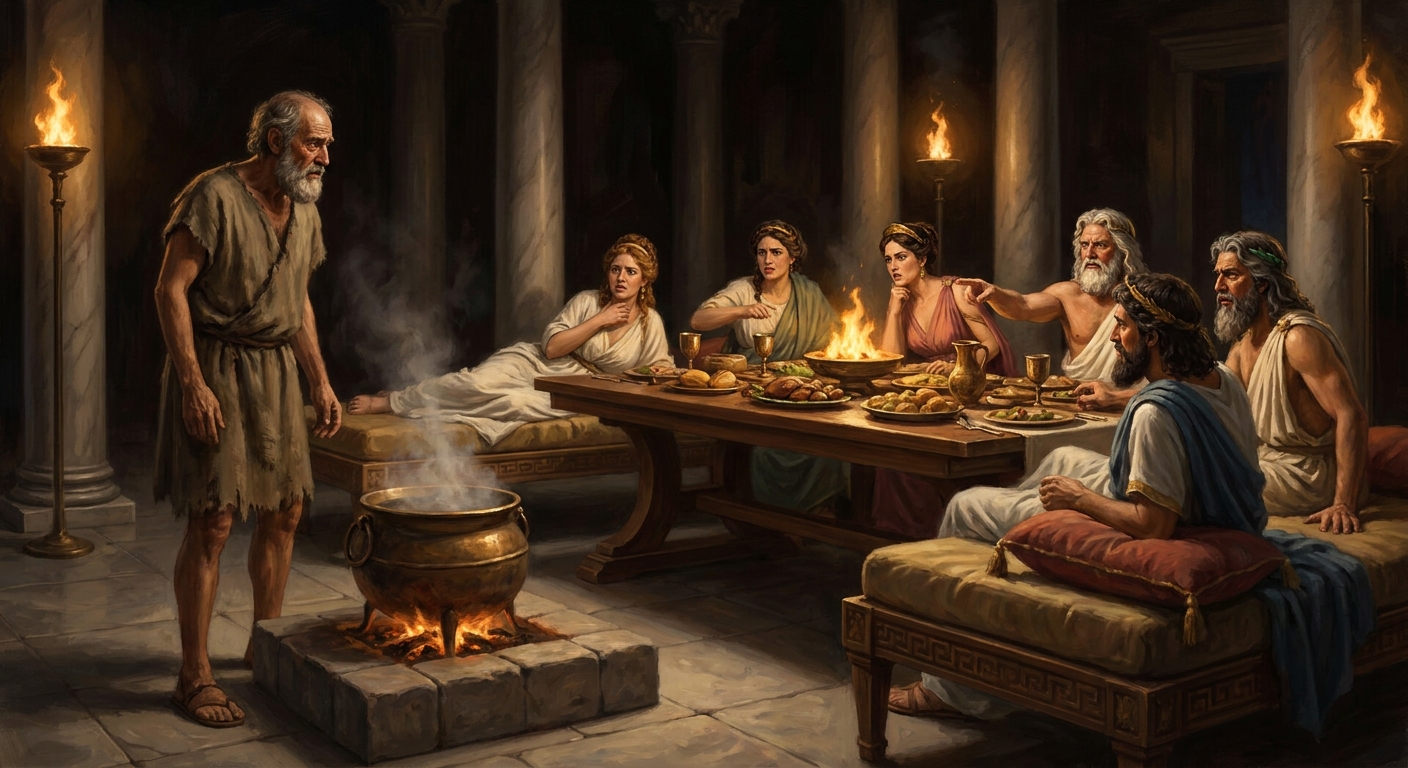
Pelops begins with a pot.
Not a sacred cauldron of blessings, not a hearth of hospitality, but a vessel of outright sacrilege where the rules of kinship and guest-right get torn like linen. Because when you invite the gods to dinner, you do not test them. You do not prank them. And you absolutely do not turn your own child into the menu.

The worst dinner
Tantalus, father of Pelops, stages a dinner meant to be a trap.
His plan is as arrogant as it is grotesque: he murders his son, chops him into pieces, and serves him to the gods as a stew. The point is not hunger. The point is a challenge. He wants to see if Olympus truly knows everything, or if divine omniscience is just a story people tell themselves when thunder rolls.
It is the kind of experiment only a man doomed by his own ego would attempt.
Alert to Tantalus’s ghastly trickery, most deities refrain from partaking in the grim feast.
Only Demeter falters.
Distracted by grief over her missing daughter, she eats without full awareness of what she is consuming. And in that small, tragic lapse, she consumes part of Pelops, specifically his shoulder.
Stitched back
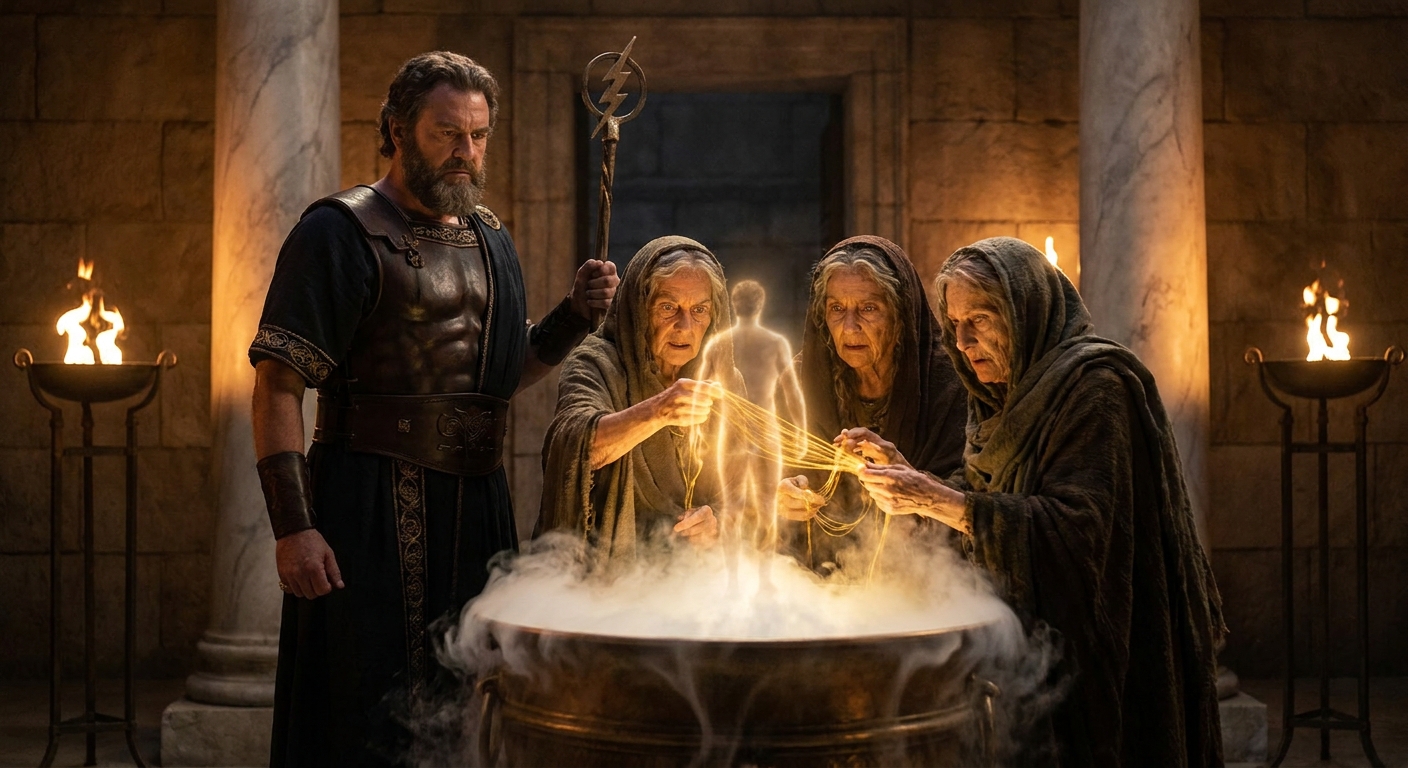
After realizing what had happened, Zeus intervenes, masterfully and decisively.
He directs the Fates to pull Pelops together again, quite literally from the boiling cauldron where his parts had been stirred. Pelops returns not as a simple reversal, but as a restoration with divine fingerprints pressed into it.
The ivory shoulder
Pelops is not restored as a perfect erasure of what happened. Greek myth rarely offers that kind of mercy.
His missing piece is replaced with something unmistakable: an ivory shoulder, crafted by Demeter. It is correction and confession, fused into a single bright seam.
This reconstruction is not merely cosmetic. The ivory shoulder becomes a token of his second breath, a divine gift that marks him for perpetuity.
And yet even improved, even remade, the boy does not get a gentle childhood afterward. He has unresolved daddy issues, and rival royalties oust him from his homeland. In Greek myth, exile is often just the next chapter, written without pause.
Poseidon’s favor
With divine favor possibly owing to his haunting beauty or his dramatic past, Poseidon sweeps Pelops into divine orbit.
The sea god does not just offer sanctuary. He makes Pelops his companion and charioteer, placing him close to power, close to danger, and close to the kind of gifts that always come with strings.
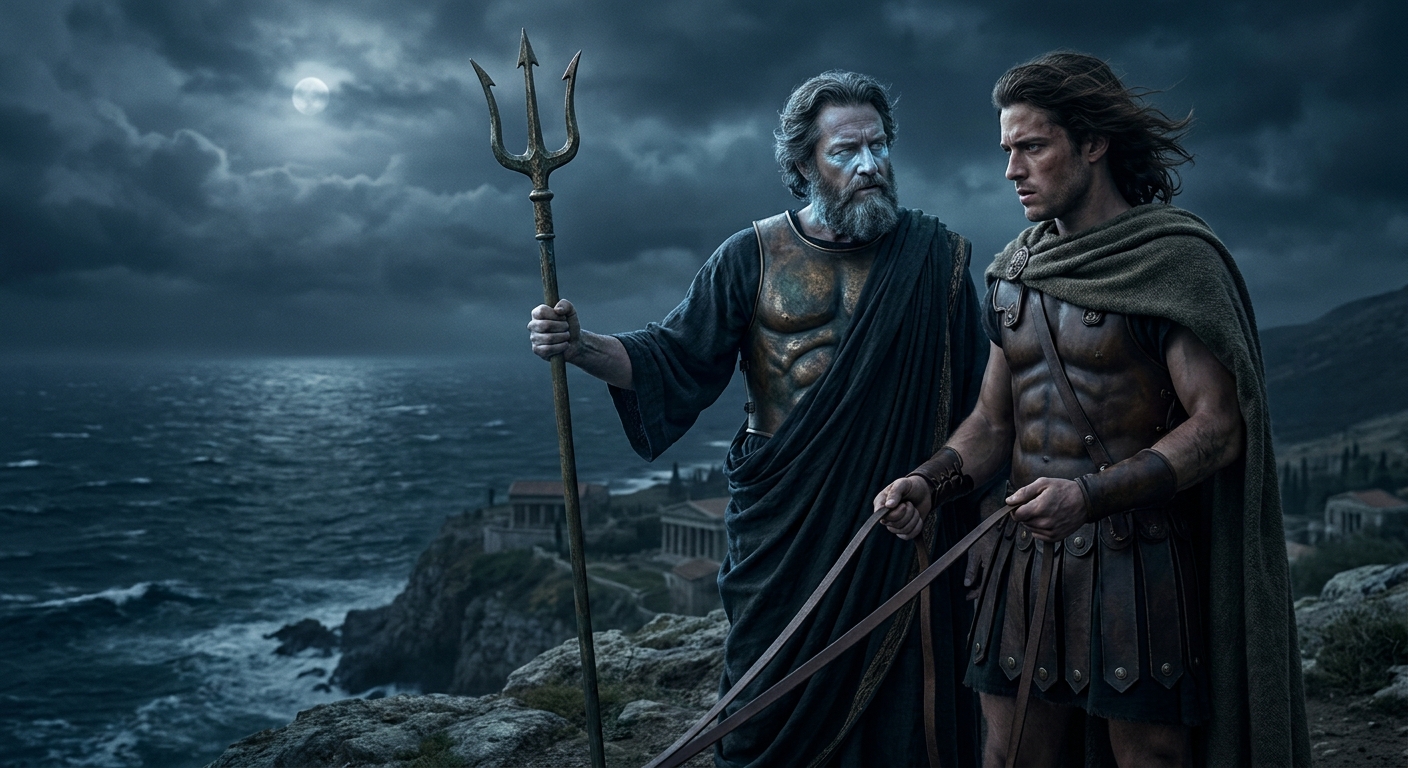
From this point on, Pelops is no longer only a survivor of a stew pot. He is a divine protégé poised between gods and mortals, primed for a saga that trades in ambition.
The race
Then comes the main entree of his story: a supercharged chariot race interspersed with divine bargaining, massive ambition, and no small measure of deception. And yes, there is a princess for a prize.
Pelops aims to best King Oenomaus for the hand of the dazzling Hippodamia. This is no simple derby around a dusty Olympia. It is a high-stakes game that will cement Pelops as a seeker of royal influence.
Greek approaches to competition orbit two principles: strive for victory (Arete) and honor the gods. Pelops, already shaped by divine attention, chooses a third principle that myths never stop returning to.
Win. By any means that still leaves you standing.
Wax and treason
Even ethereal upgrades are not enough on their own. Pelops needs a human hand inside the king’s machinery.
Enter Myrtilus, Oenomaus’s charioteer.
Pelops tempts him with promises grand and morally ambiguous. Then comes the quiet sabotage that makes the whole myth shiver. Myrtilus replaces the sturdy iron linchpins securing the king’s chariot wheels with linchpins made from wax.
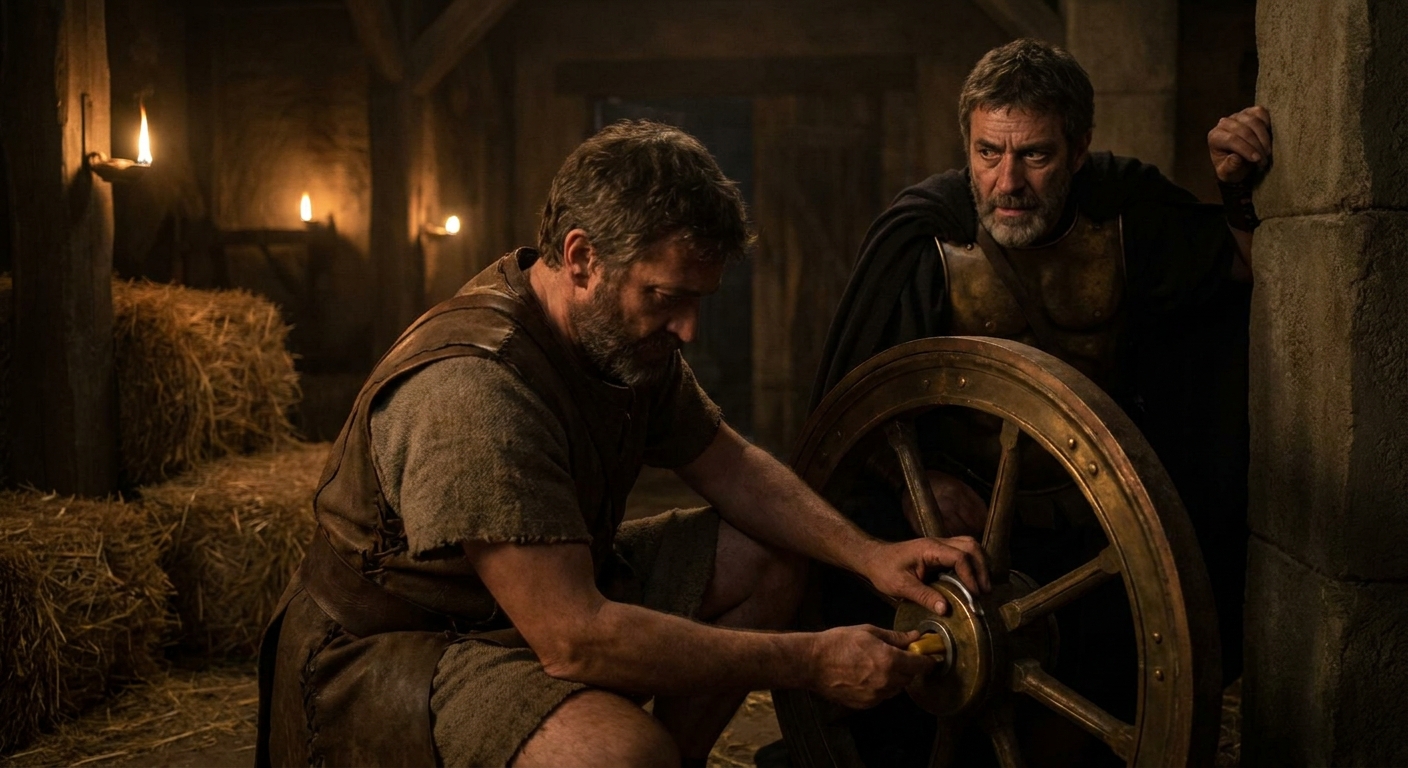
During the heat of the race, Oenomaus’s chariot falls apart. The wax melts. The king does not survive the malfunction.
A kingdom is won the way curses are born: quietly, and then all at once.
Pelops claims both the throne and Hippodamia, but hubris takes hold. The promise to Myrtilus becomes inconvenient, and inconvenience is where heroes begin to rot.
The cliff
After the dust settles, Pelops flips the script on the man integral to his victory.
Quick as a flash, Pelops throws Myrtilus off a cliff into the sea.
As Myrtilus plunges into what would henceforth be known as the Myrtoan Sea, he does not go quietly. With his last breath, he hurls a curse back at Pelops, not only at the victor but at his entire lineage.
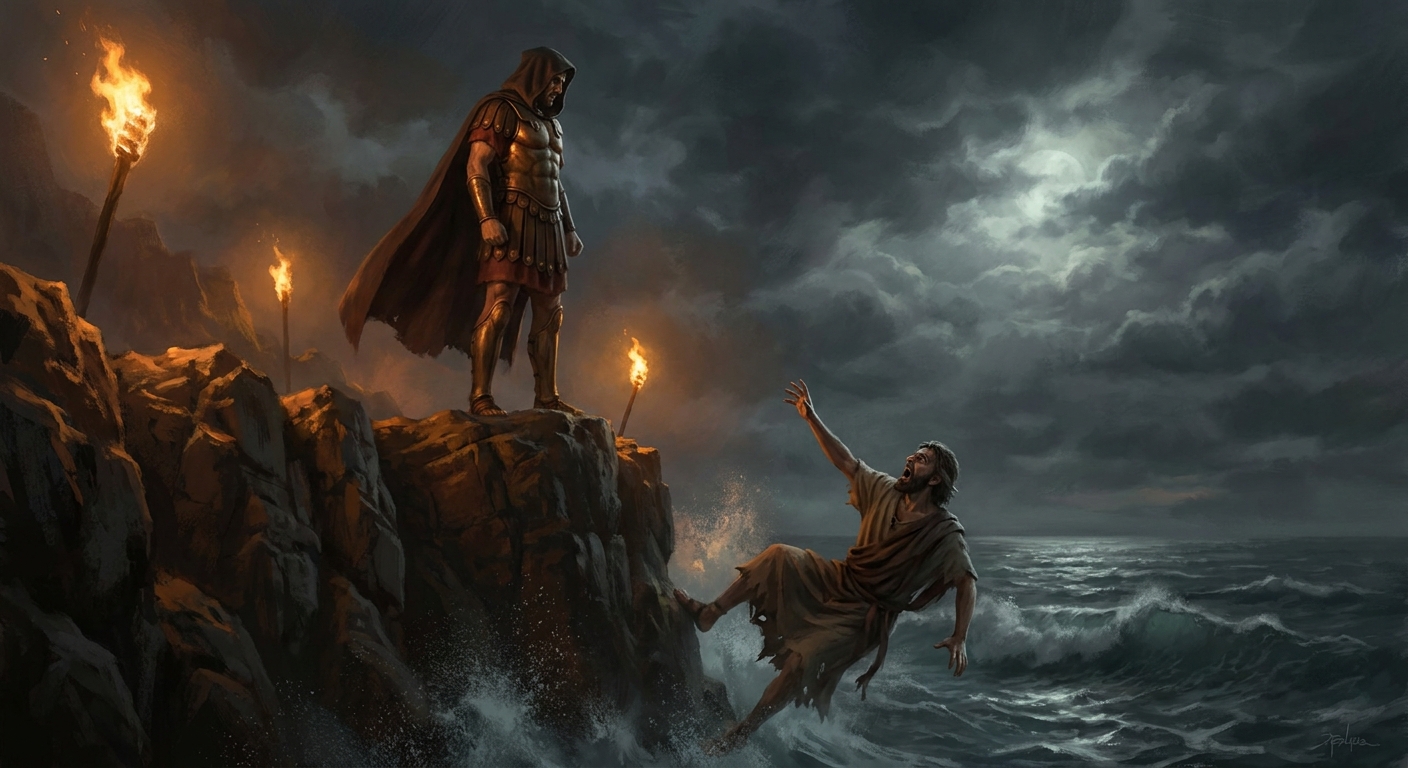
A promise breaks, and the break spreads through blood.
From that curse springs a surplus of future ruin, waiting to disrupt generations of the House of Pelopidae.
Inheritance
The subject line of this myth is Pelops, but the real protagonist is what gets passed down.
Tantalus commits an atrocity that stains the family’s beginning, yes. But the curse that clamps down on the House of Pelopidae arrives with Myrtilus, spoken as he is thrown into the sea.
And it does not stay abstract. It shows up like a bad reflex in the family’s story: murder, romances hitting snags, and collateral damage sprawling across the mythic map.
Olympia
Pelops’s chariot saga does not end when the race ends. After his father-in-law’s funeral arrangements, commemorative games in honor of King Oenomaus begin, the funerary games that become the foundation of the Olympic games.
Even victory, even mourning, becomes a spectacle. Laurel wreaths, dust, ambition, and a memory that refuses to stay buried.
The name on land
Pelops also leaves a mark on the map.
He lends his name to the southern region of Greece: Peloponnesus, the “Island of Pelops.” Myth turns geography into a monument, as if a place itself can be claimed the way a throne is claimed.
And his dynastic shadow stretches onward, touching figures like Atreus, Thyestes, Agamemnon, and Menelaus, names that carry the family’s echo into other stories, other wars, and other dinner tables that never feel entirely safe.
In this house, victory never arrives alone. It brings something with it.