Odysseus Myths: Wandering, Cunning, and the Long Way Home
Greek Mythology
Odysseus of Ithaca is not the strongest man in the Greek imagination, nor the most radiant, nor even the most consistently admirable. He is something stranger and more dangerous: a hero whose defining weapon is metis, that glittering Greek word for cunning intelligence, the mind that slips knots and tightens them in the same motion.
Metis is not merely cleverness. It is adaptive, tactical, morally flexible. It belongs to fishermen, survivors, and gods who win without lifting a spear.
So if Odysseus feels divine-adjacent, it is not because he shines like Apollo. It is because he thinks in the register Olympus understands. Athena’s favorite kind of power is the power that plans, and Homer names Odysseus polytropos, the man of many turnings.

Metis and its price
In a world that worships visible strength, Odysseus specializes in the invisible. He reads rooms the way priests read smoke. He hears what is not said. He knows when to kneel, when to lie, when to wait.
That gift is why he matters in the Trojan War and why he suffers in the aftermath. Greek myth loves a bargain. Odysseus’ bargain is simple: the mind that saves you can also doom you.
Troy and the horse
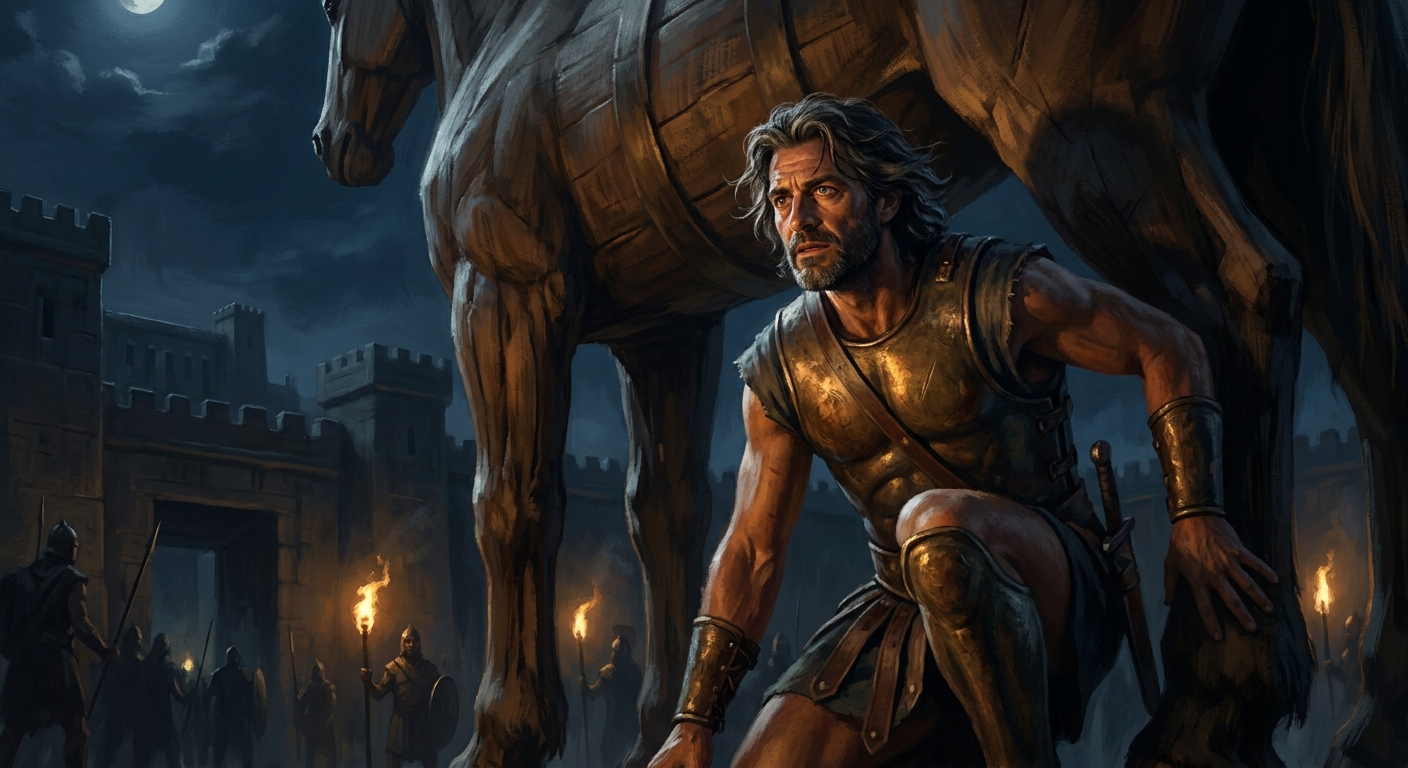
The Trojan War is an opera of egos, but its finale is a quiet piece of carpentry. The Greeks cannot batter Troy down forever, so Odysseus offers a story instead: a gigantic wooden horse, a feigned departure, a gift that smells like victory.
It is a con with sacred packaging. The Trojans debate it, as people always debate warnings they do not want to believe, and then they drag the thing inside their walls.
A city can survive siege engines. It is the unlocked gate of certainty that ruins it.
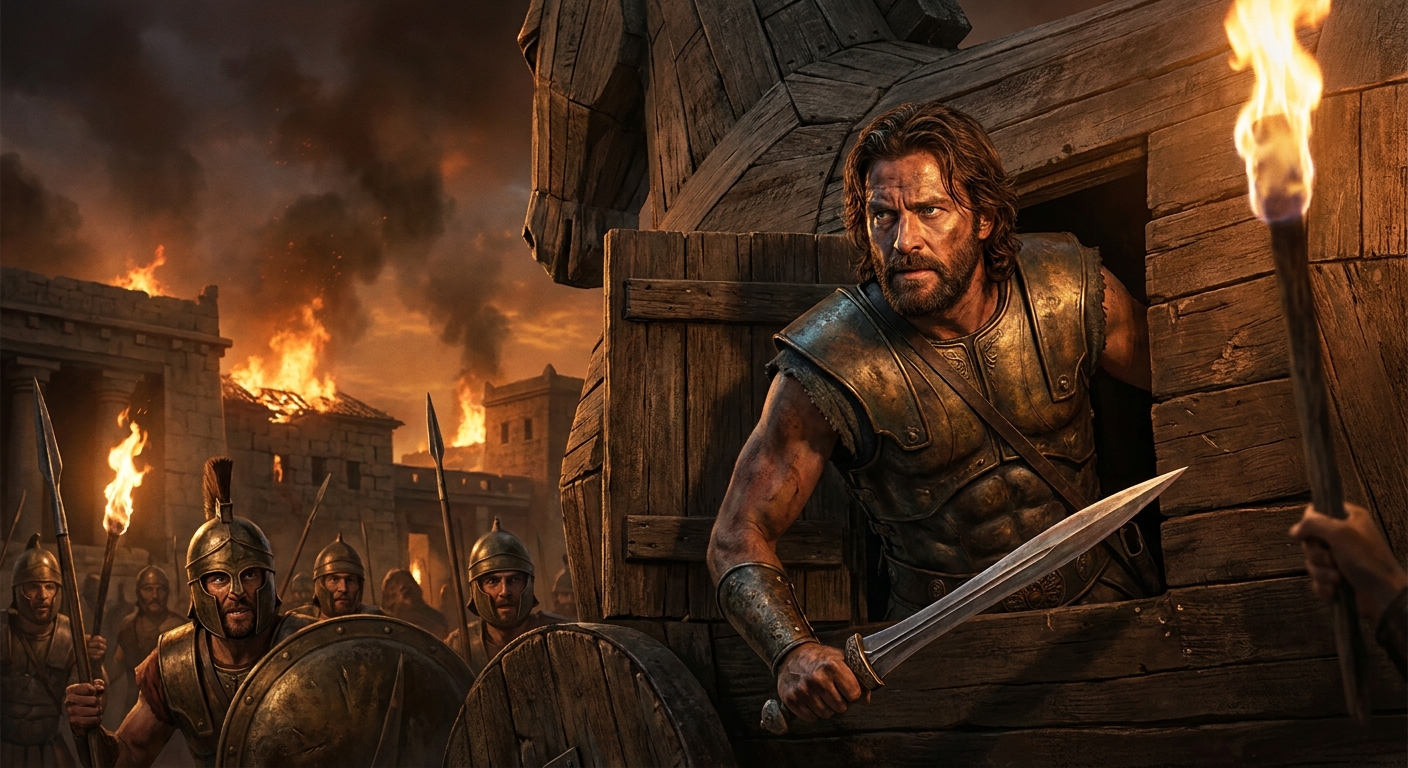
When night falls, the horse opens like a held breath finally released. The Greeks spill out. The war ends not with a heroic duel, but with strategy wearing a mask.
The long homecoming
After Troy, the Greek heroes try to sail back into ordinary life. Myth does not allow this. The sea is a god’s mood, and the gods have long memories.
Odysseus sets off for Ithaca with men and ships and the familiar hunger for home. By the end of the road, he will return with no ships, almost no companions, and a soul scoured by salt, shadow, and the slow humiliation of being mortal.
Aeolus and the winds
Odysseus reaches Aeolus, keeper of winds, who offers the sort of divine help that looks generous and can still test you like a snare. Aeolus binds the winds in a bag, leaving only the breeze that will carry Odysseus home.
It is almost tender. Ithaca comes into sight. And then human nature does what monsters cannot.
While Odysseus sleeps, his crew assumes the bag holds treasure. They open it. The winds explode out like offended spirits, and the ships are blown back into the wild, away from the shores they could have touched.
When they reach Aeolus again, he refuses further aid, convinced Odysseus is hated by the gods. In myth, a gift can become a verdict with a single mistake.
Polyphemus and the name
On the island of the Cyclopes, Odysseus steps into the cave of Polyphemus and into a primal lesson: not every doorway is meant to be entered.
The Cyclops returns, seals the cave with a boulder, and begins eating Odysseus’ men with the casual appetite of a storm destroying a roof. There is no duel here, no honorable contest, only a mind seeking an exit.
Odysseus brings wine, an offering with teeth. He tells the Cyclops his name is Nobody. When Polyphemus collapses into drunken sleep, Odysseus and his men drive a sharpened stake into the single eye.
The lie is perfect until the hero wants credit for it.
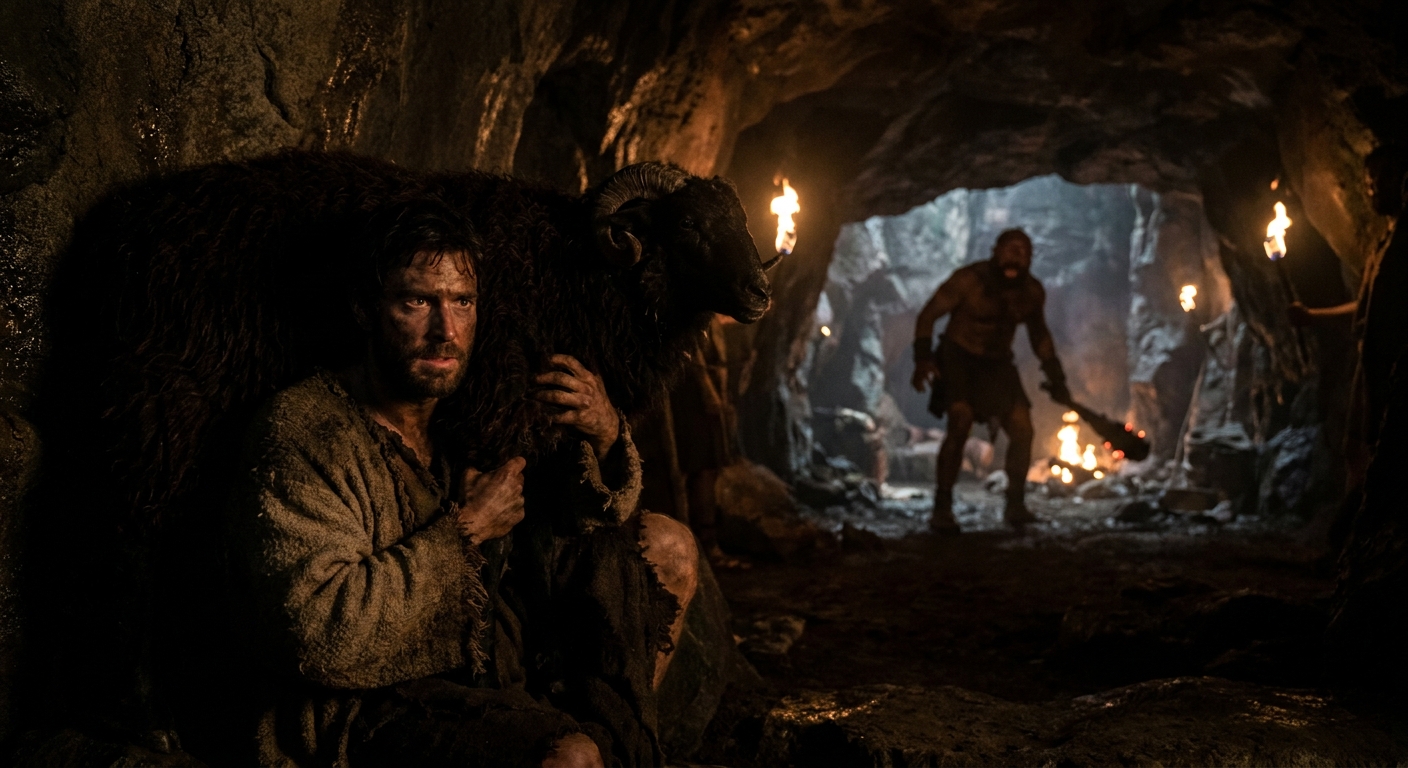
As they escape beneath the bellies of sheep, the plan holds. But once the ship is safely off the coast, Odysseus cannot resist the ancient itch for reputation. He reveals his true name, and the sound of it travels like a flare into a god-haunted sky.
Polyphemus is Poseidon’s son. The sea hears the curse, and Odysseus’ road home becomes a long punishment written in waves.
Circe and the bargain
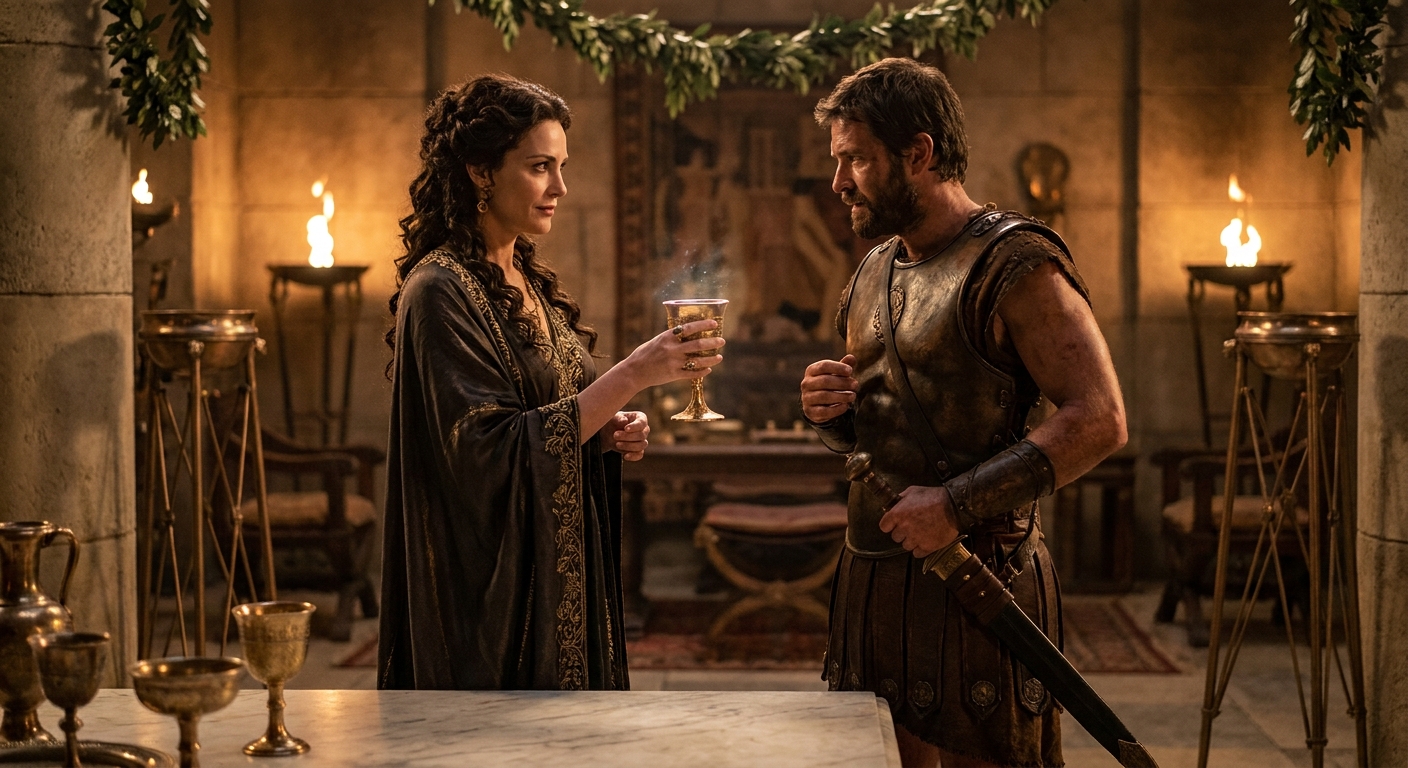
On Aeaea, Odysseus meets Circe, a sorceress whose hospitality is a silk veil hiding a blade. She turns his men into pigs, not as a joke, but as a statement: in her domain, she decides what human means.
Odysseus is warned and aided by Hermes, who provides the herb moly as protection against her magic. Odysseus confronts Circe, resists the spell, and forces a new arrangement.
This is not a clean victory. It becomes a year-long stay, a luxurious delay perfumed with enchantment and unequal terms, the old mythic shape of consent where power sets the menu and mortals choose from what is offered. Circe ultimately helps him, but help in mythology is rarely free. It always costs time, softness, and certainty.
The Underworld
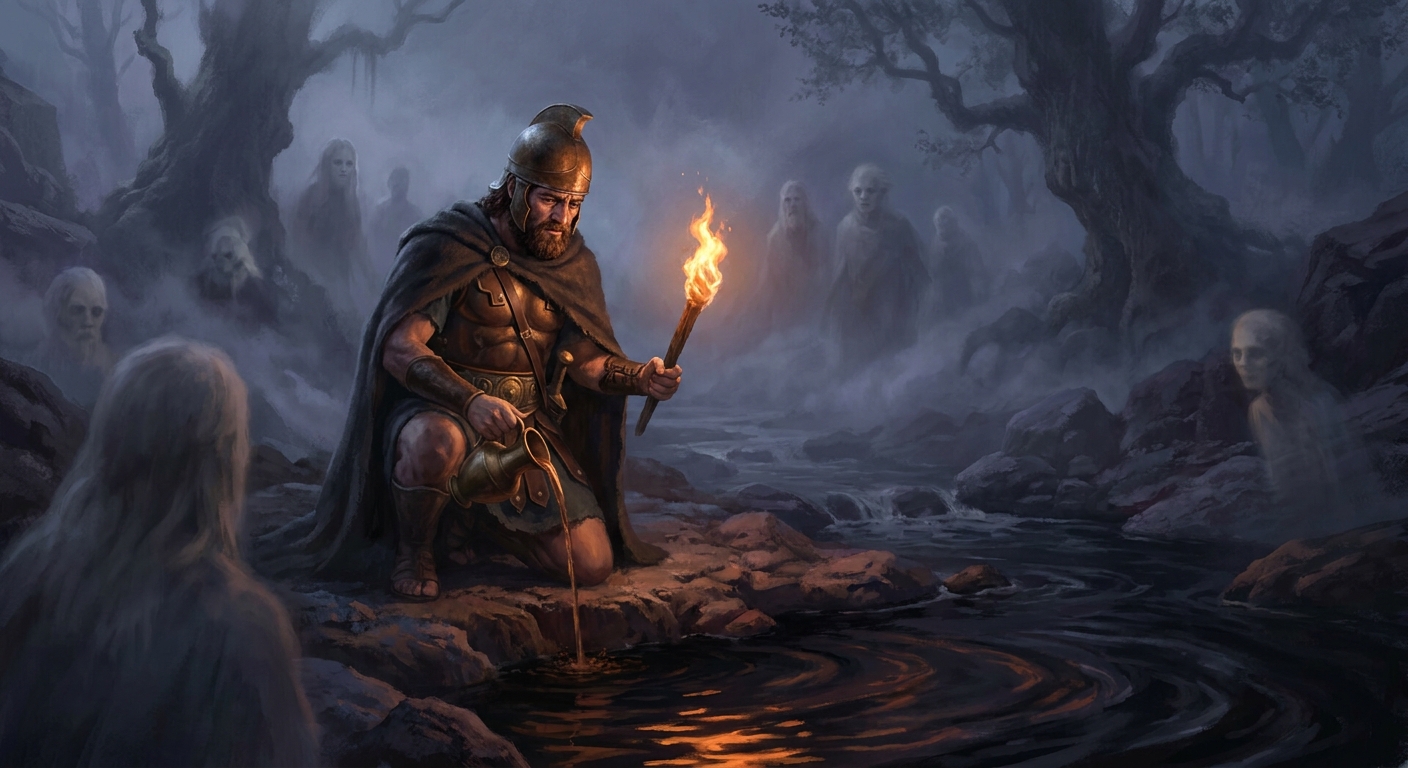
Circe directs Odysseus to do what most living men never attempt: descend to the land of the dead. In Homer’s Odyssey, this is the Nekyia, a rite of consultation at the edge of the Underworld.
Odysseus seeks the prophet Tiresias, because the future is a locked room and prophecy is one of the few keys that fits.
There are shades, and warnings, and the unbearable weight of unfinished lives. Odysseus encounters the dead, including his mother, a scene that strikes with quiet cruelty. War can keep a man alive long enough to miss the people he saved himself for.
To ask the dead for directions is to admit you are lost in a way maps cannot fix.
Tiresias delivers the terms of return: restraint, reverence, and the demand that Odysseus learn to stop fighting the sea as if it were merely water. Even after Ithaca, prophecy will ask more of him.
The Sirens
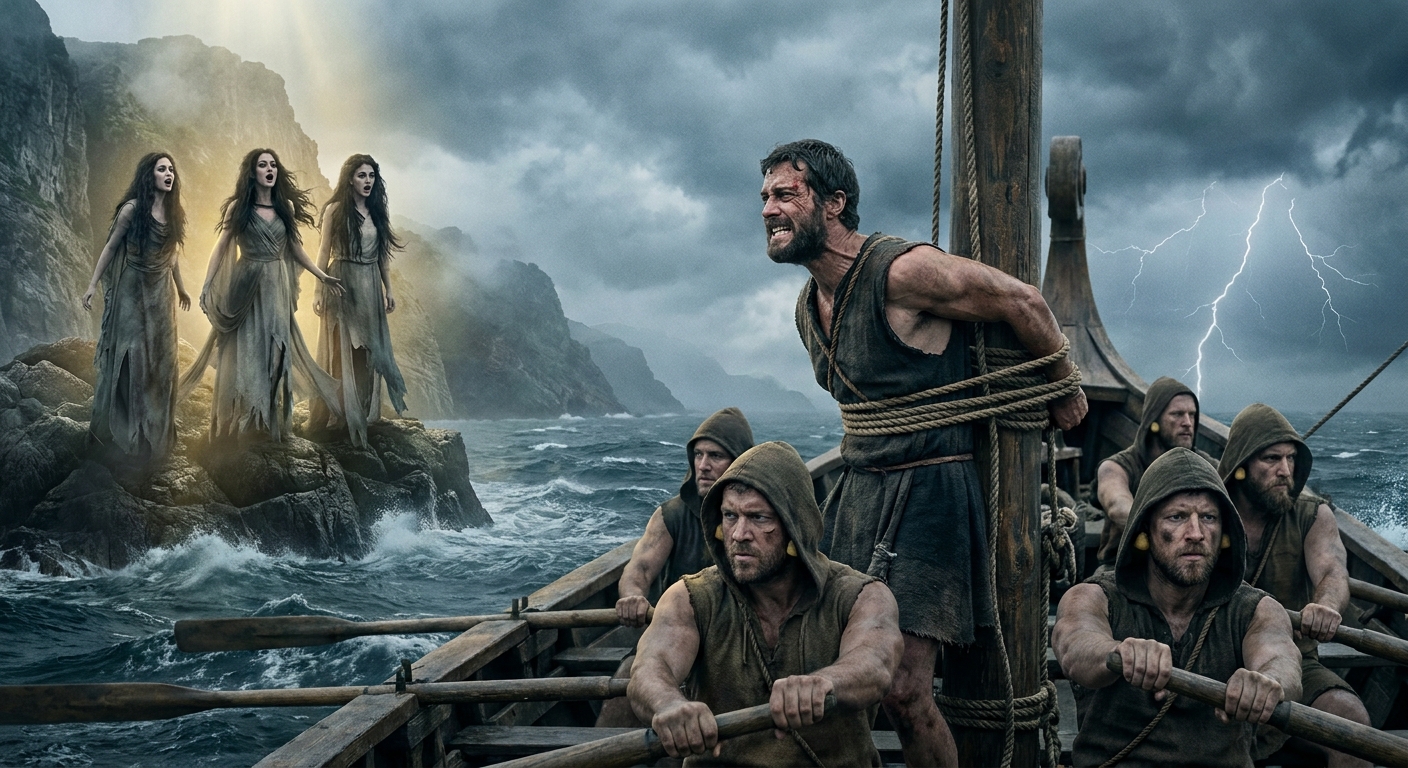
The Sirens do not seduce primarily with bodies. They seduce with knowledge. Their song promises to tell you everything, to make you the kind of person the gods cannot surprise.
Odysseus prepares like a man who knows his own weakness. He orders his crew to stop their ears with wax. And he has them bind him to the mast so he can listen without steering the ship into the rocks.
This is metis turned inward, strategy aimed at his own longing. He wants the song, and he wants to survive wanting it.
Scylla and Charybdis
Next comes the narrow passage that mythology uses the way tragedy uses a spotlight. On one side: Scylla, a many-headed devourer who plucks sailors like offerings. On the other: Charybdis, a whirlpool that swallows the sea itself.
Odysseus cannot defeat either. He can only choose how to lose.
He steers closer to Scylla, accepting the death of a few to spare the entire ship. It is leadership in its ugliest form: the arithmetic of survival.
His cunning saves the many, but it does not absolve him. The men taken by Scylla are not abstractions. They are screaming names he will carry like sea-salt under the tongue.
Helios’ cattle
After so many horrors, it is ordinary hunger that ruins the last of Odysseus’ companions. On an island sacred to Helios, the sun god, Odysseus’ crew slaughter the forbidden cattle.
The taboo is clear. The warning has been given. And still the knives come out, because mortals have bodies and bodies do not care about theology when they are starving.
Zeus answers with storm and shipwreck. Odysseus, clinging to wreckage, survives alone. In Greek myth, the gods do not need to hate you to destroy you. They only need a rule you broke.
Calypso on Ogygia
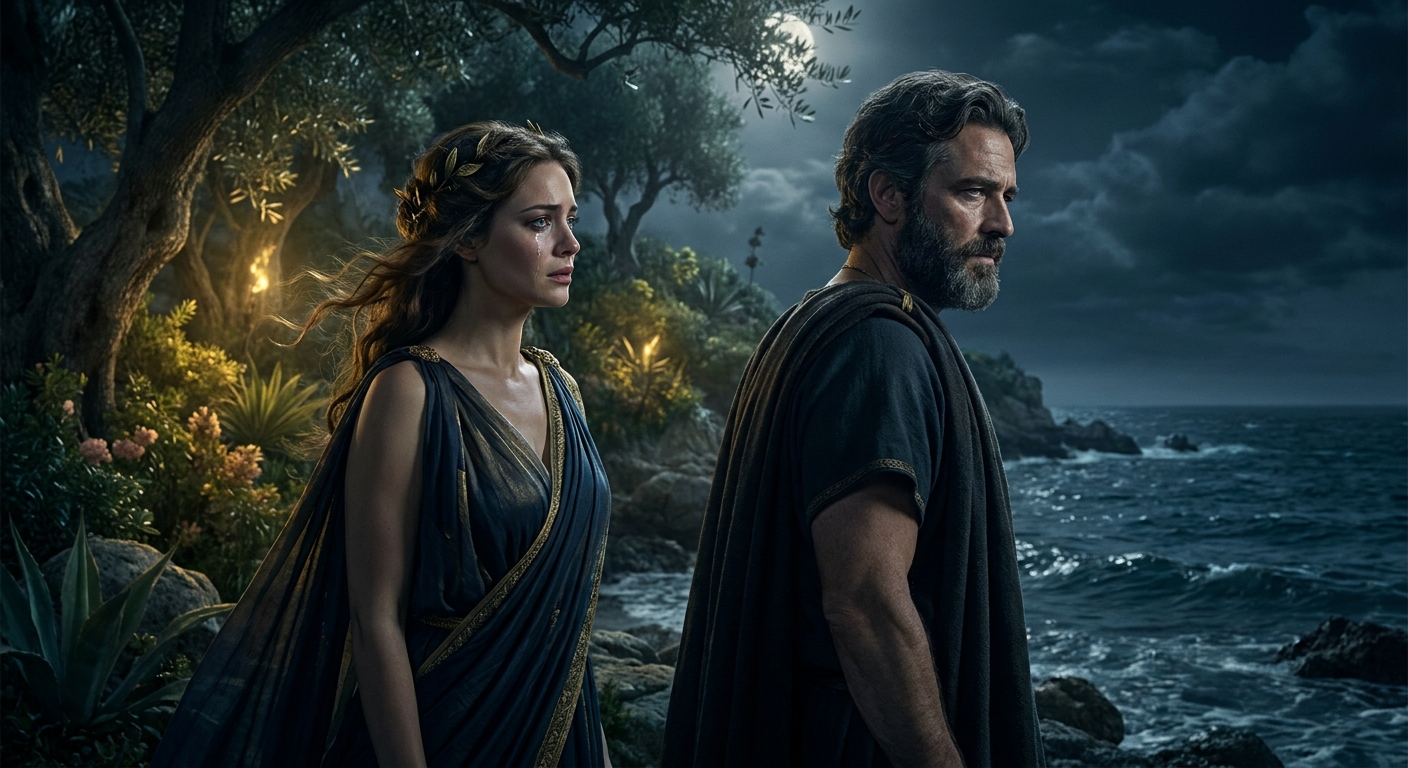
Odysseus washes up on Ogygia, the island of Calypso, and here the temptation is not immediate death. It is softness. It is the promise of forgetting.
In Homer, Calypso offers what war and travel never could: comfort, desire, and immortality with agelessness. But immortality without Ithaca is not salvation. It is exile with perfect weather.
He stays for seven years. The poem insists he weeps for home, staring at the horizon like it is a wound. Eventually the gods intervene, and Calypso must let him go.
Scheria and the Phaeacians
Freedom does not mean arrival. Poseidon wrecks Odysseus again, and he drags himself onto Scheria, the shore of the Phaeacians, with nothing left but his name and the instinct to hide it.
He is found by Nausicaa, and the scene is one of the epic’s quiet reversals: the feared raider of Troy reduced to a supplicant, borrowing dignity like borrowed cloth. Hospitality becomes the bridge that violence cannot build.
In the halls of Alcinous and Arete, Odysseus finally tells his story aloud, and the telling itself becomes a kind of homecoming. The Phaeacians carry him sleeping to Ithaca, as if returning a relic to its shrine.
Ithaca and the suitors
When Odysseus finally returns to Ithaca, he does not stride into his palace like a victorious king. He comes in as a beggar, concealed by Athena and his own instinct for survival. The homecoming is not a parade. It is an infiltration.
His house is occupied by the suitors, men who consume his wealth and pressure Penelope to choose a new husband, acting as if absence is the same thing as death.
Penelope holds them off with the strategy of her own, weaving by day and unweaving by night. Ithaca becomes a place where fidelity is not passive. It is labor. It is cunning.
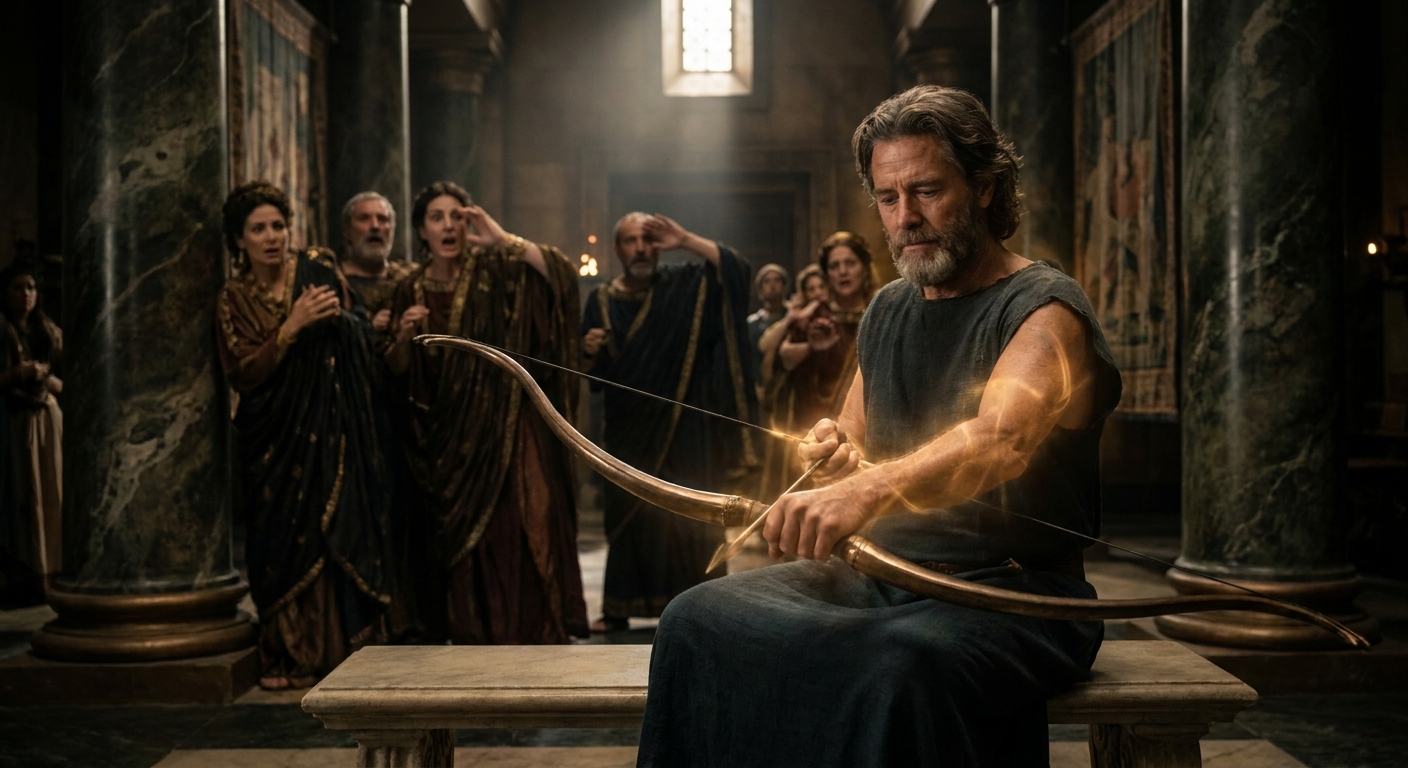
Odysseus tests loyalties in disguise, gathering information like a blade being sharpened. When the moment comes, he reveals himself through the bow only he can string, and the palace turns into a sealed chamber of judgment.
Home is not simply where you return. It is what you take back, and what it takes from you in return.
The suitors are killed. The scene is brutal, and it should be. Greek myth does not sanitize the restoration of order. It shows the cost, the blood, the reality that kingship is not a title but a force.
The bed and the proof
Odysseus’ story is filled with disguises and false names, so the ending demands something sturdier than a face. Recognition in the Odyssey arrives in stages: to his son Telemachus, to loyal servants, and finally to Penelope.
Penelope does not surrender belief cheaply. She tests him. And Odysseus, provoked, speaks of the marriage bed built around a living olive tree, a secret no stranger could know. The proof is not romantic in a modern sense. It is architectural, rooted, impossible to fake.
After monsters and goddesses and the seductive violence of fame, the most intimate truth is wood and craft and shared memory. Metis, at last, is used not to deceive an enemy, but to reveal a husband.
Why Odysseus endures
Odysseus endures because he is not a simple poster of heroism. He is the patron saint of complicated survival. He lies and saves. He boasts and pays. He longs for home and cannot stop wandering, even inside his own mind.
His myths preserve a hard Greek wisdom: the gods can be negotiated with, sometimes, but never controlled. What you can control is the angle of your sail, the story you tell, and the part of yourself you are willing to bind to the mast.
Odysseus takes the long way home because the long way is who he is. Not merely a man returning to Ithaca, but a mind trying to return to peace.