
Hera Myths: Marriage, Jealousy, and Queen of Olympus
Greek Mythology
Hera is easy to reduce if you have never stood in her temples, figuratively speaking, long enough to smell the smoke on your clothes.
In the myths, she is “jealous.” In the cult, she is queenly order, the goddess who makes marriage more than a private romance and turns it into law, lineage, and legitimacy. That difference matters. Hera is not a stereotype with a peacock. She is the consequence of Zeus making promises the way thunder makes craters.
To read Hera well, you have to read her the way the Greeks often did: as a power that protects what society needs to survive, and punishes what threatens it, even when the threat arrives wearing perfume and divine attention.

Hera and Zeus
Hera is Zeus’ sister and wife, which is already a sentence that tells you Greek mythology does not do “normal.” Their marriage is not a soft-focus pairing of soulmates. It is a cosmic contract. Zeus rules the sky and oaths. Hera rules the bond that makes households, dynasties, and city life cohere.
Some traditions linger on Zeus’ pursuit and Hera’s reluctance. One well-known version has Zeus resort to a trick, taking the form of a storm-tossed cuckoo to stir her pity, then revealing his identity. The point is not that Hera is naive. The point is that Zeus’ seduction operates like weather: it overwhelms the moment and then claims it was always fated.
Marriage, in Hera’s mythology, is not a feeling. It is a structure. And Zeus keeps testing how much damage the structure can absorb.
Hera’s “jealousy” begins here as mythic logic. If Zeus is allowed to scatter intimacy across the world without consequence, then oaths mean nothing, lineage becomes fog, and the queen becomes decorative. Hera cannot afford to be decorative.
Leto
When Zeus fathers children with Leto, Hera’s response becomes one of the most brutal chases in Greek myth. Leto, pregnant with Apollo and Artemis, wanders the earth seeking a place to give birth, and the world hesitates. Cities and islands fear Hera’s anger, because Hera’s anger is not just personal. It is the violence of a violated order.
In some versions, Hera deepens the cruelty by keeping Eileithyia, goddess of childbirth, away from Leto, stretching labor into a trial measured in days. Even the body’s mercy can be made political.
In many tellings, the turning point comes when Delos, a floating, rootless island, agrees to shelter Leto. Delos can afford what others cannot: it has little to lose. And when Apollo is born there, the island’s name becomes famous, gilded by the very risk it accepted.
Hera’s persecution of Leto is horrifying. It is also revealing. Hera punishes the public symptom, not the private cause. Zeus is the sky, untouchable. Leto is the body in the world, vulnerable to consequence. Myth does not pretend this is fair. Myth simply admits how power often works.

Io
The myth of Io is a masterclass in what happens when Zeus treats desire like entitlement.
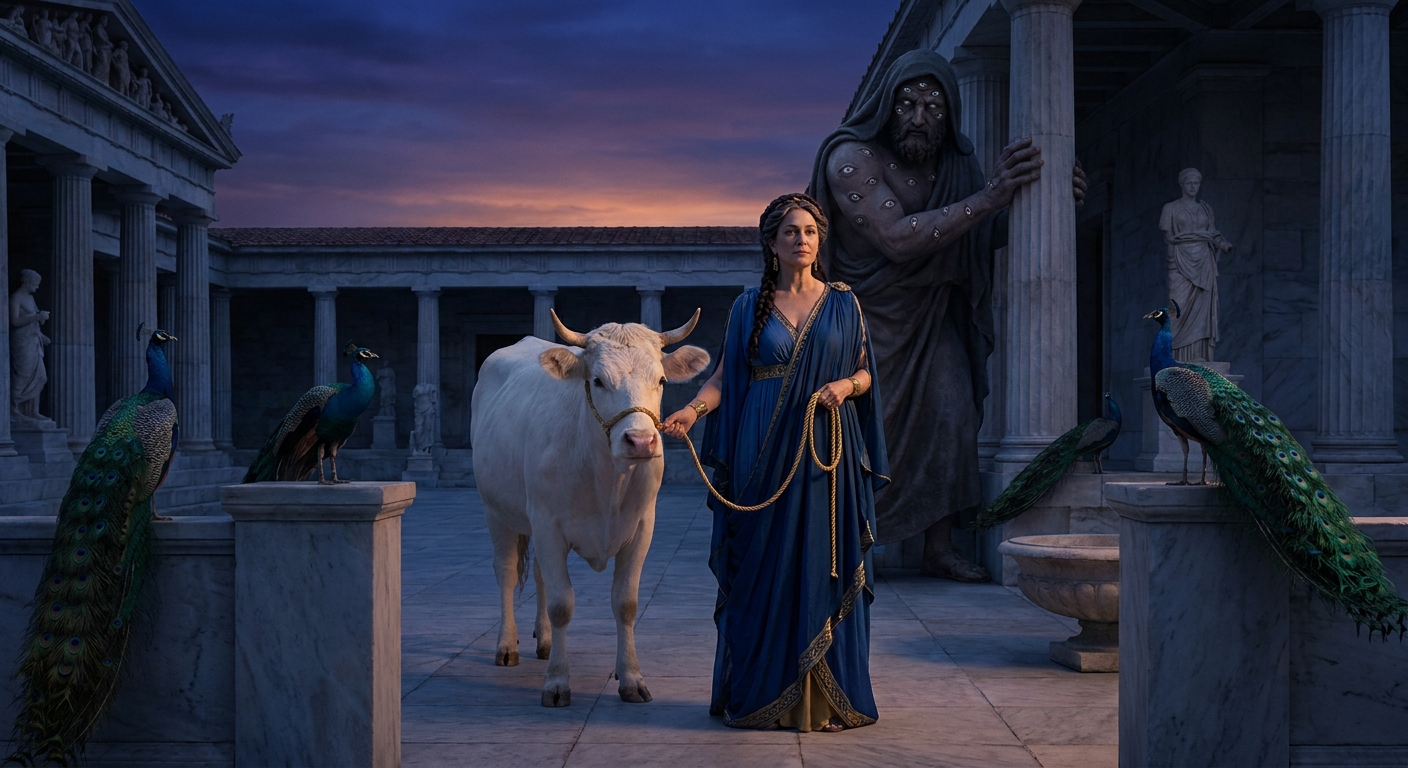
In some versions, Io is a priestess of Hera when Zeus notices her. Zeus attempts to conceal the affair by transforming Io into a white heifer. Hera, not easily fooled by the world’s most obvious shapeshifter, demands the cow as a gift and sets the many-eyed giant Argus Panoptes to guard her.
Zeus sends Hermes to kill Argus. Hera, grieving and furious, takes the memory of Argus and sets the pattern of his eyes into the tail of her peacock, a reminder that beauty in Olympus can arrive after a murder.
Then comes the part people remember as “Hera being cruel” without asking why the myth insists on the cruelty. Hera sends a gadfly to torment Io, driving her across continents in frantic flight. The story becomes geographic, almost cartographic: suffering traced into coastlines.
Eventually, far from Greece, Io is restored, and her line leads toward Epaphus and later legendary ancestry. Myth turns pain into pedigree. Hera does not erase Io, but she marks the story. She makes sure the world remembers the cost of Zeus’ appetite.
Semele
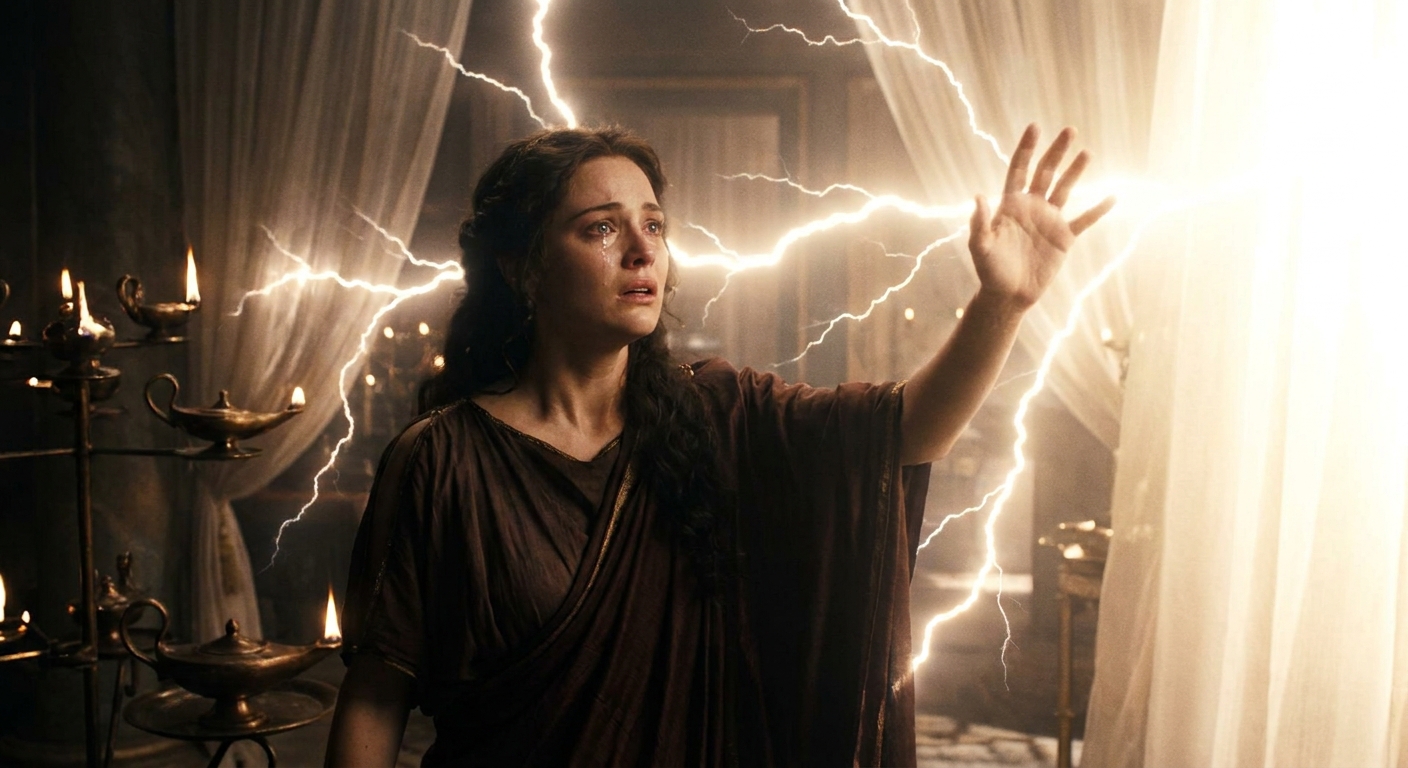
Semele, mortal princess of Thebes, becomes pregnant by Zeus and is promised a gift. Hera, disguised as an older confidante in many versions, plants an idea that is both simple and lethal: ask to see him as he truly is.
Here is the trap, and it is mythic perfection. Zeus is bound because he has sworn an unbreakable oath, often by the Styx. Semele, being mortal, cannot survive the unveiled presence of the god of storm and lightning. Zeus appears in his full splendor, and Semele is consumed.
This is not jealousy in the small sense. It is Hera weaponizing oaths, the very thing Zeus prides himself on ruling. She turns his virtue into a blade and lets him swing it.
Hera does not always strike like a spear. Sometimes she makes the victim ask for the fire.
From the ash comes a strange mercy. Zeus saves the unborn child, sewing him into his thigh until he can be born again. That child becomes Dionysus, the god of wine, ecstasy, theater, and holy disorder. Hera’s attempt to erase a rival pregnancy helps deliver one of the most destabilizing gods in the pantheon.
Heracles
Some myths feel like moral lessons. The Heracles cycle feels like a long, furious argument with the universe.
Heracles is Zeus’ son by Alcmene, a mortal woman. Hera’s response begins before the child even draws breath. In one famous thread, Hera delays the birth and manipulates the timing so that Eurystheus, also of Zeus’ line, is born first and gains the kingship that should have been Heracles’. Hera does not merely want to hurt the child. She wants to control inheritance.
Then comes the most chilling episode: Hera drives Heracles into madness, and he kills his own children (and in some versions, more than that). This is the kind of myth that leaves a taste of bronze in your mouth. The hero’s penance becomes the Twelve Labors, undertaken in service to Eurystheus.
It is tempting to call Hera’s persecution of Heracles irrational. But the myth frames it as a battle over what kind of power gets celebrated. Heracles, the violent problem-solver blessed by Zeus, is exactly the sort of figure who can make lawful order look weak. Hera tests him like a forge tests metal.
And the uncomfortable irony is that Hera’s hatred helps shape him into a legend. A hero without obstacles is not a hero. Hera becomes the obstacle with a crown.

Later traditions soften the ending into an uneasy reconciliation: Heracles achieves apotheosis and marries Hebe, Hera’s daughter, on Olympus. The message is not that Hera “got over it.” The message is that Olympus absorbs even its scandals, and turns them into family.
The Golden Apple
If Hera sometimes looks like a private villain, the Judgment of Paris reveals her as a political one.
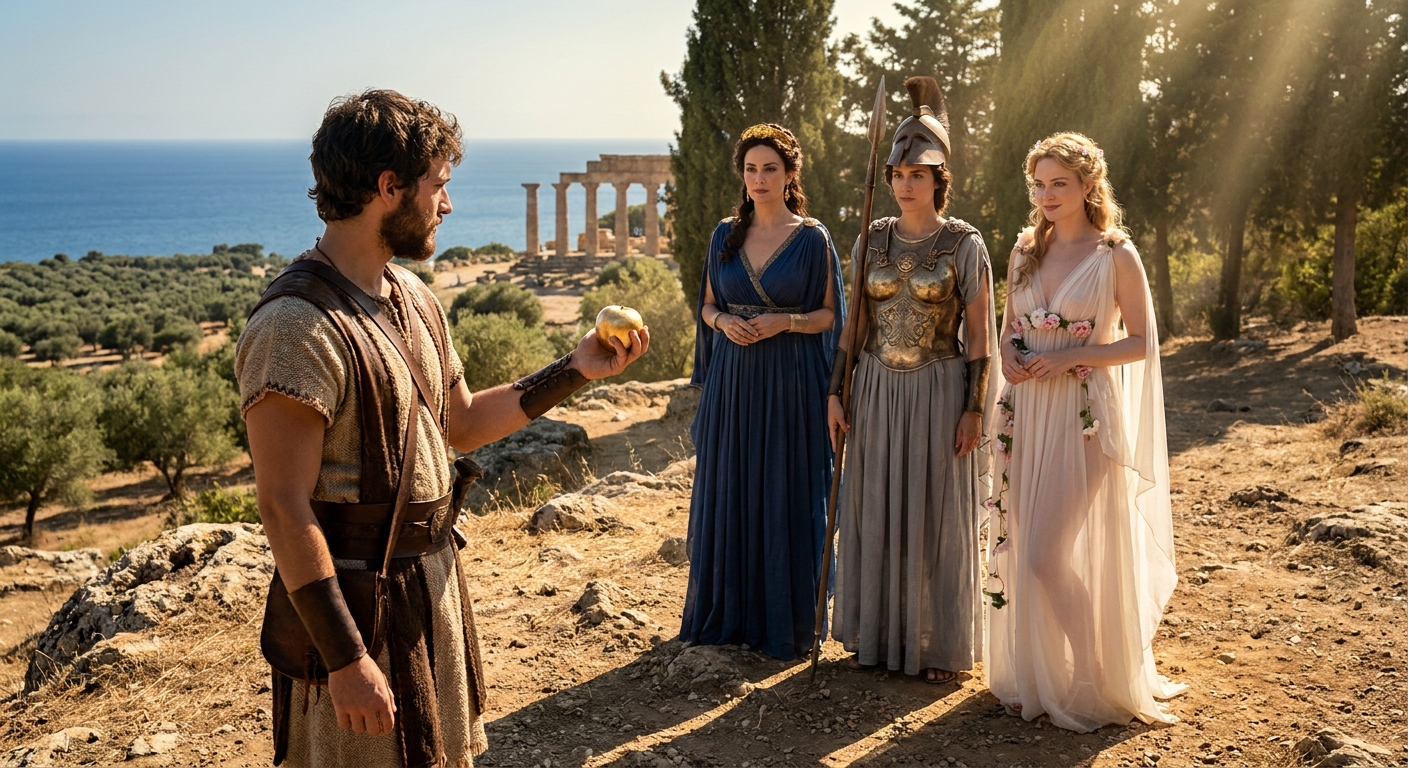
At the wedding of Peleus and Thetis, the goddess of strife, Eris, throws a golden apple marked “for the fairest.” The contenders are Hera, Athena, and Aphrodite. Zeus refuses to judge, which is perhaps his most sensible decision, and the choice falls to Paris, a Trojan prince.
Each goddess offers a bribe, and Hera’s offer is pure sovereignty: kingship, political dominance, the kind of power that makes cities kneel. Athena offers victory and wisdom. Aphrodite offers Helen, the most beautiful woman.
Paris chooses Aphrodite, and the Trojan War follows like a storm answering a drumbeat.
Hera’s rage here is not merely wounded vanity. It is the fury of a queen whose currency is status watching a mortal prefer erotic chaos over governance. Hera becomes a chief divine supporter of the Greeks, not because she is petty, but because Troy has insulted her authority in the most public possible way.
Hera’s Cult
Now step out of the bedroom drama and into the temple precinct, where Hera’s mythology becomes only one facet of her identity.
Hera was worshipped across the Greek world, famously at Argos and Samos, with major sanctuaries called the Heraion. In these places, she was not treated as a punchline. She was a guardian of the social fabric: marriage, childbirth, the protection of legitimate heirs, and the stability of civic life.
Her epithets tell you what people needed from her:
- Teleia, “of fulfillment,” often tied to marriage and its completion.
- Gamelia, bound to weddings and the binding of unions.
- Basileia, “Queen,” a title that matters in a world where power is not always gentle.
Her festivals, including celebrations sometimes called the Heraia in various locales, could include processions, offerings, and athletic contests. Ritual does something myth does not always do: it gives people a way to approach the goddess without being destroyed by her stories.
Read the cult alongside the myths, and Hera’s “jealousy” becomes less a personality flaw and more a sacred alarm. She responds to threats against the marriage bond because that bond is one of the few human structures the Greeks insisted could be blessed, not merely endured.
What Hera Is Doing
Hera is not the villain of Zeus’ love life. Zeus is the architect of the crisis. Hera is the force that makes the crisis expensive.
That does not absolve her. The myths are clear about the suffering she inflicts on women like Leto, Io, and Semele, and on a child like Heracles who did not choose his parentage. Greek myth rarely offers clean moral bookkeeping. It offers patterns: power injures, oaths bind, desire destabilizes, and someone pays.
If Zeus is the thunderbolt, Hera is the institution that survives the impact, staring into the smoke and deciding what the world is allowed to be next.