Gaia Myths: Earth, Titans, and Primordial Creation
Greek Mythology
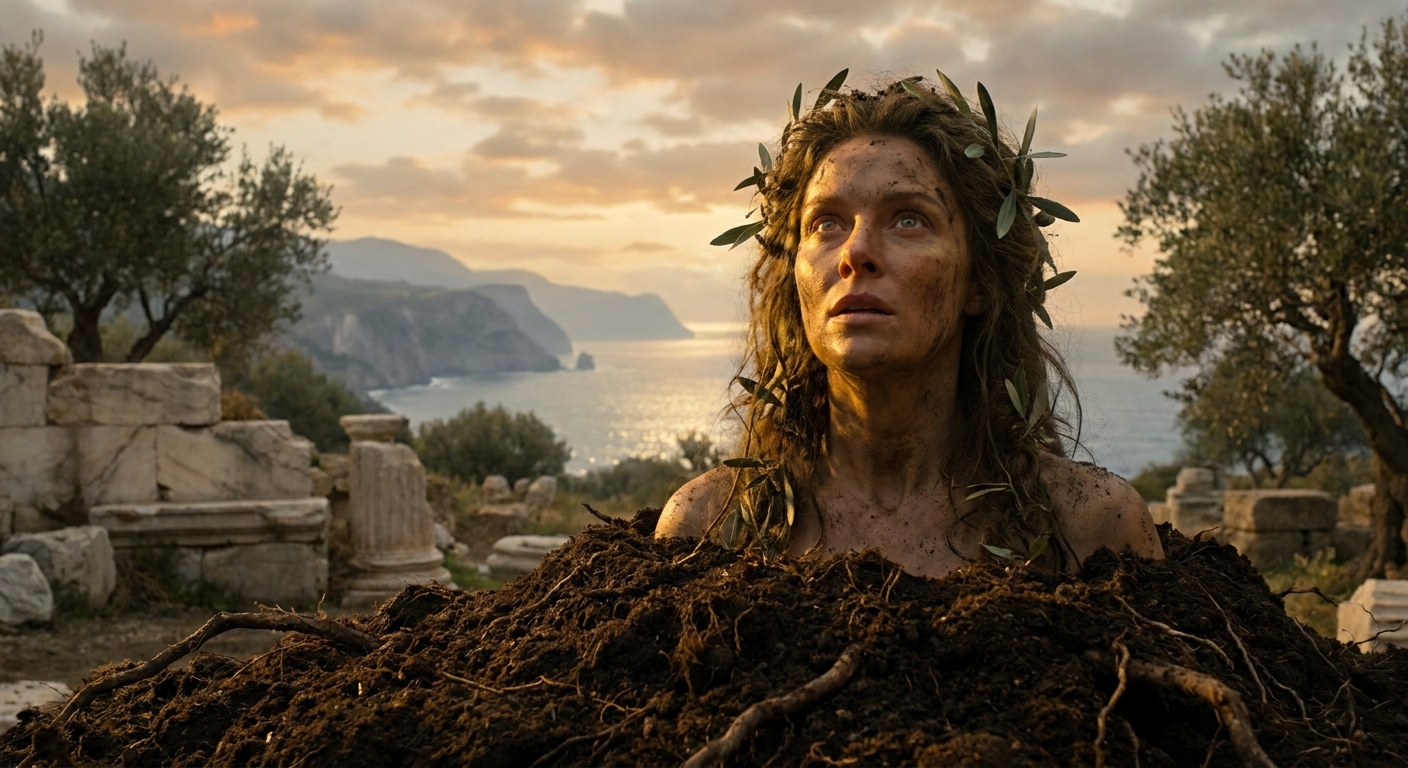
Gaia is the Greek Earth goddess, and that title is both too small and too polite. In the oldest stories, she is not a gentle background of hills and harvests. She is the living ground beneath everything, a primordial presence that can give birth without a lover, conspire against a tyrant, and deliver prophecies that ruin the confidence of kings.
When the Olympians later sit on their bright thrones, they like to pretend the world has always belonged to their rules and their lightning. But Gaia remembers an older pattern of reality, when creation was raw, dark, and dangerous. She is the mother of gods and monsters, but also the force that keeps reminding the newer gods that power has roots.

Primordial beginnings
Our most influential early map of creation comes from Hesiod’s Theogony, a poem that reads like a family tree written during a thunderstorm. In it, the cosmos does not begin with kindness. It begins with Chaos, a yawning gap, and then emerges Gaia, broad-breasted Earth, the steady floor of the world.
In Hesiod’s sequence, Gaia appears as a foundation and a generator. She brings forth Uranus (Sky) “equal to herself,” and with him the possibility of enclosure: the world becomes a place with a ceiling, a horizon, a pressure above. She also produces the great structures of landscape, including mountains and sea, in variations that show Earth as creator of both shelter and threat.
It is easy to romanticize this as pastoral. Do not. Primordial creation in Greek myth is not a soothing origin story. It is the beginning of rivalry, confinement, and the first lesson the universe ever learns: birth is political.
Gaia and Uranus
Gaia’s union with Uranus is the first great divine relationship, and it is already doomed by a familiar Greek problem: a ruler terrified of being replaced. Together they produce the earliest divine generations, including the Titans, the one-eyed Cyclopes, and the hundred-handed Hecatoncheires.
Uranus, repulsed or threatened by some of his children, forces them back into Gaia. The myth’s imagery is bodily and claustrophobic: Earth becomes a womb turned into a cell. Gaia, as mother and as world, suffers the compression of Sky’s control. She cannot walk away. Where would the Earth go?
So she does what Greek goddesses do when trapped in a cosmic marriage. She plots.
When Sky pins his children inside their mother, Earth becomes more than a birthplace. She becomes a conspirator.
The sickle and the revolt
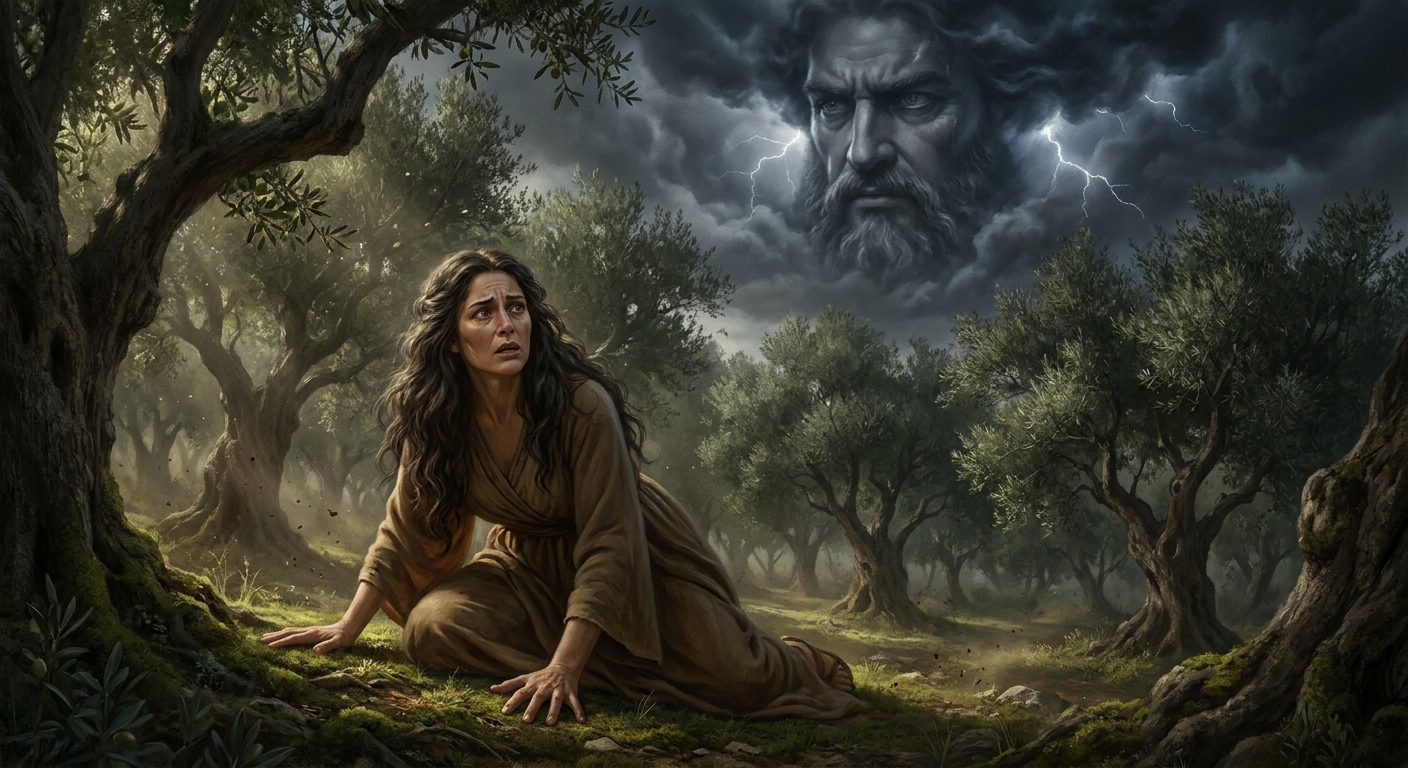
Gaia fashions a weapon, a flint sickle, and offers it to her children as an invitation to rebellion. None dare, except Cronus, the youngest, ambitious and sharp enough to be dangerous.
In Hesiod, Cronus ambushes Uranus and castrates him. The myth is brutal, symbolic, and strangely structural. Sky’s domination is literally severed. Space opens. The world can breathe.
From Uranus’s spilled blood, more beings arise, including the Erinyes (Furies) and the Giants. Elsewhere, the severed flesh thrown into the sea blooms into Aphrodite, beauty born from violence and salt-foam. In Greek myth, a wound is rarely only an ending. It is also a beginning.
Titan rule
Cronus takes power, and very quickly becomes the kind of king who hears prophecy like a blade being tested. In Hesiod, Gaia and Uranus warn him that one of his own children will overthrow him, just as he overthrew his father.
So he swallows his offspring, each newborn god disappearing into the belly of the regime. It is a familiar Greek punishment turned inward: not chains and cliffs, but a father making his own body into a prison.
Here is one of Gaia’s defining traits across the mythic centuries: she does not stop being relevant when the new order arrives. She is not a prologue. She is a force that persists, and she is often the one who supplies the knowledge that rulers wish they did not have.
When the time comes to save the last child, Rhea is guided by an older intelligence than any throne. A stone is wrapped in cloth. A tyrant is fed his own certainty.
Zeus in hiding
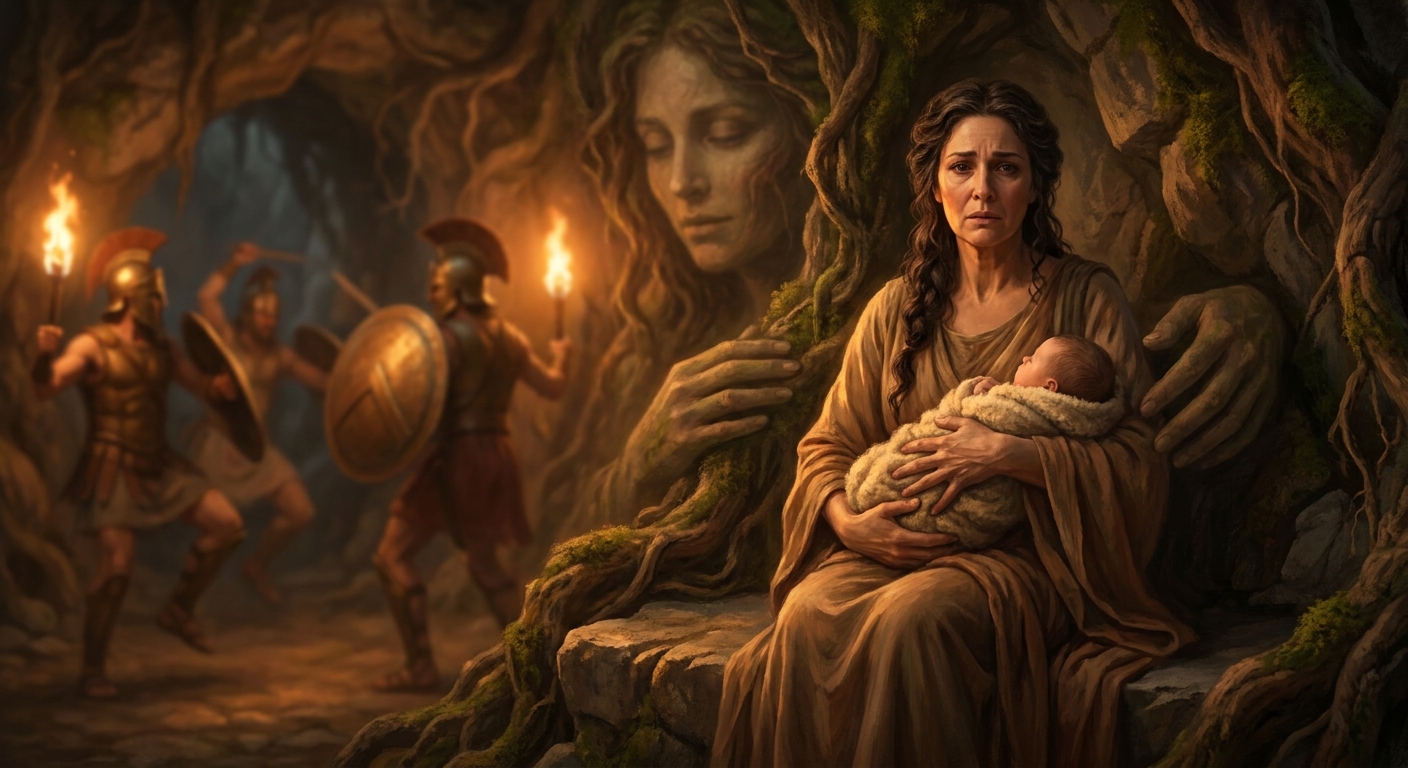
Rhea hides her infant son, Zeus, and offers Cronus the stone instead. Cronus swallows it, because tyranny is often arrogant enough to accept a substitute if it looks like obedience.
Zeus grows in secret, in stories that place him in caves and mountain sanctuaries, often on Crete. The details vary by region and poet, but the atmosphere stays the same: torchlight on rock walls, the smell of goat milk and laurel smoke, armed dancers clashing bronze to cover a baby’s cries. And beneath it all, the sense that Earth herself is sheltering a future storm.
The child who will rule the sky is raised in the dark places of the earth, where prophecy sounds like water in a cave.
When Zeus finally forces Cronus to disgorge his swallowed children, the Titanomachy follows. The war of gods is not a clean epic, but a mythic earthquake: Titans versus Olympians, with old powers and new tactics colliding. And Gaia’s earlier children, the Cyclopes and Hecatoncheires, return as crucial allies once freed from confinement.
The Cyclopes forge Zeus’s thunderbolt. The hundred-handed ones become living siege engines. The Olympians win, but notice the pattern: even the Olympian victory depends on Gaia’s ancient lineages and Gaia’s long memory of who was wronged.
Giants and Typhon
After the Titans are defeated, you might expect the Earth to settle into quiet. But Greek myth does not reward that kind of optimism. Gaia’s relationship with Zeus is complicated, and sometimes outright hostile, because Zeus represents the final sealing of a new hierarchy that limits older forces.
In many accounts, Gaia reacts to the Titans’ punishment by bringing forth challengers. The Gigantomachy, the battle between gods and Giants, is not just another action sequence for temple pediments. It is the mythic idea that the Earth can rebel against the sky even after the sky has learned to call itself “justice.”
Then there is Typhon, a storm-being in later traditions, often described with serpentine coils and a voice like a world on fire. Some stories make him Gaia’s child, sometimes with Tartarus, born as a last, furious answer to Zeus’s consolidation of power. The fight becomes a cosmic stress test: can the new king actually hold the world together when the old world tries to tear the seams?
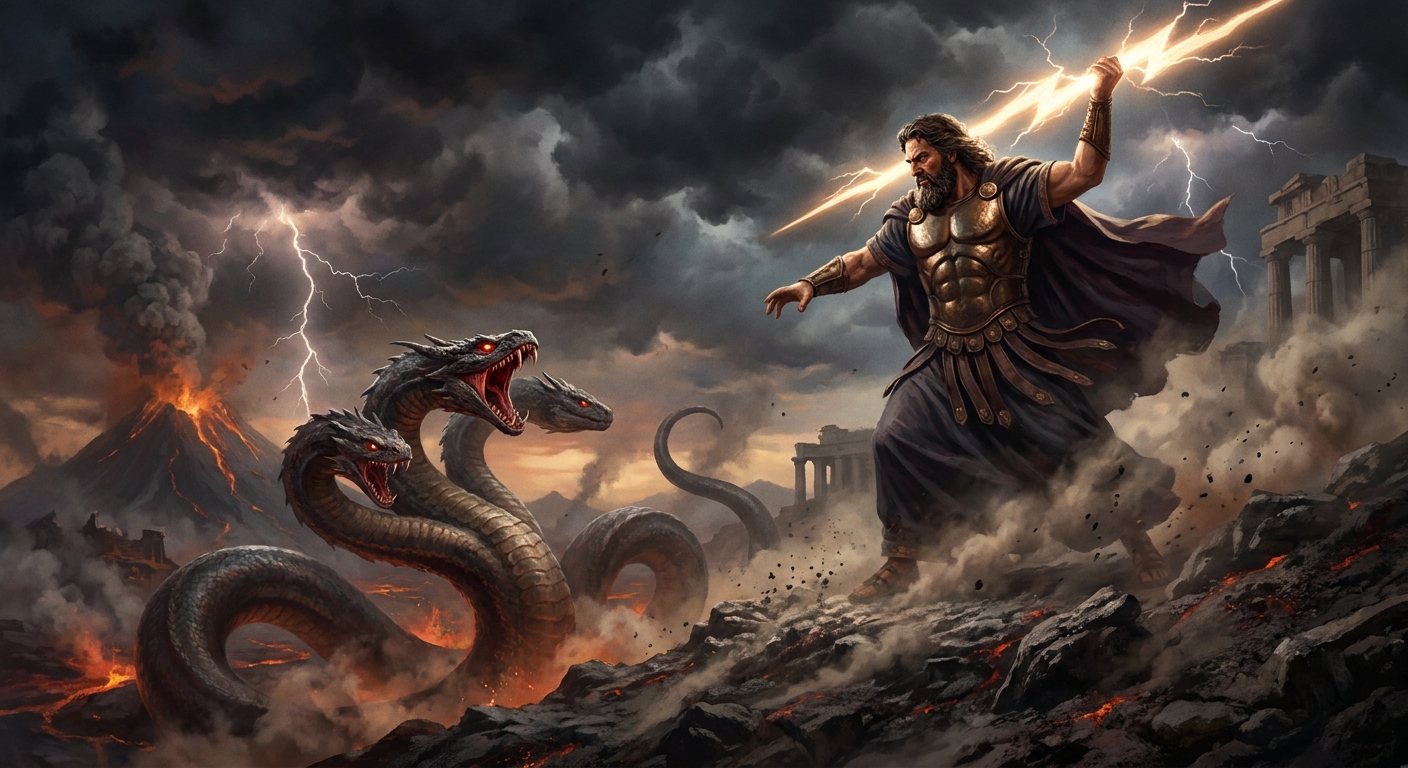
Zeus wins, as the official story insists he must. Typhon is pinned beneath earth and mountain in different local versions, a mythic explanation for volcanic unrest and the feeling that the ground itself can still shudder with imprisoned fury.
Even when the gods declare the war finished, Gaia keeps a few earthquakes in reserve.
Gaia as oracle
Gaia is not only a mother of beings. She is a mother of revelation. Oracles belong to her atmosphere, because prophecy is the Earth remembering what rulers are not ready to know.
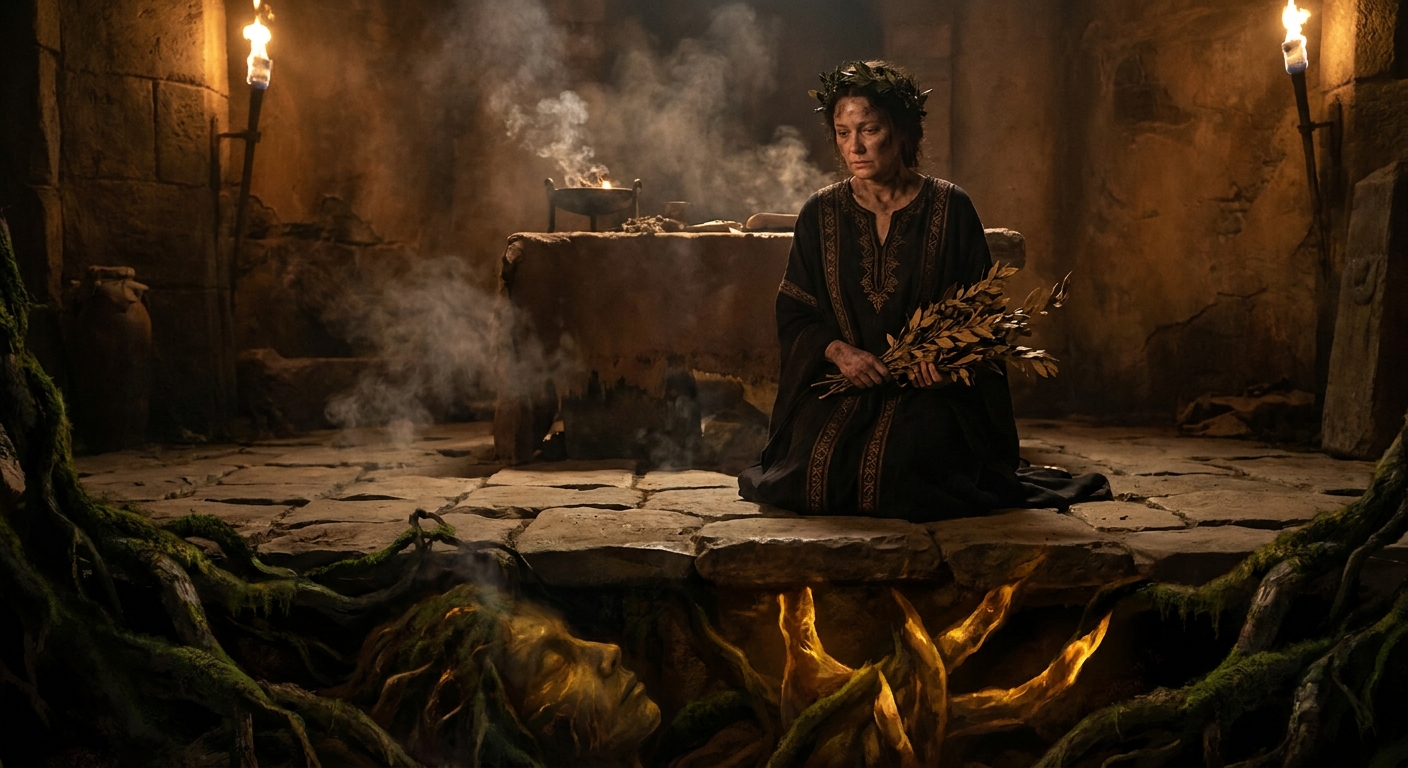
Later Greek tradition often associates an early oracular power at Delphi with Gaia, before Apollo claims the tripod and the laurel-crowned authority of the sanctuary. The details are tangled and vary across sources, but the idea is consistent and deeply Greek: before the bright young god becomes the official voice, there is an older voice in the ground, darker and more elemental.
And even when Olympus holds the temple, Gaia remains the acoustics. The vapor, the trembling, the sense that the message is not merely “divine” but chthonic, rising from below polished marble.
What Gaia means
If you read Gaia only as “the first mother,” you miss her most unsettling role. She is the reminder that Olympian order, for all its gleaming laws and heroic poetry, sits on top of something older that never agreed to be civilized.
Olympus is a regime of names, thrones, lineages, and treaties. Gaia is the regime of continuance: seasons, burial, growth, rot, rebirth. The Olympians can win wars. Gaia is what remains when the war is over and the bodies return to the soil.
That is why she keeps returning in myth cycles across generations. She is present in creation, in revolution, in the raising of kings, in the birthing of monsters, and in prophecy. She is not on anyone’s side for long. She is on the side of the world continuing to exist, even if it has to crack a few divine crowns to do it.
So when you hear “Gaia,” do not picture a tranquil meadow and call it done. Picture a moonlit hillside where the ground feels alive under your boots, where the wind smells like thyme and distant sea cliffs, and where one of the oldest goddesses is still listening.
Key figures
- Gaia: Earth as primordial mother, conspirator, and oracle.
- Uranus: Sky, the first tyrant in Hesiod’s cosmic family drama.
- Cronus: Titan king, revolutionary turned devourer, the cautionary tale of inherited fear.
- Rhea: Mother of the Olympians, architect of the most important baby-switch in myth.
- Zeus: The thunder-bearer whose order depends on older powers he cannot erase.
- Cyclopes and Hecatoncheires: Gaia’s children whose release alters the fate of gods.
- Giants and Typhon: Earthborn threats that test Olympian rule.