Cronus Myths: Golden Age, Betrayal, and Titan Fall
Greek Mythology
Cronus is one of Greek mythology’s most unsettling evolutions: a god who begins as a revolution and ends behind a gate. He is the Titan of harvest and old kingship, marked by the sickle. And in later tradition, and in popular memory, he is often tangled with Time itself, a confusion with Chronos that says something true even when the names are not.
His story does not unfold like a clean moral fable. It moves like weather over the Aegean, bright and merciless, then suddenly black with thunder. One generation is crushed so the next can breathe. Then the next repeats the crime with better incense and better excuses.

Gaia’s revenge
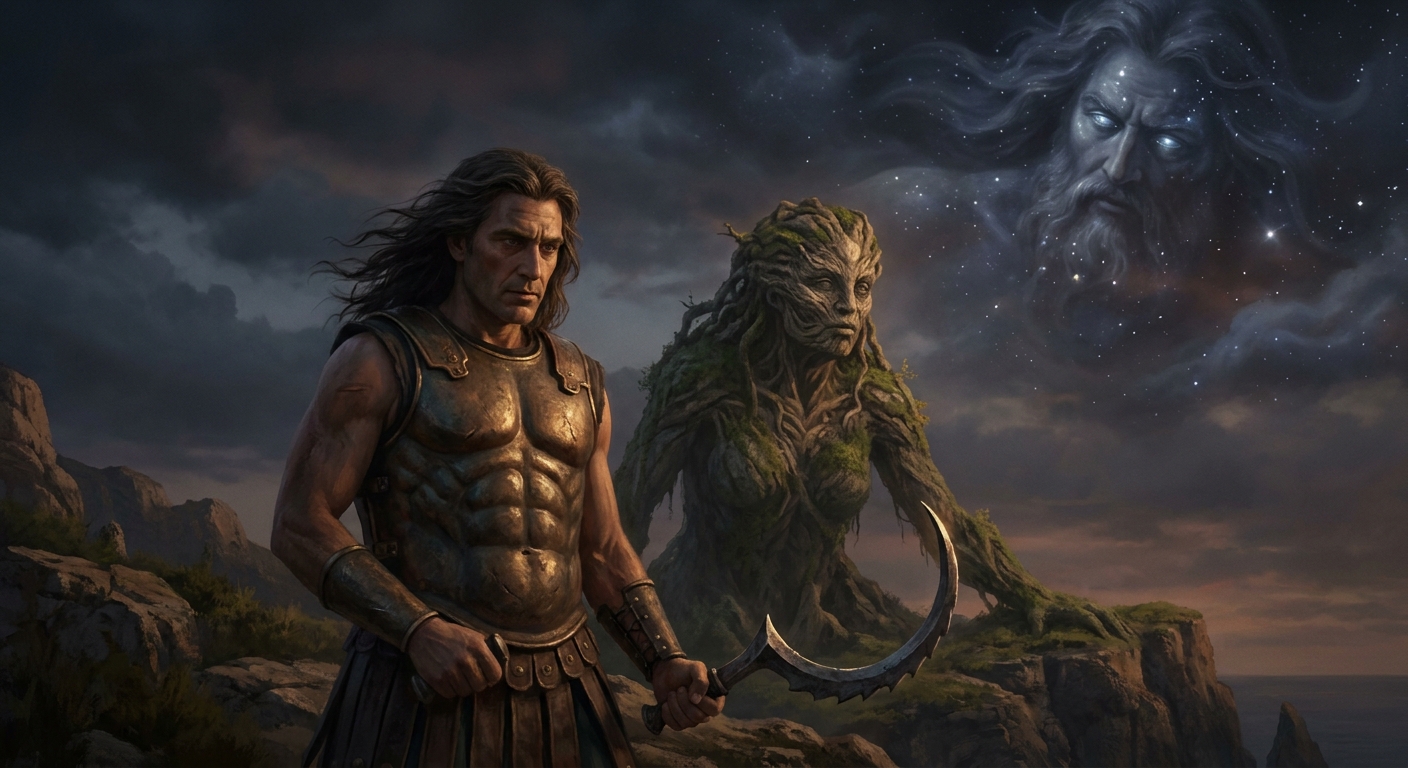
Before Cronus is a king, he is a weapon.
Uranus, the Sky, forces his children back into Gaia, the Earth, as though a tyrant could unmake his own heirs by burying them where they began. In Hesiod’s Theogony, Gaia groans under the weight of it, and the cosmos feels like a household without boundary-stones, without rites to heal what has been done.
Gaia fashions an adamantine sickle and asks her children to act. Hesiod calls Cronus the youngest and most terrible of that brood, and he alone takes the bargain. He waits. He ambushes his father. He strikes.
The details are blunt because the Greeks were blunt about origins. Creation is not always gentle. The sky is cut away from the earth. A new order becomes possible, and it is born in violence, not consensus.
A son becomes a savior for a moment, and a monster for the rest of time.
From the blood of Uranus come the Erinyes (Furies), the Giants, and the Meliae in Hesiod, the ash-tree nymphs born from a wound. From sea-foam gathers Aphrodite in the most famous version. Even vengeance, in Greece, has a way of spilling into beauty.
The Golden Age
Here is where the myth seduces you. Because after the coup comes the glow.
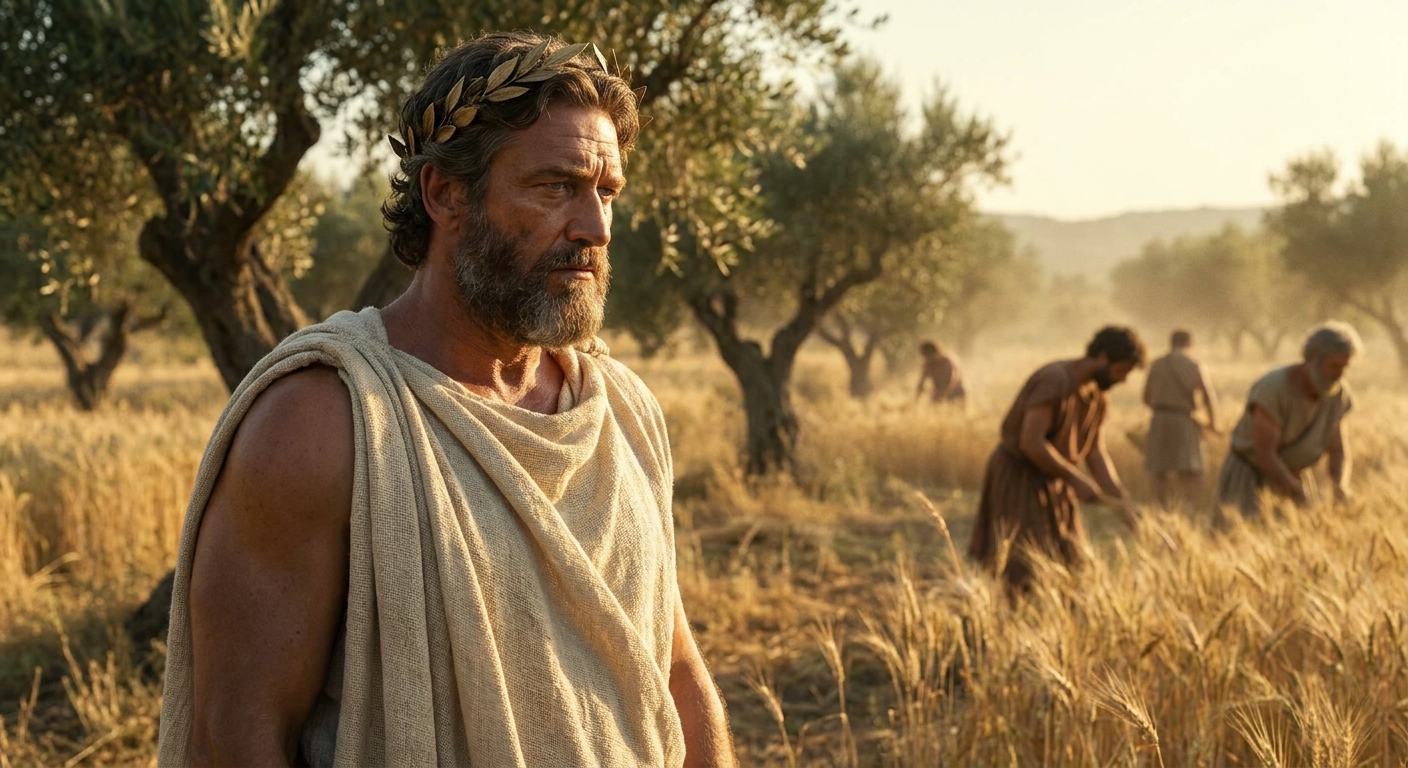
Later poets, especially Hesiod in Works and Days, remember the reign of Cronus as a Golden Age: mortals living without toil, without old age grinding their bones to dust, without the constant scrape of war. The earth yields generously. The world feels closer to olive groves and warm bread than to a battlefield.
It is tempting to turn this into proof that Cronus was a good king. Greek myth rarely rewards that kind of certainty. The Golden Age can read like nostalgia for a time before Zeus’s laws, before sacrifice smoke rose from every altar, before justice needed thunder to enforce it.
But it can also read like a warning. Even the most beautiful era can be held together by denial. A paradise built on an old crime still has that crime in its foundation, like a temple raised on a fault line.
The poisoned prophecy
Cronus takes the throne, and then he hears the sound that ruins all rulers: a prophecy.
He has done to Uranus what an ambitious child might do when the world itself invites betrayal. So he is told, in one form or another across the tradition, that one of his own children will do the same to him.
Greek myth loves this shape of doom, not because fate is cute, but because it understands something painfully human. Fear of losing power makes people commit the very acts that ensure they will lose it.
The future does not need to attack. A king will destroy himself trying to keep it out.
He swallows them
Enter Rhea, his sister and wife, a goddess whose grief is often shadowed by her husband’s horror.
As Rhea bears children, Cronus takes them at birth and swallows them whole. Not kills. Not banishes. Swallows. It is a detail so visceral it feels like the myth is trying to bypass your intellect and go straight for the throat.
The swallowed are the future Olympians: Hestia, Demeter, Hera, Hades, and Poseidon. Five divine lives stored in a living prison, suspended in the dark.
Think about what Cronus is doing. He is trying to reverse birth. He is trying to unmake succession. He is trying to turn the future into a closed circle that always returns to him.
And there is a bitter irony in the popular habit of calling him “Time.” Time cannot be owned. Even a Titan cannot close its door.
Rhea’s stone
By the sixth birth, Rhea is no longer simply enduring. She is plotting.
She turns to Gaia for counsel, and in many versions also to Uranus. The older powers, once victims of Cronus, become the quiet architects of his downfall. Myth loves symmetry, and it loves revenge that takes its time.
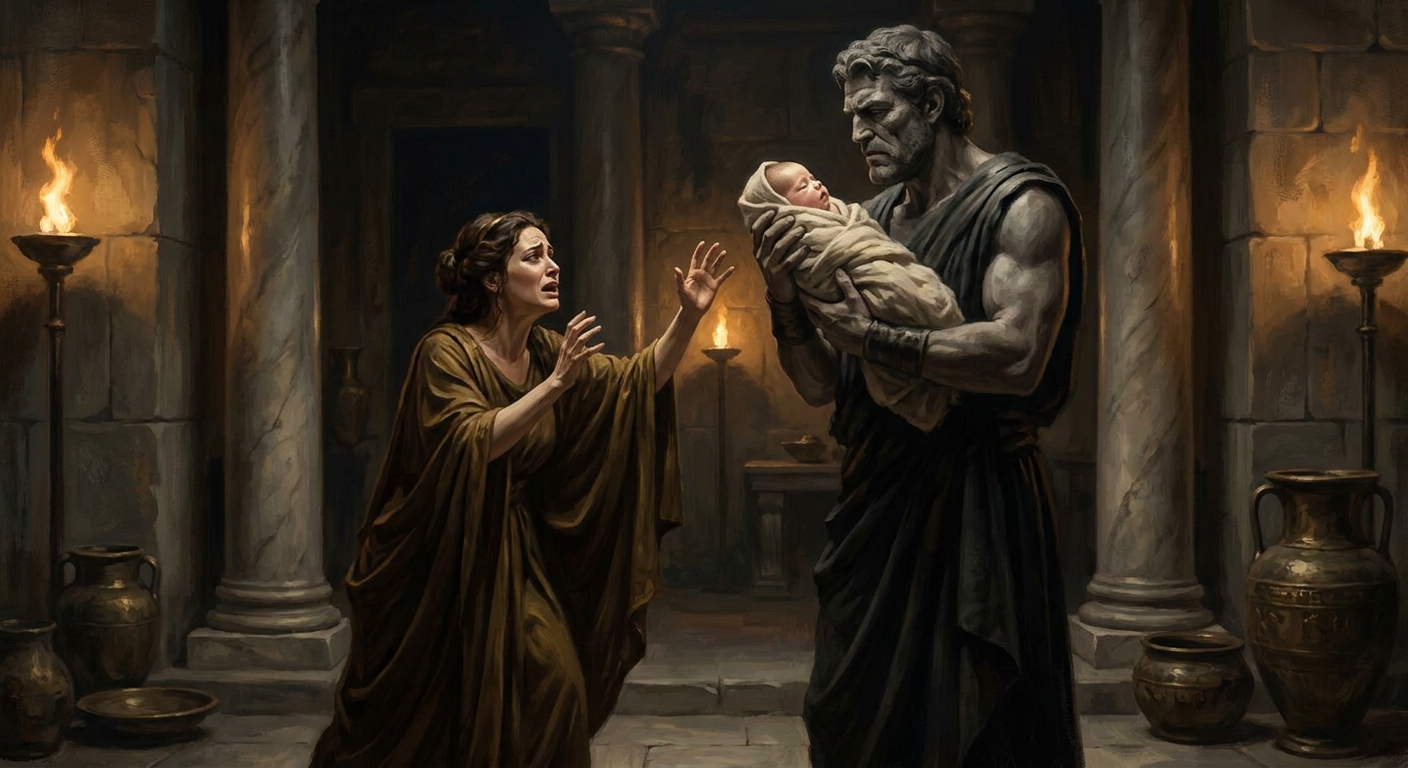
When Zeus is born, Rhea hides him, often on Crete. She gives Cronus a stone wrapped in swaddling cloth, and he swallows it, satisfied, never testing the weight of his own certainty.
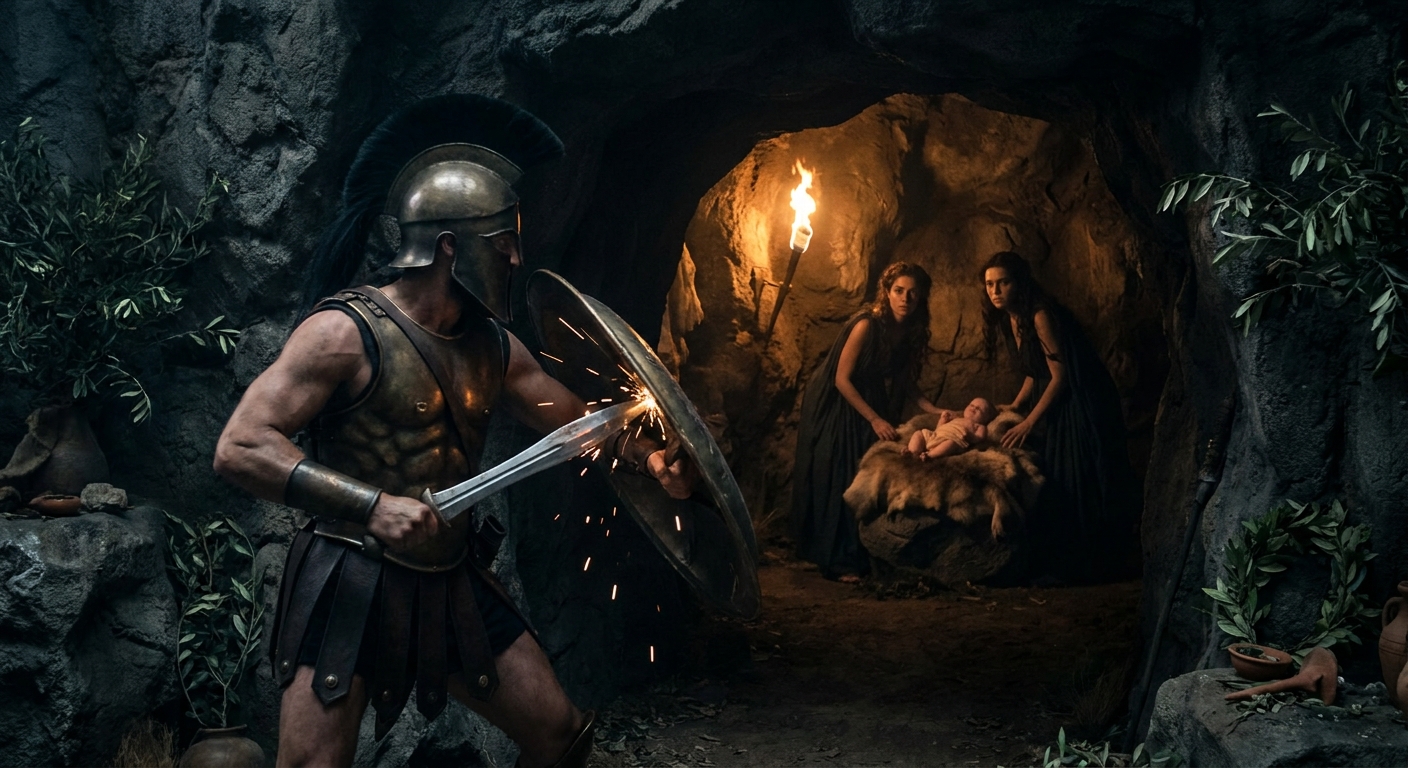
Zeus grows in secret, nursed by nymphs in some tellings, protected by the clamor of the Curetes who clash bronze on bronze to drown out the baby’s cries. It is a cinematic image: armor ringing in a sacred cave, torches breathing against damp stone, wild honey on the air, while a Titan king sleeps above the world believing he has already won.
The gods returned
When Zeus returns, the story turns from horror to reversal. The swallowed children are not dead. They are waiting.
How Zeus forces Cronus to release them varies. In many accounts, Metis, the goddess of cunning, provides a potion that makes Cronus vomit up what he consumed. In other tellings the help comes from Gaia, or Zeus himself administers the drug. First comes the stone, then the children, restored to the world in a sequence that feels like a second birth, violent and necessary.
Cronus’s attempt to stop succession becomes the mechanism that preserves it. The Olympians emerge already marked by what was done to them, already destined to rule with the memory of a prison in their mythology’s bloodstream.
And then the universe chooses sides.
The Titanomachy
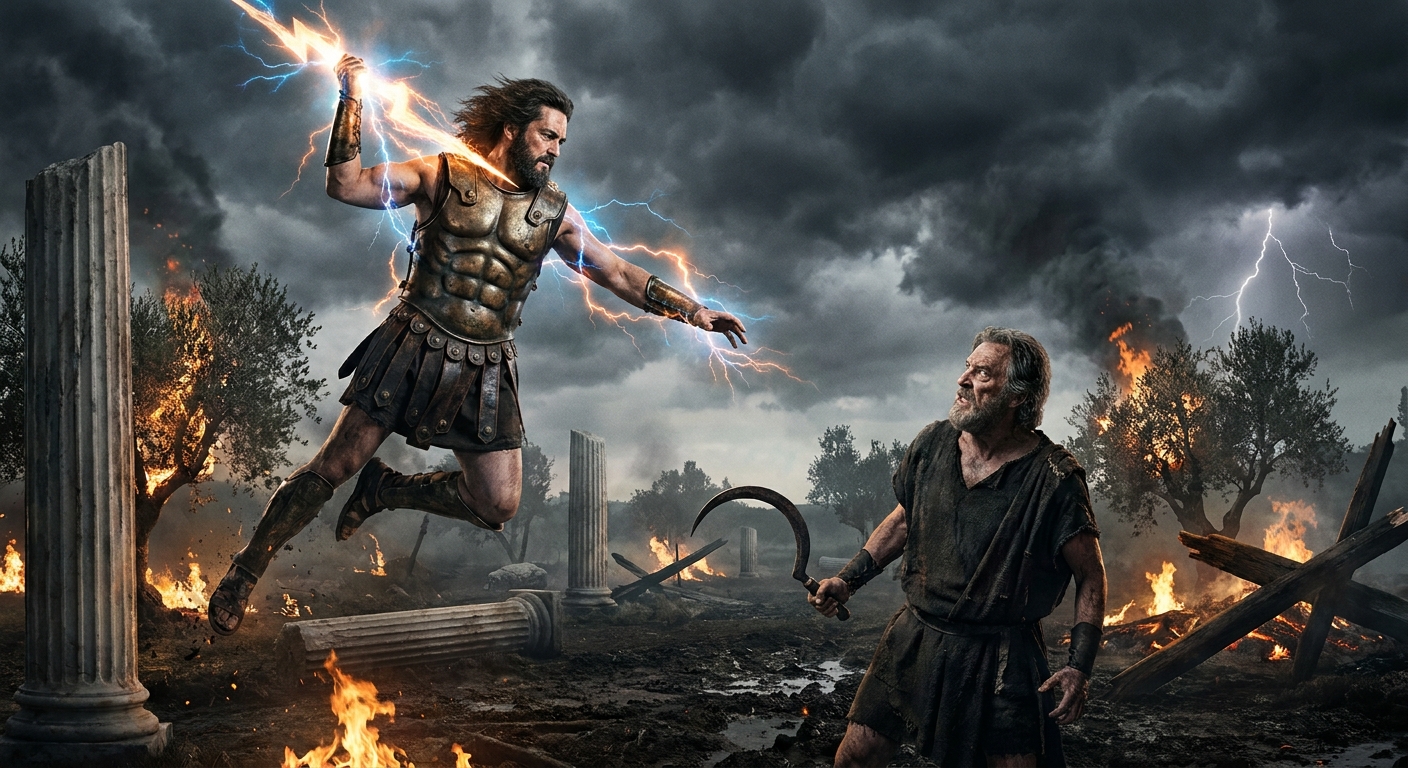
The Titanomachy is not just a brawl between gods. It is a civil war in the structure of reality, fought for ten years in Hesiod’s telling. Sky, sea, and earth tremble under it.
On one side stand Cronus and the Titans, the old rulers of the world. On the other, Zeus and the emerging Olympians, backed by allies who represent raw cosmic forces.
Zeus frees the Cyclopes and the Hundred-Handers (Hecatoncheires) from imprisonment. The Cyclopes forge the weapons that will define the new age: Zeus’s thunderbolt, Poseidon’s trident, Hades’s helm of invisibility. The Hundred-Handers become living siege engines, hurling mountains with the patience of earthquakes.
The myth is vivid because it needs to be. It is explaining why the world is ruled by storm and law instead of ancient fertile silence. It is telling you that order was not granted. It was seized, and paid for.
Tartarus or exile
When the Titans fall, the punishment is not subtle.
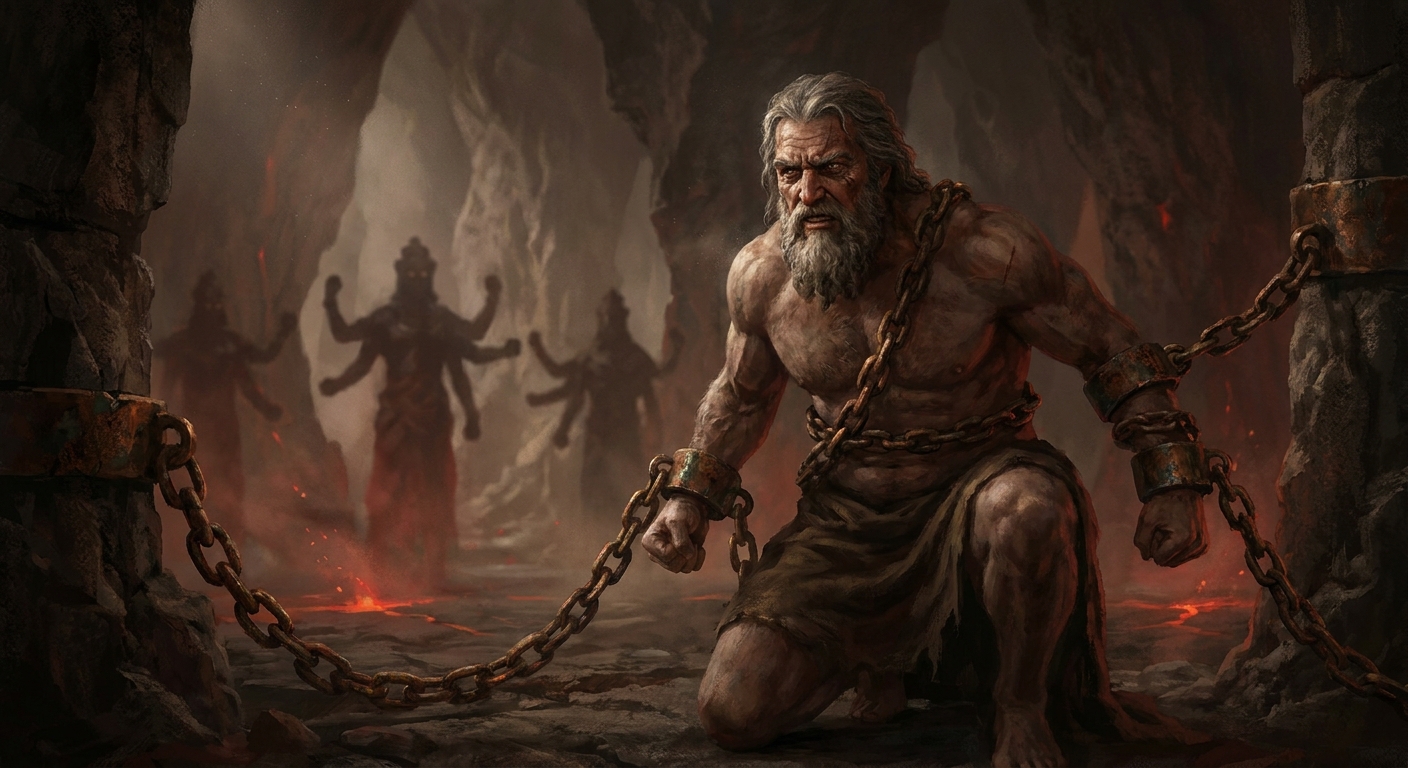
Cronus and many Titans are cast into Tartarus, the underworld abyss beneath Hades, guarded by the Hundred-Handers in Hesiod. Tartarus is not simply a prison. It is a cosmic basement where the old order is stored so it cannot climb back into daylight.
Yet Greek myth rarely lets any ending sit still. In later tradition, associated with poets like Pindar and taken up again in Roman-era retellings, Cronus is sometimes sent instead to the Isles of the Blessed, ruling over a softened paradise at the edge of the world. Some versions even imagine a release and a gentler kingship after the war.
Both endings matter. The first says: tyranny is punished. The second says: even tyrants can be refurbished into nostalgic kings when cultures look back and decide the past was prettier than it was.
What it means
Cronus is not only a villain. He is a pattern.
Greek mythology returns again and again to the idea that cosmic power changes hands through violence, and that each new ruler inherits the paranoia of the last. Uranus fears his children. Cronus fears his children. Zeus, in his own way, fears succession too, swallowing Metis in one famous myth to prevent a foretold heir.
This is why Cronus matters in a Zeus-centered universe. He is the shadow behind Zeus’s authority. Every thunderbolt that claims to enforce justice also remembers the sickle, the swallowed heirs, the cave on Crete, and the ten-year war that made Olympus possible.
Even the sickle does not receive a single clean ending. Some traditions let it vanish into the mythic background, its work already done. Others let later skies reclaim it as a sign, a blade thrown upward and made into a distant figure of cutting and measure. The Greeks do not always care where the tool goes. They care what it proved.
Cronus’s Golden Age becomes more haunting than comforting. It is the dream of peace that sits beside the knowledge that peace, in Greek myth, is often just the pause between storms.
Some gods rule by love. Some by law. Cronus rules by dread, and dread is a hungry thing. It never stops eating. It only changes whose hands hold the blade.
Quick guide
- Gaia’s revenge: Cronus uses the adamant sickle to overthrow Uranus, separating sky from earth.
- The Golden Age: Later tradition remembers Cronus’s reign as an era of ease and abundance.
- The prophecy: Cronus learns a child will overthrow him, and fear becomes policy.
- The swallowed children: Hestia, Demeter, Hera, Hades, and Poseidon are devoured to prevent succession.
- Rhea’s stone: Zeus is hidden on Crete; Cronus swallows a wrapped stone instead.
- The Titanomachy: Zeus leads the Olympians and allies to defeat the Titans and remake the cosmos.
- Tartarus or blessed exile: Hesiod imprisons Cronus in Tartarus, while later tradition sometimes relocates him to the Isles of the Blessed, and even imagines release.