Uranus Myths: Sky Father and Primordial Fall
Greek Mythology
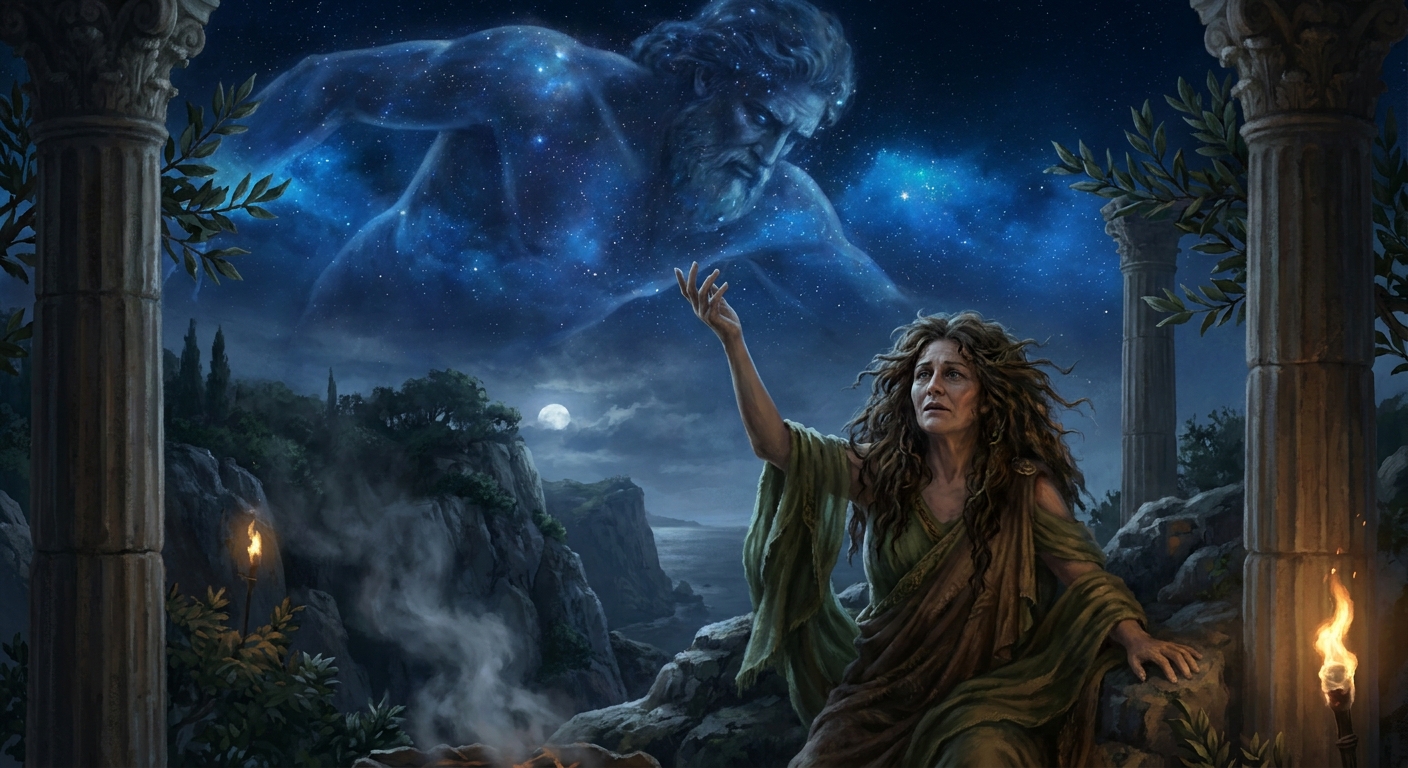
Before Olympus had thrones and scandals polished to a shine, there was only the raw architecture of the cosmos: Gaia, the living earth, and Uranus, the sky stretched tight above her like a star-studded veil.
In the oldest Greek imagination, Uranus is not a bearded king with a lightning brand. He is the Sky Father as a physical force, the first “above” that makes the world feel like a world.
And yet, in the way Greek myth loves best, the first love story curdles into the first domestic horror. Because Uranus does not simply father children. He imprisons them.

Sky and Earth
Hesiod’s Theogony gives us a beginning that feels almost too intimate for cosmology. Gaia produces Uranus as her equal, a sky to cover her completely. Their union is constant, a mythic explanation for why the heavens press so close to the earth in the earliest Greek mind.
From that union come the first great families of divinity: the Titans (twelve of them in Hesiod), the Cyclopes, and the Hundred-Handers (the Hecatoncheires). These are not decorative children. They are forces, the kind that make temple stones feel temporary.
And here the story reveals its first bruise. Uranus looks at his own offspring and feels not wonder but fear.
The Children He Buried
The Cyclopes, in Hesiod, are smith-gods with a single blazing eye: Brontes, Steropes, and Arges, names like thunder on bronze. The Hundred-Handers are even more unsettling: fifty heads each, and a hundred hands, a living wall of grasping strength. Hesiod names them Briareus, Cottus, and Gyges.
Uranus does the cruelest thing a primordial can do. In Hesiod’s version, he shoves these children into the hidden places of Earth, forcing them down into Gaia’s depths. Earth becomes womb turned cell.
Later tellings and later imaginations will speak more generally of cosmic prisons, sometimes pointing toward Tartarus. But Hesiod’s horror is intimate. The imprisonment happens inside their mother.
Either way, Gaia suffers. She is a mother made into a prison.
The first sky does not fall in battle. He falls in the bedroom, with the earth herself plotting his undoing.
Myth can be beautiful, but it rarely pretends to be gentle.
Gaia’s Plot
Gaia, crushed by the weight of what Uranus has done, turns to her Titan children and asks for revolt. Most refuse. Not because they love their father, but because even Titans understand that cosmic rebellion is not a casual decision.
Only one steps forward: Cronus, the youngest Titan, sharp enough to become the future simply by daring to reach for it.
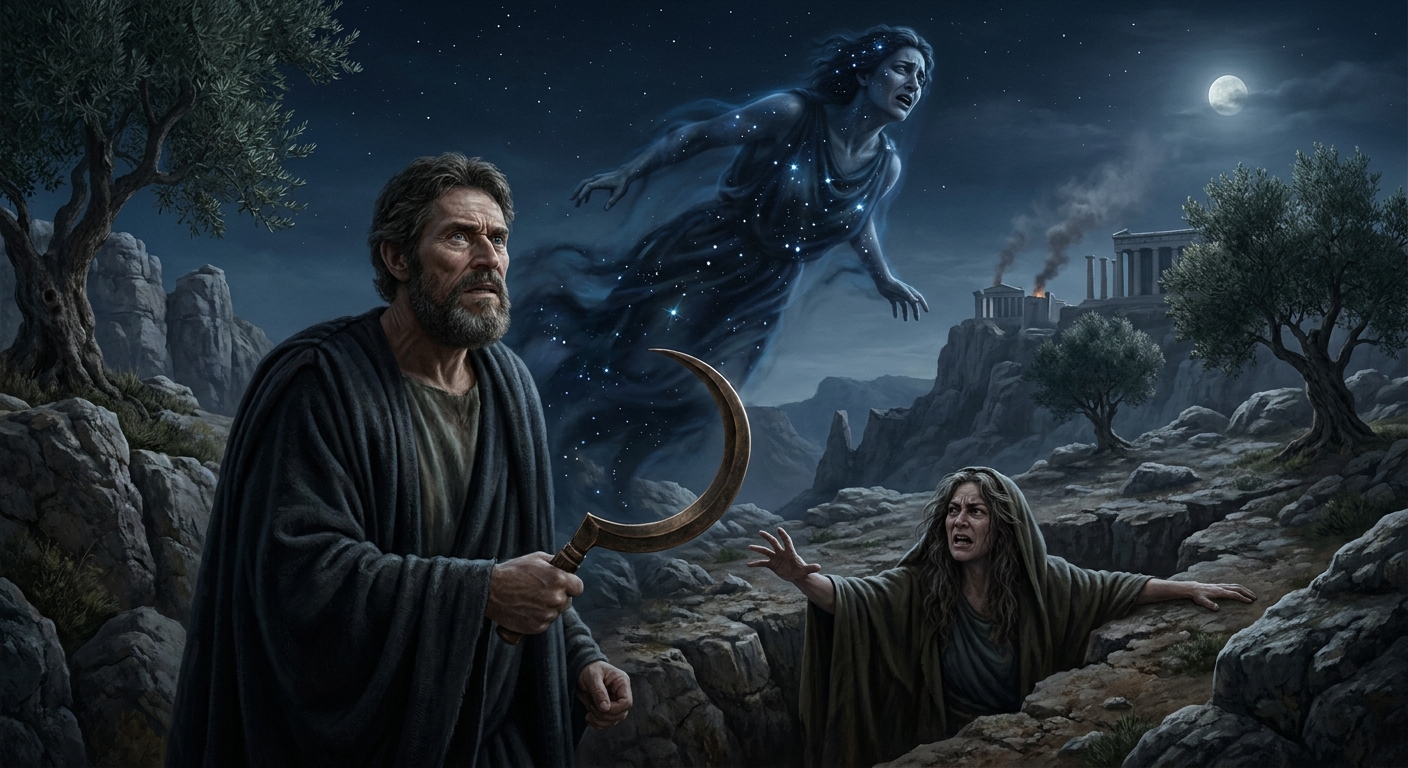
Gaia provides the weapon: a harpe, a jagged sickle of adamant. It is farming turned into surgery, harvest turned into overthrow. The tool that reaps grain will now reap a god.
When the Sky Bleeds
In Hesiod’s telling, Cronus lies in wait. When Uranus comes to Gaia as he always has, Cronus strikes. He severs his father’s genitals and hurls them away. The act is grotesque, yes, but mythically precise. It breaks domination by breaking the body, and it ends the constant embrace between Sky and Earth.
Then the story does what primordial stories do best. It multiplies consequences.
From Uranus’s blood spilled upon Gaia, new beings emerge. Hesiod names the Erinyes (the Furies), spirits of vengeance with a moral memory like iron; the Giants, violent and enormous; and the Meliae, ash-tree nymphs tied to spear-wood and war, suggesting that even tenderness grows teeth in the aftermath of divine violence.
This is the myth where creation begins to sound like punishment, and punishment begins to create.
Blood and Foam
The severed parts of Uranus land in the sea. The waters churn. Foam gathers. And in that charged, unsettling froth, Greek myth plants one of its most famous arrivals.
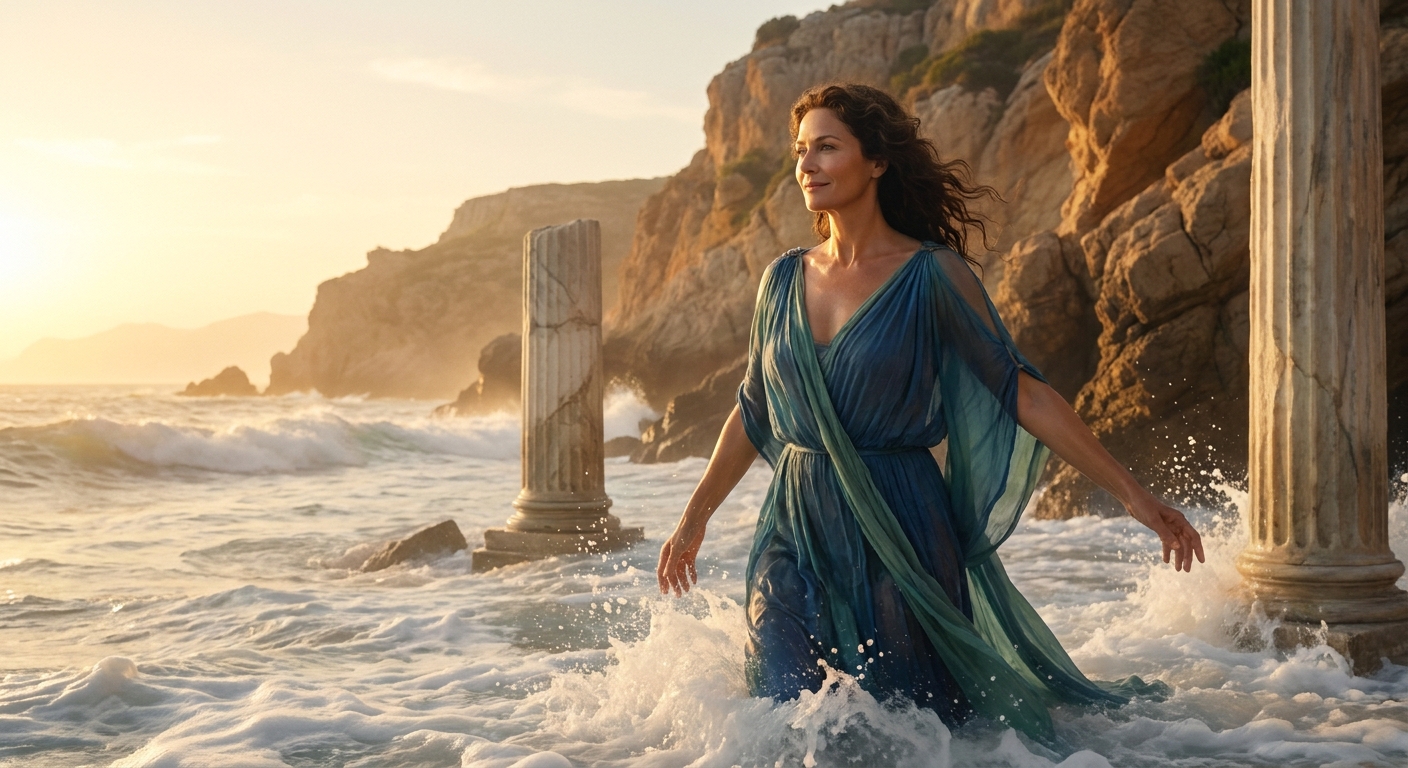
In Hesiod, Aphrodite is born from sea-foam near Cyprus and Cythera, rising like impossible softness from an act of impossible brutality. Her name is often linked to aphros, “foam,” though etymology in myth is rarely a courtroom certainty. Still, the image endures because it is mythically perfect: desire born from violence, beauty stepping out of terror as if the world could not survive without a compensating glamour.
Later traditions give Aphrodite other genealogies, most famously as a daughter of Zeus and Dione in Homer. Greek myth is not a single pipeline. It is a braided river.
After the Fall
After the castration, Uranus is no longer the oppressive husband pressing down on Gaia. He becomes something else: the maimed sky, the distant vault above, present as atmosphere rather than ruler.
Hesiod also gives the fall its lingering omen. Uranus and Gaia, as forces with long memories, set a pattern into the world: Cronus, too, will be overcome by his own child. Not a tidy speech, not a courtroom verdict, but the kind of mythic certainty that clings like ash to a hearthstone.
A son cuts down a father, and the universe quietly takes notes for the next generation.
Cronus will try to cheat the pattern by swallowing his children. Zeus will force them back into the light. And the Olympian age will begin, still haunted by the same question Uranus could not bear: what if the next child is stronger?
Why It Still Hurts
Uranus is not beloved the way Zeus is hated and adored. He has few epithets that made it into popular prayer, and there is little evidence for a major cult presence compared with the gods who came after.
He is something earlier, more brutal, and strangely modern in its psychology: a parent who sees children as threats, not continuations. A partner who treats intimacy as ownership. A ruler whose first instinct is containment.
And yet, even in defeat, Uranus shapes the mythic landscape. The sky is still there, stretched above every sea cliff and marble threshold. The Furies still stalk the edges of moral action. The Giants will one day batter Olympus itself. And Aphrodite, born from foam, keeps proving that Greek myth can grow beauty from the most frightening roots.
Key Figures
- Uranus: Primordial Sky, tyrant-father in Greek cosmogony.
- Gaia: Earth, mother and conspirator, the ground that remembers.
- Cronus: Youngest Titan who wields the harpe and inaugurates the cycle of overthrow.
- Titans: Twelve children of Gaia and Uranus in Hesiod, the first divine generation after the primordials.
- Cyclopes (Hesiod): Brontes, Steropes, Arges, divine smiths who later forge Zeus’s thunderbolt after they are freed.
- Hundred-Handers: Briareus, Cottus, Gyges, fifty-headed and hundred-handed, later crucial allies in the Titanomachy.
- Erinyes (Furies): Born from Uranus’s blood, agents of vengeance and moral consequence.
- Giants: Blood-born as well, future enemies of the Olympians.
- Meliae: Ash nymphs born where blood hits earth.
- Aphrodite (Hesiodic tradition): Born from sea-foam after Uranus’s severed parts fall into the sea.
Sources and Notes
The backbone of this cycle is Hesiod’s Theogony, which lays out the imprisonment in Earth, the harpe, the castration, the blood-born figures, and Aphrodite’s foam-birth with the stark confidence of an ancient genealogist. Homer’s epics preserve alternate traditions for Aphrodite’s parentage, reminding us that myth is plural by nature.
If you want the cleanest through-line, read Hesiod for Uranus’s fall, then follow the chain into Cronus and the rise of Zeus. The sky does not stop being there, but after Cronus swings the sickle, it stops being in charge.