Enigmatic Figures in Greek Mythology
Greek Mythology
Some punishments come like a verdict carved into marble: formal, cold, inevitable.
And then there are the Harpies.
They arrive like a storm that has learned your name. They do not debate ethics. They do not accept offerings with a soft smile. They descend as divine consequence, loud and relentless, the kind that does not simply hurt you.
It humiliates you.

When the gods want your suffering to be public, they do not send lightning. They send something that can eat your peace in front of witnesses.
Harpies
The Harpies are not subtle creatures, which is part of their genius. In the old imagination, they wear the head of a woman and the body of a bird, a fusion that feels like an omen made physical.
Their lineage matters, too, because Greek myth loves a family tree as much as it loves a scandal. The Harpies are said to be daughters of Thaumas and Electra, and they are siblings to Iris, the goddess of the rainbow. Same household, opposite job descriptions.
Iris is the bright messenger, ribboning across the sky with tidings and truce.
The Harpies are the other kind of message. The kind delivered with talons.
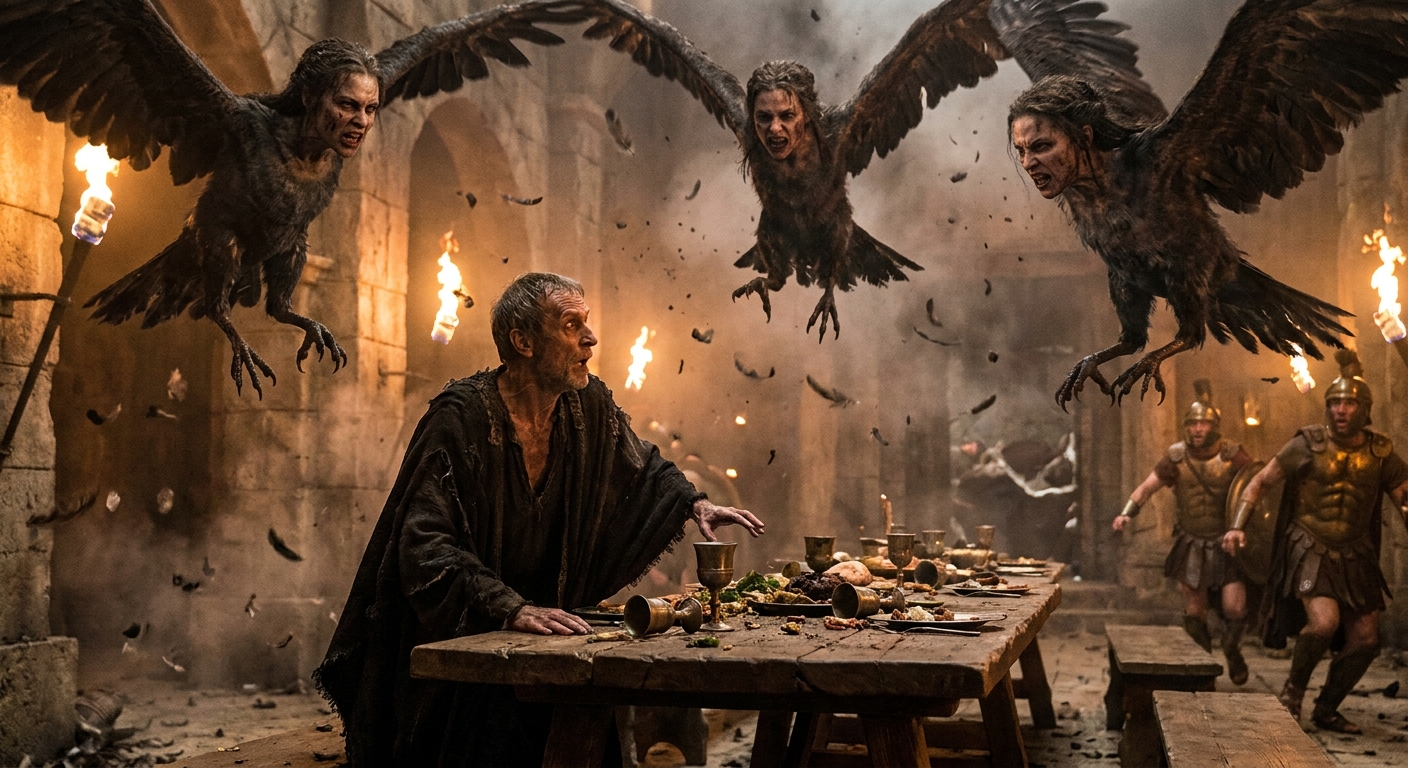
If you want the Harpies at their most exquisitely cruel, follow the scent of food to the table of King Phineus of Thrace.
Phineus was punished by Zeus for revealing too much about the future. So Zeus sent the Harpies, and the curse was not simply hunger.
It was a ritual of perpetual almost.
The meal is there. The hands reach. The mouth opens.
Then wings slash the air, and the food is snatched away. Whatever remains is spoiled and smeared, the table turned from comfort into mockery. Phineus is left perpetually starving and disgraced.
Braving these fierce creatures was no small feat. Heroes like the Argonauts had to deal with them on the quest for the Golden Fleece.
And there is a detail that complicates the easy monster label: the Argonauts even struck a truce with the Harpies at one point.
A truce implies boundaries. It implies that these bird-women are not random chaos, but agents whose violence is tethered to purpose.
Minotaur
The Minotaur is what happens when a king treats a god like a negotiable inconvenience.
King Minos of Crete thought he could get one over on Poseidon by keeping a divine bull meant for sacrifice. He kept the gift. He kept the proof. He kept the insult.
In retaliation, Poseidon cursed Minos’s wife, Pasiphae, to fall head over heels in love with that same bull. And from that divine drama, a Minotaur was born: a monstrous reminder that bargains with gods do not break cleanly.
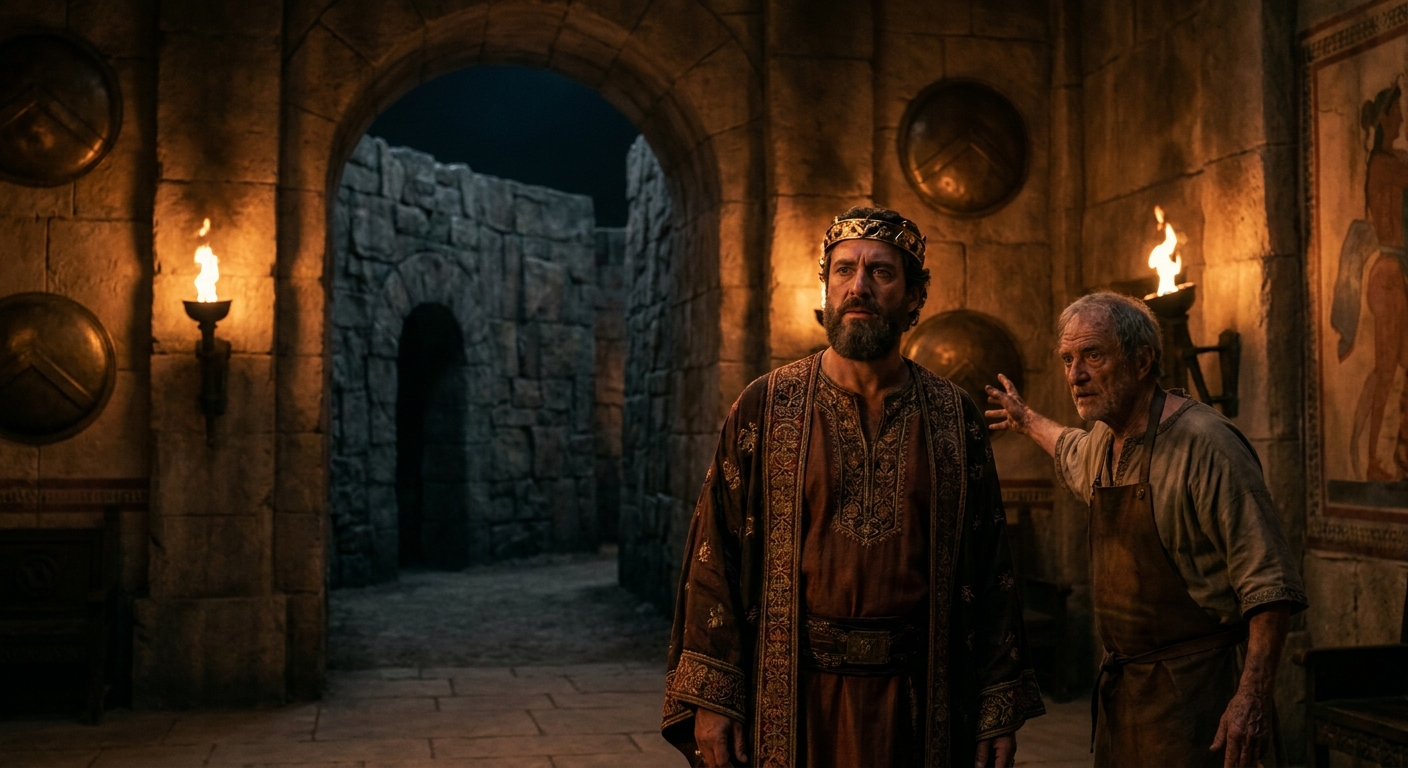
Not knowing what to do with this living consequence, Minos stashed the Minotaur in a labyrinth so intricate even certainty itself would get lost. Built by the master craftsman Daedalus, the maze became a prison made of corridors and confusion.
Then came the ritual that made the horror public. Minos demanded a tribute from Athens every few years: seven young men and seven young women, delivered like a grim offering to keep the beast fed.
Greek myth loves a hero who walks into the mouth of a problem. Enter Theseus, prince of Athens, who planned to traverse the labyrinth and slay the monster.
He did not do it alone. Minos’s daughter, Ariadne, gave Theseus a literal lifeline: a ball of thread, so he could find his way back after confronting the Minotaur.
With sword in hand and thread in tow, Theseus took down the Minotaur, saving the day and ensuring future Athenian youths could stop being sent as payment for someone else’s divine mistake.
Circe
Traveling the seas was never only about storms. Sometimes the danger was a woman with a warm smile and a cup that promised comfort.
Circe lived on the island of Aeaea, an enchantress with a knack for turning sailors into grunting porkers. She was the daughter of Helios, the god of the sun, and Perse, an Oceanid nymph. Magic was in her blood, and hospitality was her weapon.
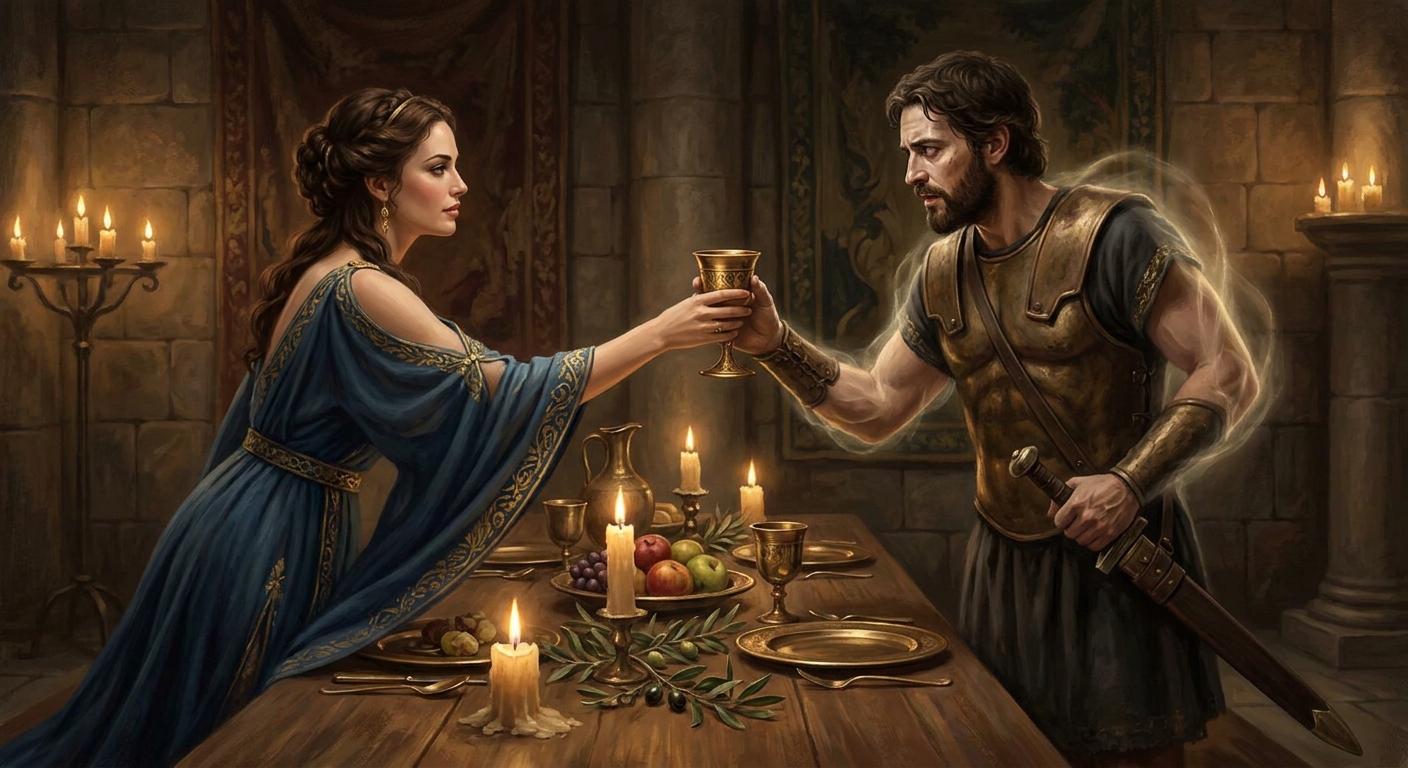
The scene unfolds like a trap dressed as kindness: exhausted sailors arrive starving, Circe lays out a feast fit for kings, and the secret ingredient is a pig potion. One minute you are chewing. The next you are snorting and rolling in the dirt.
Odysseus’s crew did not stand a chance, except Eurylochus, who stayed back and watched the spectacle from a safer distance. He ran to warn Odysseus, who was suddenly forced to treat a dinner invitation like a battlefield.
Then Hermes, the winged-sandal messenger, intervened with advice and a magical herb called moly, the key to countering Circe’s brews.
Armed with moly and a plan, Odysseus confronted her. With a flash of his blade, he showed he was not one to be folded into her menu.
Circe, taken aback, reversed the spell. She apologized with a strange kind of generosity: permission to stay on her island for a year, enchantment free. During that extended layover, Odysseus and Circe became more than friends, the kind of intimacy myths allow when danger and desire share a shoreline.
A feast can be a blessing, or it can be a spell that changes what you are.
Sphinx
Some monsters do not chase you. They wait. They guard the gate and make your survival dependent on your mind.
The Sphinx was part woman, part lion, and part bird, stationed at the entrance to Thebes like a living ultimatum. Her job was simple: answer correctly, or be devoured.
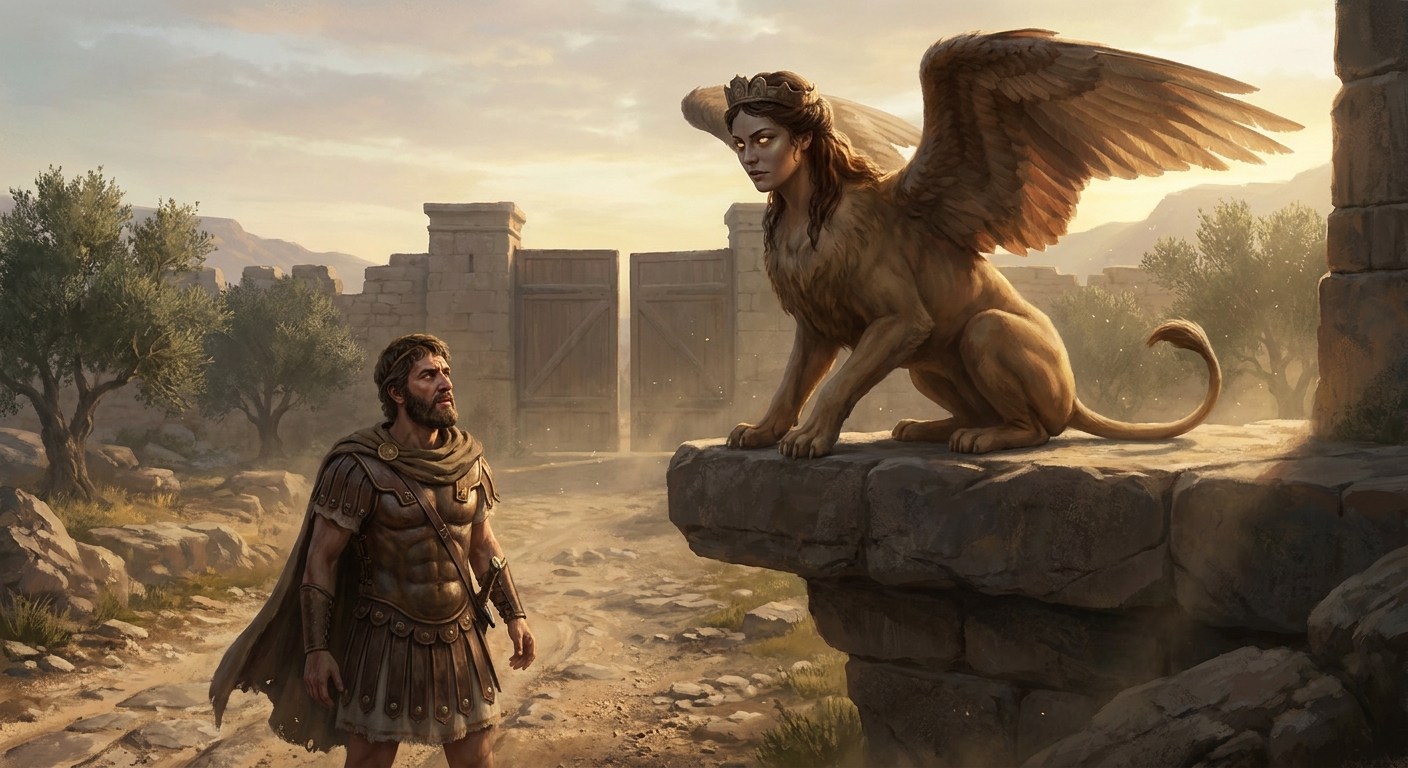
Her riddle was a blade disguised as a question:
“Which creature walks on four legs in the morning, two legs at noon, and three legs in the evening?”
Most tried. Most failed. The road learned the taste of their panic.
Then came Oedipus. He replied, “Man.” Humans crawl on all fours as babies, walk on two legs as adults, and hobble with a cane in old age.
The Sphinx, not a fan of being outsmarted, threw herself off a cliff.
Oedipus walked into Thebes as a hero, unaware that solving a riddle would be the least complicated thing fate would ever ask of him.
Medusa
Medusa, the most famous of the Gorgons, was known for hair of live serpents and a gaze that could turn anyone into stone.
Once a beautiful maiden, her life twisted when Poseidon pursued her into Athena’s temple. Athena, displeased with that breach of temple protocol, punished Medusa by transforming her hair into a nest of vipers and cursing her with a deadly gaze.
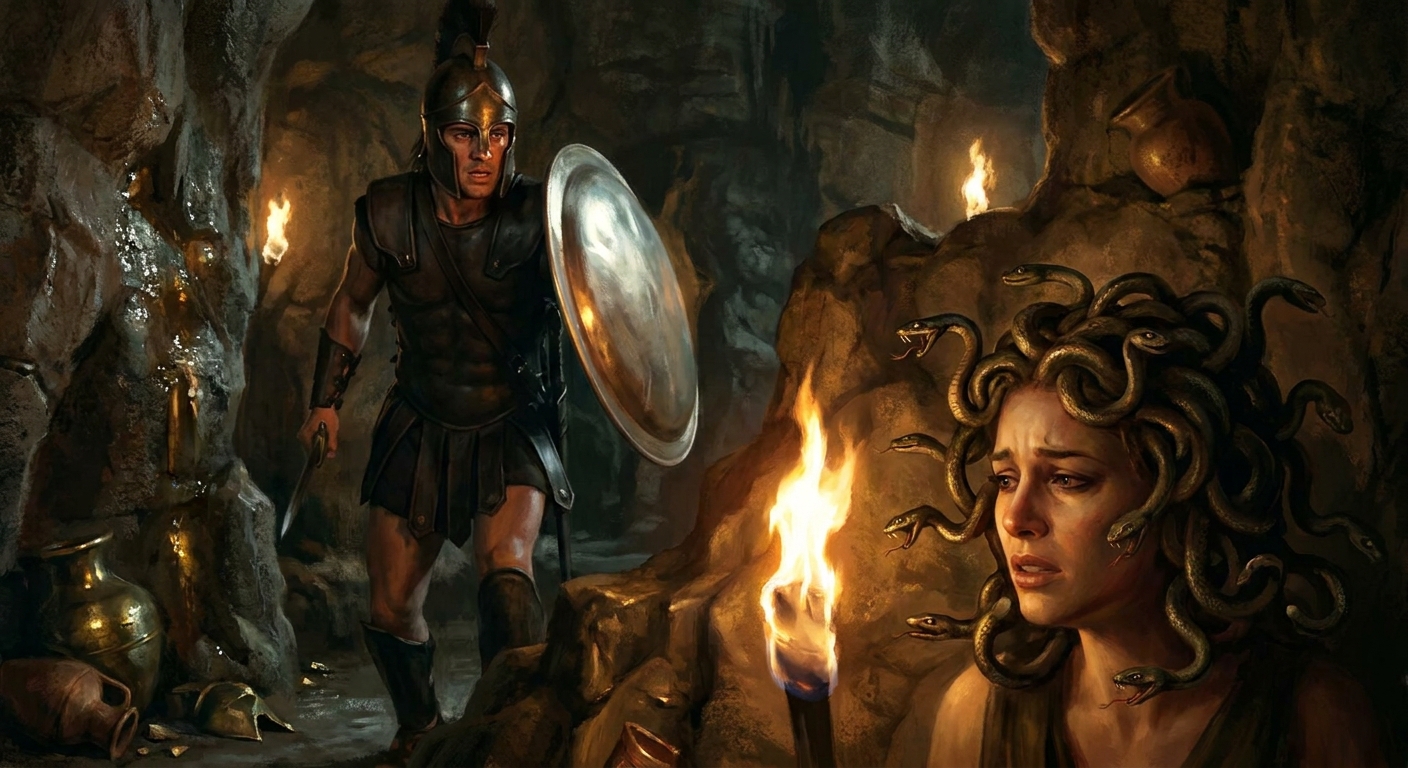
The new appearance isolated her completely. It is hard to belong anywhere when your face turns witnesses into statues.
When the hero Perseus was sent to fetch Medusa’s head, he needed divine help to avoid direct eye contact. With a quick slice, Medusa was no more, but her severed head retained its petrifying power.
Even in death, the story kept its teeth. Perseus used the head as a weapon to turn enemies to stone, then gifted it to Athena, who placed it on her shield, the Aegis, as the ultimate defense mechanism.
Medusa’s tale sits in an uneasy place Greek myths return to again and again: divine punishment, victimization, and the dilemma that refuses to die.
Was she a monstrous villain, or a tragically cursed victim?
Scylla and Charybdis
There is a particular kind of terror reserved for choices where every option is a wound.
Scylla and Charybdis turned the Strait of Messina into a lesson with salt in its mouth. Scylla, with multiple heads and hunger for sailors. Charybdis, an ever-hungry whirlpool ready to swallow ships whole.
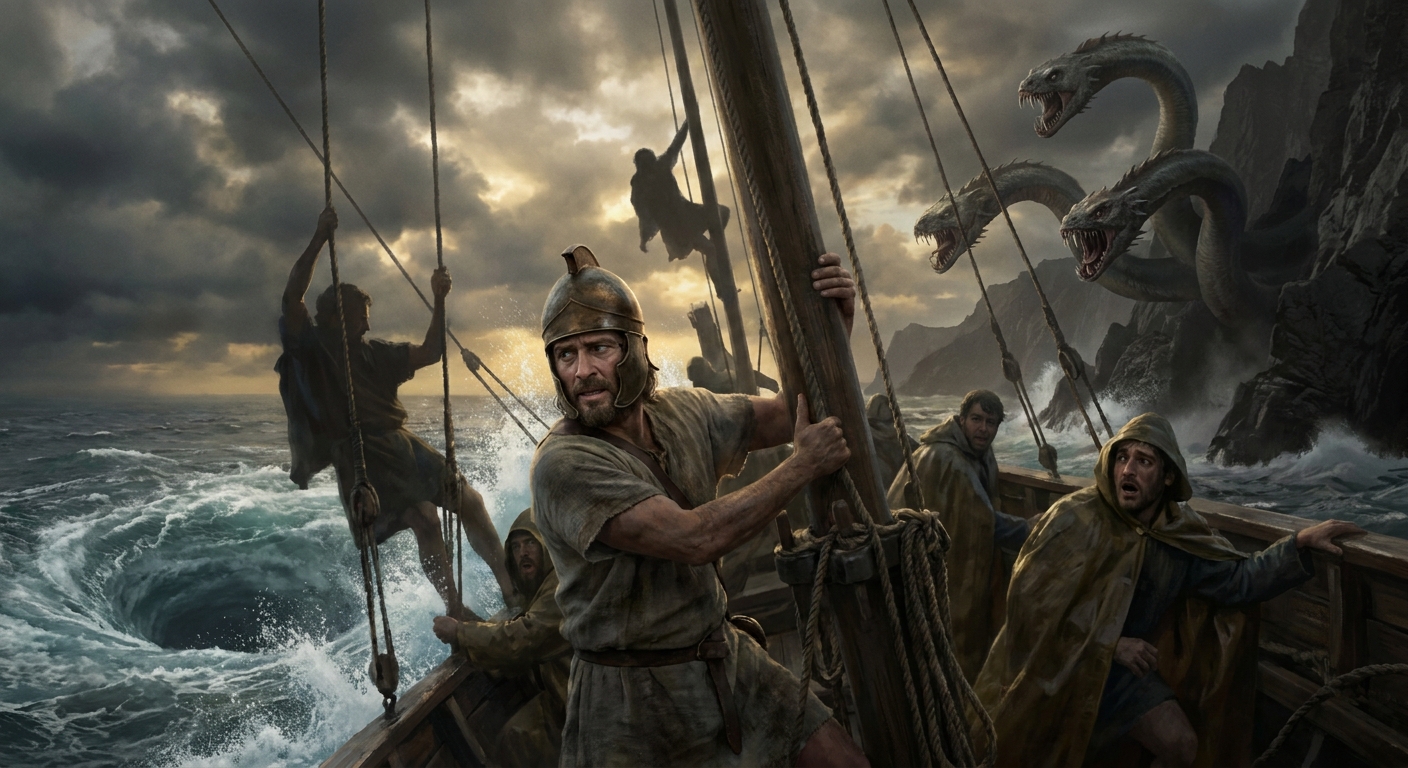
Scylla sported six heads, each waiting to snatch up the living. Charybdis could gulp down an entire ship three times a day.
On his journey home, Odysseus had no safe passage. He could lose some men to Scylla’s jaws, or risk the whole ship swallowed by Charybdis.
So he chose the lesser evil, steering closer to Scylla and sacrificing a few men rather than losing everyone.
It is not a heroic choice that looks good in bronze. It is the kind that lets you keep sailing.
Cerberus
At the end of the world, where the living stop belonging, a hound stands watch.
Cerberus, the three-headed guardian of the Underworld, was Hades’ personal security system. His primary job was to keep the deceased in and the living out, maintaining the natural balance between life and death.
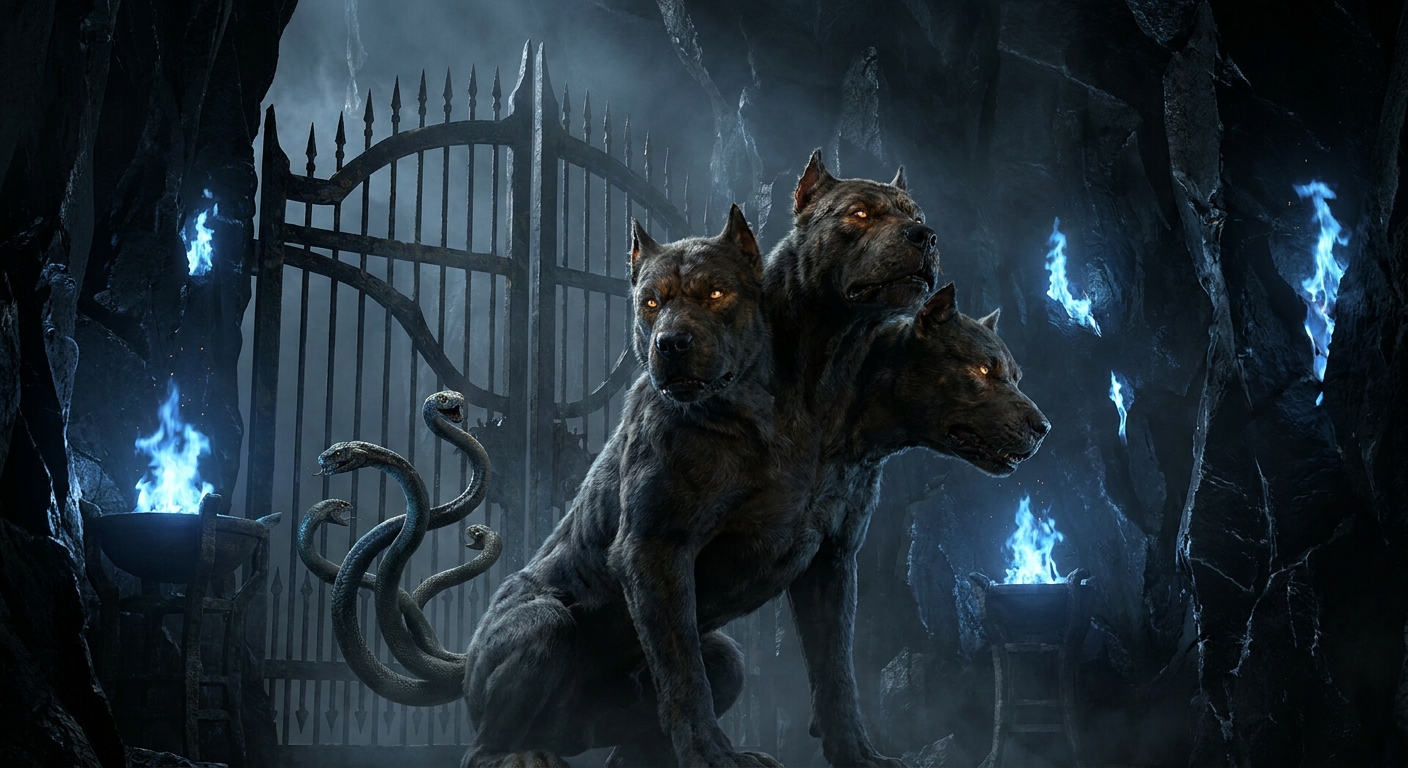
His form, three ferocious heads and a tail teeming with deadly serpents, was deterrent enough. He did not need to chase. The threshold did the work.
Heroes still came.
- Orpheus, famous for his musical prowess, serenaded his way past Cerberus when attempting to rescue his wife, Eurydice.
- Hercules, during his twelfth labor, had to leash and fetch Cerberus from the Underworld, a feat he managed through sheer muscle and determination.
Cerberus stands for the barrier that does not care how brave you are. Once you cross into Hades’ domain, there is no easy exit. Some doors are meant to stay closed, even when a hero puts a hand on the latch.
What They Reveal
Put these stories together and a pattern emerges: Greek myth does not treat the universe as gentle.
Divine retribution can arrive as hunger with wings, a bull-headed son hidden in stone corridors, a banquet that becomes a spell, a riddle at the city gate, a face that turns onlookers to stone, a strait that demands sacrifice, or a three-headed boundary that keeps the dead where they belong.
And beneath all of it is the same pressure, steady as tide against rock: the power dynamics between gods and mortals, and the inevitability of consequences when the divine decides to make a point.
Touch the divine bargain, and the universe answers in claws, corridors, riddles, and undertow.