Typhon Myths: Serpent Storm and Olympian Victory
Greek Mythology
There are monsters in Greek myth that feel like metaphors. And then there is Typhon, who feels like the weather itself deciding it has had enough of your temples, your laws, your clean little categories.
He is not a clever riddle like the Sphinx. Not a tragic stray like Medusa. Typhon is a storm made flesh, a walking apocalypse, the last great convulsion of the world before the Olympians could pretend the cosmos had a stable government.
If you have ever wondered why Greek myth keeps returning to that shiver between eras, between the raw old powers and the polished new ones, Typhon is one of the clearest emblems of it. He stands at the boundary like a crack in marble, reminding everyone what was buried to make Olympus look inevitable.

Gaia’s last rebellion
Typhon does not arrive as a random horror. He arrives as a consequence.
In several traditions, Gaia, the Earth herself, turns against Zeus after the defeat of older powers. Sometimes the grievance is the Titans trapped in Tartarus. Sometimes it is simply the ancient truth that the world does not like being ruled, not for long, not without trying to buck its rider.
So Gaia produces a final weapon. The details shift by poet and region, because myth is never a single clean script, but the shape of the story stays: Earth births something so excessive it feels like it should not exist unless the cosmos is actively breaking.
Typhon’s parentage is often given as Gaia and Tartarus, which is mythic shorthand for: the ground beneath your feet and the pit beneath your ground decided to collaborate. But in other tellings, especially later summaries, Hera births him alone, a revenge that does not need a partner.
What Typhon looks like
Greek authors describe Typhon with the kind of imagination you use when you are trying to describe a nightmare to someone who insists nightmares are not real.
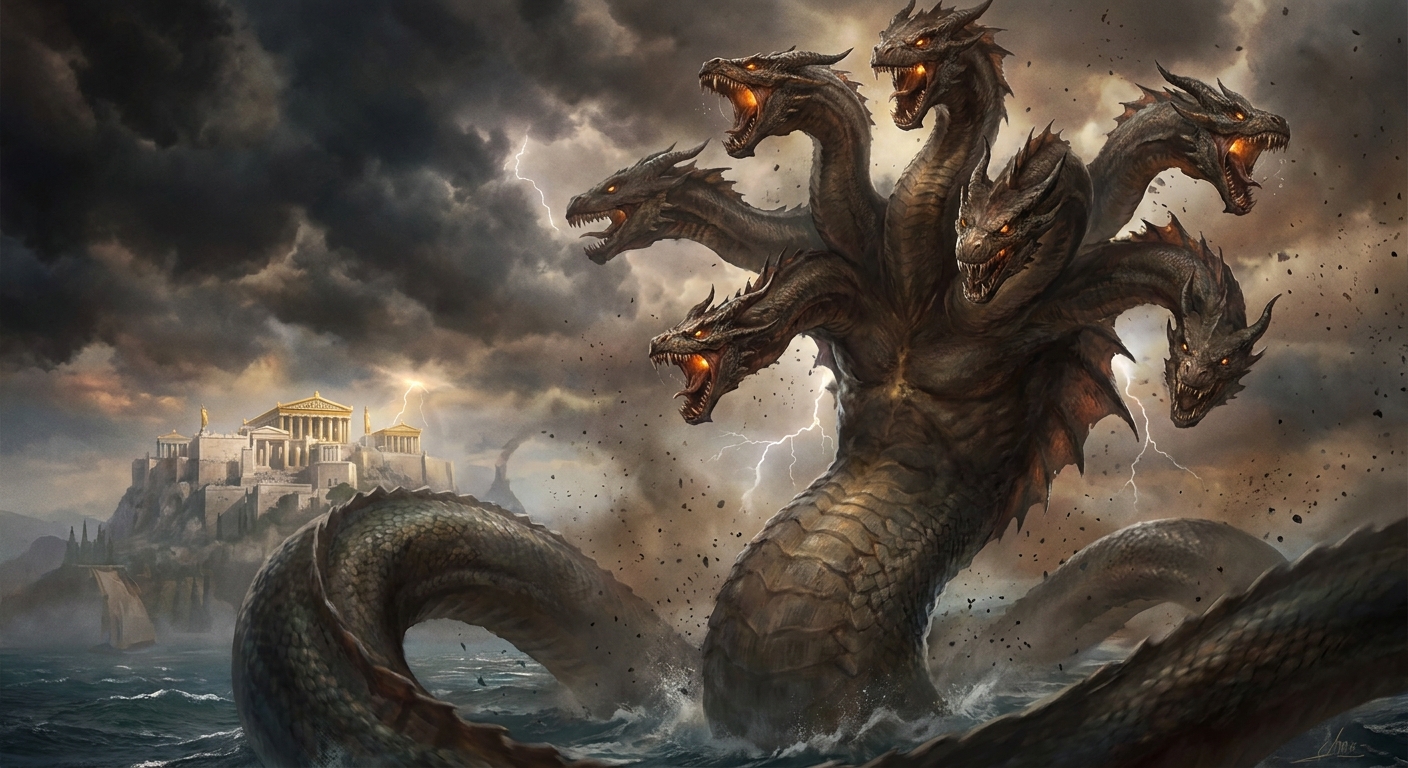
He is vast. His presence is vertical, a living mountain. He is often said to have a hundred heads, frequently serpent or dragon heads, each one a separate instrument of panic. Some versions give him wings. Many give him fire. Almost all give him an unholy soundtrack: roars, hisses, bellowing winds, and voices that sound like an entire menagerie trapped inside one throat.
Below the waist, Typhon is often a tangle of serpents, as if his body refuses the human silhouette the Olympians love so much. He is what happens when nature is not asked to be beautiful.
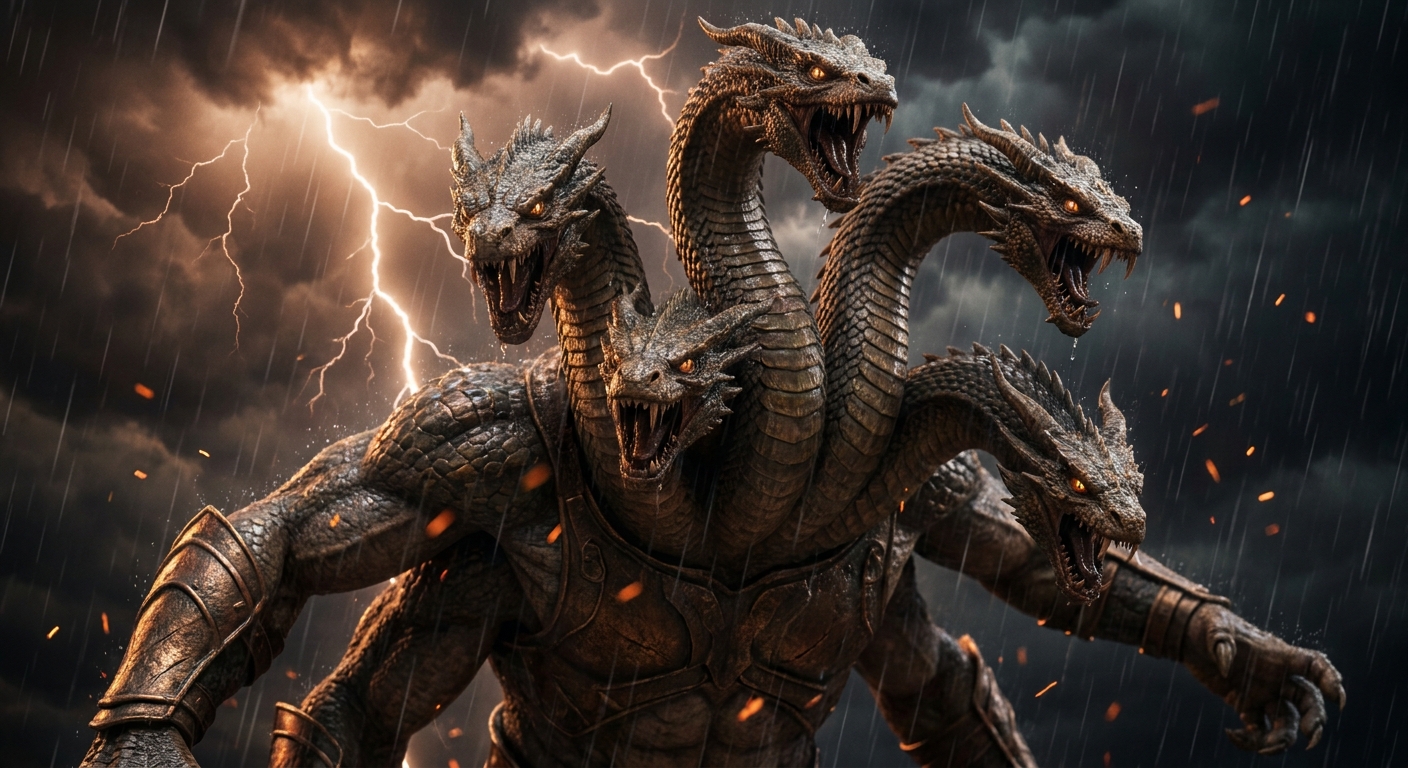
This is the moment Greek myth admits it: order is not the default setting. Order is a victory that has to keep winning.
The assault on Olympus
When Typhon rises, he does not creep. He storms.
The old stories place him in Cilicia near the rugged edges of the eastern Mediterranean, a landscape of steep rock and sudden weather that already feels like a monster’s homeland. From there, the threat turns upward, toward the seat of the gods, toward the bright idea that immortals can live in palaces and call it stability.
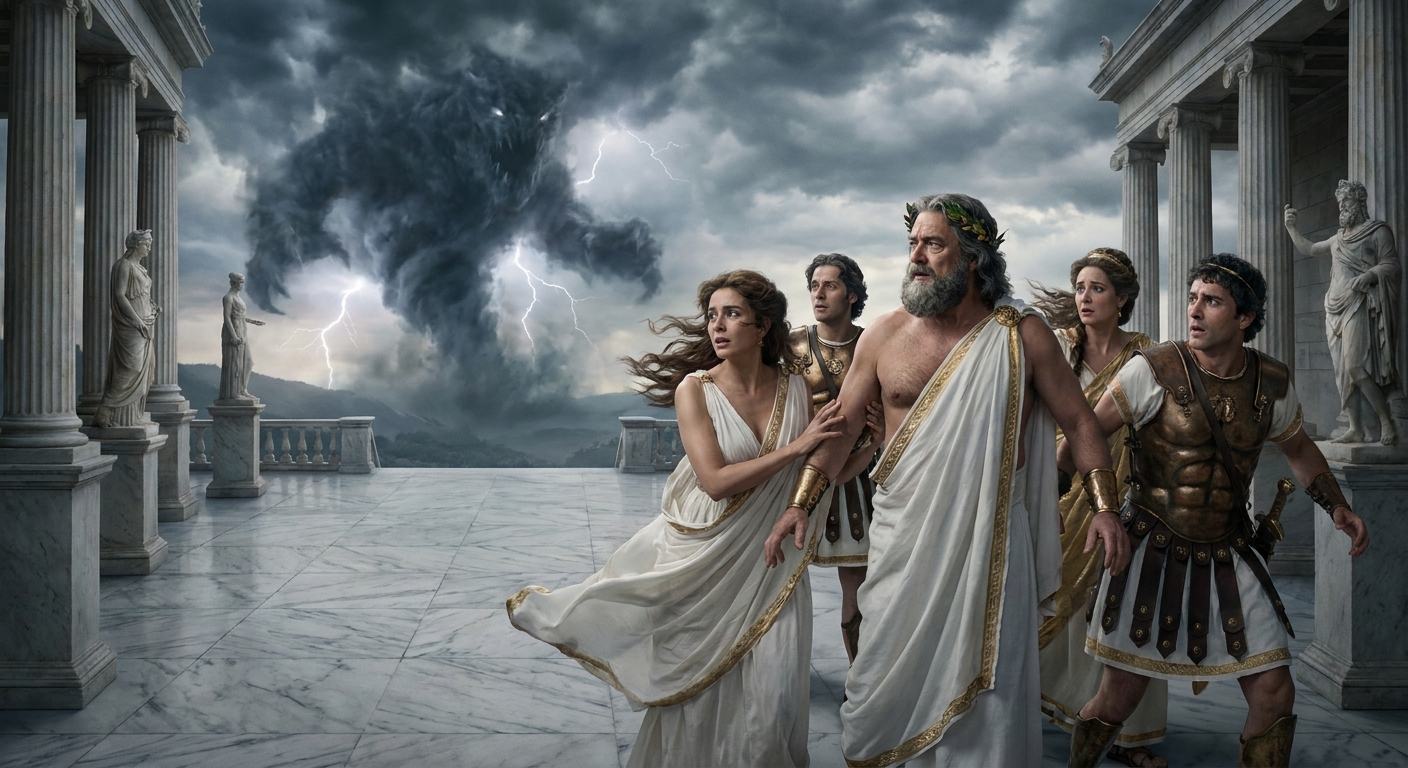
In later tellings, the gods themselves panic and flee, scattering to Egypt and disguising themselves as animals. It is a deliciously humiliating detail, and it survives because it communicates something essential: Typhon is the kind of terror that makes even divinity consider hiding.
Other versions keep the Olympians closer to their thrones, but the mood is the same. The cosmos shakes. Temple smoke bends sideways. Bronze goes cold under the hand. This is not a local problem. It is a regime change attempt.
Zeus vs Typhon
Typhon’s opponent has to be Zeus, because this is not merely a battle. It is a fight over who gets to name the world and make the name stick.
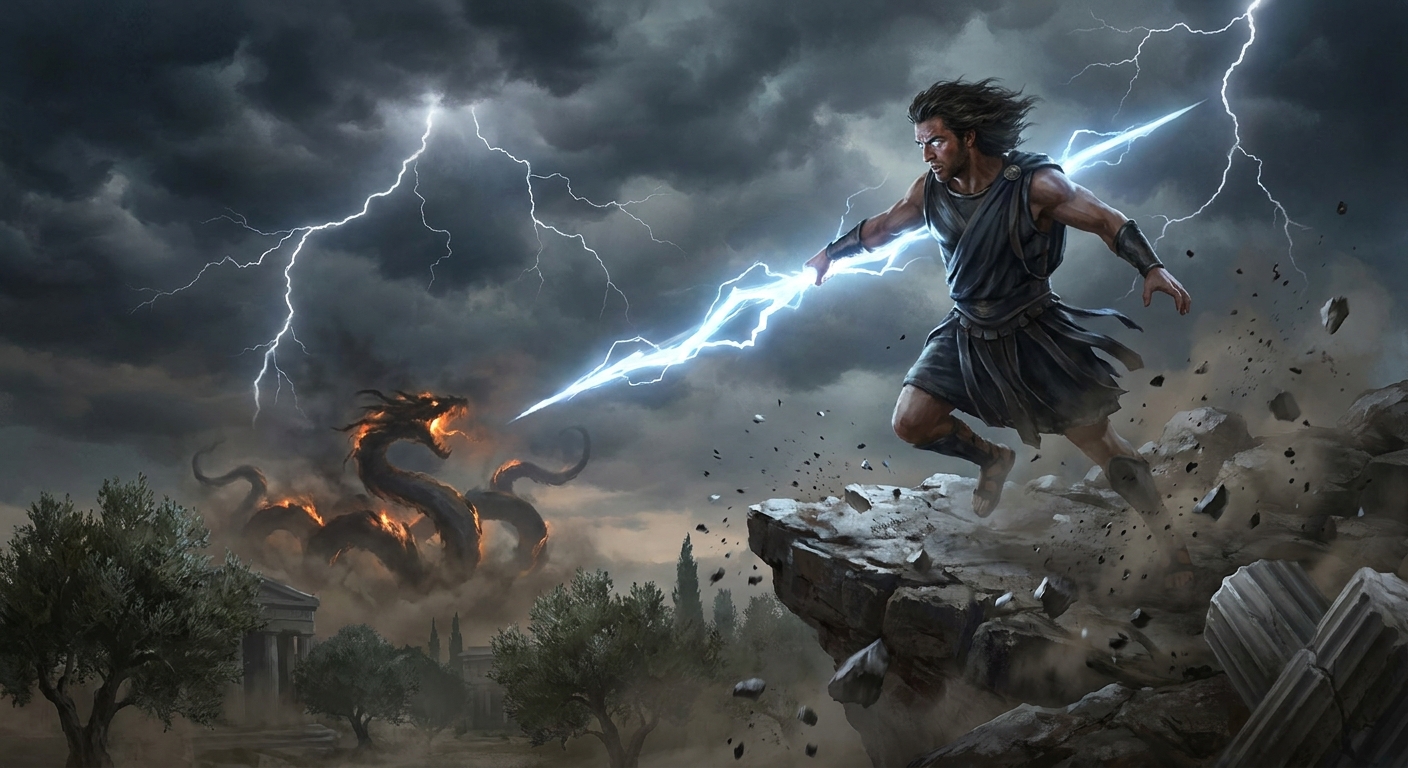
In the telling preserved by authors like Hesiod and later mythographers, Zeus meets Typhon with the only language that reliably gets through to chaos: lightning. Thunderbolts split cloud and mountain. The air becomes a forge. The sea, in some accounts, heaves as if it wants to join the revolt.
Typhon answers with storms, fire, and sheer animal force. The fight reads like a mythic version of a disaster report written by someone who believes the disaster has intent.
Some versions suggest that Zeus gains the upper hand quickly, blasting Typhon back toward the earth. Others linger on the unsettling possibility that Zeus can be hurt.
Then comes the detail that always lands like cold rain: the king of the gods is not invulnerable. He is only undefeated, until he is not.
The stolen sinews
In one of the most striking episodes, Typhon does not merely fight Zeus. He disarms him in the most intimate way imaginable.
Later sources, including accounts associated with Apollodorus, describe a moment where Typhon overwhelms Zeus, cuts out his sinews, and hides them away, sometimes in the shadowed belly of the Corycian cave. It is a grotesque image because it turns divine power into anatomy, into something that can be stolen like a sword.
Zeus is left helpless, a god reduced to a body that cannot properly move. The message is sharp: kingship is not a halo. It is a condition that can be interrupted.
In these versions, salvation comes through allies who move like thieves through a nightmare, recovering what was taken so the storm-king can rise again. The names vary in tradition, but Hermes is often present, because if anyone can slip into a monster’s shadow and come back with the missing pieces of power, it is the god of boundaries and clever escape.
Victory and the prison
Even when the myths grant Typhon a moment of triumph, they rarely let it stand. Zeus returns with renewed violence, and the story hardens into what Greek myth loves best: a cosmic verdict.
Typhon is defeated and buried. The earth itself becomes his cell. And the Greeks, always ready to pin myth to landscape like a votive offering, anchor his imprisonment beneath Mount Etna in Sicily.
Etna is not a random choice. A volcano is the perfect compromise between belief and observation. It smokes. It rumbles. It spits fire. When it erupts, it looks exactly like something enormous and angry is trying to breathe through rock.
In other versions, Typhon is pinned under different mountains, but Etna becomes the celebrity prison, the most persuasive stage. It lets the myth stay alive every time the mountain speaks.
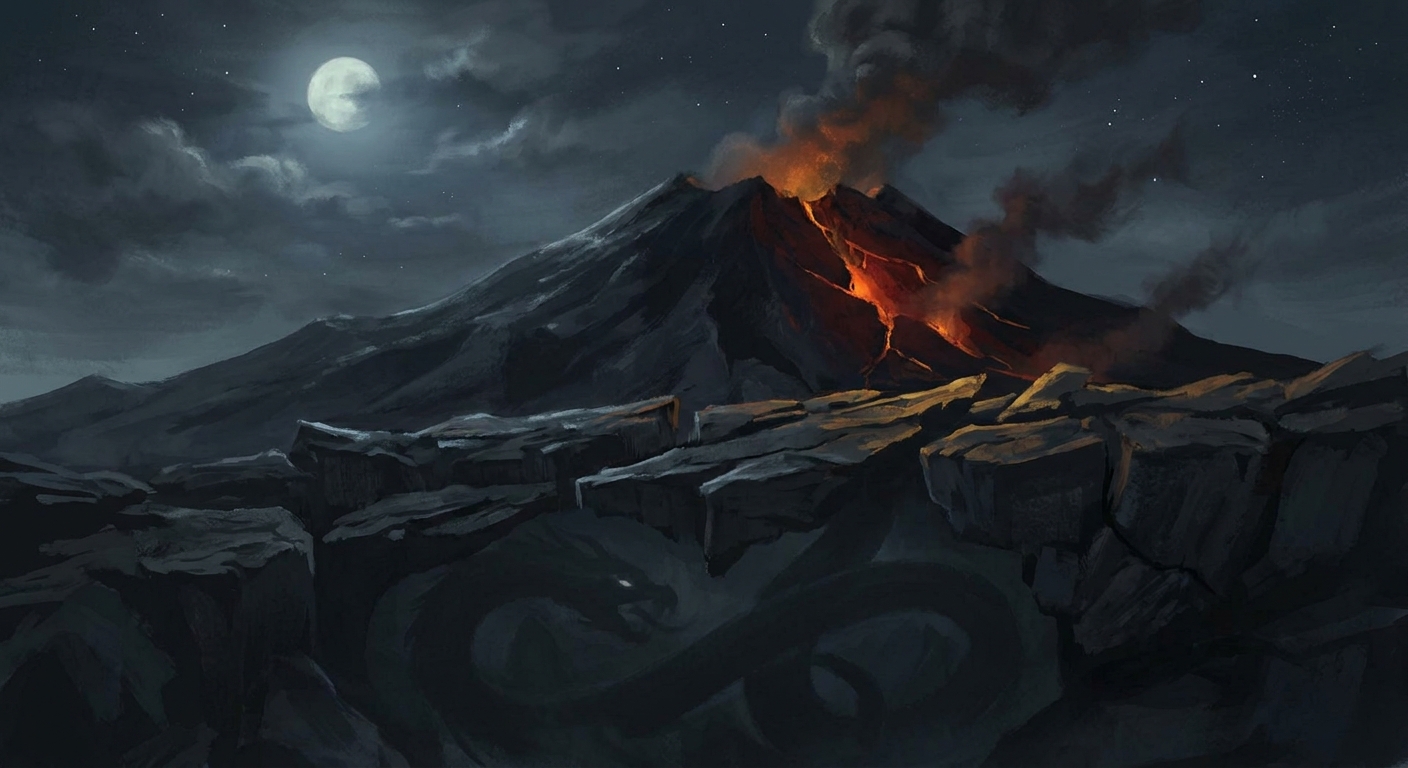
Olympian order does not erase chaos. It buries it. And then it listens for the rumble.
Why Typhon matters
Typhon’s myth matters because it solves a theological and emotional problem for the Greeks.
The Titanomachy, the war against the Titans, explains how Zeus takes power. But the world, inconveniently, still contains storms that ruin harvests, earthquakes that break cities, and fires that walk through forests like gods with no manners. Typhon becomes the story that explains why those forces feel personal, yet not sovereign.
He is chaos after the Titans, chaos that refuses to accept the new throne. By defeating him, Zeus is not just stronger than his predecessors. He is the kind of ruler who can force the oldest wildness into a shape the human mind can survive.
And yet the myth never allows Olympus to be smug. Typhon’s body remains under the world, and the volcano remains a reminder that rebellion is not only a historical event. It is a pressure that builds.
In some traditions, Typhon’s shadow stretches further still: paired with Echidna, he becomes the father of other famous terrors, a genealogy of consequences that keeps crawling out of the underworld’s cracks.
Typhon’s lasting roles
- Boundary marker: he separates the primordial era from the Olympian one, like a scar line in mythic time.
- Natural disaster with a face: storms, volcanic fire, and seismic dread given a single monstrous identity.
- Legitimacy test: Zeus is king because he defeats what cannot be negotiated with.
- Warning: the world is not domesticated. It is managed, temporarily, by power and ritual and story.
Typhon now
When I hike in the Pacific Northwest and the weather turns suddenly theatrical, I think about how the ancients told the truth with monsters. They looked at a sky that could darken in minutes and said, honestly, that feels like a creature.
Typhon is the name they gave to that sensation. The moment nature stops being scenery and becomes a rival. The moment order feels like a thin marble floor laid over something very old, very alive, and not at all interested in your plans.
And Zeus, for all his imperial thunder, is not the calm after the storm. He is the storm that defeats the other storm and calls the aftermath peace.