Athena Myths: Wisdom, War, and Mortal Trials
Greek Mythology
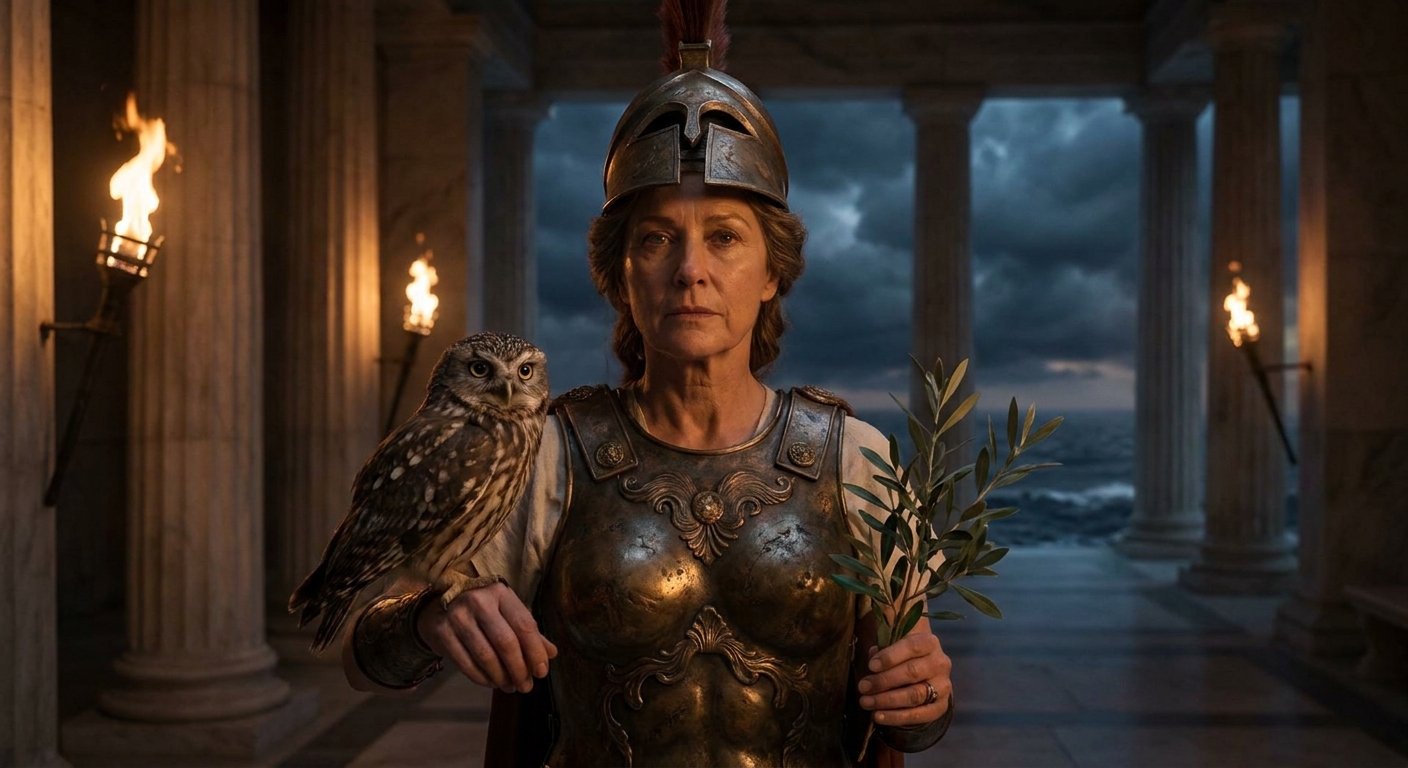
Athena is often packaged as “wisdom” the way a storm is packaged as “weather.” Technically true. Also laughably incomplete.
She is thought made weapon, the polished edge of civilization, the calm gaze that measures a battlefield and decides where the world will break. She builds cities, advises heroes, and enforces limits with the kind of precision that makes mortals wish they had chosen a different god to offend.
This is the Athena I love most: not the inspirational quote, but the strategist. The punisher. The patron who will lift you up, then stare you into honesty when you mistake talent for entitlement.

Born from Zeus, Not of Him
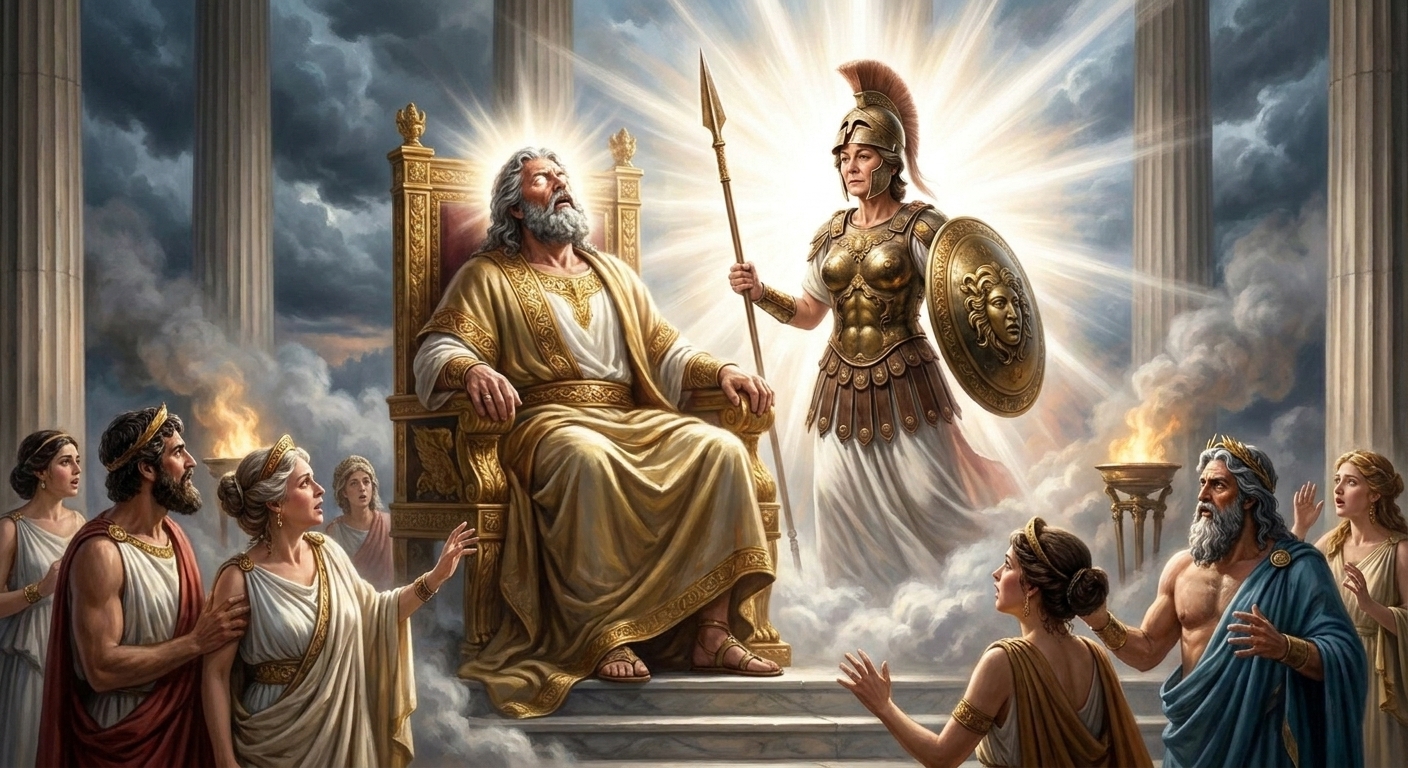
Athena’s origin is not a cradle scene. It is a crisis of power, prophecy, and a god trying to outthink fate.
The story begins with Metis, an Oceanid of cunning intelligence in Hesiod’s lineages, and a name that tastes like sharp planning. Zeus takes her as a partner, then hears the familiar prophecy: Metis will bear a child, and that child will be powerful. In many tellings, a later child would surpass its father. Zeus, allergic to being overthrown, does what Zeus does best when nervous.
He swallows Metis.
But fate is not food. Metis remains alive within him, and in time Zeus is seized by an unbearable headache. In the best-known versions, Hephaestus splits Zeus’s skull with an axe (some traditions name Prometheus instead). The result is consistent: out steps Athena, fully armored, a war cry echoing across Olympus.
A goddess is born where a god thought he had safely hidden the future: inside his own mind.
The Contest for Athens
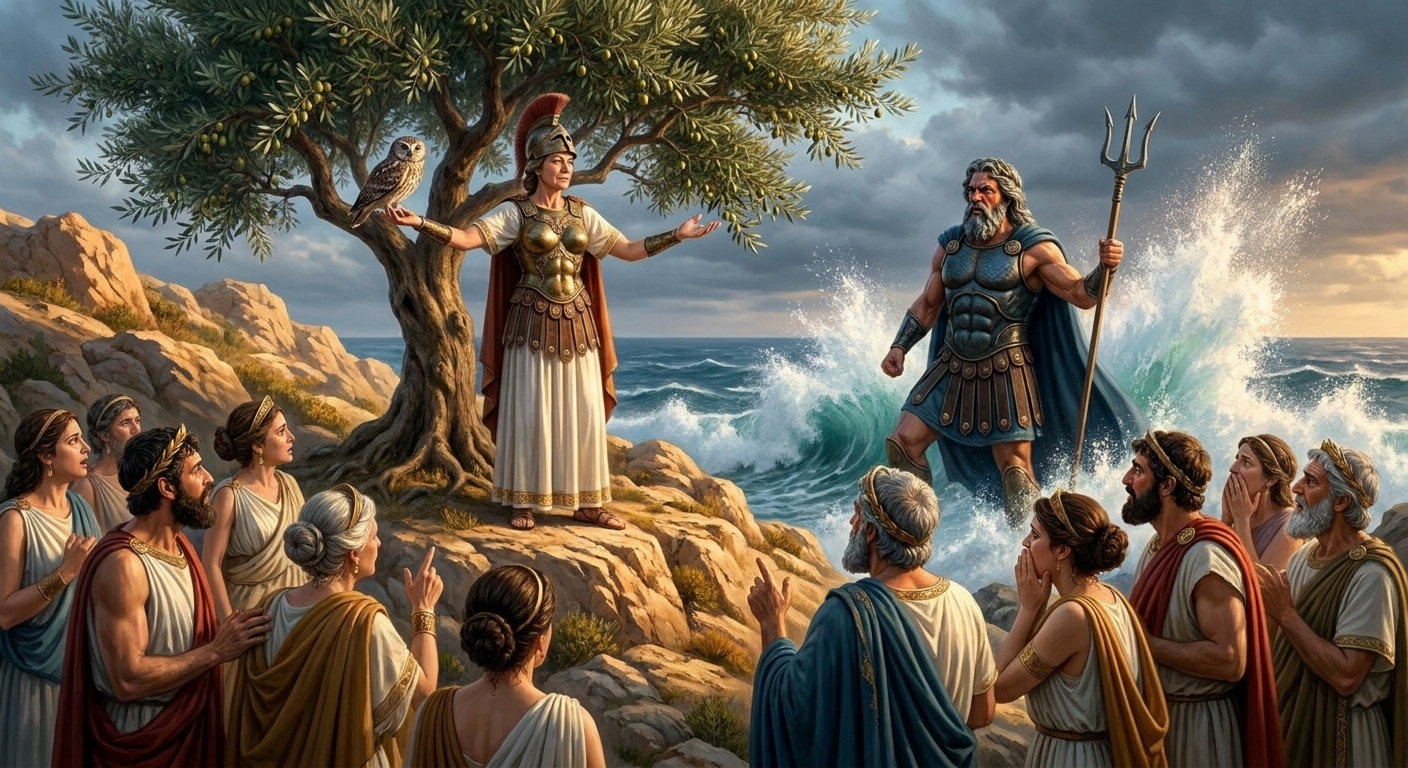
When a new city seeks a divine patron, the gods do not submit résumés. They compete. And few competitions reveal character as cleanly as the one between Athena and Poseidon.
Both want the city that will become Athens. Both offer a gift. Poseidon strikes the ground with his trident and brings forth a dramatic wonder: in some versions a brackish salt spring that tastes of the sea, in others a horse. Either way, it is a gift with teeth. Salt water does not nourish a city. A horse is glory and warfare, but also expense, danger, and appetite.
Athena plants an olive tree. Quiet. Useful. A promise of oil, wood, shade, and trade. Civilization rather than spectacle.
The judges vary by telling: Cecrops the serpent-tailed king, the citizens, or the gods themselves. But the result holds. Athena wins the city. Poseidon does not take losing as a character-building exercise. The myths remember floods, resentment, and the long mood of the sea pressing against the cliffs.
Arachne
Athena loves craft, but she does not love arrogance wearing craft like a crown.
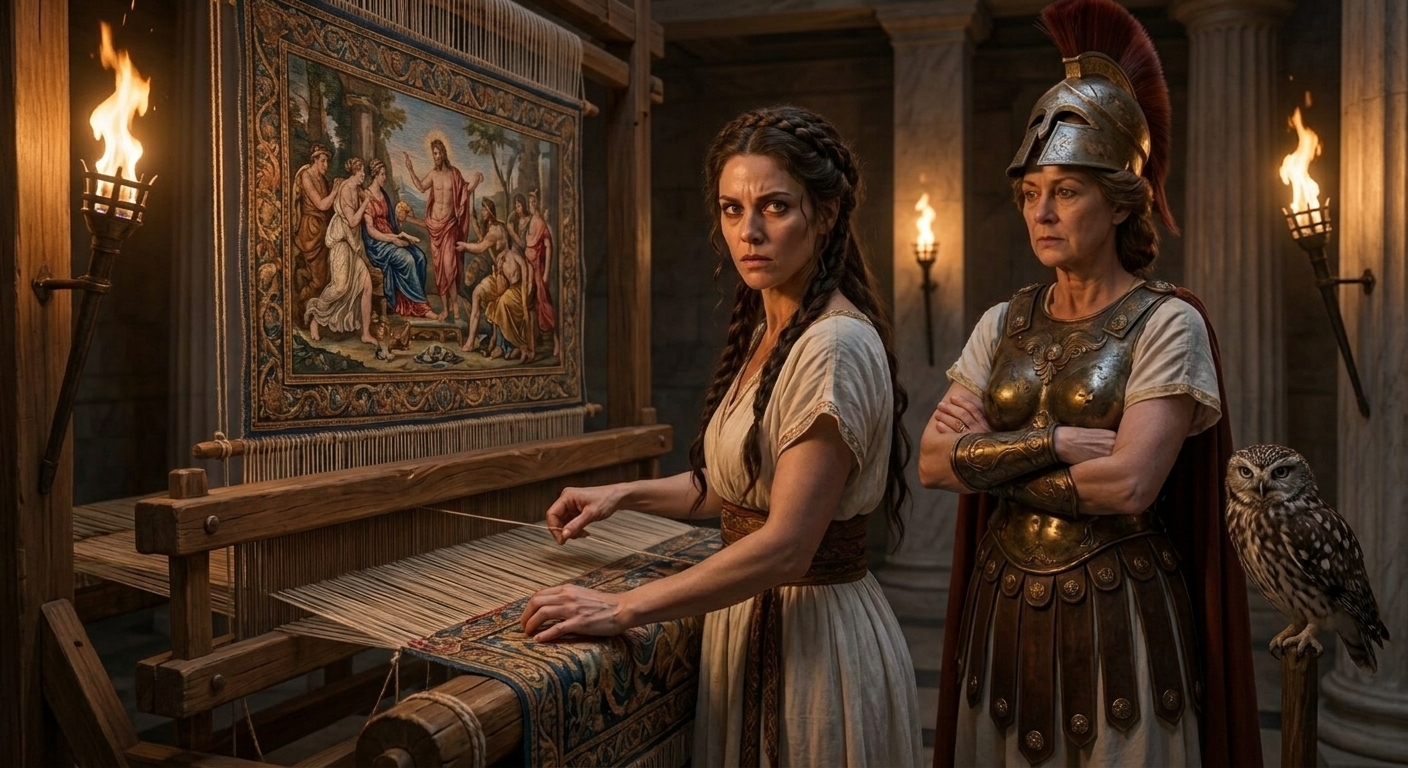
Arachne is a mortal weaver of stunning talent. Her threads can make you forget to breathe. And like many gifted mortals, she commits a fatal sin: she claims she is better than the goddess herself, or that she owes Athena nothing. In Ovid’s famous version, Athena approaches disguised as an old woman, offering a graceful exit: humility, apology, a way to keep your hands and your life.
Arachne refuses. The contest begins.
Athena weaves the gods in their majesty and, crucially, the consequences of mortal hubris. Arachne weaves something more daring: the gods’ seductions and violations, their divine appetites, their scandals. Technically brilliant. Reckless in a world where gods also keep score.
The details shift across retellings. In the best-known telling, Arachne hangs herself in despair and Athena transforms her. Other traditions make the punishment more immediate. But the end is the same shape: Arachne becomes a spider, doomed to weave forever.
Medusa
Any Athena compendium that tiptoes around Medusa is performing politeness at the expense of honesty. This myth is contested in the modern imagination because it comes to us in different shapes, and the differences matter.
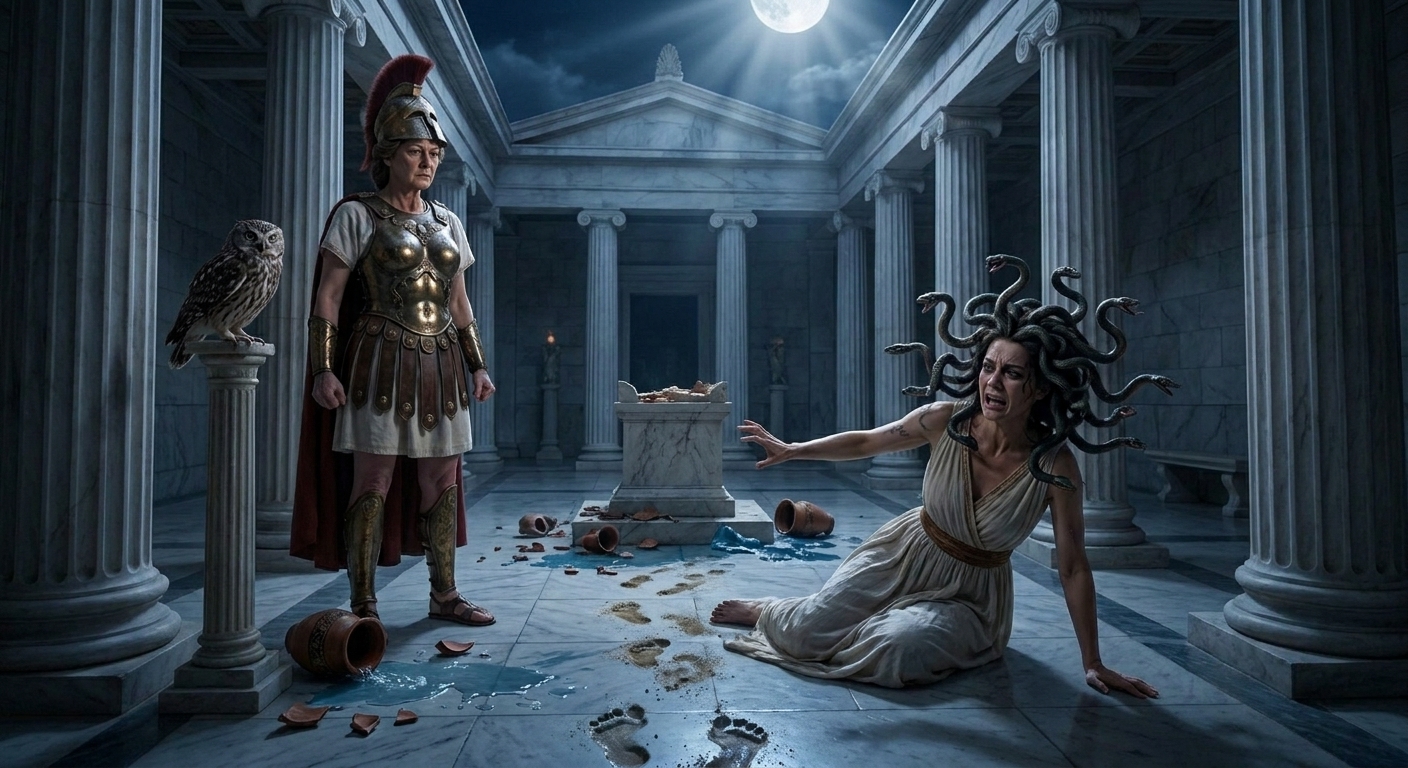
In early Greek tradition, Medusa is often simply a Gorgon, monstrous by nature, one of three sisters whose gaze turns people to stone. In Ovid’s later Roman telling, Medusa is once a beautiful maiden who is violated by Poseidon in Athena’s temple, after which Athena transforms Medusa into the snake-haired terror. Whether you read that transformation as punishment, protection, or a grim attempt to turn desecration into deterrence depends on the version and the reader.
What stays constant across Athena’s wider myth-pattern is her obsession with sacred limits. Temples are not just buildings. They are contracts. When they are broken, someone pays.
And Athena later aids Perseus in the quest that ends Medusa’s life. She provides strategy, tools, and that most Athena-like of gifts: a method. A mirrored shield so Perseus can approach without meeting the deadly gaze directly. Wisdom here is not empathy. It is tactical distance.
In Athena’s world, holiness is a line on the ground. Step across it, and the story becomes a sentence.
Tiresias
Not every Athena myth is about conquest. Some are about consequence, the price of seeing what is not meant for mortal eyes.
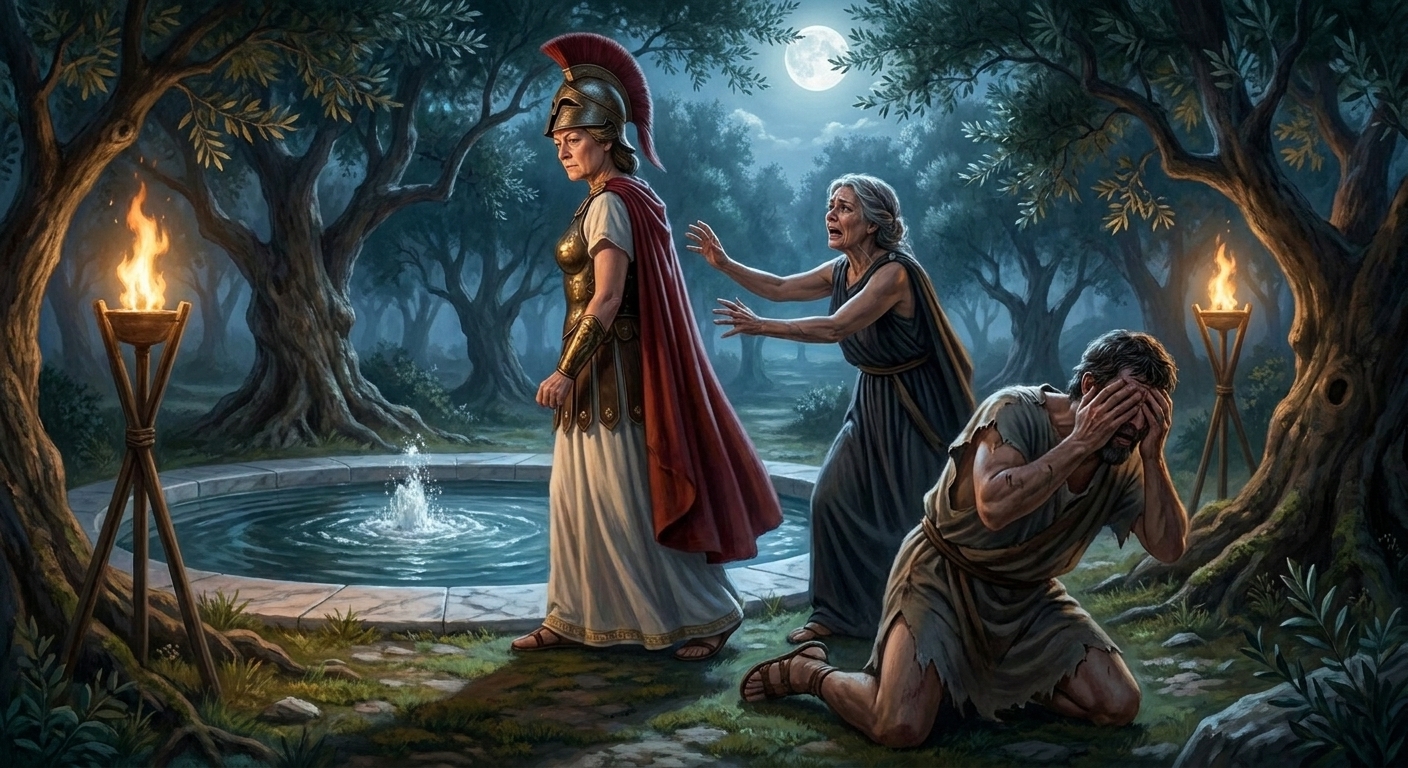
Tiresias, in a well-known account (told by Callimachus), accidentally sees Athena bathing. The theme is steady: a mortal breaches a divine threshold, even unintentionally. Athena blinds him.
His mother, Chariclo, pleads. Athena, who can be rigid without being thoughtless, offers compensation. Tiresias receives prophetic sight, and in some tellings additional gifts like extended life. He cannot see the world, but he can see what is coming.
It is a grimly balanced Athena bargain: trade one kind of sight for another. Keep the cosmic order intact, but do not pretend there was no harm.
The Judgment of Paris
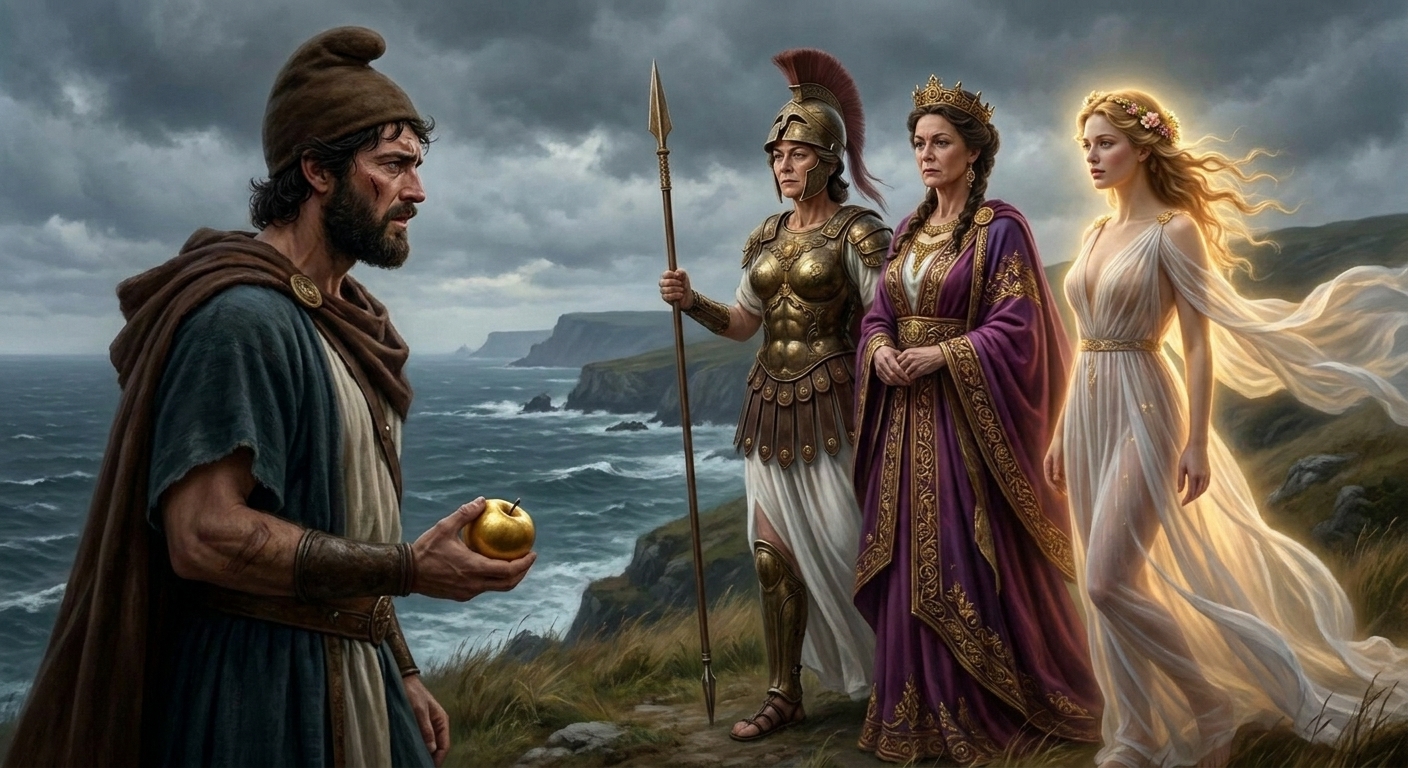
The Judgment of Paris is mythology’s most glamorous disaster: three goddesses, one golden apple, and a mortal prince asked to decide who is “fairest.” It is not a beauty contest. It is a bribe auction with excellent lighting.
Hera offers power. Athena offers victory and excellence in war, sometimes also wisdom. Aphrodite offers the love of the most beautiful woman in the world, Helen.
Paris chooses Aphrodite, because mortals are consistent that way. Athena, slighted, does what she does best: she plans. The Trojan War becomes not just a conflict of kingdoms, but a theater for divine grudges.
And here is the sharp edge: Athena’s offer is arguably the most honest. Not easiest. Not sweetest. Honest. The tragedy is that honesty rarely wins when a golden apple is involved.
Athena at Troy
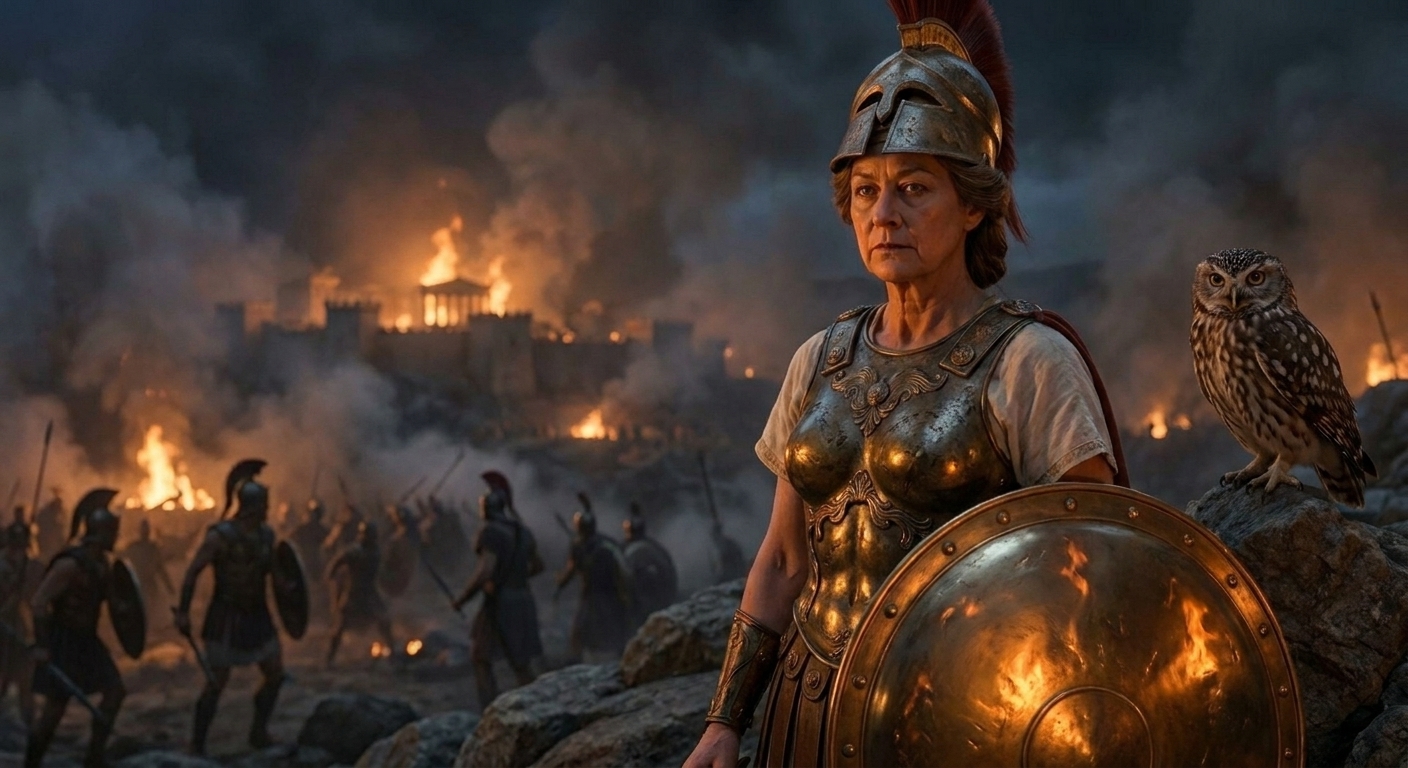
At Troy, Athena’s intelligence becomes a force that can feel almost modern. She is the goddess of strategy, the kind that wins wars while other gods are still shouting about honor.
She supports the Greeks, often alongside Hera. In the Iliad, she restrains Achilles from killing Agamemnon in a rage, grabbing him by the hair in an invisible intervention that saves the Greek cause from imploding on its own ego. She also guides and emboldens key fighters, including Diomedes, granting him the ability to recognize and wound gods on the battlefield. Even immortals bleed when Athena decides the rules allow it.
Yet she is not a simple cheerleader for the Greek side. She is attentive to disrespect. When Trojan allies or Greek kings cross lines, she remembers. Her justice is less a warm moral principle and more a ledger.
After Troy falls, Athena’s wrath follows another violation: Ajax the Lesser drags Cassandra from Athena’s sanctuary. Some traditions place Cassandra clinging to Athena’s statue, trying to make a holy precinct matter to men with swords. It does not. And Athena does not let it slide. The Greeks’ homecomings become tangled with storms and punishments. The war ends, but her accounting does not.
Odysseus
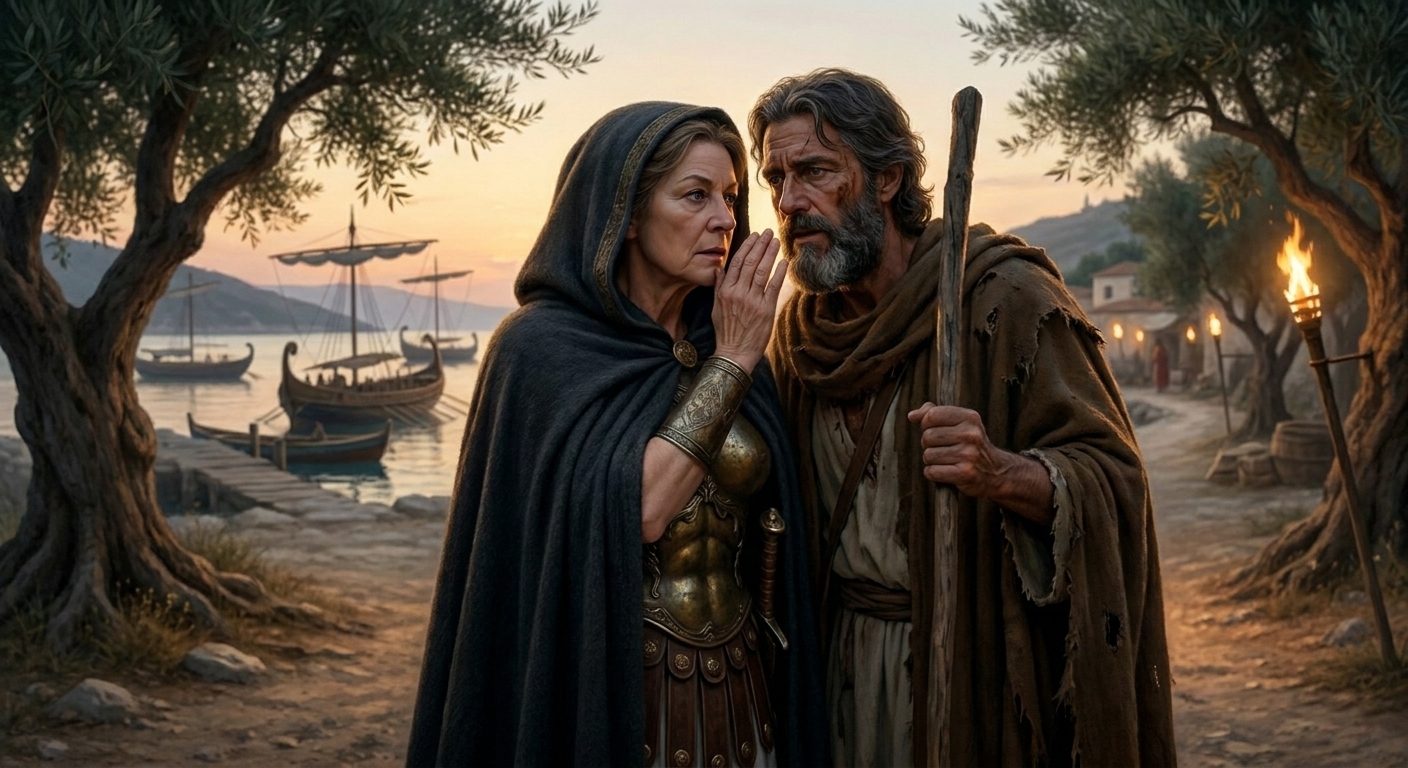
If you want Athena’s patronage in its purest form, look to Odysseus. Not the strongest. Not the prettiest. The one who survives because he thinks.
In the Odyssey, she is not merely a blessing in the background. She is a working intelligence in the story, guiding, disguising, redirecting. She steadies the long arc of a homecoming the way a hand steadies a blade before it strikes.
And she asks something in return: discipline. Restraint. Timing. With Athena, heroism is not a roar. It is the right move at the right hour.
Erichthonius
Some Athena myths are about punishment. Others are about guardianship so strange it feels like a riddle.
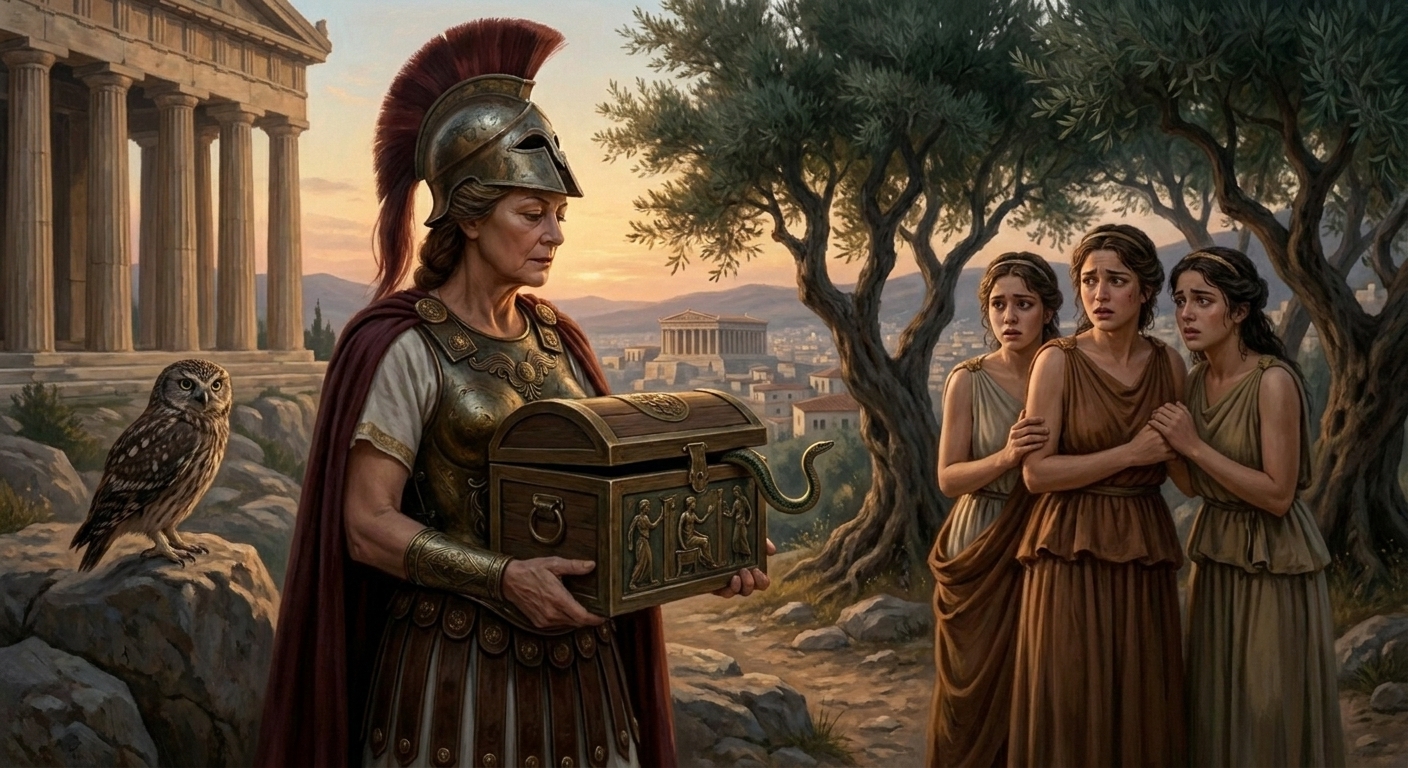
Erichthonius is Athens’ unsettling miracle child, tied to autochthony, the idea that a people are born from their own soil. The myth’s best-known version begins with Hephaestus attempting to force himself on Athena. She resists. In the struggle, Hephaestus’ seed falls to the earth, and Gaia becomes pregnant. The earth gives birth to Erichthonius, often marked with serpent features, and Athena takes the child to raise and protect.
She places him in a chest and entrusts it to the daughters of Cecrops, warning them not to open it. They open it. They see what they were told not to see, and the consequences follow, commonly madness and death. Athena’s warning is never decorative. It is the hinge of the story.
Erichthonius grows to become a king of Athens in mythic memory, a living symbol that the city belongs to Athena not only by vote, but by origin story. Civilization, in these myths, is not clean. It is built from strange materials and guarded by a goddess who understands what must be hidden for a city to endure.
What Athena Teaches
If you read Athena as a tidy mascot for “smart,” you miss her. Her myths insist on something sharper: intelligence has obligations.
- Wisdom is strategic: she wins with planning, not volume.
- Craft is sacred: excellence matters, but so does humility before the power that taught you.
- Limits are real: oaths, precincts, and taboos are cosmic infrastructure, not vibes.
- Favor is conditional: she protects heroes who listen, and breaks the ones who confuse talent with entitlement.
Athena is luminous and severe, like moonlight on marble. The kind of beauty that does not ask if you are comfortable, only if you are paying attention.