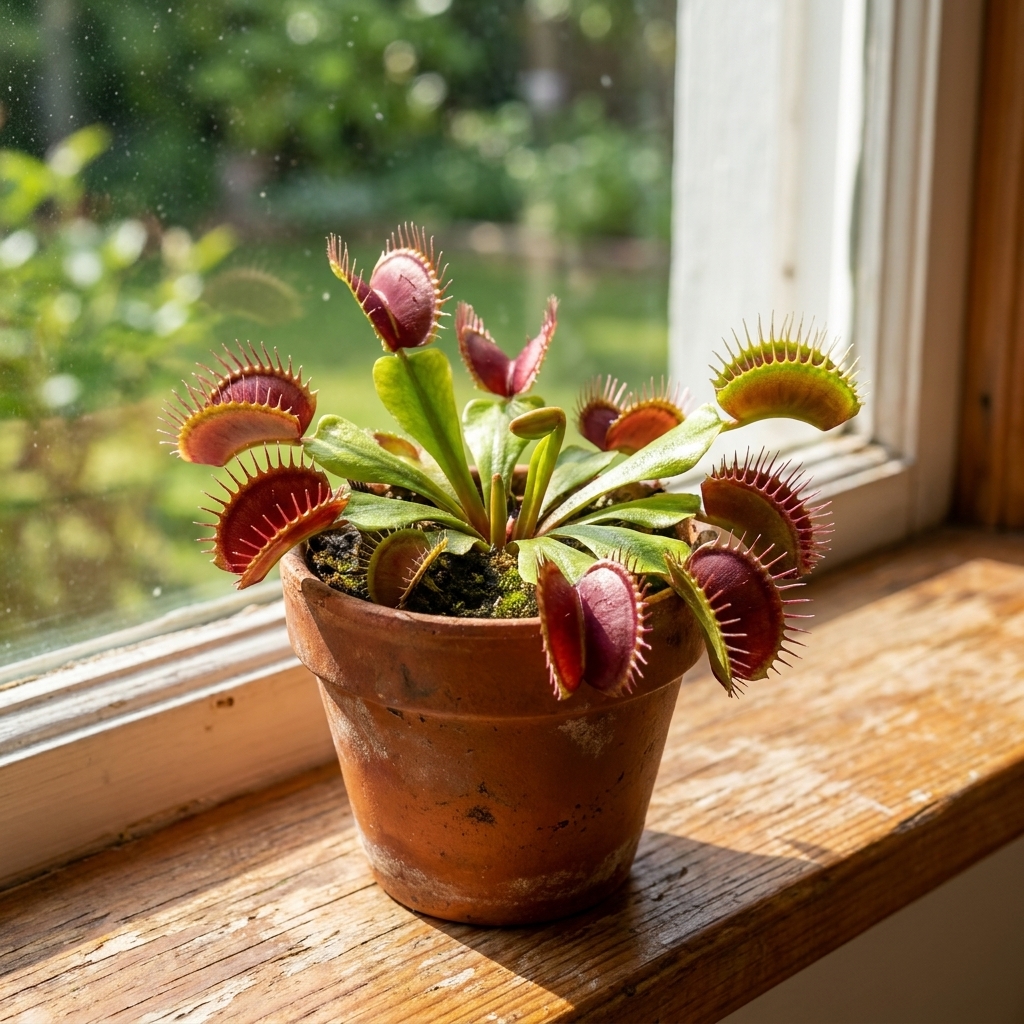
Venus Flytrap Care for Beginners
Greek Mythology
There are houseplants that politely decorate a windowsill, and then there is the Venus flytrap, Dionaea muscipula, a botanical drama queen that survives by luring, snapping, and digesting. It is not evil. It is not a monster. It is a small, sun-loving carnivore from nutrient-starved bogs, built for scarcity and astonishingly picky about the basics.
If your first flytrap arrived like a tiny green jaw on legs, welcome. Beginners usually lose them for the same reasons mortals lose Greek favors: too much help, the wrong offering, and ignoring the seasons. Let’s keep yours alive.

Meet the plant behind the myth
The Venus flytrap is native to the Carolinas in the United States, where it grows in open, wet savannas and bog edges. The soil there is acidic and extremely low in nutrients. That matters because it explains nearly every care rule you will ever read:
- It wants lots of sun because bogs are bright and open.
- It wants pure water because bogs are rain-fed and low-mineral.
- It wants nutrient-poor soil because its roots are not built to handle fertilizer salts.
- It needs winter dormancy because it evolved with seasons.
Think of it less like a tropical houseplant and more like a wild creature that tolerates captivity only when the habitat is convincing.
Light: no compromises
If Venus flytraps had an altar, it would be the sun.
How much light?
- Outdoors (best): Aim for 6 to 8+ hours of direct sun in the growing season. Morning sun with some afternoon protection can work in very hot climates, but most beginners under-light these plants.
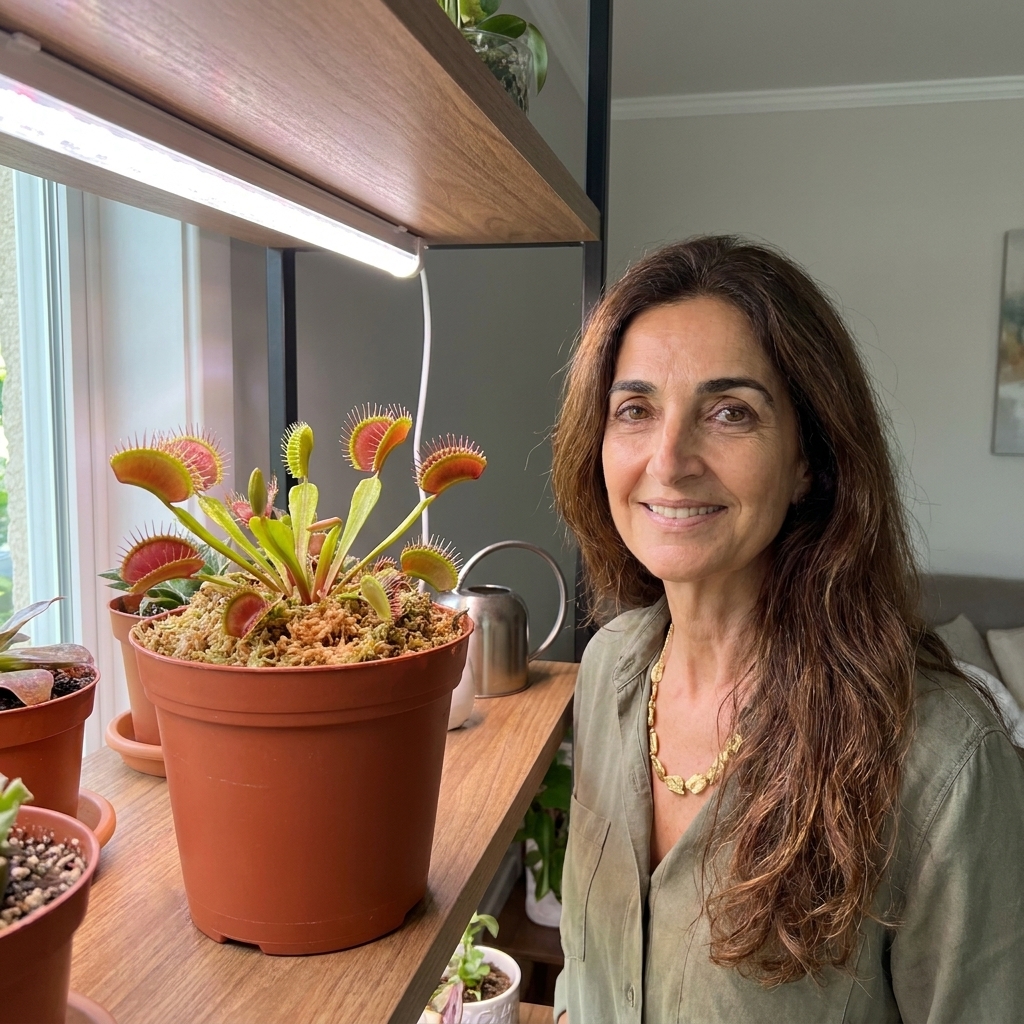
- Indoors (possible): A very bright south or west window can work, but in many homes it is still not enough. Treat a window as “maybe” and a strong grow light as “reliable.”
Hardening off (important)
If you move a flytrap from indoors to full outdoor sun, do it gradually over 7 to 14 days. Start with bright shade or gentle morning sun, then increase exposure. Even sun-worshippers can burn when they go from candlelight to Apollo.
Signs you need more light
- Long, floppy leaves and small traps
- Traps staying mostly green with little red coloration (some varieties are greener, but weak light usually looks washed out)
- Slow growth during spring and summer
Grow light tip: Use an LED grow light designed for plant growth, run it 12 to 16 hours a day, and keep it close enough to be effective while following the manufacturer’s distance guidance. Consistency matters more than perfection.
Water: keep it pure
A very common way flytraps fail is slow mineral buildup, not dramatic neglect. Tap water often contains dissolved salts and minerals that accumulate in the pot and burn roots over time.
Use one of these
- Rainwater
- Distilled water
- Reverse osmosis (RO) water
Avoid mineral water, spring water, and most “drinking water” that has added minerals. If you are unsure about your tap water, assume it is risky unless you have a low TDS reading. Many carnivorous plant growers aim for under 50 ppm TDS, some have success closer to 100 ppm, and lower is safer.
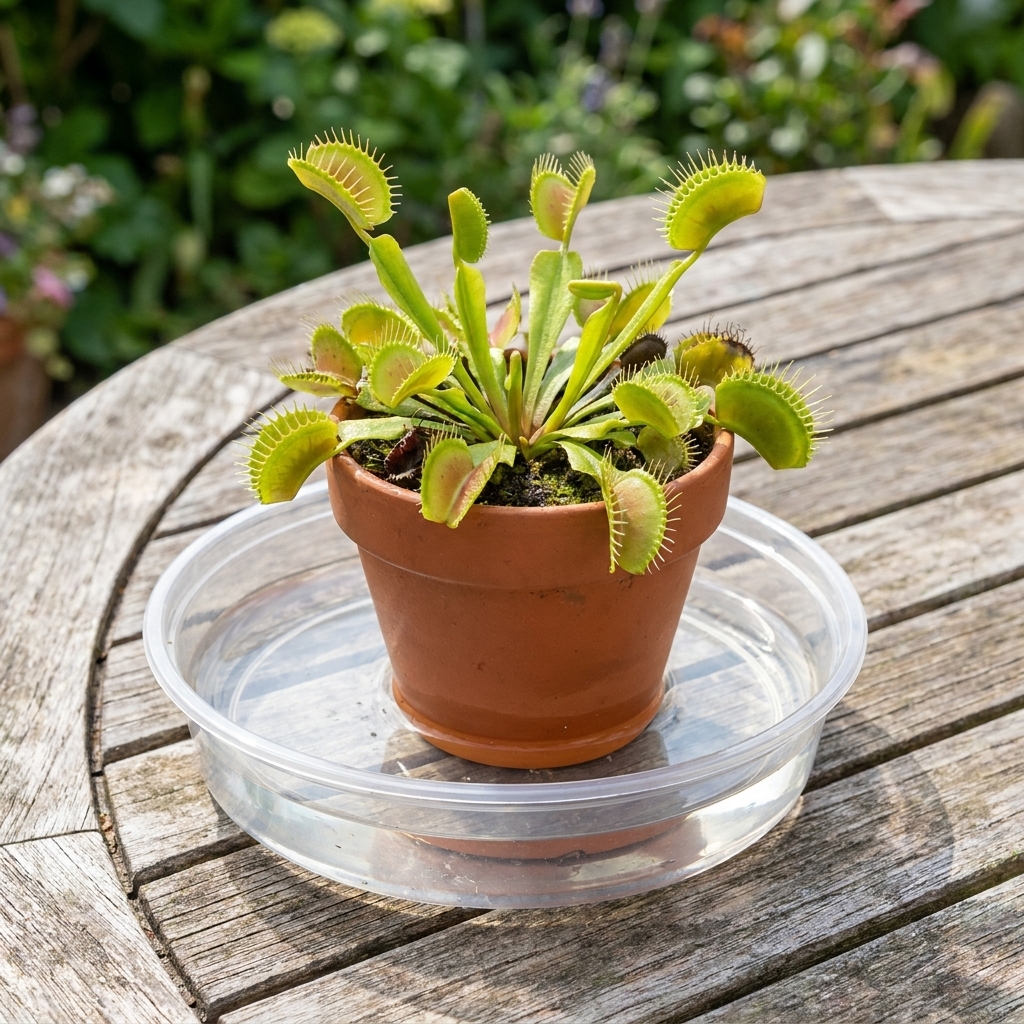
The tray method (easy and reliable)
- Set the pot in a shallow tray.
- During active growth, keep roughly 0.5 to 1 inch of water in the tray.
- In cooler weather, or during dormancy, keep it damp and reduce the standing water.
- Let the tray go nearly dry occasionally, then refill. The goal is even moisture, not drought.
Do not: water with softened water, add plant food to water, or mist as a substitute for proper watering. Humidity is not the main challenge. Minerals are.
Soil and pot: keep it poor
In mythology, gods are offended by the wrong sacrifice. Flytraps are offended by the wrong soil.
Beginner soil mixes
- 1:1 peat moss and perlite (classic and forgiving)
- Long-fiber sphagnum moss (excellent, but use reputable, clean moss)
Use only: unfertilized peat moss and plain perlite. Avoid anything labeled “feeds plants” or “with nutrients.”
What to avoid
- Regular potting soil
- Compost, manure, worm castings
- Fertilizer pellets
- Most “moisture control” mixes
Pot choice
- Plastic is the simplest, safest option.
- Fully glazed ceramic is usually fine if the glaze covers the interior.
- Avoid unglazed terracotta or clay, which can leach minerals into the soil over time.
- Pick a pot with drainage holes, suitable for the tray method.
- A slightly taller pot helps keep roots cooler and evenly moist.
Feeding: be restrained
Your flytrap does not need constant meals. In bright sun outdoors, it often catches enough on its own. Indoors, you can feed occasionally, but restraint is part of the art.
If your plant lives outdoors
Skip feeding unless you have a reason. The plant will hunt.
If your plant lives indoors
- Feed one trap every 2 to 4 weeks during active growth if it is not catching anything.
- Use small insects like flies, small spiders, or small crickets. Prey should be no larger than about 1/3 the trap size.
- For dried insects, rehydrate slightly and gently stimulate the trigger hairs so it seals and digests.
Do not feed: hamburger, chicken, cheese, or anything oily. Those rot, and rot is a kind of underworld the plant did not ask to visit.
Triggering traps for fun wastes energy and shortens a trap’s working life. A trap only closes a limited number of times before it dies back. Let it be dramatic only when it matters.
Flowering
Flytraps can flower in spring. If your plant is small, newly purchased, or struggling, consider cutting the flower stalk early. Blooming is beautiful, but it can cost a young plant more than it can afford.
Dormancy: winter rest
This is where many beginners panic. Venus flytraps are temperate perennials. They expect a cool winter rest. Without it, they often weaken over time even if they limp along.
When it happens
Typically late fall through winter, around 3 to 4 months. Growth slows, traps may blacken, and the plant looks smaller and less enthusiastic. That is normal.
What it needs
- Cool temperatures: roughly 35°F to 55°F is a common target range, with some growers succeeding a bit warmer (closer to 60°F) depending on conditions.
- Less water: keep the medium damp, not waterlogged.
- Some light: a bright window, unheated porch, or protected outdoor spot depending on your climate.
Dormancy setups
- Outdoor shelter: In a temperate, rainy climate like Seattle, dormancy outdoors can work if the plant is protected from prolonged hard freezes and not sitting in icy water.
- Cool garage or porch: Bright, cold, and above deep-freeze is the sweet spot.
- Fridge dormancy: For warm-winter climates, many indoor growers use a refrigerator to hold a consistent cool rest. Keep the plant just damp, not soggy, and check regularly for mold. It is not glamorous, but neither are most underworld journeys.
What to do with black traps
Some blackening is normal, especially in winter or after a trap finishes digesting. Trim dead material carefully if it turns mushy, but do not manicure obsessively. The plant is not here for our aesthetics.

Repotting: fresh start
Repotting refreshes the medium, reduces mineral buildup, and gives divisions space. Many growers repot every 1 to 2 years.
Best time
Late winter to early spring, around the end of dormancy, is ideal. The plant is waking up and can recover quickly.
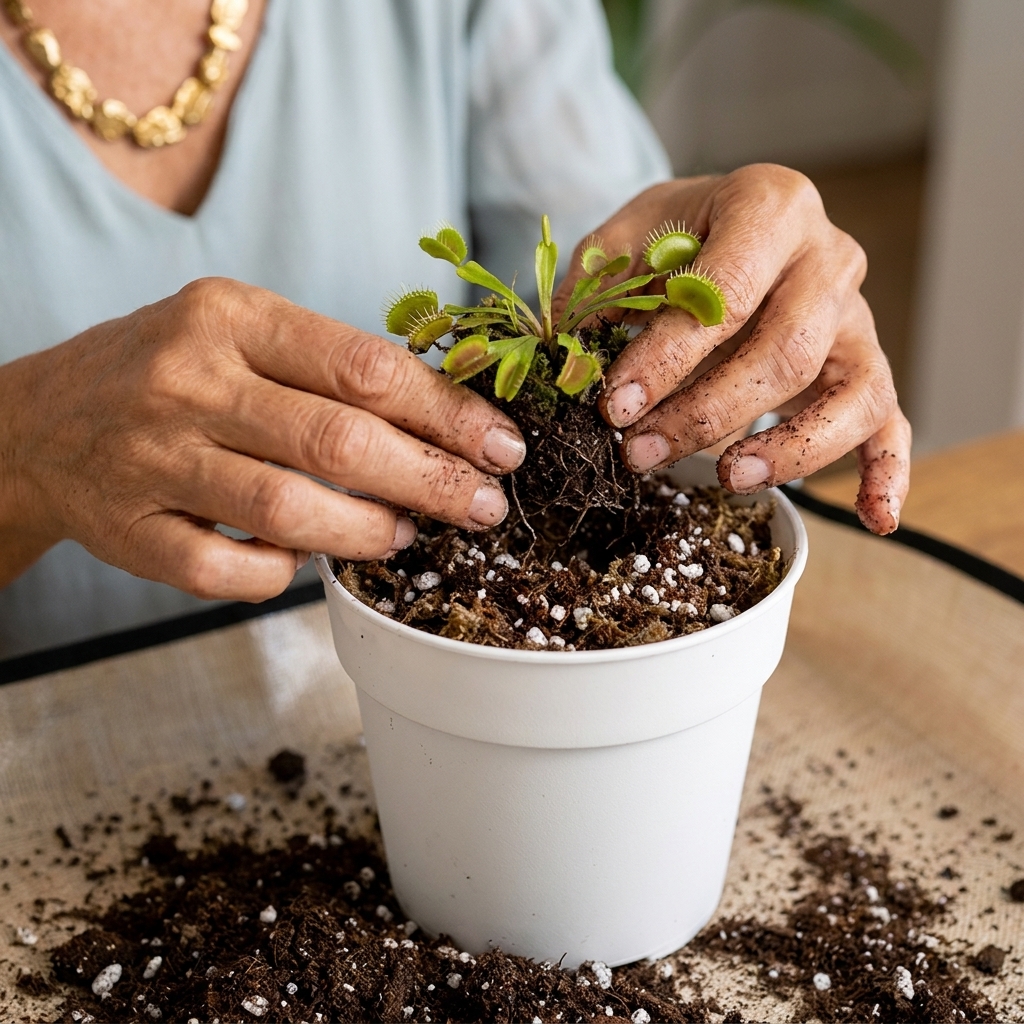
How to repot
- Moisten your new medium first so it is evenly damp.
- Remove the plant gently and tease away old medium carefully.
- Handle by the white rhizome and roots when possible, not by the traps.
- Plant it at the same depth, keeping the growing point above the medium.
Common mistakes
- Using tap water: mineral buildup is real and sneaky.
- Keeping it in low light: it survives, then it sulks, then it collapses.
- Planting in potting soil: too rich, too salty, too dense.
- Using unglazed terracotta: mineral leaching over time can quietly ruin the party.
- Skipping dormancy forever: it may live for a while, but it rarely thrives long-term.
- Feeding too much: more food does not mean more strength.
- Triggering traps for entertainment: a trap is not a toy, it is a costly mechanism.
Troubleshooting
Traps turning black
- Normal after digestion or during dormancy.
- Concerning if many traps blacken rapidly in summer, especially with sour smell or a mushy base. Check for stagnant conditions, rot, and water quality.
Traps not closing
- Some traps are old and near the end of their life cycle.
- Low light can weaken response.
- Repeated triggering can exhaust a trap.
New growth is small and pale
- Increase light.
- Confirm you are using mineral-free water.
- Consider repotting if the medium is old or contaminated.
White fuzzy mold on soil
- Improve airflow and reduce constant saturation, especially in cool conditions.
- Remove dead material and consider fresh medium if it persists.
Pests
- Aphids can distort new growth and hide in the crown.
- Spider mites can cause stippling and weak, sad-looking leaves in hot, dry setups.
- Fungus gnats are usually more annoying than deadly, but larvae can bother seedlings and stressed plants.
If pests show up, isolate the plant, increase airflow, and choose treatments labeled safe for carnivorous plants. Avoid random fertilizers and “leaf shine” products. Those are gifts from the wrong god.
Beginner routine
If you want a checklist you can actually live with, here is the reliable rhythm:
- Spring to early fall: full sun (harden off first) or strong grow light 12 to 16 hours, tray method with pure water, no fertilizer.
- Feeding: let it catch prey outdoors; indoors feed lightly and infrequently.
- Late fall to winter: cool dormancy, less water, accept the scruffier look.
- Every 1 to 2 years: repot into fresh carnivorous plant medium.
One last note worth saying out loud: Venus flytraps are native plants with a small natural range. Buy from reputable nurseries, not from the wild. Let the bogs keep their treasures.
The Venus flytrap does not ask for much, but it asks for it precisely. Give it sun like Apollo, water like an untainted spring, and a winter rest like Persephone returning to the dark. Do that, and your little carnivore will keep snapping shut with the kind of confidence only ancient stories and well-adapted plants can afford.