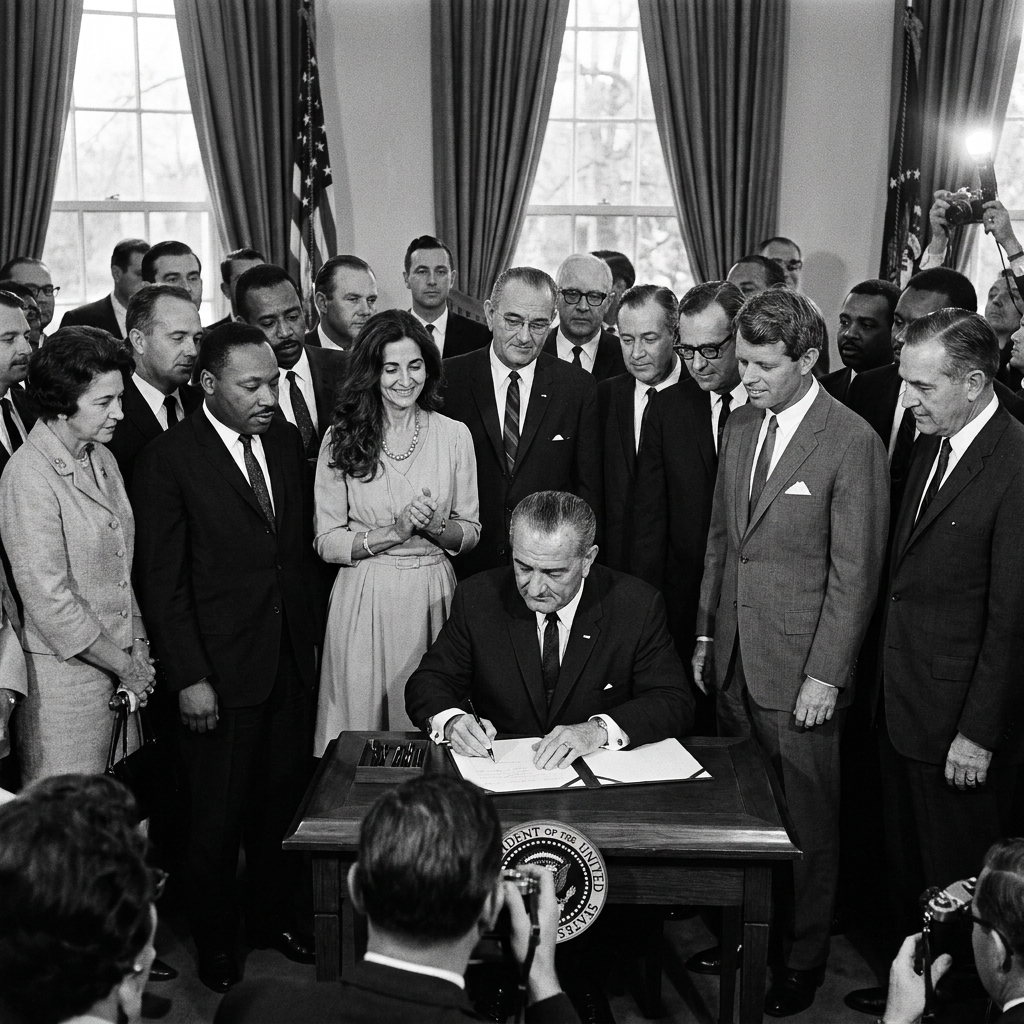
The Voting Rights Act and the Constitution
Greek Mythology
In Greek myth, the gods loved a good rulebook until the moment it stopped serving them. The Constitution has a similar reputation in American life: revered, recited, and endlessly fought over in courtrooms that feel, on certain days, like marble temples built for argument.
The Voting Rights Act of 1965 is one of the most consequential laws Congress ever passed under that rulebook. It sits at the intersection of two truths that rarely coexist peacefully: the Constitution’s promise of political equality, and the country’s long, determined history of finding loopholes when equality becomes inconvenient.
This is the story of how the Constitution makes room for federal voting protections, what the Voting Rights Act actually did, and why modern Supreme Court decisions have redrawn the boundaries of that power.

The Constitution’s Voting Baseline
The original Constitution did not arrive with a clean, democratic halo. It created a federal system and left enormous control over elections to the states. Article I, Section 4, sometimes called the Elections Clause, gives state legislatures the power to set the “Times, Places and Manner” of congressional elections, but it also gives Congress authority to “make or alter” those rules.
That shared authority matters. It is part of the constitutional foundation for federal voting laws.
Amendments that expanded the vote
If the original Constitution was a framework, later amendments were a reckoning, and then a long, uneven widening of the doorway.
Reconstruction era (the Reconstruction Amendments are the 13th, 14th, and 15th):
- 14th Amendment (1868): guarantees equal protection of the laws and due process. It became a constitutional backbone for challenging discriminatory election practices.
- 15th Amendment (1870): prohibits denying or abridging the right to vote “on account of race, color, or previous condition of servitude.”
Later expansions of the franchise:
- 19th Amendment (1920): prohibits sex-based voting discrimination.
- 24th Amendment (1964): bans poll taxes in federal elections.
- 26th Amendment (1971): prohibits denying or abridging the right to vote for citizens 18 and older “on account of age,” effectively setting 18 as the national voting-age floor.
Two amendments are especially relevant to the Voting Rights Act: the 14th and 15th. Both end with an enforcement clause that gives Congress power to enforce their guarantees through “appropriate legislation.” The phrasing is not identical in every clause across the Constitution, but the point is consistent: these amendments hand Congress a tool, not just a principle.
“The Congress shall have power to enforce this article by appropriate legislation.”
That enforcement power is the constitutional engine behind the Voting Rights Act.
Why the Act Was Needed
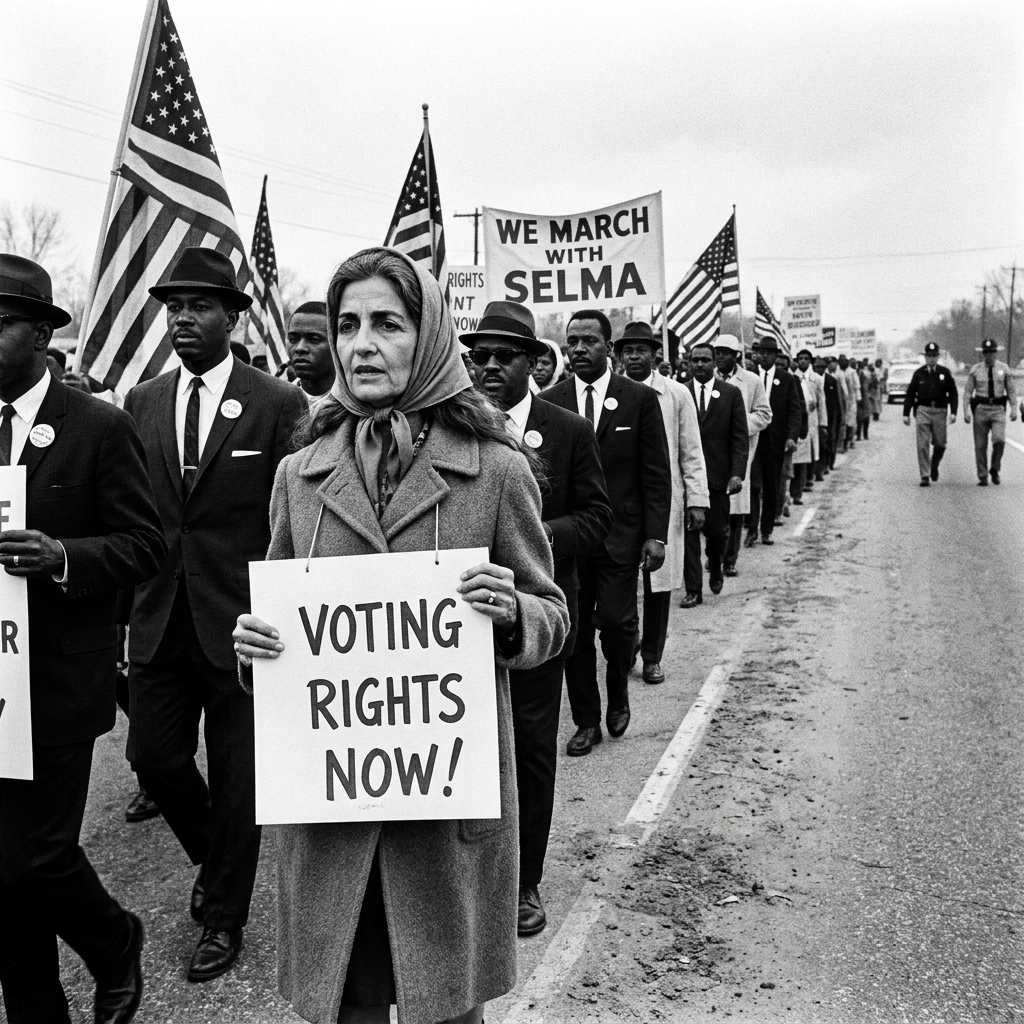
After the Civil War, the 15th Amendment existed on paper, but state and local governments built a whole architecture of evasion: literacy tests, grandfather clauses, intimidation, violent reprisals, and administrative tricks that turned registration into a labyrinth with no exit.
By the 1960s, Congress concluded that case-by-case lawsuits were not enough. The Constitution promised voting rights, yet enforcement was slow, expensive, and often reactive, arriving after elections had already been shaped by discrimination.
The Voting Rights Act was designed to do what ordinary litigation struggled to do: prevent discrimination before it could distort the political process.
What the Act Did
The Act is famous, but its mechanics are where the legal drama lives. Several provisions became central pillars.
Section 2
Section 2 applies across the entire country. It prohibits any voting practice or procedure that denies or abridges the right to vote on account of race or color.
Two clarifying notes matter here. First, Congress amended Section 2 in 1982 to reinforce a “results” framework, so plaintiffs did not always have to prove discriminatory intent. (This was a response to the Court’s intent-focused approach in City of Mobile v. Bolden.) Second, protections for language minority voters were added through later amendments, notably in 1975 (and expanded again in 1992).
Section 2 is enforced through litigation, often brought by the Department of Justice or private plaintiffs. It has been used to challenge:
- district maps that dilute minority voting strength
- at-large election systems that prevent minority communities from electing candidates of choice
- certain voting rules alleged to impose discriminatory burdens
Section 5
The most distinctive feature of the original Act was Section 5, which required certain states and localities with a history of discriminatory practices to obtain federal approval, called preclearance, before changing voting rules.
Practically, preclearance meant this: a covered jurisdiction had to show that a proposed change would not worsen the position of minority voters. Review typically ran through the Department of Justice or a three-judge federal court in Washington, D.C. It was not a symbolic step. It stopped real changes before they hardened into “just how things are,” including last-minute polling-place closures, registration rule shifts, and redistricting plans that quietly drained power from Black and Brown communities.
In legal terms, Section 5 was a shift from after-the-fact punishment to before-the-fact restraint. It treated voting discrimination not as a rare accident, but as a recurring pattern requiring special oversight.
Section 4(b)
Preclearance did not apply everywhere. Section 4(b) provided the coverage formula that determined which jurisdictions were covered, based largely on (1) the use of tests or devices such as literacy tests, and (2) voter registration or turnout below 50 percent in certain benchmark years (including 1964, 1968, and 1972 as the law evolved through reauthorizations).
Section 5 and Section 4(b) worked together like lock and key. One without the other could not do much.
Section 3(c)
There is also a lesser-known provision, Section 3(c), sometimes called “bail-in.” It allows a federal court to place a jurisdiction under preclearance after certain findings of constitutional violations. After Shelby County, Section 3(c) became one of the few remaining pathways to a form of preclearance, but it is narrower and case-specific.
The Court: Then and Now
The Voting Rights Act has lived many lives in the courts. At times, it was upheld as a necessary enforcement of the Reconstruction Amendments. More recently, it has been narrowed through constitutional and statutory interpretation.
Early validation
In South Carolina v. Katzenbach (1966), the Supreme Court upheld key parts of the Act, including preclearance. The Court recognized that extraordinary measures were permissible to combat extraordinary, persistent discrimination.
Later, in City of Rome v. United States (1980), the Court again upheld Section 5, allowing Congress to target not only intentional discrimination but also rules with discriminatory effects in covered jurisdictions.
Shelby County
In Shelby County v. Holder (2013), the Supreme Court invalidated Section 4(b), the coverage formula. The reasoning emphasized federalism principles and the idea that the formula relied on outdated data. Section 5 remained on the books, but without a valid coverage formula, preclearance became effectively inoperable for most of the jurisdictions it once covered.
Important nuance: the Court did not strike down Section 5 itself. It removed the working mechanism that determined who had to preclear changes.
Section 2 After Shelby
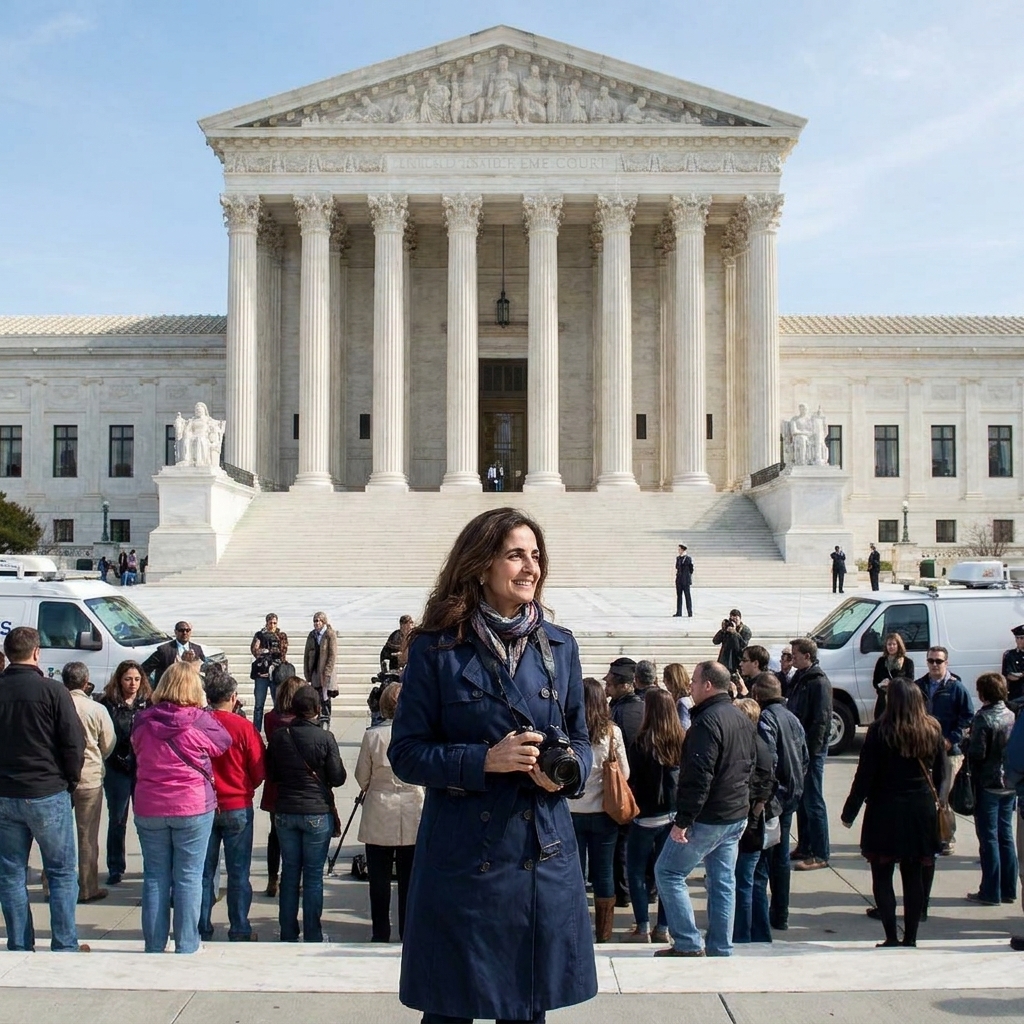
After Shelby County, many voting disputes shifted toward Section 2 litigation, because preclearance no longer blocked changes before they took effect.
Brnovich
In Brnovich v. Democratic National Committee (2021), the Supreme Court addressed how Section 2 applies to certain voting rules. The Court articulated a set of guideposts for evaluating vote-denial claims under Section 2, focusing on the size of the burden, historical practices, the state’s interests, and the overall openness of the voting system.
Supporters of the decision describe it as a clarity move that prevents Section 2 from becoming an all-purpose weapon against ordinary election regulations. Critics argue it raised the bar for proving discriminatory results and made Section 2 a narrower shield than Congress intended.
Milligan
In Allen v. Milligan (2023), the Court reaffirmed the core Section 2 framework used in redistricting cases, rejecting an attempt to significantly weaken it in that context. The decision signaled that while Section 2 has been constrained in some vote-denial disputes, it still has real force against racial vote dilution in district maps.
Federal Power vs State Control
Every major Voting Rights Act case tends to circle the same constitutional question: how far can Congress go when enforcing the 14th and 15th Amendments, especially when those efforts intrude on state election administration?
Two principles in conflict
- State authority over elections: deeply rooted in the Constitution’s structure and in the Tenth Amendment’s general reservation of powers.
- Federal enforcement of equal voting rights: explicitly granted through the Reconstruction Amendments and reinforced by the Elections Clause for federal contests.
Preclearance was legally unusual because it flipped the presumption. Instead of courts presuming state laws valid until proven discriminatory, covered jurisdictions had to show proposed changes were not discriminatory.
Supporters call that necessary realism. Opponents call it an affront to equal state sovereignty. The Supreme Court has increasingly weighed that second concern heavily.
What This Means Today
In practical terms, the Voting Rights Act still matters, but it operates differently than it did during its most famous decades.
- Section 5 preclearance: largely dormant unless Congress enacts a new coverage formula that satisfies modern constitutional scrutiny, or a court orders preclearance in a specific case under Section 3(c).
- Section 2: remains the primary nationwide tool, but litigation can be slow and fact-intensive.
- Constitutional claims: voters and advocacy groups also bring constitutional challenges under the 14th and 15th Amendments, often through 42 U.S.C. §1983 rather than as a simple, free-standing cause of action.
If you want the blunt truth, it is this: the Constitution promises voting equality, but it does not automatically enforce it. Enforcement is a human act, a political choice, a legal strategy, and sometimes a grind measured in years.
Common Questions
Is the Act constitutional?
Yes. The Supreme Court has repeatedly held that Congress can enforce the 14th and 15th Amendments through “appropriate legislation,” and it upheld major parts of the Act. The modern debate is not whether Congress can act, but how targeted and up to date certain mechanisms must be to satisfy constitutional limits.
Did Shelby County end the Act?
No. It invalidated Section 4(b)’s coverage formula, which effectively disabled the Section 5 preclearance system as it functioned for decades. Other provisions, especially Section 2, remain in force.
Can Congress restore preclearance?
Congress can attempt to create a new coverage formula grounded in contemporary evidence, but any new scheme would almost certainly face immediate constitutional challenge.
Is there any preclearance left?
Yes, in a narrower form. Section 3(c) allows courts to impose preclearance on jurisdictions as a remedy in certain cases, but it is not the broad, automatic coverage regime that Section 4(b) once created.
A Paleothea Note
When I hike the damp, evergreen trails outside Seattle, I always think about how landscapes remember. Rivers cut their arguments into stone. Forests keep their own archives in rings and roots. The Constitution, in its way, also remembers, but only if we force it to. Text is not justice by itself. It is potential, waiting to be used.
The Voting Rights Act was one of the boldest moments when the nation tried to make constitutional promises behave like reality. And the fight over it continues for the same reason myths endure: power never stays still, and it never stops insisting it has a right to be worshipped.
Sources and Further Reading
- U.S. Constitution: Article I, Section 4; Amendments 14, 15, 19, 24, 26
- Voting Rights Act of 1965, Pub. L. 89-110
- South Carolina v. Katzenbach, 383 U.S. 301 (1966)
- City of Rome v. United States, 446 U.S. 156 (1980)
- Shelby County v. Holder, 570 U.S. 529 (2013)
- Brnovich v. Democratic National Committee, 594 U.S. ___ (2021)
- Allen v. Milligan, 599 U.S. ___ (2023)