
Author: Alilia Athena
-

Greek Muses Mythology
Origins and Roles of the Muses The Muses, those goddesses of inspiration, weren't just born out of thin air. They came from the union of Zeus, the head honcho of the Greek gods, and Mnemosyne, the embodiment of memory. After nine nights together, they welcomed nine daughters into the world, each with a unique artistic…
-

Heimarmene Greek Goddess
Origins and Family Heimarmene, nestled within the illustrious cadre of the Moirai, has a narrative that intertwines directly with the supreme god Zeus and the goddess Themis. Zeus, known for his complex romantic entanglements, alongside Themis, goddess of justice and order, supposedly sired this less-celebrated but pivotal deity. Heimarmene, in some tales, emerges as a…
-

Greek Goddess Ececheira
Origins and Mythology Ececheira, a lesser-known figure in Greek mythology, holds her own unique allure. Some propose that she might be a daughter of Poseidon, god of the sea, given her association with coastal domains. Others speak of her as a progeny of Oceanus, the titan god of the great earth-encircling river. Her ties extend…
-

Greek Goddess Carya
Origins of Carya In the intricate world of Greek mythology, where gods and mortals intertwine with fateful consequences, we meet Carya, daughter of King Dion of Laconia. Carya lived a life marred by love, betrayal, and ultimately transformation. During a visit, Dionysus, the god known for his double-edged gifts of wine and frenzy, granted Carya…
-

Greek Goddess Alcyone Bio
Genealogy and Divine Relations In Greek mythology, Alcyone is the daughter of the mighty Titan Atlas and the sea nymph Pleione. She's one of the shimmering stars in the cluster known as the Pleiades, where her six sisters—Merope, Electra, Taygeta, Maia, Sterope, and Celaeno—twinkle alongside her in the constellation's embrace. Alcyone's story ripples out into…
-

Ersa Greek Goddess Bio
Origins and Family Connections In the intricate web of Greek mythology, Ersa stands out, not through thunderous power like her father Zeus or shining like her mother Selene, but through her genteel essence as the goddess of dew. Reflecting her mother's calmer luminosity rather than Zeus's stormy prominence, Ersa highlights a softer heritage among the…
-

Bolbe Greek Goddess Bio
Identity of Bolbe Bolbe, an enchantress of the waters tucked away in the lush landscapes of Thessalia, northern Greece, holds dominion over Lake Bolbe—a lesser-known chapter of the captivating world of Greek mythology. Unlike the buzz surrounding more spotlight-drenched deities, Bolbe carries a quieter allure, revered locally as a goddess-nymph whose story rings with the…
-

Greek Goddess Halia Bio
Identity and Origins of Halia Halia, a captivating sea-nymph from Greek mythology, hailed from the enchanting shores of Rhodes. As the daughter of Thalassa, the embodiment of the sea itself, Halia was undeniably ocean royalty. Her family tree is rife with intrigue, especially when Poseidon, the mighty god of the sea, found himself irresistibly drawn…
-

Greek Goddess Maia Bio
Genealogy and Origins Maia, the eldest of the Pleiades, a star cluster that has captured imaginations since ancient times, has origins as divine as they come. Born to Atlas, the Titan known for his strength in holding up the sky, and Pleione, a beautiful Oceanid nymph, Maia's lineage is truly remarkable. Her father literally bears…
-

Goddess Hedone Biography
Origins and Family Hedone, the goddess of pleasure, was born from the love story of Eros, the god of love, and Psyche, a stunning mortal woman. With such illustrious parents, Hedone wasn't just another face in the cloudy heights of Olympus; she was the embodiment of joy and gratification. Hedone's genealogy ropes in Aphrodite too,…
-

Greek Goddess Horai
Origins and Evolution of the Horai The Horai, or the goddesses of the seasons and time, are among the most versatile and dynamic characters in Greek mythology. With their roots planted deeply in the soil of the ancient world, these divine siblings serve a fundamental role in myth, presiding over natural phenomena, justice, and societal…
-

Greek Goddess Physis Bio
Concept of Physis in Greek Philosophy Physis, often shrouded in the enigma of ancient Greek philosophy, sits at the heart of discussions about life and the very essence of the universe. This Greek term, translating to 'nature' in English, wasn't merely about the physical world. It encompassed the entire grand spectacle – life, fertility, weather,…
-

Greek Goddess Adikia
Identity and Representation Adikia, the goddess of injustice, often lurks in the shadows of Greek mythology, a stark contrast to her sister Dike, the embodiment of justice. Typically depicted as strikingly unattractive, Adikia serves as a visual representation of discord clashing with harmony. In the famed chest of Kypselos portrait, Dike appears as an elegant…
-

Greek Goddess Helia
Origins and Meaning of Helia The name Helia shines as brightly as its meaning, rooted deep in the sun-drenched lore of ancient Greece. Deriving from the Greek word 'helios,' which directly translates to 'sun,' the name effortlessly evokes imagery of radiance, light, and boundless energy. As the linguistic sibling of Helios, Helia distinctly personifies the…
-

Ganymede Greek Mythology
Origin and Family Born to King Tros of Dardania, the namesake of the renowned city Troy, Ganymede was a standout figure in Greek mythology. His jaw-dropping looks made him the most gorgeous among mortals, catching the attention of even the gods. Ganymede's mom, Callirrhoe, passed on more than just good looks; it was like being…
-

Greek Goddess Ankhiale
Stroll through the annals of Greek mythology, and you'll often encounter gods and goddesses who wield formidable powers over the elements, human emotions, and the mysteries of the universe. Yet, among these divine figures, Ankhiale stands out not just for her control over fire but for the subtle warmth she brings to the forge and…
-

Aethra Greek Mythology
Aethra's Background and Lineage Born to King Pittheus of Troezen, a maven of myths, and raised in a palace where whispers of destiny rustled through the halls, Aethra's story is not your run-of-the-mill royal tale. This isn't just about crowns and court—it's about gods and legacies. Her dad, knowing his mythology inside out, used it…
-

Greek Goddess Names: R
1. Rhea Rhea, the daughter of sky god Uranus and earth goddess Gaia, is known most famously as the mother of the Olympian gods. Her offspring include big names like Zeus, Hera, and Poseidon. However, Rhea isn't just notable for her divine fertility; she's got quite the tale of marital rebellion, too! Her husband Cronus,…
-

Erymanthian Boar Myth
Historical Context The Erymanthian Boar, with its aggressive behavior and impressive size, is more than just another tale from Greek mythology. Living on Mount Erymanthus, this beast caused quite a stir in Arcadia. As one of Heracles' Twelve Labors, capturing the creature wasn't merely about animal control; it was a devious way to tame the…
-

Apollo vs Dionysus Rivalry
Foundational Myths Born on the island of Delos to Zeus and the Titaness Leto, Apollo's entry into the world was steeped in adversity as Hera, jealous as always, barred Leto from giving birth on terra firma, forcing her to seek refuge on the floating island of Delos. Moments after birth, Apollo was already clutching a…
-

Greek Nymph Salmacis Bio
Origins and Mythological Background Unlike her bustling nymph-sisters rushing after Artemis with bows in hand, Salmacis was quite the leisure lover, often found pampering her own beauty instead of pursuing the strenuous paths of the hunt. Think of her as perhaps the early-day lifestyle influencer among the Naiades, prioritizing vanity over velocity! Her fame (or…
-

Erida Greek Goddess Bio
Identity and Origins of Erida Meet Erida, a lesser-known character in Greek mythology. She's often mistaken for Eris, her sister, thanks to their similar inclinations—both enjoy stirring up chaos. However, Erida puts her own unique twist on mayhem. As the daughter of Nyx (Night), with some tales suggesting Zeus and Hera as her parents, Erida…
-

Goddess Techne
Origins and Family In the grand tapestry of Greek mythology, Techne's divine parentage speaks volumes about her capabilities. Born from the union of Hephaestus, the revered god of craftsmanship and metalworking, and Aphrodite, the goddess of beauty and love, Techne inherited a unique blend of skills and aesthetics.1 This combination of grit and grace gave…
-

Greek Nymph Pallas Bio
Origins and Family Pallas, a nymph with major mythological lineage cred, was born to Triton, the sea god with wave-manipulating powers. As the offspring of Poseidon (god of the sea) and Amphitrite (sea goddess), Triton's status places Pallas right into the elite circle of water deities. Being the granddaughter of Poseidon, Pallas is a Naiad—a…
-

Greek Goddess Lina Bio
Identity and Origins Lina, a lesser-known goddess in the vast tapestry of Greek mythology, subtly influenced the lives of those who invoked her charm. Positioned intriguingly in the pantheon, sources hint at Lina being associated with the allure of spontaneity and unexpected changes. Diving into her celestial family tree, Lina is said to be a…
-

Pandrosos Greek Mythology
Identity and Origins of Pandrosos Meet Pandrosos, a lesser-known yet intriguing figure in Greek mythology. As the daughter of Cecrops—the legendary first king of Athens, who himself was born directly from the earth—Pandrosos boasts a rather mythical origin story. Picture this: your dad is half-man, half-serpent, deeply connected to the sacred soil of one of…
-

Phaethusa Greek Mythology
Identity and Origins Phaethusa, a captivating figure from Greek mythology, was the daughter of Helios, the sun god, and Neaera, an ocean nymph. Along with her sister Lampetia, Phaethusa's main responsibility was to oversee their father's sacred cattle on the island of Thrinacia. These divine beasts had glimmering hides that could blind a mortal, and…
-

Greek Nymph Panope Bio
Identity and Origins Deeply rooted in the watery realms of Greek mythology, Panope, often referred to as Panopeia, emerged from the frothy Aegean aided by an impressive lineage. Her parents are none other than Nereus, the old man of the sea, revered for his gentle nature and prophetic abilities, and Doris, an Oceanid known for…
-

Manticore Mythology
Origins and Evolution The manticore, a creature born from Persian mythology, first appears in Ctesias' Indica. This fearsome beast has the body of a lion, tinged in red, with a human head and a scorpion's poisonous tail. Its name comes from the Persian 'murthykhuwar' or 'man-eater,' which later evolved into the Greek 'mantikhoras.'1 Ctesias, a…
-

Charybdis Greek Mythology
Charybdis Origins Let's plunge right into the swirling narrative that sets Charybdis apart. Imagine being the personification of a whirlpool, not by accident but through divine condemnation. According to one version of her story, Charybdis was once a lovely daughter of Poseidon and Gaia. Here she was, minding her business, helping dad with some 'minor'…
-

Greek Sphinx Mythology
Origins and Evolution of the Sphinx The captivating journey of the Sphinx from a tranquil Egyptian guardian to a perilous Greek enigma aptly showcases the power of cross-cultural exchanges that shaped ancient mythologies. Known in Egypt as the doorkeeper of the Pyramids, the Sphinx represented royal authority and protection. Its massive, stone form – a…
-

Amphictyonis Greek Goddess
Amphictyonis, a goddess not as famed as Zeus or Athena, still holds a pivotal role in the tapestry of Greek mythology. Her dual influence over grains and diplomacy offers a refreshing glimpse into the ancient world, where the divine and the earthly intertwine seamlessly. As we unravel her story, we discover a deity who not…
-

Penia Greek Goddess
Penia, the Greek goddess of poverty, might not headline the pantheon of ancient deities, yet her story weaves a compelling picture through the mythology and human experience alike. As we traverse her stories and symbolism, we uncover layers that resonate deeply with the perennial human conditions of need and resilience. Mythological Origins Penia's legendary story…
-

Pandia Greek Goddess
Origins and Family Pandia, a luminous figure in Greek mythology, emerges as the daughter of Zeus, the king of the Olympian gods, and Selene, the moon goddess. Her birth stitches together celestial majesty and terrestrial influence. Zeus and Selene's union showcases a divine partnership bridging day and night. Pandia's sisters, Ersa and Nemea, share their…
-

Cretan Bull Mythology
Origins and Symbolism The Cretan Bull is a remarkable figure in Greek mythology, connected profoundly with King Minos of Crete. This majestic bull, sent by Poseidon, was supposed to be a sacrifice, but Minos decided to keep it and sacrifice an ordinary bull instead. Angered by this sleight, Poseidon punishes Minos by enchanting Queen Pasiphae…
-

Basilisk Mythology
Origin and Evolution The basilisk's story begins in ancient Greece and Rome, where it was described as a serpent king that could end lives with its breath or a single glance. Pliny the Elder, a Roman naturalist, portrayed this creature in his Natural History as a snake less than two feet long but deadlier than…
-

Fauns in Greek Mythology
Origins and Evolution of Fauns Fauns, the original party animals, have a mythology dating back to ancient Greece and Rome. These characters, always ready for a good time and a wild frolic in the woods, find their origins nestled between old-world legends and mythical masterminds like Pan, the god of nature and mischief. In Greek…
-

Lernaean Hydra Mythology
Origin and Family Typhon and Echidna, names that echo with the might and terror typical of the legends of antiquity, are the formidable parents of the Lernaean Hydra. This lineage makes the Hydra not just a villain in Heracles' tales but also a descendant of the grandest scale of monsters. Typhon, often described as a…
-

Greek Goddess Eutychia Bio
Identity and Origins of Eutychia Eutychia, often associated with good fortune and prosperity, weaves an intriguing thread through Greek mythology. Known as the cheerier face of Tyche, the enigmatic goddess of chance and fortune, Eutychia is synonymous with blessings and brighter days. Although she shares traits with Tyche, tracing her origins proves challenging. Commonly embraced…
-

Erinyes Greek Goddesses
Origins of the Erinyes The Erinyes, also known as the Furies, have a backstory that is as epic as it gets in Greek mythology. Born from the blood of Uranus, their genesis kicked off with a celestial coup. When Cronus castrated his father Uranus, the spilled blood led to the rise of these avenging deities.…
-

Greek Goddess Hesychia
Welcome to a refreshing take on a lesser-known deity of Greek mythology, Hesychia. As we peel back the layers of her serene existence, we find intriguing connections between her divine tranquility and our bustling modern lives. Identity and Origins Hesychia, in Greek mythology, embodies 'tranquillity of mind.'1 Her origins trace back to some heavyweight lineage…
-

Amphictyonis Greek Goddess
Identity and Worship of Amphictyonis Amphictyonis, bearing the weighty surname of Demeter—Goddess of the Harvest—embodies not only agricultural might but also the intriguing realm of international diplomacy. Originating from Anthela, her name echoes the gatherings of amphictyons, representatives dispatched by Greek nations to convene after battles. These meetings were far more than mere ceremonial affairs;…
-

Greek Goddess Lampetia
Identity and Origins Lampetia, a lesser-known but intriguing figure in Greek mythology, serves as an example of the intertwining of nature, divinity, and duty. Born to the sun god Helios and the nymph Neaera, Lampetia embodies the brilliance of her father's domain. Her name, linked to the notion of shining or gleaming, reflects her connection…
-

Greek Goddess Eris
Stepping into the realm of Greek mythology, we often encounter figures wrapped in layers of tales and symbolism, each weaving a narrative that resonates through ages. Among these storied characters, Eris stands out—not just for her notorious role in mythic conflicts but for the profound echoes of discord she casts across the tales of gods…
-

Taylor Swift & Greek Myths: A Modern Epic
Taylor Swift and the Greek Muses: A Modern-Day Myth Imagine if you will, Taylor Swift not just as a pop star but as a living, breathing Muse. Like those enchanting beings of ancient Greece who spun creativity and gifted it to mortals. Think about it—Taylor, with her songs and melodies, is like Calliope, the muse…
-

Greek Goddess Eleos
Origins and Family Born to Erebus, the deep dark shadow itself, and Nyx, the essence of night, Eleos carved a niche for herself as the embodiment of mercy and compassion. Being the progeny of such primordial figures gives Eleos a significant edge in the sphere of deities. Both Erebus and Nyx are part of the…
-

Greek Goddess Aegle
Origins and Mythological Background Aegle shines as a symbol of wellness and splendor in Greek mythology, characteristics intricately tied to her father, Asclepius, the esteemed god of medicine. The ancient Greeks revered Aegle as the embodiment of a glowing, healthy body, a truly radiant figure attributed to her father's domain over health and healing.1 Her…
-

Goddess Metis in Greek Mythology
Metis's Role in Greek Mythology Metis, a Titaness and daughter of Oceanus and Tethys, is known as Zeus's first wife. During the Titanomachy, a battle between the Titans and the Olympians, Metis provided crucial advice to Zeus, helping him secure his position as the ruler of the gods. However, their relationship took a dramatic turn…
-

Tritopatores Explained
Identity and Origins of the Tritopatores The Tritopatores, often overlooked in Greek mythology, are a curious triad representing a lineage or group frequently tied to familial roots. These 'Three Fathers' emerge in various sources with intriguing names: These monikers hint at their roles and significance, suggesting a connection to ancient forebears and divine ancestry. Scholarly…
-

Greek Nymphs Starting with G
Genealogy and Origins of Nymphs Starting with G Gaia, the primordial deity embodying the Earth, is a formidable figure in Greek mythology. As the Mother of All, her presence looms large over the Greek pantheon. Marital ties to Uranus, the sky, thrust Gaia into the role of a unifying force between heaven and earth, producing…
-

Greek Goddess Arce
Origins and Family Arce's story starts with a splash – literally – given her dad is Thaumas, a sea god with a flair for the wondrous. Then add her mom, Electra (not the complex, but the cloud-nymph), whose name literally shines with hints of stormy glamour, connecting sky and sea in mythic style. It's no…
-

Greek Goddess Pheme
Origins and Family Pheme's family tree is a mythological powerhouse. As the daughter of Elpis, the personification of Hope, and Gaia, the earth mother, her lineage shapes her role in the mythological world. Elpis embodies expectation and anticipation, while Gaia represents the primal force of life. This duality gives Pheme's whispers a unique blend of…
-

Nymph Rhodus Bio
Step into the vibrant world of Greek mythology where the tales of gods and mortals intertwine with the natural world in a dance of fate and divinity. Today, we cast our gaze upon Rhodus, a figure whose story encapsulates the essence of mythological tales, transforming personal tragedy into a beacon of hope and guidance. Identity…
-

Greek Nymphs Starting with G
Genealogy and Origins of Nymphs Starting with G Gaia, the primordial deity embodying the Earth, is a formidable figure in Greek mythology. As the Mother of All, her presence looms large over the Greek pantheon. Marital ties to Uranus, the sky, thrust Gaia into the role of a unifying force between heaven and earth, producing…
-

Nemean Lion Mythology
Origins of the Nemean Lion The Nemean Lion's roots are steeped in mythological intrigue. This celestial monstrosity, known for its golden, weapon-proof fur and razor-sharp teeth, has a fascinating genealogy. Some tales spin the lion's origin from the mighty behemoths Typhon and Echidna, considered the father and mother of monsters in Greek mythology. Other versions…
-

Greek Mythology Amazons
Origins and Migration of Amazons The Amazons, a tribe of warrior women in Greek mythology, have their roots steeped in divine heritage and epic journeys. Traditionally believed to be the offspring of Ares, the god of war, and Harmonia, a sprite from the Akmonian Wood, their origin story showcases their brutal and aggressive nature dedicated…
-
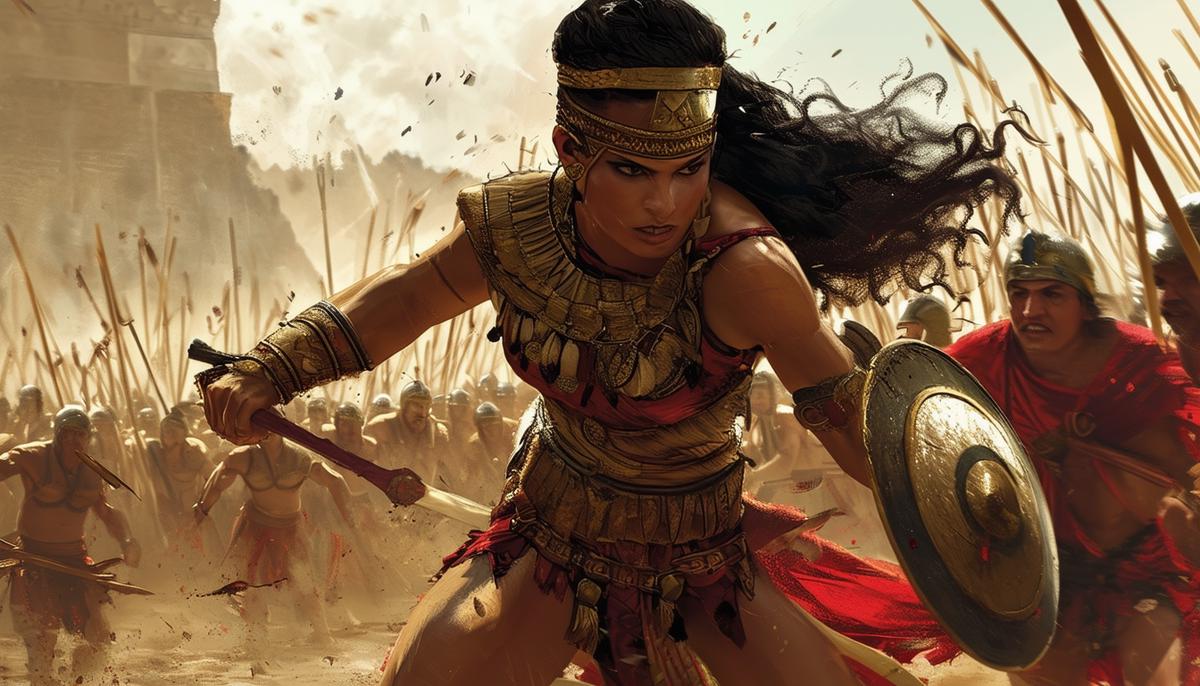
Greek Mythology: Bremusa
Origins and Mythological Context of Bremusa Bremusa, one of the lesser-known but fiercely impactful Amazonian warriors, embodies the robust independence and warrior spirit celebrated in Greek mythology. Born in Themiskyra around 1204 BC, she was poised not just for conflict but for cultural defiance. Her name, Bremusa, directly translates to "Raging Female," a title teeming…
-
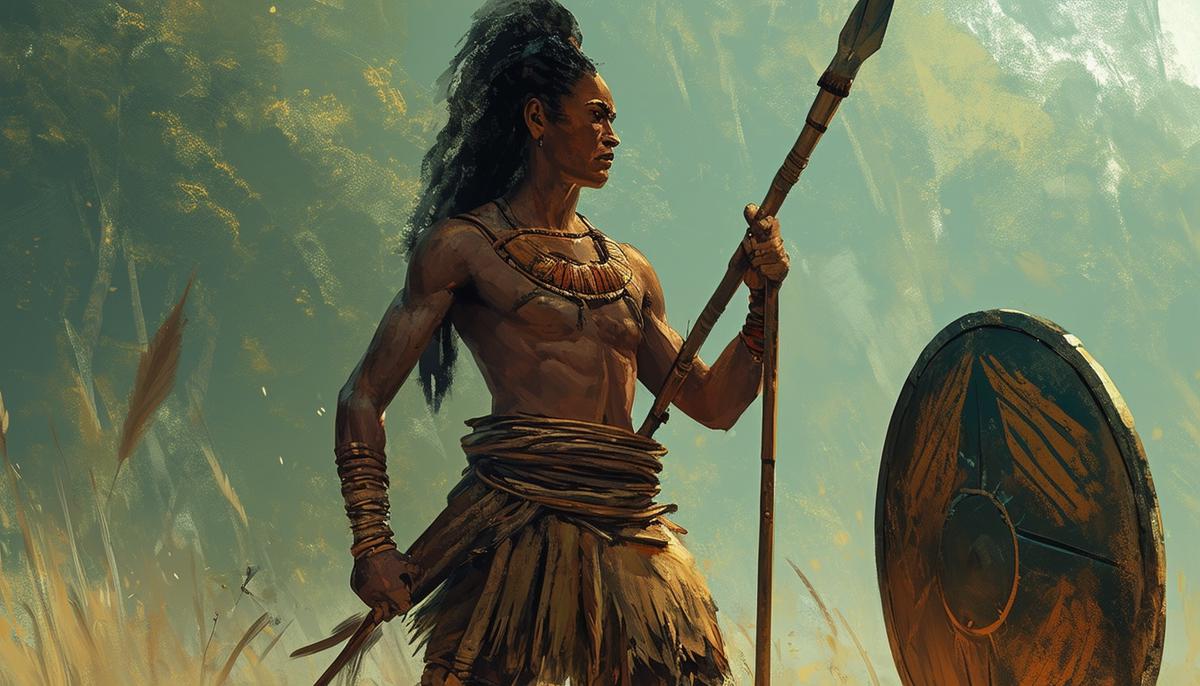
Greek Mythology: Iphito
Origins and Identity of Iphito Diving into the heart of Amazonian lore, Iphito stands out as a figure shrouded in mystery. Legend suggests that she played a critical role, not merely in battlefield engagements but as a pillar within her society—a culture tightly woven around strength, prowess, and a fierce matriarchal ethos. Within these matriarchal…
-

Eurypyle Greek Amazon
Identity of Eurypyle Eurypyle stands out in Greek mythology not just for being an Amazon but for her royal lineage—she was a queen. This title alone set her apart, further emphasizing the traditional Amazon valor blended uniquely with regal authority. Amazons were the iconic tribe of warrior women dominating many a hero's path with their…
-

Amazon Antibrote
Antibrote's Role and Significance Antibrote, roughly translating to 'Equal to Man,' or 'Man's Match,' stood out as a symbol of gender equality long before the term was coined in modern dialogues. She throws a curveball at the typical Greek depiction of femininity. While Athens had its women playing house, the Amazons—Antibrote among the elite—played warriors…