The Golden Apple
Greek Mythology
There are wars started over borders, over treaties, over the slow rot of ambition.
And then there is the Trojan War, which begins the way so many catastrophes do: with a party, a snub, and a small object that turns everyone’s vanity into a weapon.
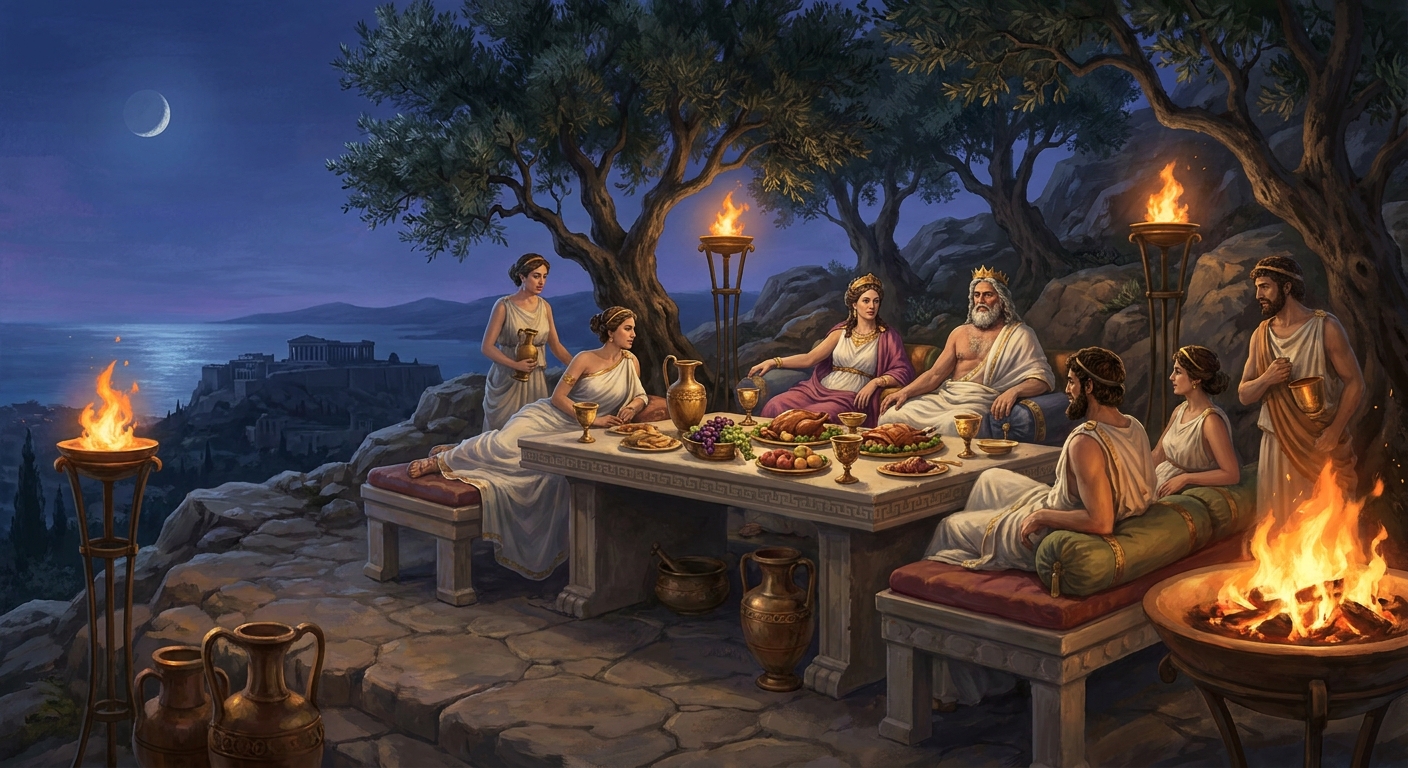
The object is a golden apple. The snub is aimed at Eris, goddess of strife, who does not do “quietly hurt feelings.” And the party is the wedding of Peleus and Thetis, a celebration so luminous it practically begged the universe to punish it.

The wedding and the prophecy
The marriage of Peleus, a mortal hero, and Thetis, a Nereid of terrifying pedigree, is not romantic comedy material. It is more like a diplomatic solution wrapped in wedding garlands.
Thetis was fated to bear a son greater than his father, the kind of child who could one day unmake a dynasty. Zeus and Poseidon both wanted her, until prophecy made them suddenly remember the value of self-preservation. So Thetis is married off to a mortal instead. Love may or may not be invited. Politics definitely is.
Still, the wedding feast is famously grand. The gods show up. Gifts sparkle. The air practically smells like hubris.
Eris arrives anyway
Eris is not invited to the wedding. Depending on the version, she is excluded because she embodies discord, or because someone had the audacity to hope that discord would politely RSVP “no.”
But Eris is a goddess. You do not keep a goddess out with a guest list.
She arrives anyway, carrying something small enough to be overlooked and sharp enough to cut through Olympus like a blade.
A golden apple rolls into the feast, inscribed: “to the fairest.”
This is not a compliment. It is a trap dressed as a prize.
The apple is a symbol with teeth. It forces the room to do what gods do best: turn status into blood sport.
Three goddesses, one ruin
Immediately, the apple becomes the property of three divine egos who do not lose gracefully.
- Hera, queen of the gods, power incarnate, with a marriage so volatile it could qualify as weather.
- Athena, goddess of wisdom and strategy, whose pride has edges as clean as spear points.
- Aphrodite, goddess of love and desire, who knows exactly what everyone wants and exactly how to make it cost them.
Each believes the apple should be hers. Each has a case. And none of them will accept second place.
So they do what the Olympians always do when their emotions outgrow the room.
They demand a judge.
Zeus refuses
In some myths, Zeus could settle this instantly. He could name a winner. He could call it “fair” and dare anyone to argue.
He does not.
Because even Zeus understands that choosing between Hera, Athena, and Aphrodite is not judgment. It is self-sabotage.
So the king of gods hands the choice to a mortal, as if divinity itself fears the fallout.
The judge will be Paris, a Trojan prince raised as a shepherd. A beautiful young man with just enough innocence to think a goddess offering him a gift is a blessing, not a contract.
The setting is Mount Ida, where the world feels quiet enough for a decision that will not stay quiet.

The judgment
This is where the apple stops being party drama and becomes international policy.
The goddesses appear before Paris, and they do not offer “being the fairest” as a vague honor. They offer bribes, divine ones, the kind that rearrange a life’s trajectory with a single promise.
- Hera offers power and kingship.
- Athena offers victory in war and strategic brilliance.
- Aphrodite offers the most dangerous gift of all: the most beautiful woman in the world.
That woman is Helen of Sparta.
And Helen is already married, to Menelaus. Which means the gift is not romance. It is theft with a silk ribbon tied around it.
Paris awards the apple to Aphrodite.
In some versions, it is a choice of appetite. In others, it is a choice of survival, because refusing a goddess is its own kind of death wish. Either way, the decision is made.
And the air changes. Because now Hera and Athena are not just insulted. They are invested.
From apple to war
The Trojan War does not ignite because one man falls in love. It ignites because the Greek world has a network of oaths, alliances, and pride that can be snapped into place like armor.
After Aphrodite’s promise, Paris travels to Sparta. Helen leaves with him. Whether she goes willingly, is persuaded, or is carried away varies by ancient source and later retelling, but the result is the same.
Helen is in Troy.
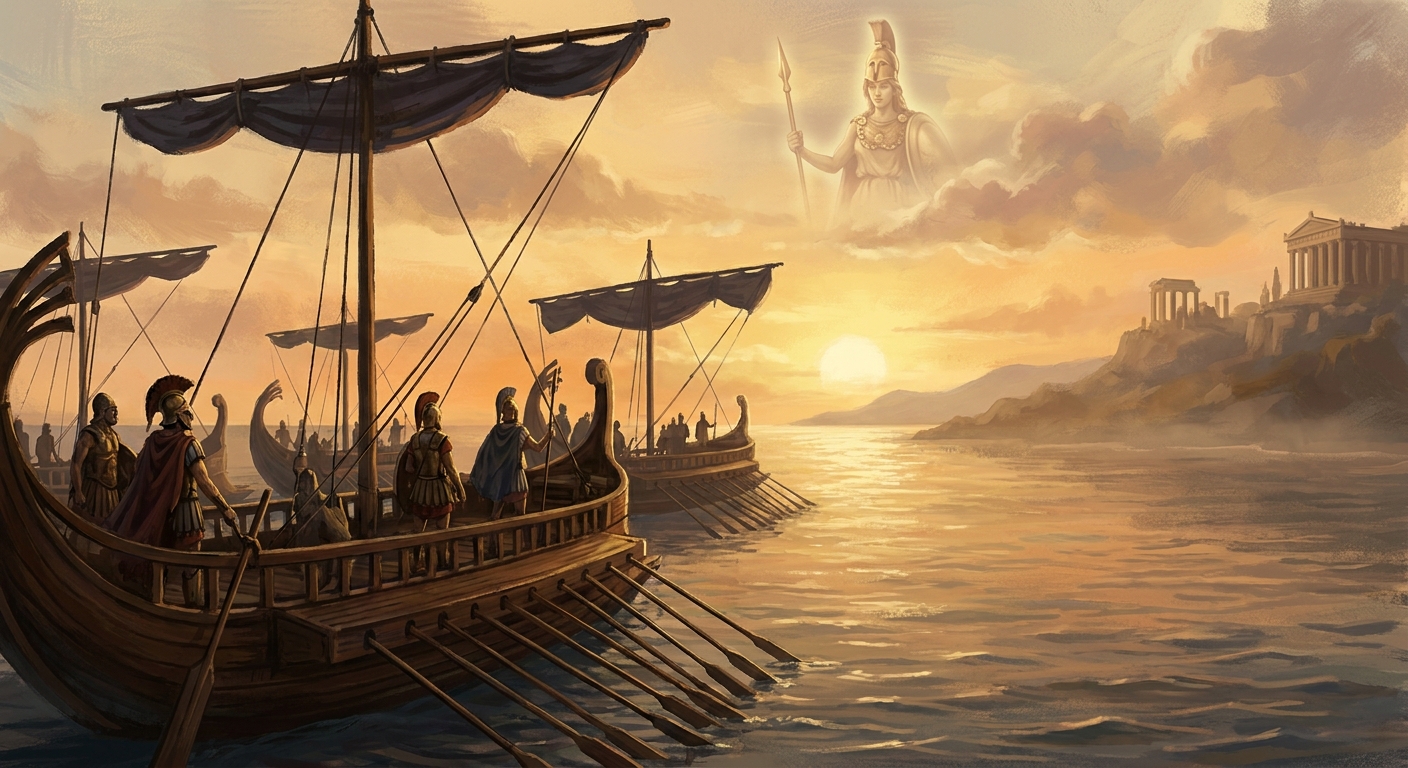
Menelaus calls on the Oath of Tyndareus, sworn by Helen’s former suitors: defend the chosen marriage, no matter who breaks it. Suddenly the Achaean kings gather. Ships assemble. Heroes arrive like storms.
And on the divine side, the lines harden.
- Hera and Athena become relentless enemies of Troy, nursing that apple-bright insult through the long war that follows.
- Aphrodite supports Paris and the Trojans, protecting her chosen winner even when he makes it difficult.
- Zeus, bound to fate and his own rivalries, shifts the balance at times, but balance is not peace.
Why the insult matters
The golden apple is small, but it functions like a mythic pressure point. It reveals a truth Greek myth rarely hides for long: the gods are not moral teachers. They are magnified emotions with temples.
Eris does not need an army. She needs a room full of egos and a single, well-aimed provocation.
Hera and Athena do not go to war because they love battle. They go because status is sacred, and insult is a stain that must be scrubbed out with consequences.
Aphrodite does not “win” because she is gentler. She wins because desire is persuasive, and mortals confuse what they want with what is fated.
And Paris, sweet doomed Paris, proves the bleakest lesson of all. A mortal asked to judge the gods is not being honored. He is being used.
In Greek mythology, the smallest object can be the lever that moves an empire.
The apple’s shadow
When we talk about the Trojan War, we tend to start at the beaches and the ships, at Achilles and Hector, at the famous grief of heroes.
But the war’s first wound is social, not military. It is a deliberate exclusion. A public humiliation. A goddess left outside the gate.
That is why the golden apple still feels modern, in the darkest way. Because you can see the entire disaster in miniature.
- A celebration that forgets who is watching.
- A slight that becomes identity.
- A symbol that forces people to choose sides.
- A choice that becomes a story nobody can step out of.
Somewhere in that wedding hall, among the spilled wine and the music, you can almost hear the sound of history turning its head.
Not toward the battlefield yet. Toward a glittering thing rolling across the floor, catching torchlight, pretending it is only an apple.