The Fate of Icarus
Greek Mythology
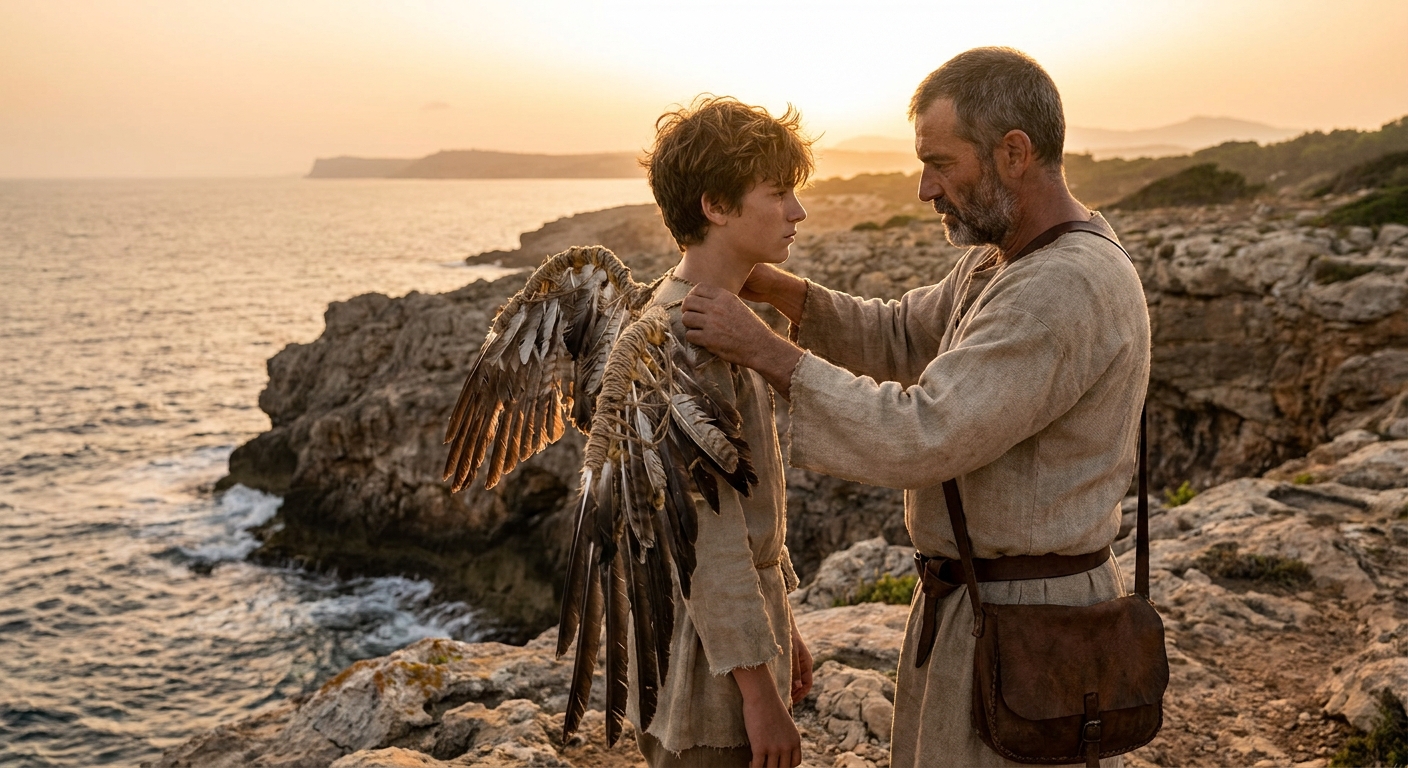
There are myths that feel like marble: cold, fixed, meant to be admired from a safe distance. And then there is Icarus, who feels disturbingly alive. Salt on the wind. Sunlight on skin. A father’s hands shaking as he ties a contraption of feathers and wax to his son’s shoulders and calls it salvation.
The modern version tends to stop at the splash, as if the only moral is do not fly too close to the sun. But the Greeks rarely offered a single clean lesson. They preferred a chain of choices, bargains, and punishments that tightens slowly, like a net drawn up from the sea.
What follows is a fuller arc across major traditions, and it begins long before the wings, in a mind like a forge: Daedalus, the man who could build anything except a peaceful life.

Daedalus: Genius With Blood on His Hands
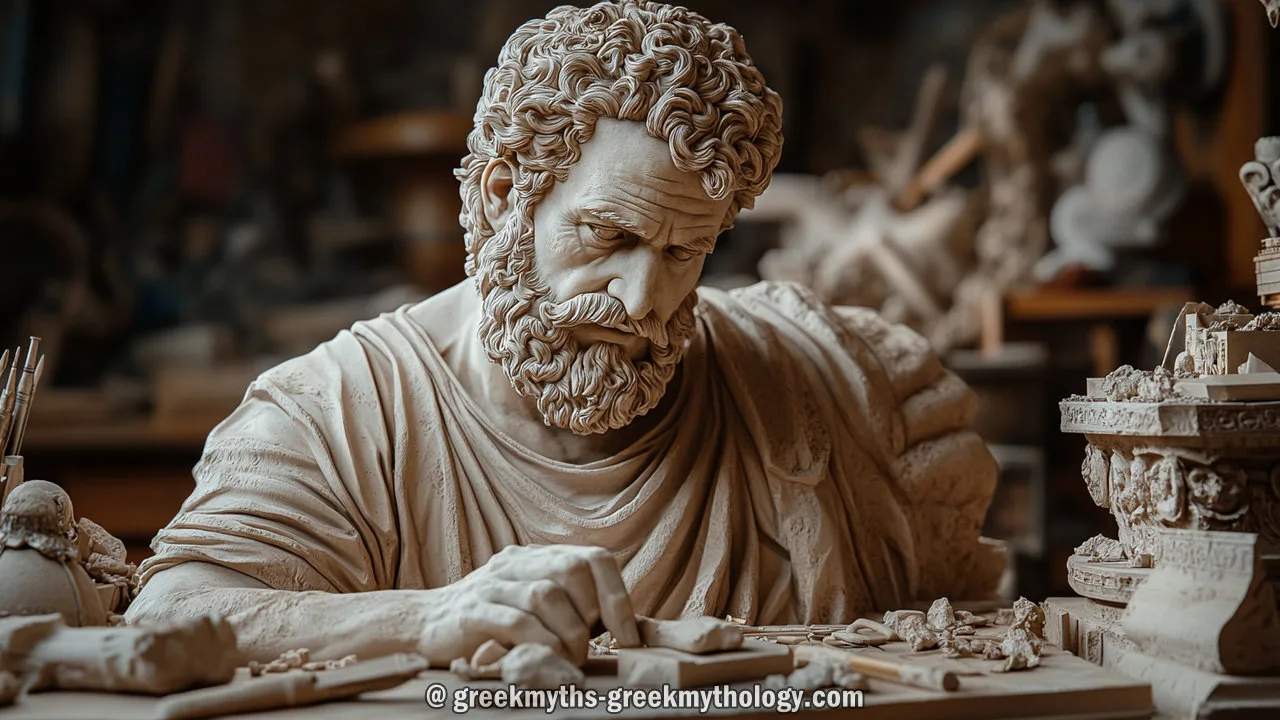
Daedalus is often introduced as an inventor, but in Greek myth invention is rarely innocent. Skill attracts envy. Skill invites kings. Skill turns into a weapon if you place it in the wrong hands.
In the Athenian tradition, his story already carries a stain: he takes on a gifted apprentice, often named Talos or Perdix depending on the source. The boy is brilliant, and the city loves brilliance right up until it threatens the wrong ego.
In many tellings, Daedalus pushes the boy from a height, often the Acropolis. In Ovid’s version, the fall becomes a metamorphosis: the youth is turned into a partridge, a bitter little answer to the name Perdix. Details shift, as myths do, but the shape remains: a teacher who cannot bear to be surpassed. He flees Athens afterward, because even in stories full of monsters, a harmed child still counts as a crime.
Crete and Minos
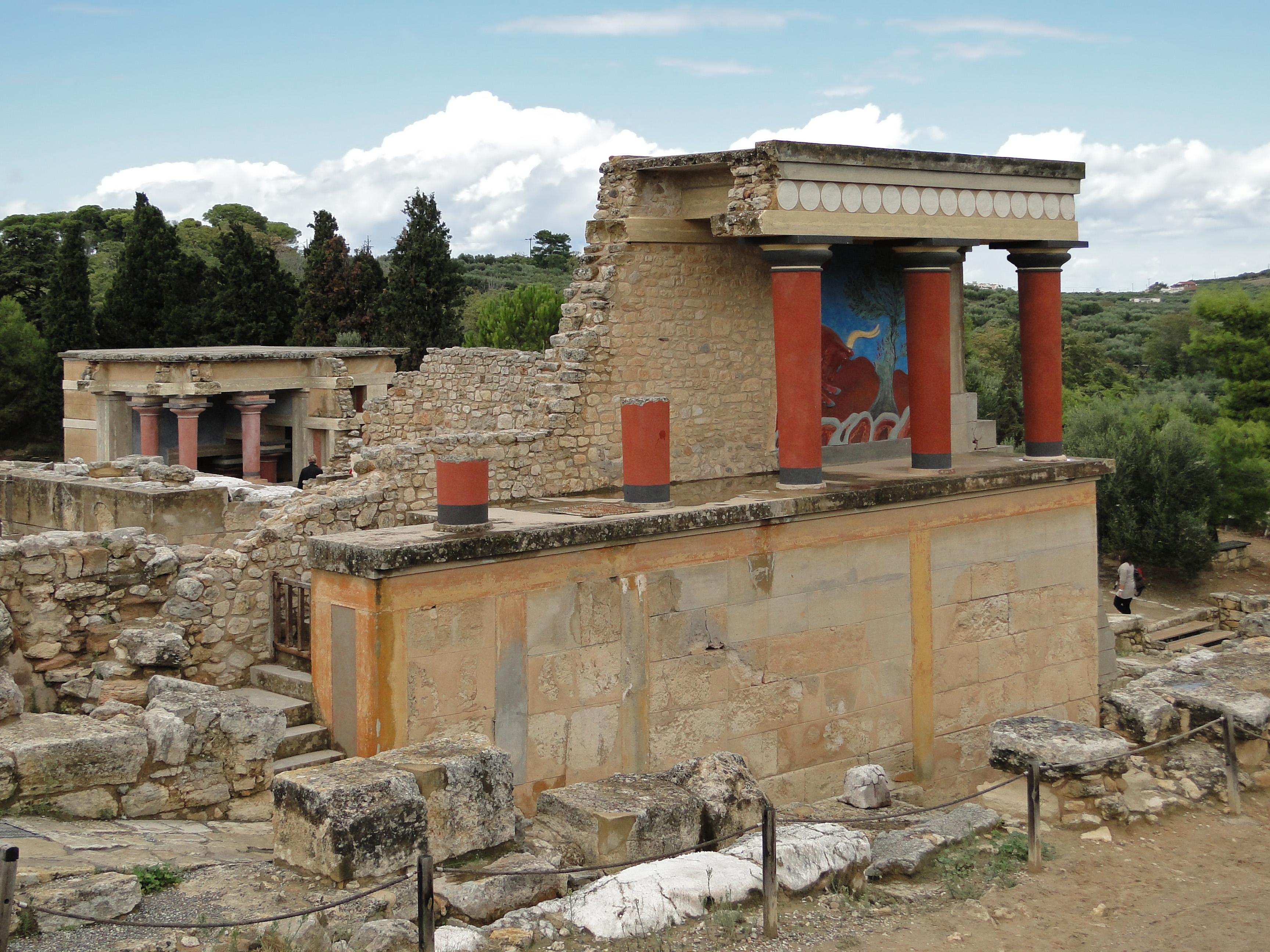
Daedalus washes up in Crete, where the island’s power smells like warm stone and sea spray, and where King Minos rules with a collector’s hunger for rare things: tribute, glory, and talented men he can keep.
Minos’ own tragedy begins with a divine bargain. He prays to Poseidon for a sign of kingship, and the sea-god sends a magnificent bull rising from the surf. Minos is meant to sacrifice it back, a neat transactional piety the gods adore.
But the bull is too beautiful. Minos keeps it. The gods notice when you keep what was meant to burn on the altar.
Poseidon’s punishment is not a lightning bolt. It is worse. He drives Minos’ queen, Pasiphaë, into desire for the bull. The result is the Minotaur, a creature whose very existence is a public scandal and a private horror, half human and half sacred animal, born from a king’s refusal to pay his debt.
A king refuses a sacrifice, and the price arrives not as thunder, but as a hunger that cannot be explained away.
The Labyrinth
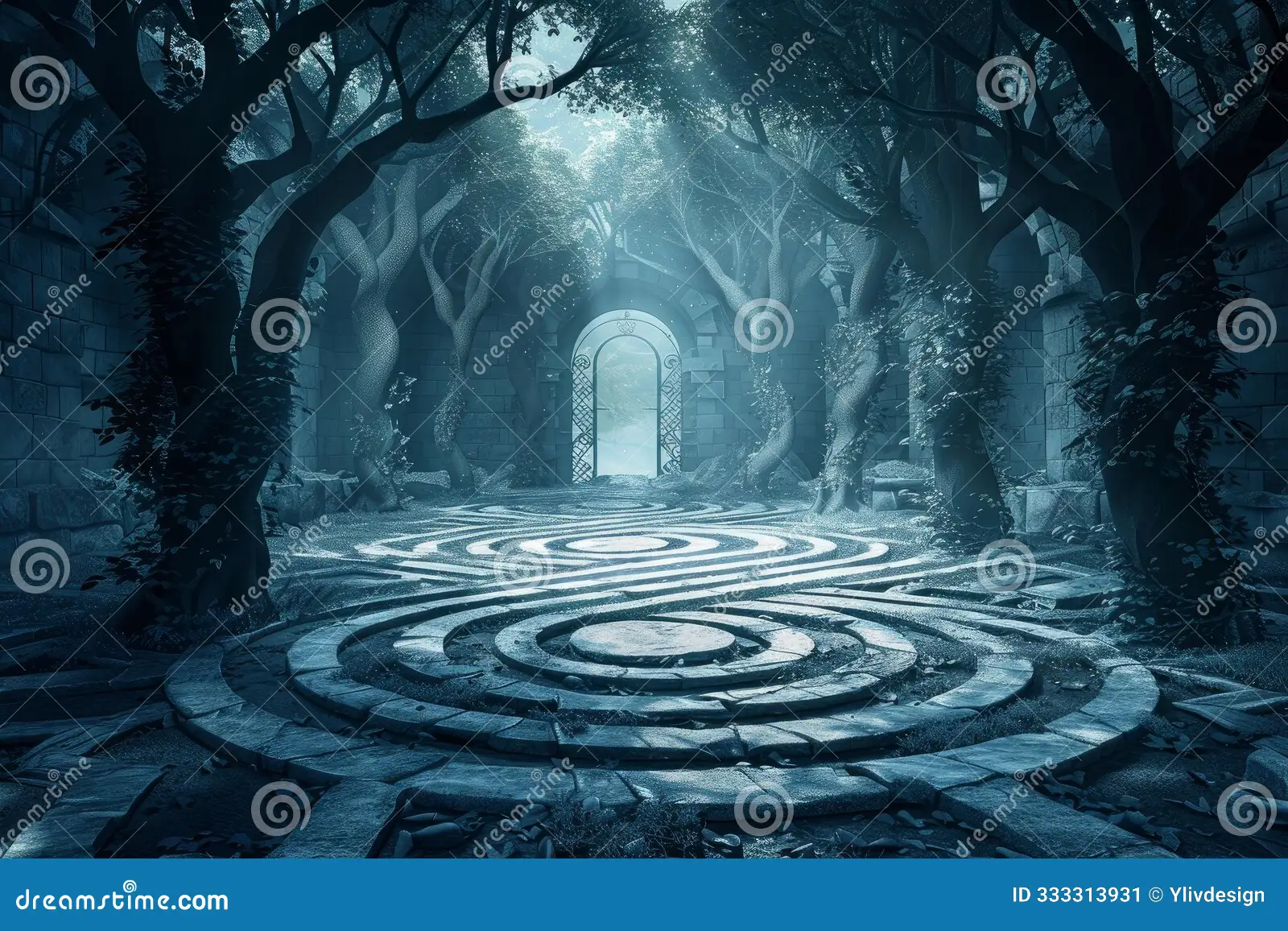
Minos turns to Daedalus for containment. Hide the evidence. Bury the shame. Make the impossible stay inside its walls.
Daedalus builds the Labyrinth, a structure less like a building and more like a thought you cannot escape. In later art it becomes a neat spiral, but in the mythic imagination it is confusion made architectural: corridors that repeat, turns that lie, a place designed so that even your certainty gets lost.
And then there are the Athenians. As part of Crete’s dominance, Athens sends youths as tribute to be fed to the Minotaur. The story keeps the human cost in view. Power is never merely political in Greek myth. It is sacrificial.
When Theseus arrives, the saga tilts. Ariadne, Minos’ daughter, falls for him. She provides the famous thread that leads him back out again, a clew that turns terror into a path.
Daedalus’ role here is stranger and more indirect. He built the prison, so the escape depends, in a way, on the shape of his mind. Some later accounts also suggest he advised, or at least understood, the method that could undo his own masterpiece.
Why Minos Imprisons Them
Monsters are one thing. Humiliation is another. When Theseus escapes and the Minotaur dies, Minos needs someone to blame, and he has a convenient scapegoat in the person who knows the Labyrinth’s secrets.
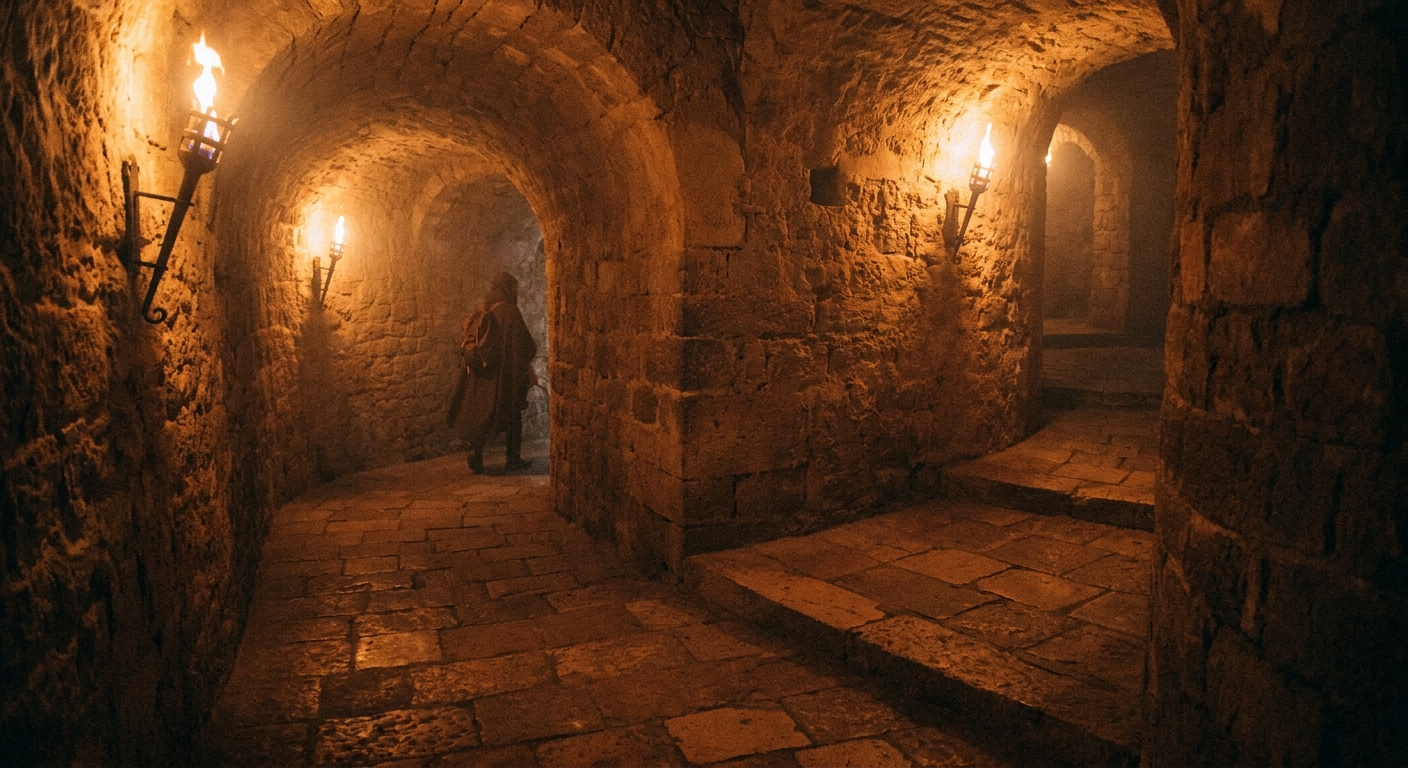
So Minos imprisons Daedalus and his son Icarus. Many classical tellings simply say they are kept under guard. Later traditions sometimes sharpen the cruelty by placing them within the Labyrinth itself, the maker trapped in his own design.
Icarus, in most versions, is young. Not a baby, not a man. That in-between age Greek myth treats like dry brush near a torch. Old enough to understand freedom, young enough to believe the sky might actually welcome him.
The Wings
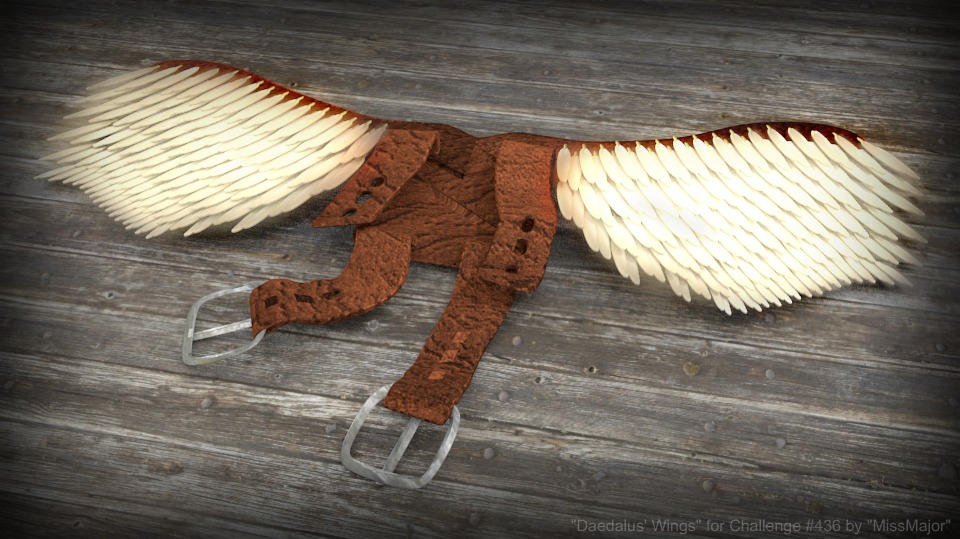
Daedalus does what he always does when cornered: he invents. If Minos commands the sea with ships and the land with soldiers, Daedalus will take the one route a king cannot patrol.
He gathers feathers, small as offerings. He binds them with wax, sometimes also described as secured with thread or cord. He makes a pair for himself and a pair for his son. Not divine wings. Human wings. Fragile and audacious, stitched together by desperation and genius.
Then comes the warning, the line that hangs over the myth like temple smoke, the counsel in essence:
Fly the middle way. Not too low, where the sea will drag you down, and not too high, where the sun will undo you.
This is not only fatherly advice. It is Greek cosmology. The world is full of deadly extremes. The sea is Poseidon’s mood. The sun is a god’s domain. The safe route is narrow, and mortals do not always love narrow.
The Flight
They launch. Imagine it: the first human-shaped shadows passing over the Cretan surf, salt air rushing up like applause, the island shrinking behind them. Daedalus is focused, tight with fear, every muscle a calculation.
And Icarus is experiencing something else entirely. Not strategy. Not survival. Something closer to rapture.
He rises. He feels power where he has only known captivity. The myth does not require him to be stupid. It only requires him to be young, and newly alive to the fact that the world has a ceiling he can touch.
The Fall
Then the story tightens its hand.
In the most familiar version, Icarus climbs too high. The sun softens the wax. The feathers loosen. The sky that felt like a doorway becomes a trapdoor.
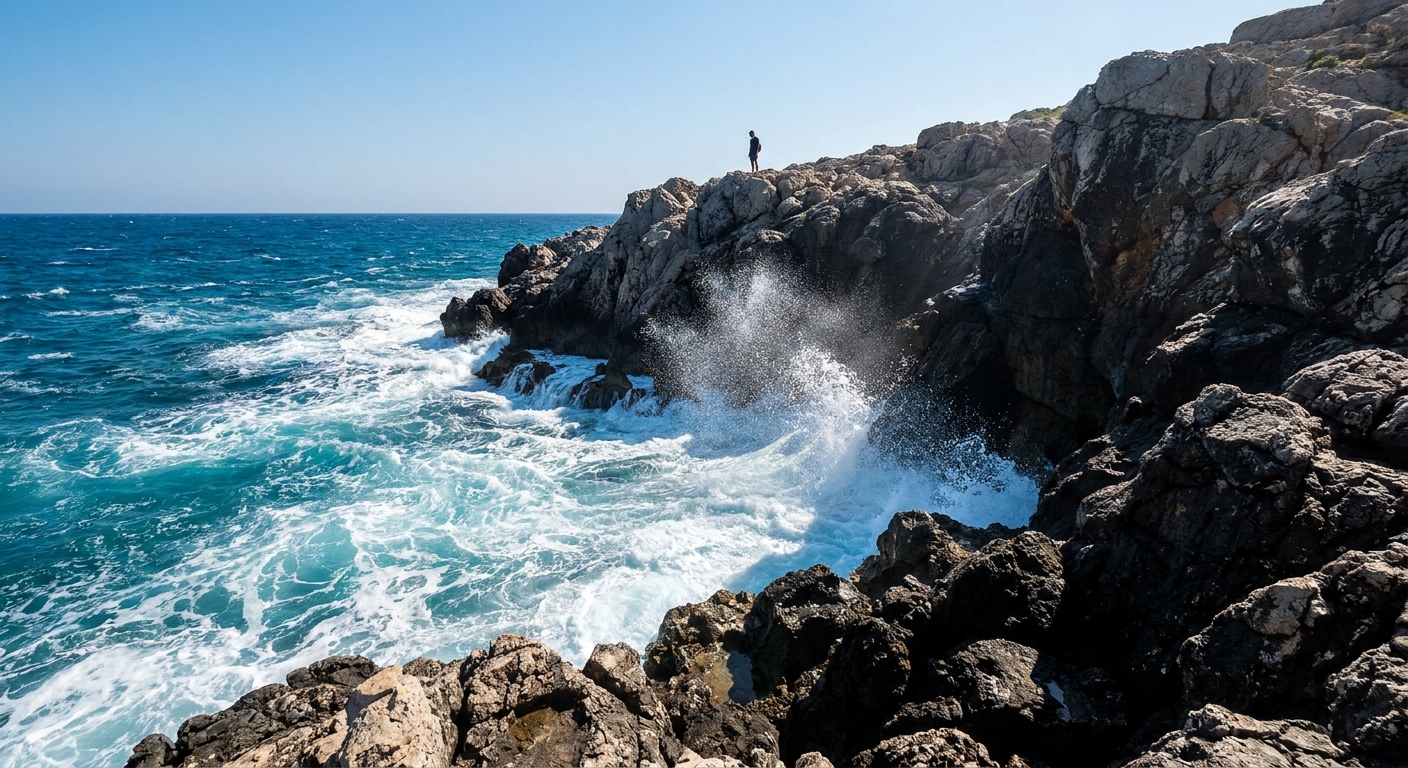
He falls into the sea, which receives him with the indifference of nature and the intimacy of a grave. Some sources place the tragedy near what later becomes known as the Icarian Sea, a naming that feels like the Greek way of granting a kind of immortality: if the boy cannot endure, at least the map will remember.
Daedalus survives. That is part of the cruelty. A parent’s worst nightmare paired with the fact that the invention still works well enough to keep him alive.
In some tellings, Daedalus lands and buries Icarus on Ikaria (or a nearby island named in variant forms). In others, Heracles is the one who performs the burial. The details vary, but the emotional architecture remains consistent: a father who has escaped a king, but not the consequences of his life’s pattern.
Aftermath in Sicily
The tale does not always end at the shoreline. In later arcs, Daedalus reaches Sicily and finds refuge with King Cocalus, trading his genius for protection.
Minos pursues him, carrying a puzzle as proof and trap: a spiral shell meant to be threaded. Daedalus solves it, of course, and in solving it reveals where he is. In the versions that follow this thread, Minos meets his death in Sicily, and the chase that began with a Labyrinth ends in an unfamiliar house, far from Crete.
What the Greeks Were Saying
If you want the simplest moral, you already know it. Hubris gets you killed. Excess invites punishment. The gods dislike mortals who forget their size.
But the saga is more nuanced, and frankly more savage. Different tellers lean on different edges: obedience, moderation, the limits of techne, the cost of brilliance, the danger of sudden freedom.
The middle path is not glamorous
Daedalus’ instruction is essentially an ethic of moderation. Yet the myth admits what polite philosophy often avoids: the middle path is hard to love when the sky is wide and your blood is singing.
Daedalus is not only a grieving father
He is also a man whose brilliance keeps creating crises. He builds the Labyrinth. He helps unmake it. He becomes indispensable to power, then punished by power, then tries to out-invent punishment itself. Icarus’ death is not random tragedy. It is the endpoint of a long sequence of choices.
Nature is part of the divine order
In Greek myth, the sea and sun are not mere weather. They are territories of gods and forces that do not negotiate with human feelings. You can be brave, you can be talented, you can be loved, and still be breakable.
Icarus After the Splash
Icarus became a symbol so potent that later artists could not leave him alone. Poets returned to the image of the boy in freefall because it holds two truths at once: the beauty of reaching beyond your limits, and the brutality of what limits do.
Even the geography participates in his afterlife. Seas and islands bearing his name feel like the Greek habit of turning grief into place, as if the world itself is a memorial stone.
And that might be the real reason the story endures. The fate of Icarus is not only a warning against arrogance. It is an elegy for the moment you realize you can escape, and the moment you learn escape still has rules.
For a heartbeat, a mortal wears the sky like a crown. Then the crown becomes weight.