How to Get Rid of Grubs in Your Lawn and Garden
Greek Mythology
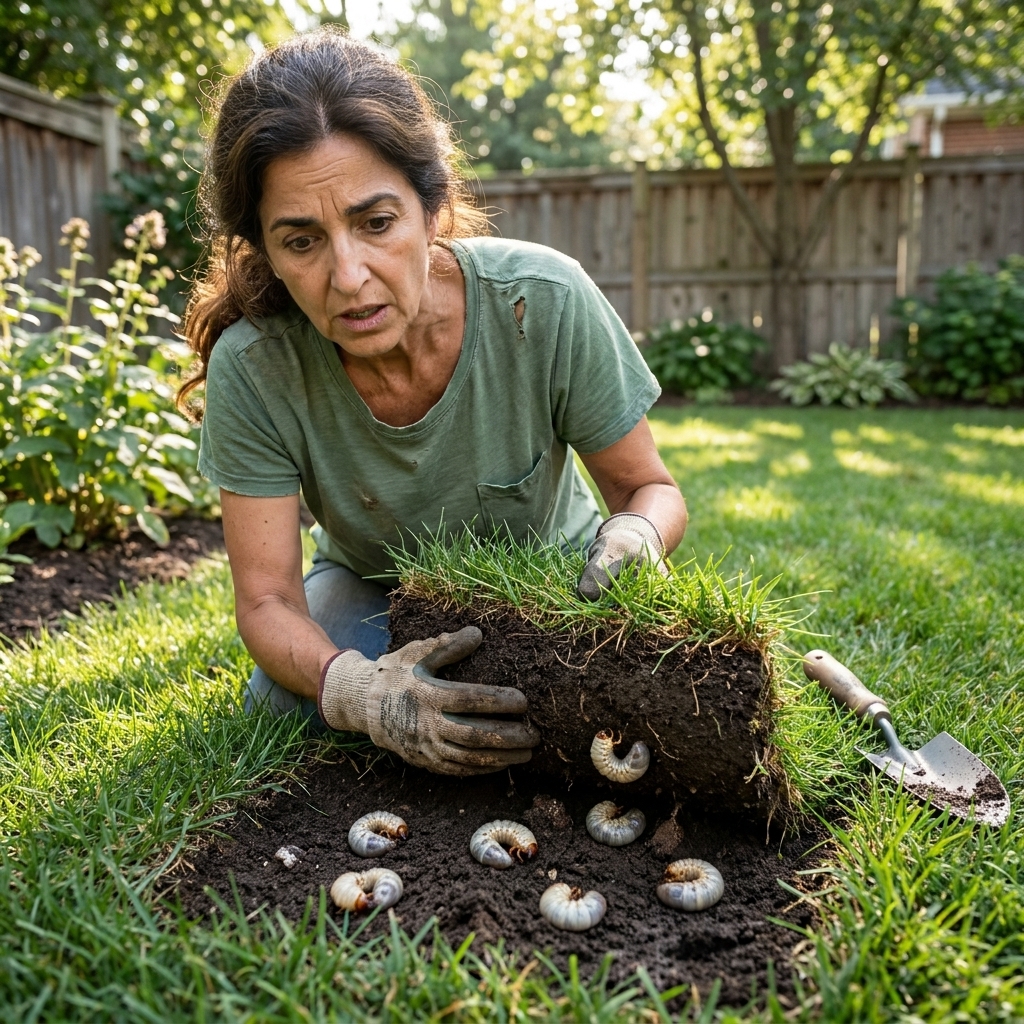
Grubs are the underworld of the yard. You do not see the damage at first, just a faint paling of the grass, a softness underfoot, a patch that refuses to thrive no matter how lovingly you water it. Then one morning you lift the sod like a loose tile, and there they are: pale, C-shaped larvae curled in the dark like they own the place.
If you have ever watched a lawn unravel in late summer as if some petty god has tugged the threads, you already understand the grub problem. The good news is that grubs are beatable. The even better news is that most lawns do not need scorched earth. They need timing, confirmation, and the right tactic for the right life stage.

What grubs are and why they wreck lawns
Lawn grubs are the larvae of several beetles. In many U.S. yards, the most common culprits are Japanese beetles, June beetles (also called May or June bugs), masked chafers, and sometimes European chafers. The adults fly, mate, and lay eggs in turf. Those eggs hatch into grubs that feed on grass roots. When roots vanish, grass cannot drink, cannot anchor, and cannot recover from heat.
Grubs also attract their own noisy fan club. Raccoons, skunks, crows, and even neighborhood dogs can tear up turf hunting them. If your lawn looks rototilled overnight, the grubs may be the reason, but the animal damage is the signature you notice first.
Quick ID note
Not every soil larva is a “lawn grub,” and not every grub is a Japanese beetle. Most turf-damaging grubs are scarab beetle larvae: creamy white, C-shaped, with a brown head and six legs near the head. If you want to be extra sure, your local extension office can help identify species, sometimes using the pattern of hairs on the rear end (the “raster”), because control timing can vary by species and region.
The grub life cycle (the part that matters)
- Early to mid summer: adult beetles emerge, mate, and lay eggs.
- Mid to late summer: eggs hatch and young grubs feed near the surface. This is the easiest time to control them.
- Early fall: grubs get larger, still feeding, then move deeper as temperatures drop.
- Winter: they overwinter deeper in soil.
- Spring: they move back up, feed briefly, then pupate into beetles.
The plot twist is simple: products aimed at young grubs work best. Spring treatments can help in some situations, but late summer to early fall is where you win the cleanest victories.
How to confirm you actually have grubs
Not every brown patch is a grub tragedy. Drought stress, fungal disease, compaction, dog urine, and shade can all imitate grub damage with unsettling accuracy. Before you treat, confirm.
Do the tug test
Grab a handful of grass at the edge of a thinning area and pull upward. If it lifts easily, root feeding is likely.
Do a simple dig count
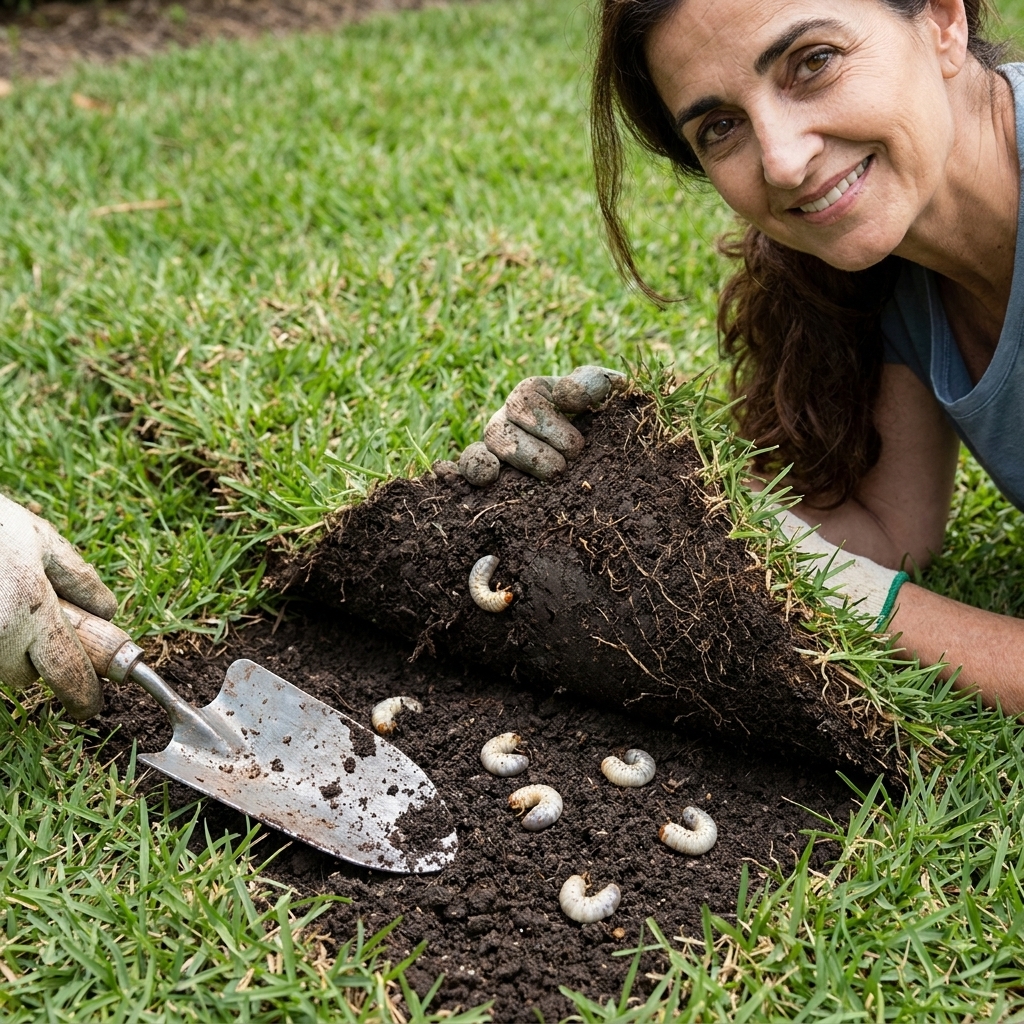
Cut three sides of a 1 square foot flap of sod (about 2 to 3 inches deep) and peel it back. Count the grubs in the top 2 to 3 inches of soil.
- 0 to 5 grubs per square foot: often tolerable in a healthy lawn.
- 6 to 9 grubs per square foot: damage is possible, especially in heat or drought.
- 10+ grubs per square foot: treatment is usually warranted.
These numbers are a rule of thumb, not a sacred tablet. Some guides use an action threshold closer to 8 to 10, and irrigated lawns may tolerate more. The goal is not a sterile lawn. The goal is a lawn that is not being eaten alive.
How to get rid of grubs
Think in two categories: curative treatments (kill grubs you have right now) and preventive treatments (stop the next generation). Preventives do not resurrect a lawn that is already failing, and spring control is often less reliable because many grubs are larger and deeper.
Option 1: Beneficial nematodes
Beneficial nematodes are microscopic roundworms that hunt soil-dwelling pests. For grubs, look for species commonly sold for lawn use such as Heterorhabditis bacteriophora. They enter the grub and release symbiotic bacteria that kill it.
Best timing: late summer to early fall when grubs are small and near the surface.
How to apply (this part matters):
- Water the lawn before application so the soil is evenly moist.
- Apply at dusk or on a cloudy day. UV light can harm them.
- Use a hose-end sprayer or watering can, following label directions exactly.
- Keep soil moist for about 1 to 2 weeks afterward.
Pros: low risk to pollinators when used as directed, compatible with many gardens, great for organic-minded yards.
Cons: they are living organisms, so storage, temperature, and moisture are non-negotiable.
Option 2: Milky spore
Milky spore (Paenibacillus popilliae) targets Japanese beetle grubs specifically. It can establish in soil over time and provide multi-year suppression in suitable climates.
Best timing: when Japanese beetle grubs are present, typically late summer to early fall.
Pros: selective, long-lasting once established.
Cons: not a quick fix, does not help much if your grubs are not Japanese beetles, and performance varies by region and soil conditions.
Option 3: Curative insecticides
If you have high counts and visible turf damage, a curative product can be appropriate. For homeowners, one of the most common modern curative actives (where registered) is trichlorfon. It is used to knock down grubs that are actively feeding.
Best timing: late summer to early fall (often Aug to Sep) while grubs are small. Larger early-fall grubs and spring grubs are harder to control.
How to apply:
- Choose a product labeled for white grubs and for your turf type.
- Apply when soil is moist.
- Water in as the label instructs so the product reaches the root zone. As a general guideline, many granular grub products are watered in with around 0.25 to 0.5 inch of irrigation, but the label is the law.
- Follow re-entry, kid, and pet safety instructions exactly.
Safety and pollinators: even though grubs are in the soil, misapplied lawn insecticides can affect non-target insects, especially if they contact flowering weeds. Mow off blooms like clover before treatment if the label permits, avoid drift into beds, and do not apply right before heavy rain. Also note that some products are restricted or not available in all areas, so local labels and extension guidance matter.
Option 4: Preventive insecticides
Preventives are applied before or just as eggs hatch, so they can intercept tiny larvae early. The most common preventive actives (availability and restrictions vary) include chlorantraniliprole and, in many areas, neonicotinoids such as imidacloprid, thiamethoxam, or clothianidin.
Best timing: late spring to mid summer (often May to Jul, depending on region and product). In many schedules, chlorantraniliprole is applied earlier than neonicotinoid preventives because it needs more lead time.
Who should use this: lawns with a history of grub damage, especially if you confirm grubs year after year.
If you are not sure you need prevention, start by monitoring and doing dig counts in late summer. Plenty of people treat annually out of fear, not necessity, and the lawn does not award medals for unnecessary chemistry.
What to do this week
1) Confirm the infestation
Do the dig count in a few spots, especially along the edge of damaged turf.
2) Choose a plan
- High grub counts + active damage: curative treatment now (late summer to early fall is best), then consider a preventive window next season if it is a repeat problem.
- Low to moderate counts + mild damage: improve watering and lawn health, consider nematodes, and recheck in 10 to 14 days.
- History of severe damage: plan a preventive window next year based on local timing, and set a calendar reminder.
3) Water correctly
Grub-damaged lawns need moisture, but not constant sogginess. Deep, infrequent watering helps grass recover by encouraging deeper roots. If you treat, water according to the label so the product reaches the root zone.
4) Repair what was eaten
If turf is already dead, it will not resurrect out of sheer optimism. Rake out dead patches, loosen soil, and either overseed (best in early fall for many cool-season lawns) or patch with sod. Keep new seed consistently moist until established.

Prevention that works
Build a thicker lawn
A dense, well-fed lawn tolerates some root feeding without collapsing.
- Mow higher: many lawns do better at 3 to 4 inches, depending on grass type.
- Fertilize thoughtfully: follow local guidance and do not overdo nitrogen in peak heat.
- Aerate compacted soil: especially in high-traffic areas.
- Overseed in fall: for many cool-season grasses, this is the easiest time to thicken turf.
Be strategic with summer watering
Adult beetles often prefer to lay eggs in turf that is moist and actively growing. That means a lush, heavily irrigated lawn can be attractive, and a stressed lawn can show damage faster. The middle path is best: do not drought-stress your grass, but avoid turning peak beetle season into a nightly spa routine if you can.
Reduce flowering weeds before treating
If you choose an insecticide, mow off flowering weeds like clover beforehand when label directions allow. It reduces the chance of exposing visiting pollinators to residues.
Use monitoring, not superstition
Mark your calendar for a late-summer grub check. Dig counts are simple and honest. They tell you whether you need action or just patience.
Common mistakes
- Treating at the wrong time: many products perform poorly against large, mature grubs. Aim for late summer to early fall for curatives, and late spring to early summer for preventives.
- Not watering in when required: if the product stays on the surface, the grubs keep feeding below.
- Assuming all damage is grubs: fungus and drought can mimic the same symptoms.
- Ignoring animal dig-ups: if raccoons are tearing your lawn apart, you must address the food source and then repair the turf.
- Skipping recovery: killing grubs does not reattach dead roots. Reseeding and soil care are part of the cure.
Grubs in garden beds
In garden beds, “grubs” can include beetle larvae that feed on roots of ornamentals, as well as other soil pests mistaken for grubs. If you are seeing wilting perennials with adequate water, dig carefully and identify what you find.
A note on containers: true lawn-type scarab grubs are less common in pots than in-ground turf. Container root damage is often something else entirely (depending on your region), which is why identification is everything before you treat.
What you can do:
- Hand removal: in small beds, this is surprisingly effective. Drop grubs into soapy water.
- Nematodes: excellent for beds too, as long as soil stays moist.
- Targeted treatments only when needed: broad soil insecticides in beds can harm beneficial insects and soil life. Use the narrowest tool that solves the problem.

When to call a pro
If you have widespread turf failure, repeated grub outbreaks despite correct timing, or you are unsure which species you are dealing with, a local lawn care professional or your county extension office can help with identification and a region-specific schedule. Local knowledge matters here because grub species, product availability, and egg-laying windows change by climate.
A final note
In Greek myth, the earth is never inert. It is a realm of appetites, cycles, and quiet forces working below the surface. Your yard is not so different. Grubs are not evil. They are simply hungry, persistent, and offensively well-timed.
Confirm them. Treat them when they are vulnerable. Repair what they damaged. And let the rest of your garden return to the sunlight, where it belongs.