Prometheus’ Innovation
Greek Mythology
In Greek mythology, Prometheus stands out as a figure whose actions echo through time. His story goes beyond rebellion, igniting a spark of innovation in humanity. By giving fire to mankind, Prometheus didn't just defy Zeus; he opened up a world of possibilities and challenges that still resonate in our modern understanding of creativity and progress.
Prometheus and the Origins of Human Innovation
Prometheus was quite the troublemaker, stealing fire from Zeus and handing it over to humanity. This fire wasn't just about keeping warm; it symbolized knowledge and innovation. Imagine the first human tinkering with fire, feeling a spark of creativity and power. It was like handing them the keys to a whole new world.
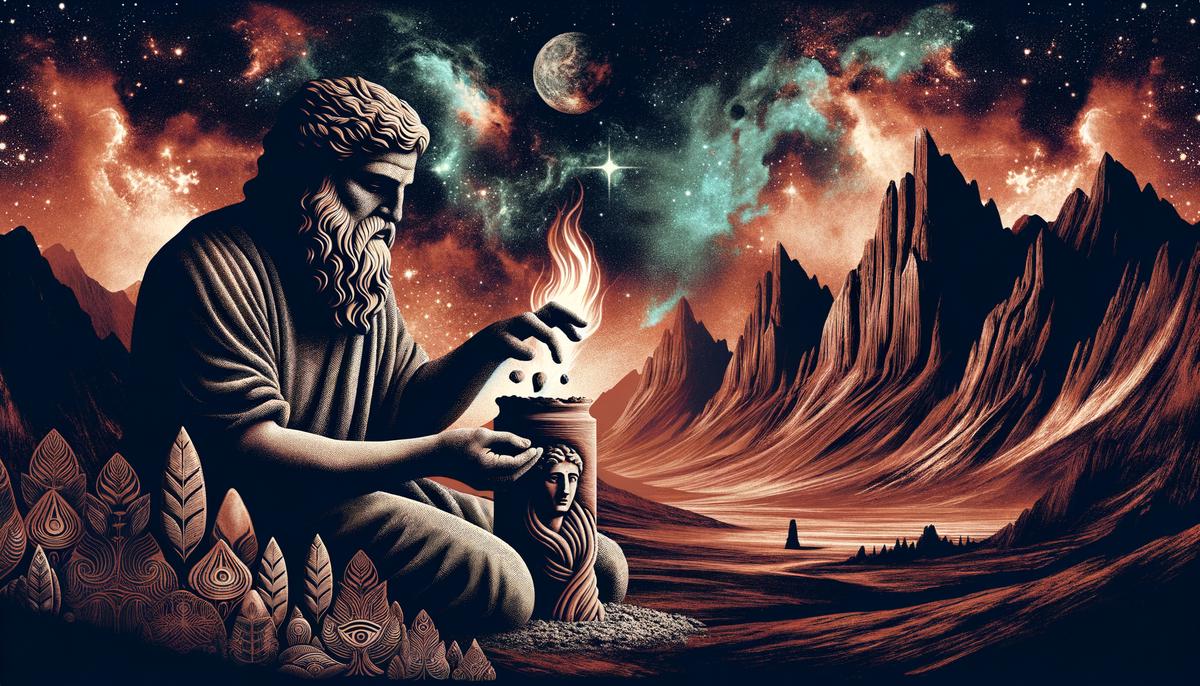
Let's talk about Prometheus's role in creating humans. Picture a titan shaping mankind from clay, pouring his heart into it, and then adding the crowning touch: fire, the ultimate tool for advancement. It's like he gave humanity its first upgrade: Knowledge 1.0.
Zeus, like any parent discovering you borrowed the car without asking, wasn't thrilled. Prometheus's act of rebellion turns the mountain into his time-out corner, complete with an eagle for extra punishment. It's the kind of eternal sentence that would make even the worst chores at home look easy.
With fire, humanity could warm themselves, cook food, and light up dark nights—not unlike being the first to figure out electricity. It gave people the tool to expand their thinking and reshape their environment, much like artists or inventors with a fresh canvas.
Prometheus's deed reminds us that the quest for knowledge isn't always smooth sailing. It requires guts, a bit of craziness, and sometimes going against those who'd rather keep things as they are. If you've ever tried sneaking an extra cookie despite mom's rules, you get it—Prometheus just did it on a cosmic level.
In giving humanity fire, Prometheus unleashed a force that would ignite civilization. From fire came metallurgy, cooking, and warmth—a leap from stone-age survival to civilization's bright horizon. His boldness set the stage for all things inventive, from writing to space exploration.
The Consequences of Defiance
Zeus, as the cosmic disciplinarian, was not one to let Prometheus's shenanigans slide without retaliation. Imagine being nailed to a rock on Mount Caucasus, with a giant eagle playing buffet with your liver daily. Talk about a divine timeout! This wasn't just punishment; it was an eternal reminder that crossing the chief god means facing some serious consequences.
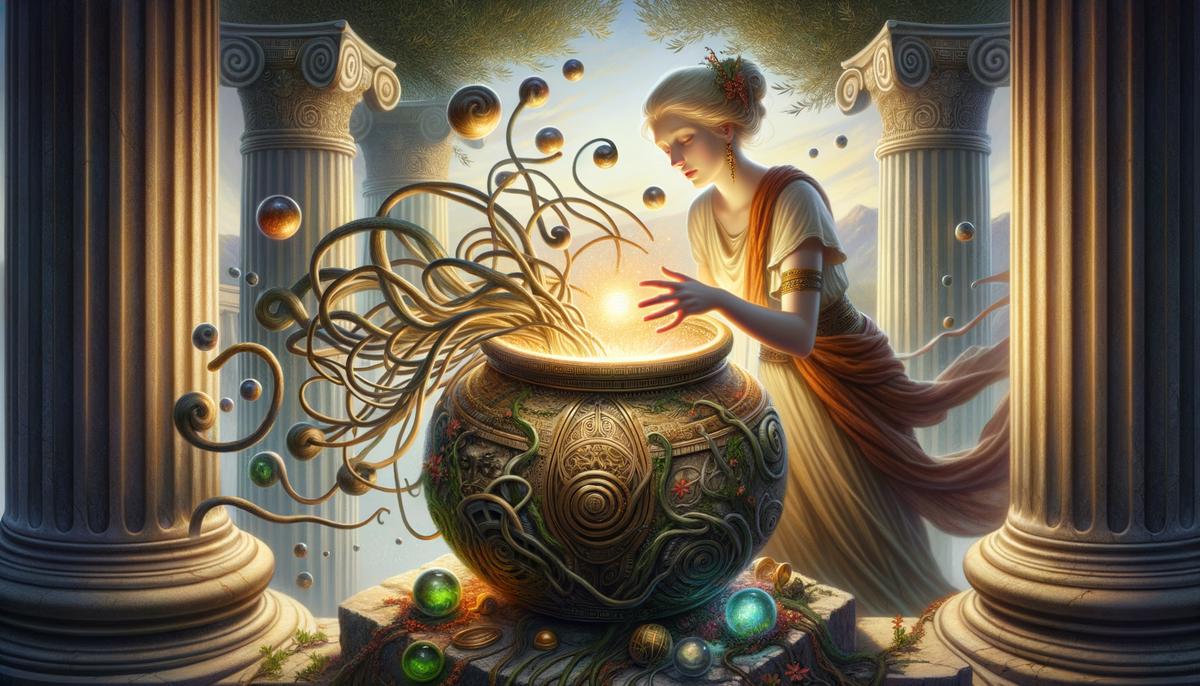
But Zeus wasn't done. Enter Pandora—a divine creation made to dole out a bunch of mortal troubles. She carried a jar brimming with all the plagues and woes that would pepper human existence. As Pandora's curiosity got the better of her, out flew misfortune, sickness, and all sorts of problems. But nestled at the bottom was Hope—a tiny silver lining in the storm clouds of adversity.
The saga of Prometheus and his punishment doesn't just highlight the risks of defying cosmic order; it shows that while divine forces might be quick to discipline, they inadvertently left room for optimism. Prometheus and Pandora's tales dance between devastation and possibility, lighting up even the darkest mythological stories.
So there you have it: Prometheus and the ripple effect of defiance. His tale reminds us that while breaking the norms might cost you dearly, sometimes it's the spark that ignites a future worth dreaming about.
Symbolism of Fire and Innovation
Fire—Prometheus's most illuminating gift to mankind. It's not just for toasting marshmallows; it's a beacon of enlightenment. Think of it like that mind-blowing moment when you first discovered Wi-Fi: a world suddenly connected in ways previously unimaginable.
But here's where it gets interesting—the same blaze that lit paths to progress could equally spark destruction. Fire, like all good wildcards, brought along its own set of risks. It's the same flame that can cook your breakfast or burn down the house if left unchecked.
Isn't that the eternal struggle in innovation? Each technological leap is a dance between discovery and potential disaster. Like inventing the airplane for breathtaking flight yet grappling with fear of crashing. Fire represents that duality beautifully: a tool for survival and a trigger for catastrophe.
Nowadays, we have all sorts of fiery innovations blazing trails: electricity, space exploration, quantum computing—modern Promethean quests. But let's not forget the scorch marks they can leave behind. In the hands of creation, innovation could shine a light into the darkest corners of the universe or blow up in our faces faster than you can say "oops."
Prometheus's gift taught humanity the precious balancing act of progress. It's about embracing the optimistic glow of creation while acknowledging the dangers dancing in the shadows. It's responding to that ever-burning question: How do we keep sparking the fire of innovation without getting burned?
So remember, while we bask in the glow of new discoveries, it's wise to carry a proverbial fire extinguisher. That way, we're translating Prometheus's legacy into the language of tomorrow while keeping a mindful eye on responsible innovation.

Prometheus in Modern Culture
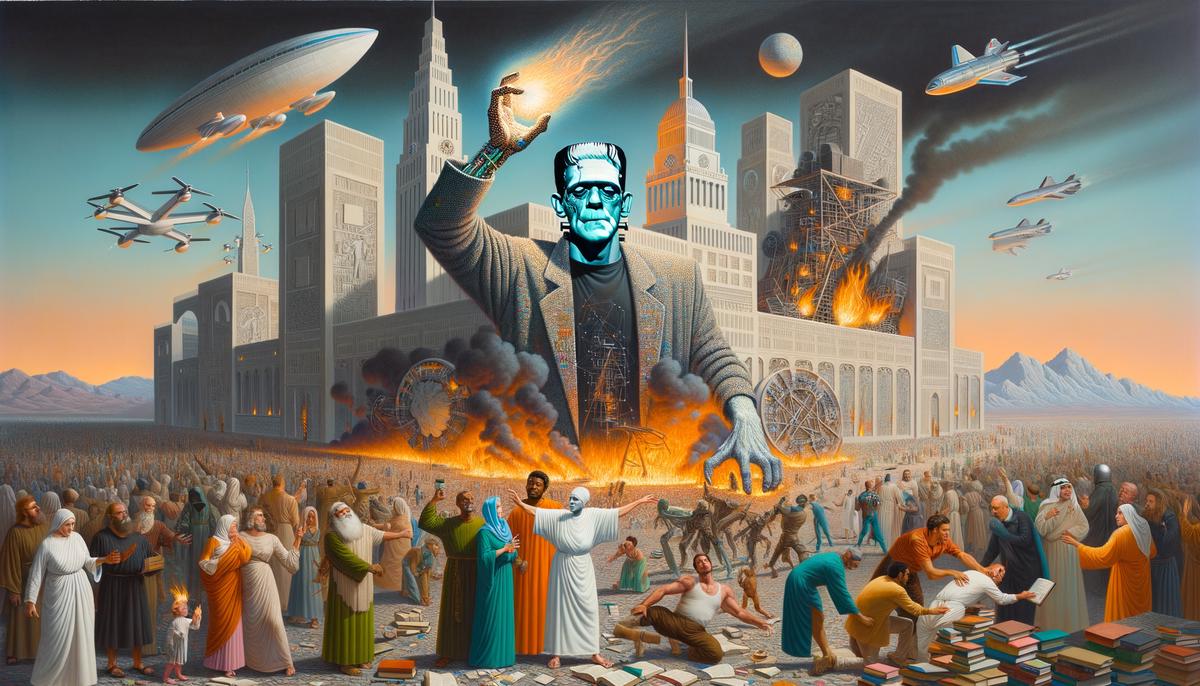
Prometheus, with his knack for rebellion and grand acts of defiance, is like that rockstar who keeps getting covered by new bands, no matter how many eons pass. Take Mary Shelley's "Frankenstein," dubbed "The Modern Prometheus." Victor Frankenstein's ambitious creation mirrors Prometheus's fiery gift and its consequences, vaulting the theme of innovation-gone-awry into the literary spotlight.
Prometheus doesn't just hang around in dusty myth anthologies. He's snuck into modern stories, steering the wheel of creativity like a champion of chaos and consequence. We see this in films, books, and comics that use Prometheus's fire-thieving venture as a launch pad for exploring responsibility and youthful folly.
In Ray Bradbury's "Fahrenheit 451," you can hear echoes of Prometheus's brave defiance. This novel invites readers into a world where fire is used to stamp out knowledge, turning our fire-bearing Titan into a rebel mascot for enlightenment.
On the silver screen, Ridley Scott's "Prometheus" takes the mythological core and spins it into a sci-fi universe. It's an exploration where ancient themes ignite futuristic drama, melding Promethean rebellion with cosmic-sized consequences.
Even the comic book world tips its hat to our blaze-bringer. Superheroes often wrestle with the heavy toll of their powers, echoing the age-old story of rebellion, progress, and responsibility.
By weaving Prometheus's legendary mischief into tales of modern magic and invention, contemporary culture keeps the fire-themed saga sizzling hot. From canvas to keyboard, from page to stage, it whispers about the potent mix of brilliance and recklessness. So, as you venture into the world of creative expression, remember that sometimes mythic muses hold the matches that spark the brightest flames of inspiration.
Prometheus's legacy reminds us that while innovation often comes with risks, it also holds the potential for profound transformation. His tale encourages us to embrace both the light and shadow of discovery, keeping alive the flame of curiosity and resilience as we forge our own paths toward enlightenment.
- Hesiod. Theogony. Translated by M.L. West. Oxford University Press; 1988.
- Aeschylus. Prometheus Bound. Translated by Alan H. Sommerstein. Harvard University Press; 2008.
- Shelley M. Frankenstein; or, The Modern Prometheus. Lackington, Hughes, Harding, Mavor & Jones; 1818.
- Bradbury R. Fahrenheit 451. Ballantine Books; 1953.