The Most Badass Greek Goddesses
Greek Mythology
Olympus did not run on serenity. It ran on ego, oaths, prophecy, and the occasional thunderbolt hurled like a tantrum in bronze. And if you listen closely through the temple smoke and laurel leaves, you can hear something else: the steady footfall of goddesses who were never meant to be ornamental.
Their power is not always gentle. Sometimes it is strategy. Sometimes it is wilderness. Sometimes it is grief that becomes weather.
In Greek myth, strength is rarely clean. It is beautiful, yes. But it is also a bargain, a boundary, a punishment, a price.
These are not the only divine women worth naming, and the myths themselves have a habit of changing their masks from poet to poet. But here are the Greek goddesses who still feel like original icons of power: glamorous, dangerous, brilliant, and utterly unwilling to be reduced to background scenery.

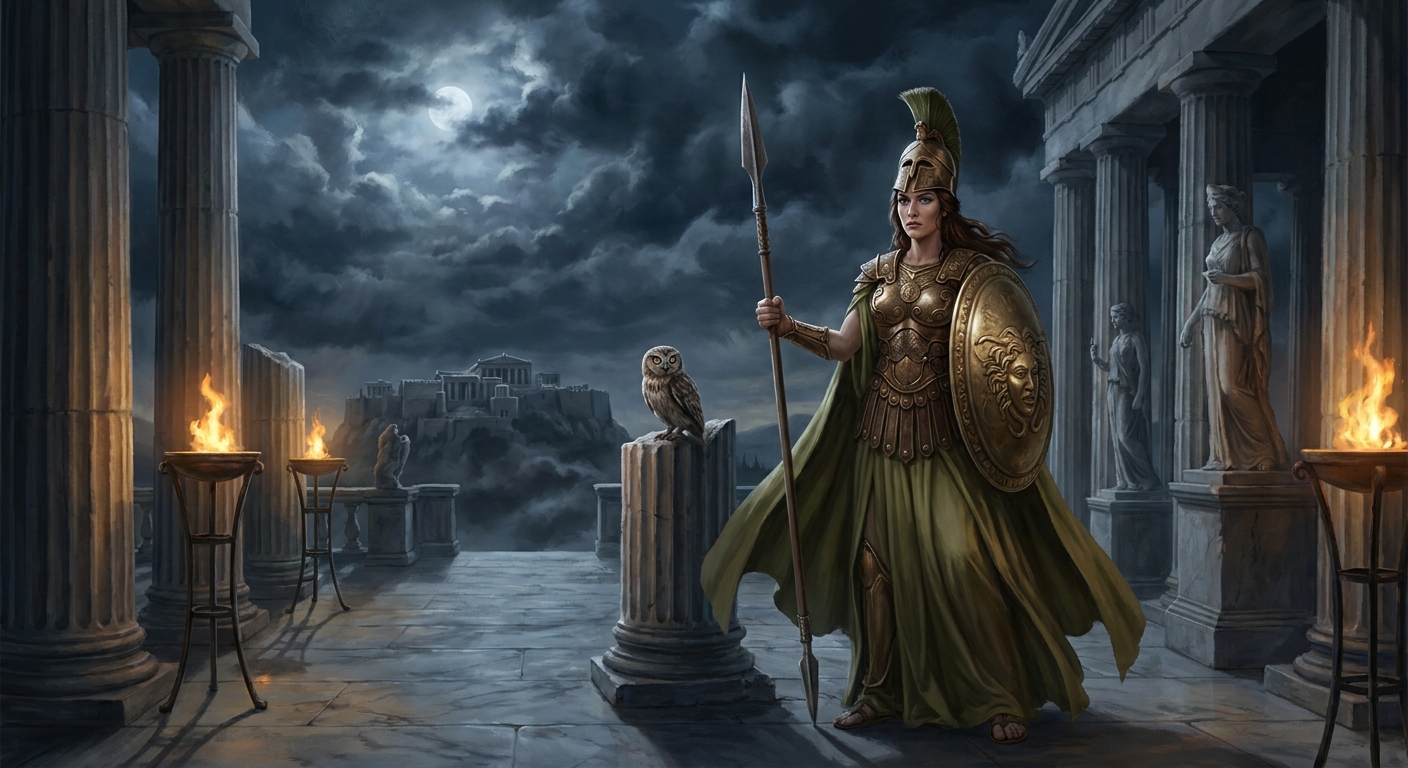
Athena
Athena is the kind of goddess who makes chaos look embarrassing.
She rules strategy, craftsmanship, and civic order. Not the thrill of violence, but the mathematics of victory.
Her origin alone is an announcement: Zeus swallows Metis, and later his skull is split open by a god with a blade, and out steps Athena, fully armed. Already complete. Already dangerous. Already carrying authority that does not ask permission.
She is the patron of heroes who survive by thinking. Odysseus endures because he can plan. Perseus succeeds because he follows divine instruction and accepts the gifts offered, rather than improvising his way into a grave.
Athena protects, but she also enforces boundaries. In her myths, cleverness is holy, and arrogance is a fast way to become an example.

Artemis
Artemis is not a goddess you invite into your life unless you mean to keep your promises.
Her domain is the wilderness: pine-dark mountains, the silence before dawn, sacred forests where a snapped twig sounds like a confession. She is the hunt, wild animals, and the fierce protection of young women. Her beauty is not salon-polished. It is moonlit, sharp, and untouchable.
She chooses independence early, rejecting marriage and the glittering cage of Olympian romance. A wise decision, considering how often love on Olympus ends with curses, transformations, and funerals.
This is the goddess who does not flirt with boundaries. She is the boundary.
Her stories are gorgeous and brutal in the same breath. When the hunter Actaeon sees what he should not see, Artemis turns him into a stag and lets his own hounds decide the ending. It is not a lesson written in soft ink. It is carved into bone.
Artemis does not need a throne to rule. She needs only a treeline, a breath held too long, and the moment someone mistakes a sacred place for an entitlement.

Hecate
Hecate is where Greek mythology gets nocturnal and honest.
She is the goddess of crossroads, ghosts, witchcraft, thresholds, and the uneasy feeling that the dark is listening back. Even her light is different. Not Apollo’s clean daylight, but torchlight: wavering, intimate, and perfectly suited to secrets.
Her most haunting appearance is in the story of Persephone. When Persephone vanishes, it is Hecate who hears the cry, who recognizes the sound of a boundary being crossed. With twin torches, she guides Demeter through a world suddenly made unfamiliar.
Later tradition places her beside Persephone in the Underworld itself, as if the realm of the dead required not just a queen, but a guardian of doors.

Hera
People like to reduce Hera to jealousy, as if a queen of the gods could be summarized like a petty headline.
Hera is the goddess of marriage, queenship, and the hard architecture of power. She sits beside Zeus, not as a decoration, but as a throne that has learned to endure thunder.
Her myths are often painful because she is trapped in a divine institution built to humiliate her. Zeus breaks vows like a pastime, and Hera’s rage frequently lands on mortals and rivals. Greek myth is rarely interested in fairness. It is interested in what happens when sacred marriage vows are treated like disposable ribbon.
Still, do not mistake her suffering for weakness. Hera’s power is political, cosmic, and terrifying in its patience. She can ruin a hero’s timeline, unmake reputations, and turn an entire myth into a warning about what it costs to insult a queen.

Demeter
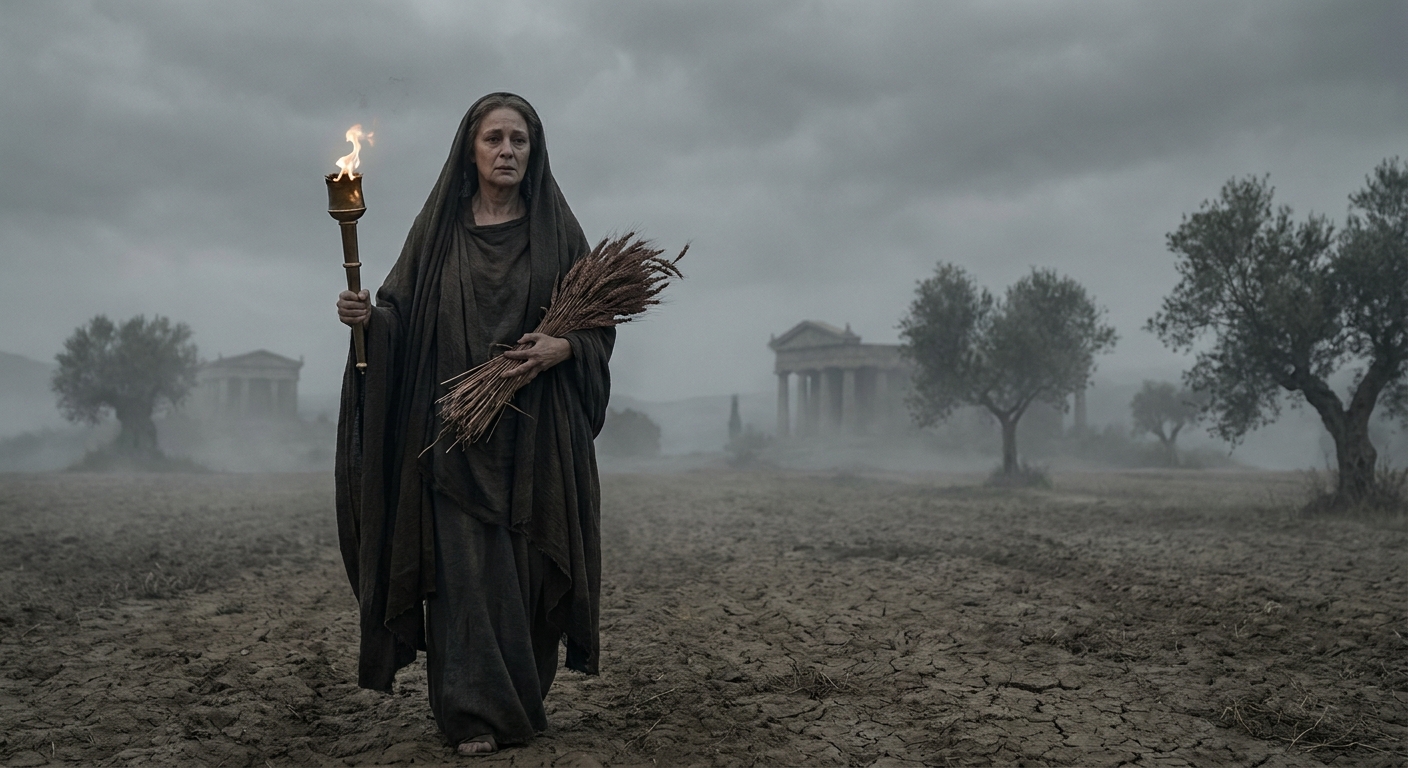
Demeter is proof that Greek mythology understood a truth modern people still flinch from: sometimes the most world-altering force is not a sword. It is a mother’s grief.
Goddess of grain and agriculture, Demeter is the reason bread exists, the reason fields rise green instead of dead. Her strength is civilization-level. When she blesses the earth, people live. When she withholds that blessing, empires panic.
After Persephone is taken into the Underworld, Demeter does not accept the loss as “the way things are.” She searches. She refuses comfort. She turns sorrow into famine, and suddenly the world learns what happens when a goddess says no.
The myths tie her to Eleusis and the Eleusinian Mysteries, a cult guarded so fiercely we still cannot fully reconstruct its rites. Even now, Demeter keeps a portion of her power behind a veil.
Persephone
If Demeter is the fury of loss, Persephone is the transformation that follows.
She begins as Kore, spring-bright and untested. Then the earth splits, the Underworld opens like a mouth, and she is pulled into a marriage that becomes one of mythology’s most enduring arguments about power, consent, and fate.
But Persephone does not remain a passive figure carried by the story. In many traditions, she becomes Queen of the Underworld, a ruler beside Hades, a goddess whose presence changes the temperature of death itself.
The pomegranate is the pivot. A fruit like spilled rubies, sweet and binding. Eating its seeds ties her to the realm below, and the poets argue the details: how many seeds, how many months, what portion of the year the living must share her with the dead. What matters is the same every time.
One bite, and the myth becomes a calendar. Desire becomes a contract. A daughter becomes a queen.
Her ferocity is quiet, and that is what makes it unsettling. She learns the language of the dead and speaks it fluently. Springtime may be her perfume, but the Underworld is her crown.

Why They Last
These goddesses endure because their stories refuse to behave. They are not tidy moral lessons. They are weather systems, sacred laws, and emotional catastrophes rendered in marble and flame.
- Athena proves that intelligence can be sharper than any spear.
- Artemis makes freedom holy, and makes disrespect expensive.
- Hecate guards the doors we pretend do not exist.
- Hera reminds Olympus that a queen is not a footnote.
- Demeter shows what happens when grief becomes famine.
- Persephone turns survival into sovereignty.
And yes, there are others. Aphrodite, for one, whose soft power can topple heroes as efficiently as any spearpoint, and whose glamour is a kind of warfare. But that is a different torchlit corridor.
Somewhere, a torch is still burning at a crossroads. Somewhere, an owl still watches from a temple beam. Somewhere, the Underworld still waits with its patient doors.