Top 5 Myths of Prophetic Power
Greek Mythology
5. Cassandra's Curse
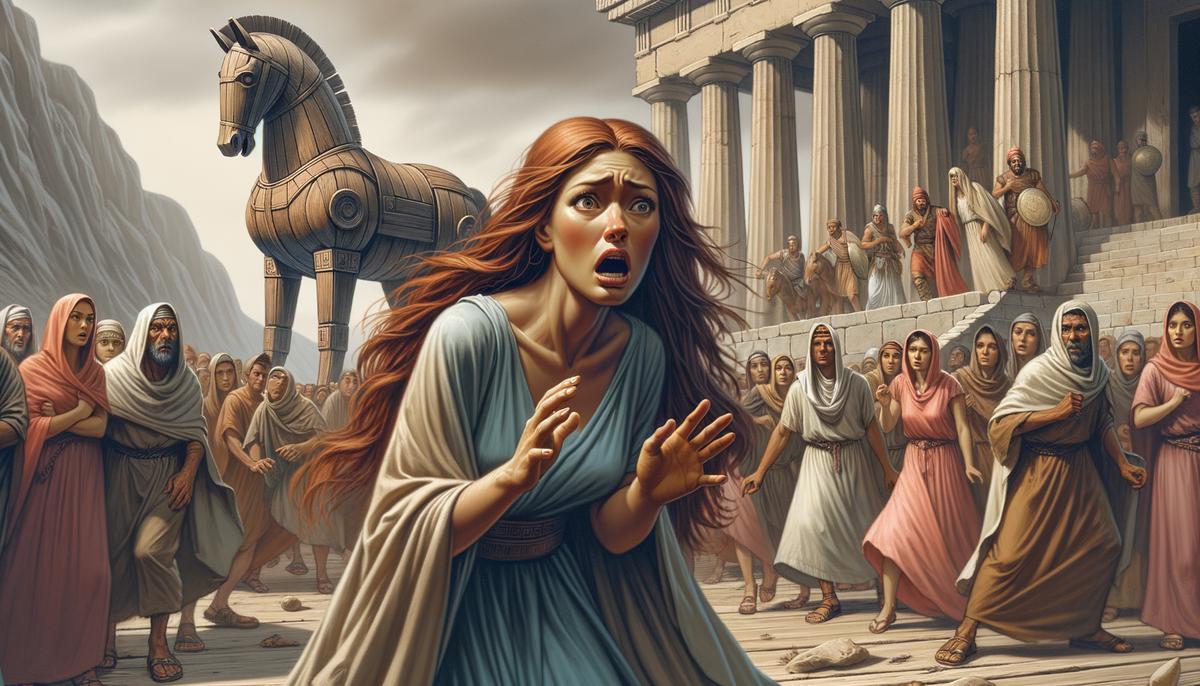
Cassandra, the Trojan princess with prophetic powers, offers a tale of injustice. Apollo gifted her the ability to foresee the future but cursed her predictions to never be believed when she rejected his advances. This turned Cassandra's life into a tragic cycle:
- She foresaw Troy's fall
- Warned about the wooden horse
- Her cries fell on deaf ears
Her gift became a torment, as no one trusted her foresight. Cassandra's story shows how even a godly gift can become a curse, highlighting the cruel power dynamics in mythology and demonstrating that knowing the future doesn't always change its course.
4. Prometheus Foresees Humanity's Flame
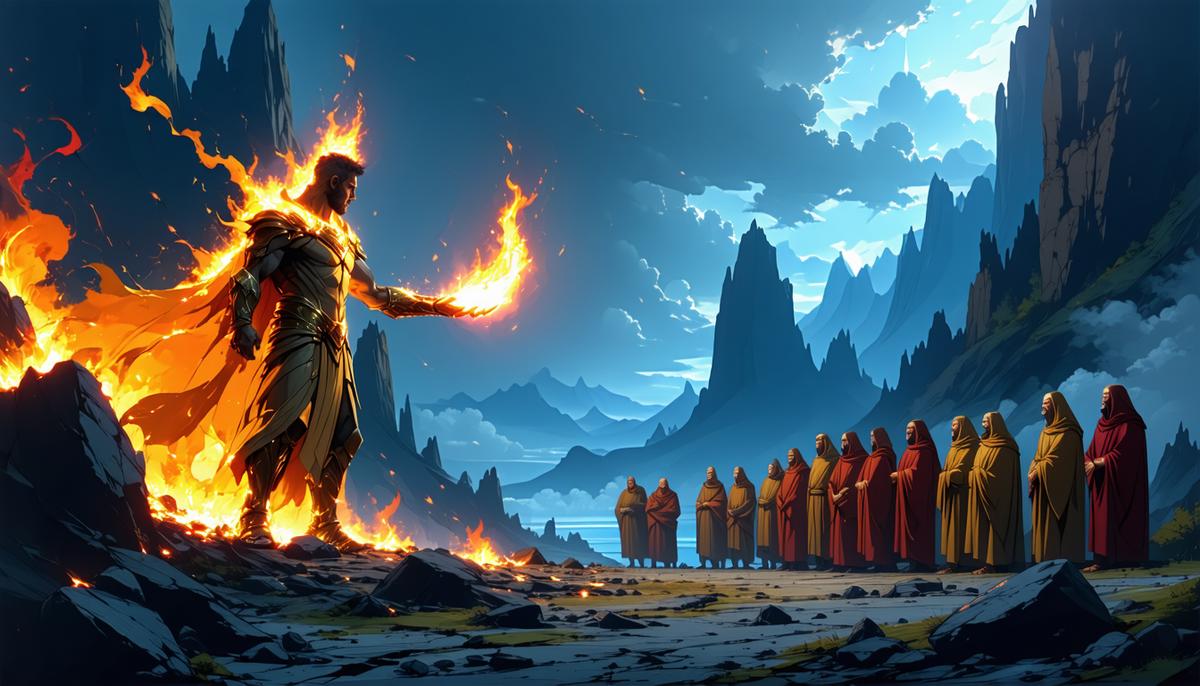
Prometheus, the titan with a heart for humanity, dared to dream of a brighter future for mortals. He stole fire from the gods and gave it to humans, sparking civilization's dawn. This wasn't just about literal flames, but the fire of knowledge and progress.
With fire, humans could:
- Cook food
- Forge tools
- Heat their homes
Prometheus' foresight emphasized prophecy's role in human evolution, showing that reaching for the stars sometimes means defying the gods.
Zeus, not a fan of this unauthorized gift, sentenced Prometheus to eternal liver-pecking by an eagle. Talk about a sore sport! Yet, Prometheus' gift highlights how prophecy can empower, alter destinies, and propel humanity forward. In his flame-gifting foresight, we see prophecy's true potential to illuminate and transform.
3. The Fates: Masters of Destiny
The Fates—Clotho, Lachesis, and Atropos—are the celestial weavers spinning life's thread. Their roles are distinct:
- Clotho holds the strings
- Lachesis measures them
- Atropos snips them away
These crafty spinners don't just decide human fates; they have Zeus himself dancing to their tune.
While Zeus might claim to be king of gods, the Fates hold ultimate prophetic authority. They don't whisper prophecies; they declare them outright. Even Zeus can't change their decisions, showing that not all divine power needs to shout from the heavens.
The Fates remind us that prophecy isn't always about fiery proclamations. Sometimes, it's the quiet click of scissors—the soft weaving of life's journey—that really gets you. As they thread through the destinies of gods and mortals alike, the Fates show us that destiny's allure lies in the gentle, inevitable unraveling of the divine fabric.

2. How the Furies Execute the Unseen Justice
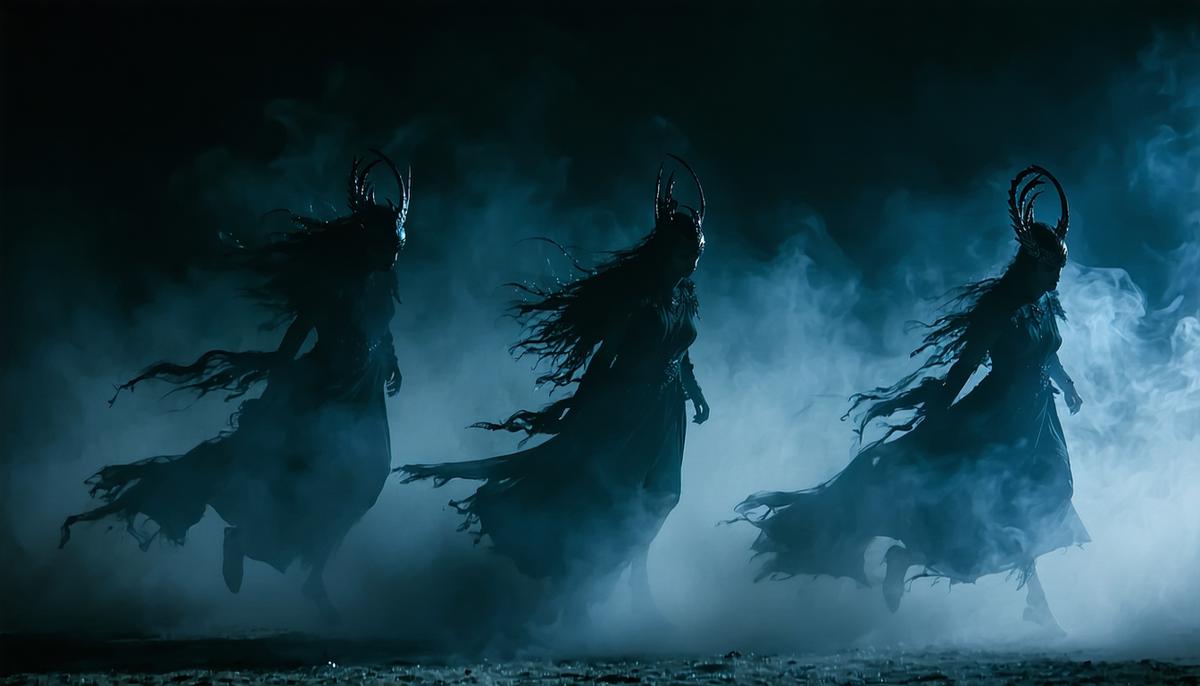
The Furies—Tisiphone, Megaera, and Alecto—are the relentless enforcers of celestial order. These divine detectives roam the underworld, doling out punishment to wrongdoers like cosmic baristas of consequence.
The Furies showcase the grittier aspect of prophetic power. They scour Earth for any hint of evil or injustice, tireless in their commitment to retribution. Their prophecies unfold silently, ushering wrongdoers toward an inevitable comeuppance.
This trio demonstrates that prophetic power isn't always about foreseeing futures; it's about revealing hidden truths. They embody a sophisticated unraveling of fate's darker side, making sure no sin goes unchecked. The Furies remind us that sometimes, prophecy is about looking into the unseen, and that justice, though delayed, is never denied.
1. Medusa: A Prophetic Transformation
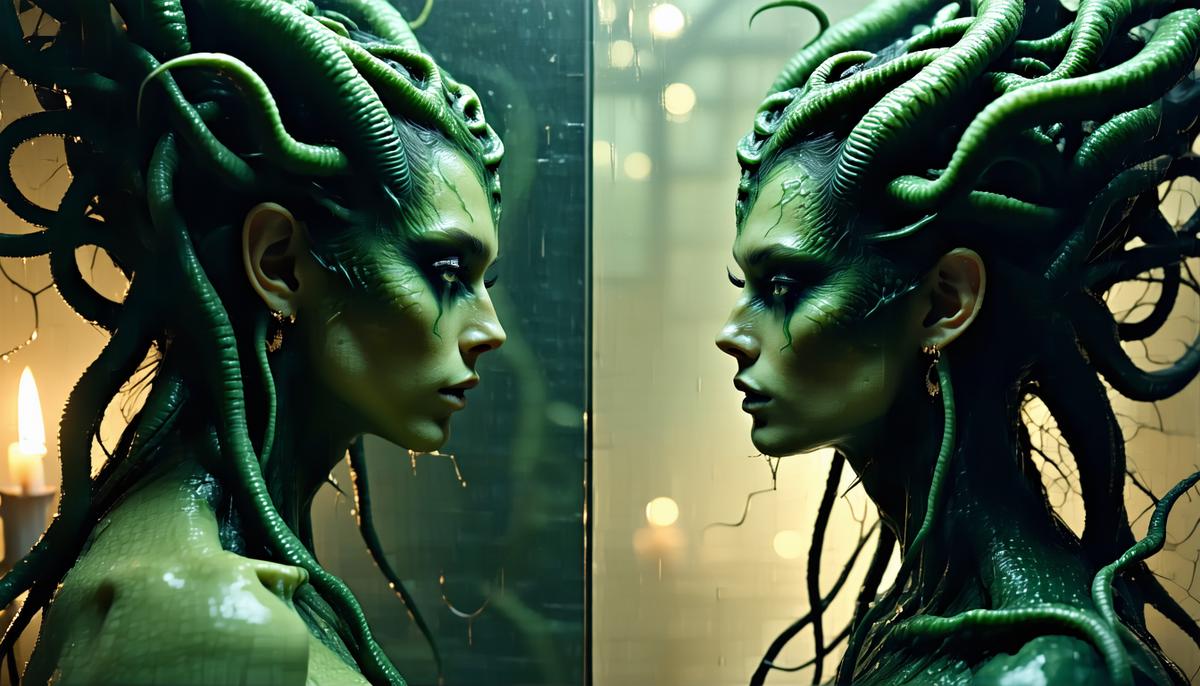
Medusa's tale intertwines beauty, betrayal, and beastly rebirth. Her transformation from celebrated beauty to Gorgon with a lethal gaze serves as a cautionary tale echoing through mythology.
After an unfortunate encounter with Poseidon in Athena's temple, Medusa was transformed into a figure able to petrify with a mere glance. The embodiment of loveliness became a social pariah, with snakes for hair and an aura of isolation.
"Every kid on Earth, when they learn about the Underworld, they think I'm there against my will," – Persephone in Kaos
Medusa's story speaks of inherent power recognized too late, a prophecy wrapped in her transformation. Her fate teaches us about the danger of appearances and the depths of vengeance, challenging us to reflect on who the real monsters are—those who wield power out of fear, or those forced into monstrous roles by unjust judgment?
As her spine-chilling gaze perpetuates through the ages, Medusa stands not just as a figure of petrifying strength, but as a timeless, prophetic reminder of empathy for the misunderstood.
These tales of Greek mythology offer more than entertainment; they invite us to reflect on the human condition. Whether it's Medusa's tragic transformation or Prometheus' rebellious gift, each story holds a mirror to our own lives. They remind us that understanding these ancient tales can illuminate our path forward, encouraging empathy and introspection as we face life's challenges.
- Powell B. Classical Myth. Upper Saddle River, NJ: Prentice-Hall; 2001.
- Fry S. Mythos: The Greek Myths Retold. London: Michael Joseph; 2017.
- Hamilton E. Mythology. New York: Little, Brown and Company; 1942.
- Graves R. The Greek Myths. London: Penguin Books; 1955.
- Homer. The Iliad. Translated by Fagles R. New York: Penguin Books; 1990.